WahlheYmatPost — Understand How To Berlin
Weekly guide for Berlin’s international community
Quick stories, local events, and ways to take part, right in your inbox — made with Berliner Morgenpost.
Your data matters to us — see our privacy policy.
This is a cooperation with Berliner Morgenpost. You can subscribe to their newsletters here.

WahlheYmatPost
-

From Kyiv to Berlin: War Changed His Path, but Not His Dream
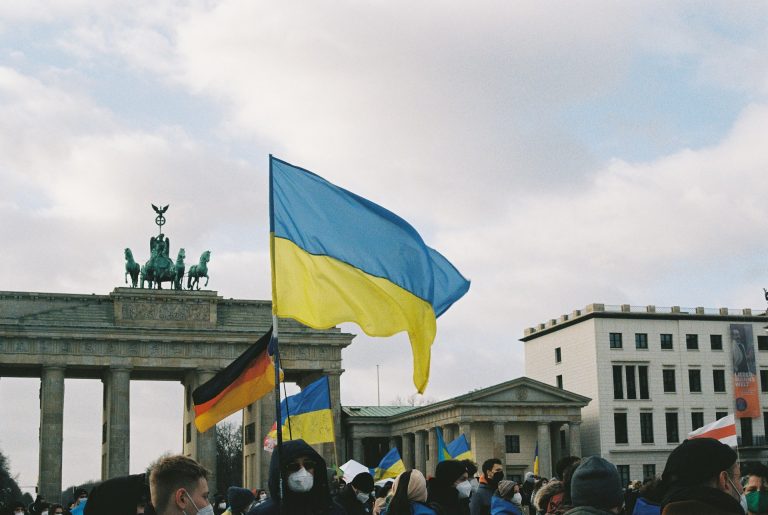
At 15, Oleksandr Drevytskyi left Kyiv with his mother and their dog Ozzy after Russia’s full-scale invasion of Ukraine. In Berlin, he found himself navigating a new language, a new school system and an uncertain future. Four years later, he is studying mathematics at Humboldt University – and helping other Ukrainians find their own way through the city. -

The Berlin Election Is Over – The Work Begins
Berlin has voted – but for WahlheYmat, the bigger question is what happens next. We look at three takeaways from the election and outline two priorities for the years ahead: bringing international Berliners’ interests onto the political agenda and building a stronger coalition for civic participation. -

Strangers by the Spree: Inside Berlin’s Outdoor Latin Dance Community
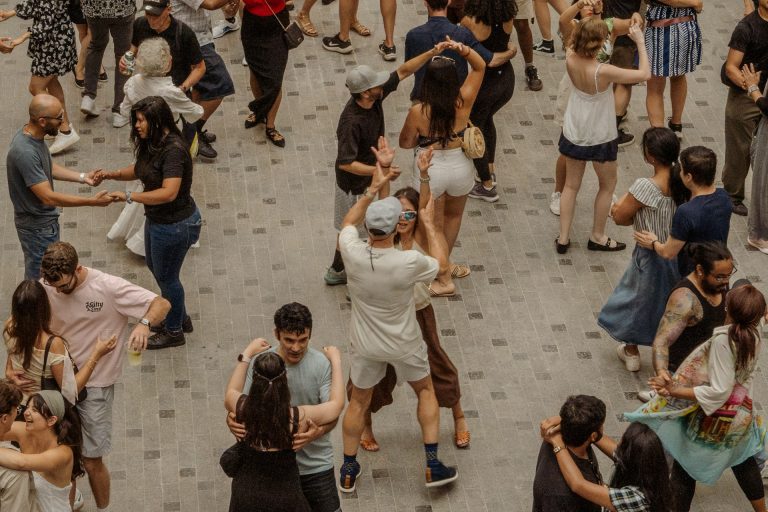
Just a few hundred metres from Berlin Central Station, strangers meet by the Spree to dance salsa and bachata together. Drawing on her own experience of joining the crowd, Borbála Hanna Dévai explores how Berlin’s outdoor Latin dance scene brings together people of different ages, backgrounds and professions. -

StimmlosTrend 2026: 96 Percent Would Vote If They Could
The final results of WahlheYmat’s StimmlosTrend are in. They show a striking willingness to participate among international Berliners without voting rights – but also widespread concern about the city’s future and a strong sense of having little influence over it. -

Who Will Lead Germany Into Its International Future?
Germany is becoming more international, while its political structures remain rooted in the nation-state. What can Charles de Gaulle’s extraordinary story teach us about leadership, persistence and the courage to rethink the status quo? -

A Mayor Tandem for Berlin
What if Berlin’s nearly one million residents without a vote had their own representative at the very top of the city? A second mayor, working alongside the elected Regierende Bürgermeister, could give international Berliners a visible voice in how the city is shaped. A radical idea? Perhaps. But in a city where roughly one in four residents cannot vote in state elections, it may be time to rethink what political representation can look like. -

No German Passport? You May Still Have a Vote in Berlin
Around 240,000 non-German EU citizens are eligible to vote in Berlin’s district elections on September 20. A new series of multilingual events aims to explain how the election works – and how EU citizens can help shape the neighbourhoods they call home. -

“Berlin taught me to dislike the word integration”
Berlin was the city that changed everything for Marilena Chatziantoniou. After more than two decades working in humanitarian aid around the world, she founded Just-Go-For-It to help people recognise opportunities rather than obstacles. In this interview, she explains why she rejects the word “integration”, why community matters more than bureaucracy, and why she believes participation is something we choose every single day. -

What is Germany’s greatest asset?
Germany doesn’t need to become more German. It needs to become better at turning its greatest asset—its reputation as an open, reliable, and innovative country—into a magnet for people and ideas from around the world. -

Migrants With Degrees Are Not What Germany Is Looking For
As state-funded German courses become harder to access, many migrants are left trapped between limited language skills and low-income jobs. At the Lohana Berkins Center in Berlin, Darío Farcy and his team are trying to break this cycle through free education, solidarity, and community organizing inspired by Latin American grassroots movements. -

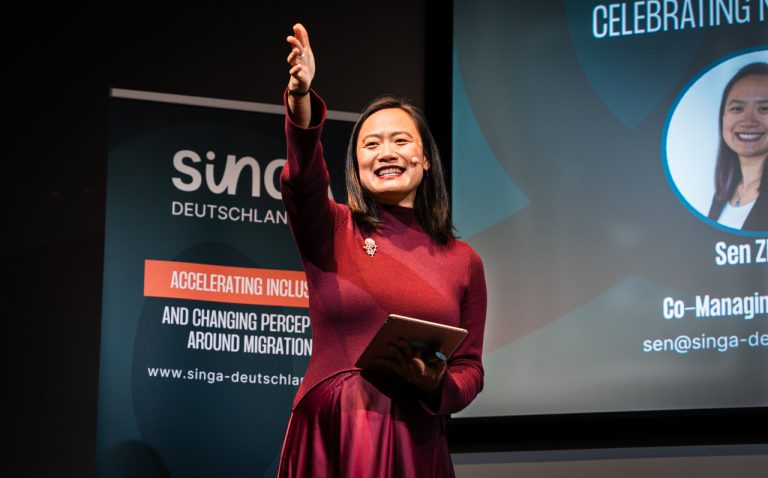
Newcomers Are Not a Problem to Solve: How SINGA Deutschland Builds Participation
Sen Zhan, Co-Director of SINGA Deutschland, shares why the biggest challenge for newcomers in Berlin isn’t ability, but access to systems, networks, and trust. In this interview, she talks about entrepreneurship, fatigue in high-friction systems, and why supporting contribution benefits the whole city. -

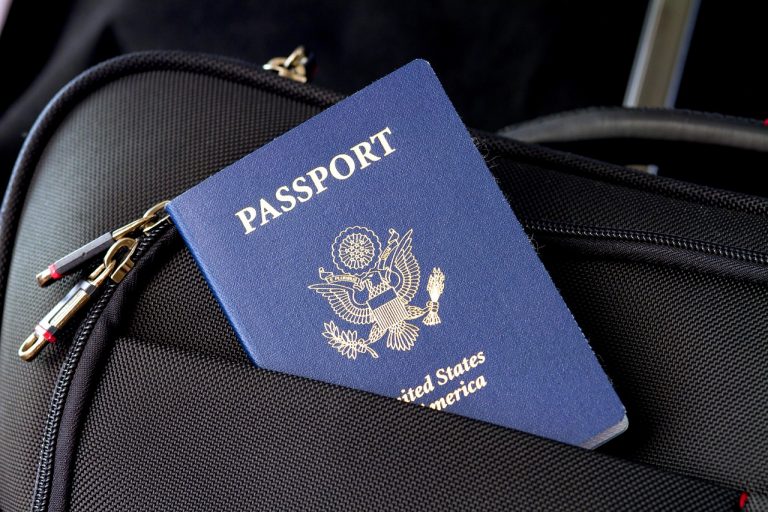
Papers, please! — How I Turned a 90-Day Visa into a Home in Berlin
If you’re an international trying to build a life in Berlin and feeling overwhelmed by visas, rules, and uncertainty — this is for you. Walter Phippeny shares his honest, sometimes messy journey from a 90-day tourist visa to permanent residency. No expert tips, no guarantees — just lived experience, hard lessons, and the reassurance that you’re not failing if this feels difficult. -

Berlin’s Rental Maze: What an American Learns When the Landlord Plays Games
Berlin’s housing market may seem unforgiving at first glance, yet it hides unlikely forms of protection. Walter Phippeny contrasts American precarity with German resilience, showing how a city that often appears aloof can become a refuge when things go wrong. -

Monsieur Ibrahim’s Magic in Kreuzberg: From Runaway to Community Maker
In a cozy café in Kreuzberg, a man named Jaybo has built a sanctuary where creativity, kindness, and courage shape everyday life. In this intimate portrait, Taylor Coburn sits down with the French artist-turned-pâtissier to explore his journey from runaway to community builder — and how tiny, intentional choices can transform an entire Kiez. -

Stay: The New Migration Challenge Germany Can’t Ignore
Germany urgently needs international talent — yet one in four newcomers is considering leaving again. In his latest reflection, Ivan Gabor argues that the real challenge isn’t only attracting workers, but building a society where they want to stay. He calls for a bold narrative shift: a Germany that integrates itself into an inclusive, collaborative, future-ready reality. -

“We Can’t Let Protection Become a Privilege”
Representing over 90 organizations, the Migrationsrat e.V. (Migration Council Berlin) works at the intersection of policy, community empowerment, and rights advocacy. In this interview, project manager Vicky Germain explains why racialized migrants from Ukraine still face exclusion, how shrinking funding threatens essential support structures, and why solidarity must be practiced — not merely proclaimed. -

Neustart Berlin: A Fresh Start Without Everyone in the Room
We were at the Neustart Berlin Conference — to see how Berliners imagine a bright new future for their city. -

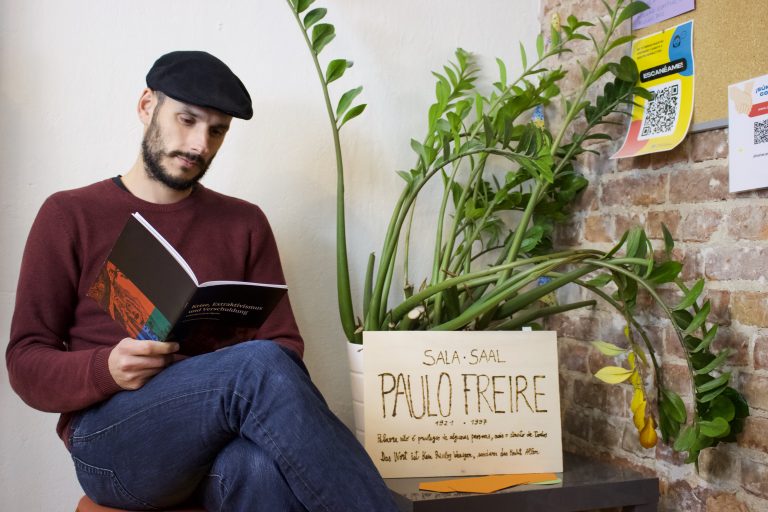
Berlin, Hold My Book: Why Physical Still Beats Digital
Algorithms may know our browsing history, but they don’t know our souls. Walter Phippeny travels from the small-town bookstores of his childhood to the indie shops and cultural havens of Berlin — arguing that real discovery, real community, and real magic still live on physical shelves, not in digital feeds. -

Remembering as Resistance – How AKEBI Confronts Racism in Berlin
AKEBI e.V. is reshaping Berlin’s remembrance culture, challenging racism and right-wing extremism, and amplifying marginalized voices across the city’s post-migrant communities. In our interview Erkin Erdoğan, project lead at AKEBI explains why Berlin needs strong civil society voices now more than ever. -

The Berlin Lesson: Trust People, Not Bureaucracies
Ivan Gabor explores how Berlin’s vibrant civic life awakened a new understanding of community, responsibility, and democracy — and why grassroots spaces succeed where the state so often fails. -

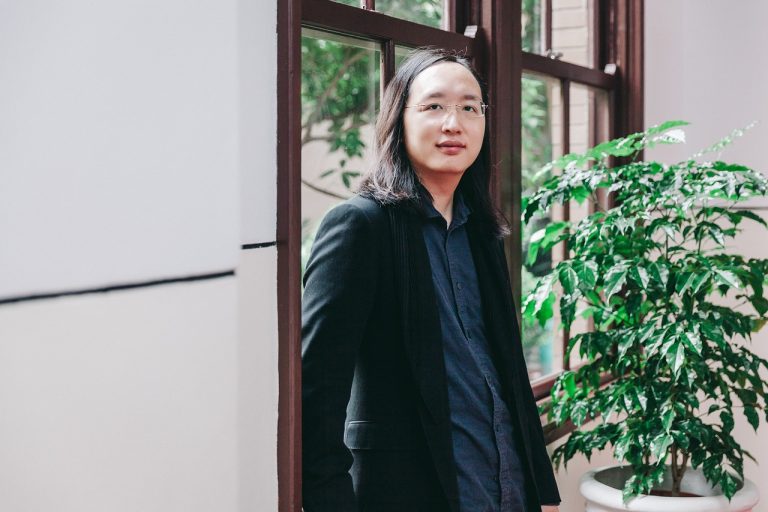
How Audrey Tang Is Rebooting Democracy — and What Berlin Can Learn from Taiwan
At the Berlin Freedom Conference, Ivan Gabor met Audrey Tang, Taiwan’s trailblazing Digital Minister, whose radical yet practical ideas show how democracy can thrive in the digital age. From crowdsourced policymaking to fighting deepfakes with citizen assemblies, Tang’s vision proves that participation, not perfection, is the future of governance. -

From Glitter to Growth: How Taylor Coburn Found Her Shine in Berlin
Walter Phippeny sat down with Taylor Coburn, an American-born change-maker who turned a life of glitter, grief, and grit into one of purpose and connection. After nearly two decades in Germany, Taylor now helps other immigrants find balance, belonging, and meaning in Berlin — not by surviving, but by thriving.