
From Corporate Law to Kindergarten: Finding Belonging Between Brazil and Berlin

Borbála Hanna Dévai,

Ivan Custódio grew up in a working-class family in Brazil and worked his way toward a prestigious career in law. But after moving to Berlin, his life took an unexpected turn. Today, he works as a kindergarten teacher – a job he finds meaningful and intellectually challenging in its own way. His story is about belonging, breaking free from expectations and redefining what success really means.

Bullying, shame, loneliness – this is how Ivan Custódio describes growing up gay in the small town of Populina, Brazil. “I never felt like I belonged. As a child, I was nothing like the other boys around me. I identified much more with the girls and wanted to spend time with them.”  

Excluded by the other boys and misunderstood by his family, Ivan just wanted to become invisible. “I became extremely shy and tried to make myself small. The only safe space I found was education, so I put everything I had into becoming a top student,” he explains. 

Studying was indeed Ivan’s strong suit. After fourth grade, he received a scholarship that allowed him to transfer to a renowned private school. There, he met many diligent students like himself, yet he still felt out of place. “Now I was surrounded by teenagers from upper-middle-class families who talked about their latest travels and had more books at home than I could count.” 

Ticket to freedom

Coming from a working-class family, imposter syndrome was a constant companion throughout Ivan’s private school years. “Just push through until university – that’s what I kept repeating to myself. Then you’ll finally be free.” 

And indeed, getting accepted into the prestigious Mackenzie Law School turned out to be Ivan’s ticket to freedom. He moved to the metropolis of São Paulo, home to people from all kinds of economic backgrounds, cultural heritages and sexual orientations. “It was the first time I experienced a real sense of queer community, the first time I truly felt that there were other people like me.” Culture, friends, parties – the world opened up to Ivan when he finally found his community. 

At least, that was true at night. “It felt liberating to be welcomed into a group where people shared my experiences. However, I quickly noticed that we only ever met in clubs or bars at night. In some way, it still felt like we were hiding.” 

This observation led Ivan to join the Gaymada São Paulo Collective, an inclusive LGBTQ+ project that uses the traditional Brazilian game of dodgeball (“queimada”) to reclaim public spaces, promote participation in sports and build social and political visibility. 
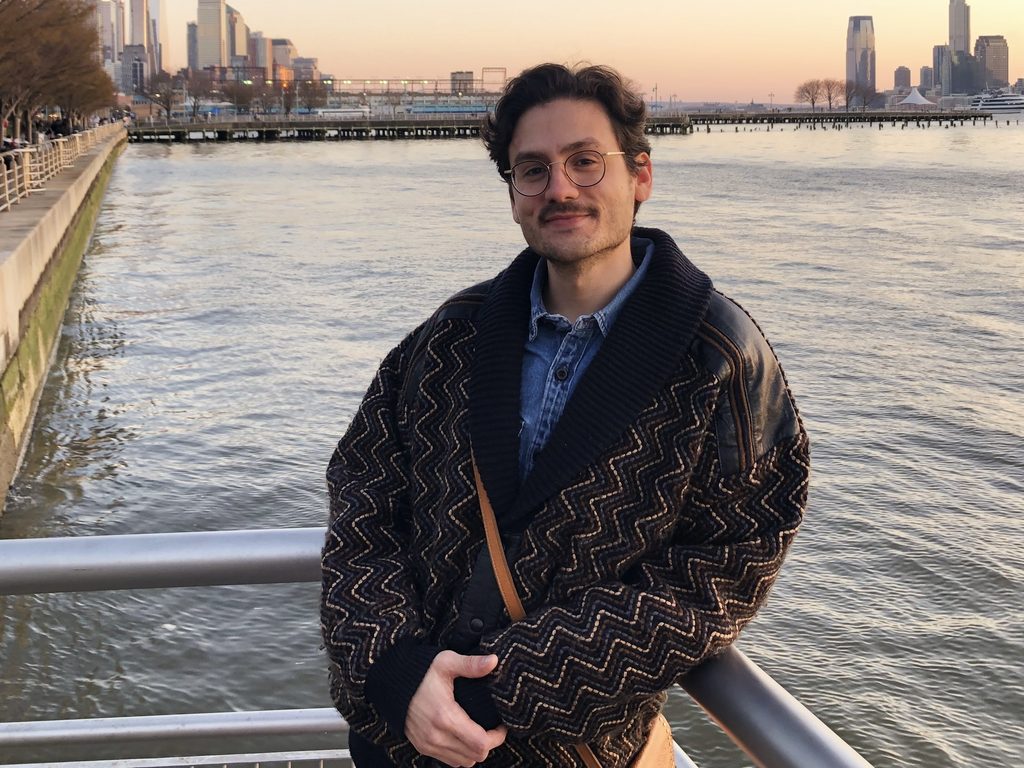
Raising awareness for a cause close to his heart gave Ivan a strong sense of purpose – in stark contrast to the job he had taken straight out of university. He had been working at a corporate law firm, dealing with clients’ family matters. “Taking a closer look at my work life, I realized I was spending 13 hours a day at the office, in an environment where so much revolved around making more money for already wealthy clients. I started figuring out what really mattered to me. I knew I had to get off the corporate hamster wheel.”

Next stop: Sweden

Exploring life abroad had always appealed to him, especially somewhere far away from everything he knew. Ready for a change of scenery, the young lawyer decided to move to Lund, Sweden, to pursue a master’s degree in human rights, for which he also received a scholarship. 

Although Ivan was passionate about his field of study and managed to build a solid circle of friends in his university town, he recalls feeling somewhat disillusioned with the progressiveness of Swedish society. “Scandinavian countries are often portrayed as the epitome of acceptance and inclusion. And in some ways, I actually had more interactions with straight men there than I did in Brazil. But I also encountered a different, more subtle kind of homophobia. Straight men would sometimes say things like, ‘I have absolutely no problem with gay people, but I am definitely straight.’ It was as if they felt the need to clarify their sexuality before simply having a conversation with me, almost assuming that I might otherwise be interested in them.”

Willkommen in Berlin

During his studies, Ivan frequently visited a friend living in Berlin. He greatly appreciated the German capital’s demographic and cultural diversity, as well as Berliners’ general frankness, which contrasted with the widespread tendency to avoid conflict that he had seen in Sweden. 

But the city itself wasn’t the only thing that caught his eye. On one of these visits, he went to a bar with his friends and fell in love with a German man. His relationship with Lars began as a long-distance romance, but their bond continued to grow stronger. After completing his master’s degree in human rights in Sweden, Ivan moved to Berlin to be with Lars. Today, they have been happily married for five years. 

For a while, he tried to find a job that matched his qualifications. He even began working on a PhD, comparing the legal implications of social movements in Brazil and Germany. He encountered bureaucratic obstacles, language barriers and what he perceived as a preference for German applicants among potential employers. 

At first, this situation was quite discouraging for Ivan. However, it turned out to be an unexpected opportunity. His career path had always seemed predetermined. As a first-generation university graduate, he had felt compelled to choose a profession that would guarantee financial security for himself and his working-class family. Now, as he tried to build a stable life in Germany, he began reconsidering his career and exploring other professional possibilities.

One day during the COVID-19 pandemic, he was sitting on a bench in Volkspark Friedrichshain when he spotted a couple of preschool teachers looking after a group of small children. “Now that’s a cool job!” he jokingly told his partner that evening. 

He knew he had found his calling

Although it seemed like a radical change, a bold idea had taken root in Ivan’s mind. After completing an intensive German course and obtaining his B2 language certificate, he found himself surrounded by dozens of lively toddlers at Kita Garuda, completing his Bundesfreiwilligendienst (German Federal Voluntary Service) in early childhood education. 

The first few weeks were definitely challenging. Watching little boys tumble, wrestle and yell reminded him of his own early childhood experiences, when boys like these would exclude and hurt him. Back then, he had nobody to turn to for help. For this reason, he made it his mission to create an environment of solidarity, inclusion and respect for all children. 

Representation plays a major role in this. “I am a Brazilian immigrant who is married to another man. Having someone like me in a German Kita can help children become familiar with the idea that people with all kinds of differences can belong to the same community.” Despite occasional language-related difficulties, the children soon rewarded Ivan’s warm and open demeanor with their trust.  

By the end of his time at Kita Garuda, Ivan had discovered a professional path he hadn’t previously considered, one that turned out to be a surprisingly good fit. After completing his Bundesfreiwilligendienst, he went on to undertake a three-and-a-half-year training program to become an early childhood educator at a vocational school in Lichtenberg. 

“At our core, we’re all much more alike than we think”

Ivan’s decision to leave corporate law for early childhood education has puzzled many people around him, including some of the children’s parents. “A lot of people don’t understand why I chose this job with my credentials and academic background. Childcare work is seriously looked down upon, even though we are responsible for establishing the core values of the next generation. Actually, I find early childhood education intellectually challenging in ways that many people might not expect.”

Assertive communication, democratic decision-making, compromise in conflict resolution and questioning societal expectations – such as which toys are “for boys” or “for girls” – are central principles in Ivan’s work. He is convinced that the behavioral patterns we develop in early childhood, and the guidance we receive from caregivers during these formative years, help shape the society we live in. 

“At our core, we’re all much more alike than we think. We all feel the same emotions, just for different reasons. I believe this mindset can help people recognize each other’s vulnerabilities and develop empathy. If we can teach that to young children, the future will be bright.”

Author:

More From WahlheYmatPost

  • From Corporate Law to Kindergarten: Finding Belonging Between Brazil and Berlin

    From Corporate Law to Kindergarten: Finding Belonging Between Brazil and Berlin

    Bullying, shame, loneliness – this is how Ivan Custódio describes growing up gay in the small town of Populina, Brazil. “I never felt like I belonged. As a child, I was nothing like the other boys around me. I identified much more with the girls and wanted to spend time with them.”   Excluded by…

  • Social Psychologist Ulrich Wagner on How Fear and Prejudice Fuel the Far Right

    Social Psychologist Ulrich Wagner on How Fear and Prejudice Fuel the Far Right

    The rise of the far right has become impossible to ignore in Germany. In the 2026 state elections in Saxony-Anhalt, the AfD mobilized voters on a remarkable scale, with migration and “remigration” playing a prominent role in its political messaging.  But why are narratives that portray immigrants and other social groups as a threat so…

  • From Distrust to Dialogue: Why We Need to Meet

    From Distrust to Dialogue: Why We Need to Meet

    “Immigrants’ political trust starts high – and declines over time,” says the We-ID project, which we have covered in detail. Living in a better society, having a voice and being part of a democracy are among the most important factors people consider when choosing a new place to live. Before the rise of the AfD,…

  • The Participation Paradox: Why Political Trust Doesn’t Always Translate Into Votes

    The Participation Paradox: Why Political Trust Doesn’t Always Translate Into Votes

    Research published earlier this year by researchers at the University of St Andrews as part of the European We-ID project found a striking pattern: across Europe, immigrants tend to have greater trust in political institutions and higher levels of satisfaction with democracy than native-born populations. But the longer they and their families live in their…

  • We talk a lot. But what do we actually do?

    We talk a lot. But what do we actually do?

    “When people co-create, we outperform any master plan.”Audrey Tang, Taiwan’s first Digital Minister described this as one of the lessons of Berlin in 1989. How are we performing today? What is the master plan? And what about co-creation? To answer this, let me start with my three lessons from Taiwan’s democratic process. It took decades…

  • Democracy at the Späti: What Berlin’s Symbolic Election Revealed

    Democracy at the Späti: What Berlin’s Symbolic Election Revealed

    Ahead of Berlin’s September elections, Migrationsrat Berlin e.V. brought the ballot box to an unusual setting: the city’s Spätis. At 11 locations across Berlin, people were invited to take part in a symbolic election and discuss a question that affects a significant part of the city’s population: who gets to have a say in the…

  • From Kyiv to Berlin: War Changed His Path, but Not His Dream

    From Kyiv to Berlin: War Changed His Path, but Not His Dream

    “The war is here – those were the words my mom woke me up with that morning,” Oleks recalls. On February 24th, 2022, the life of 15-year-old Oleksandr (Oleks) Drevytskyi was changed forever. Leading up to the devastating Russian attack, expectations about the future of the ongoing conflict varied across Ukraine. While many had established…

  • Strangers by the Spree: Inside Berlin’s Outdoor Latin Dance Community

    Strangers by the Spree: Inside Berlin’s Outdoor Latin Dance Community

    Feierabend! A busy weekday is coming to an end, and Hauptbahnhof is becoming crowded with tired Berliners: businessmen with briefcases heading home after a long day at work, groups of schoolgirls huddled up on benches apathetically scrolling on TikTok, and exhausted travelers searching for the S-Bahn that will finally take them to their accommodation.  The…

  • StimmlosTrend 2026: 96 Percent Would Vote If They Could

    StimmlosTrend 2026: 96 Percent Would Vote If They Could

    Around one million people living in Berlin do not hold a German passport, 851,000 of whom are adults. They cannot vote in elections to the Berlin House of Representatives – and their political views are therefore largely absent from traditional election polling. WahlheYmat created StimmlosTrend 2026 to make these perspectives visible. Inspired by the BerlinTrend…

  • A Mayor Tandem for Berlin

    A Mayor Tandem for Berlin

    What if Berlin had two Regierende Bürgermeister:innen? One representing the city’s elected voice — and another representing the voice of Berlin’s international residents who live, work and contribute here but do not have German citizenship and therefore cannot vote in Berlin elections. Because in a democratic society, it can’t be right that 25% of the…

  • No German Passport? You May Still Have a Vote in Berlin 

    No German Passport? You May Still Have a Vote in Berlin 

    If you are an EU citizen living in Berlin but do not have German citizenship, you cannot vote in the election for Berlin’s House of Representatives (Abgeordnetenhaus). But you can vote for your local District Assembly (Bezirksverordnetenversammlung, or BVV) if you meet the eligibility requirements. Around 240,000 non-German EU citizens are eligible to take part…

  • “Berlin taught me to dislike the word integration” 

    “Berlin taught me to dislike the word integration” 

    WHP: You worked in humanitarian aid around the world for many years. What ultimately motivated you to found Just-Go-For-It? Marilena Chatziantoniou: I started working in the field of humanitarian aid in 1998. My first assignment was in Albania, where I worked for a small German NGO, just months before the Kosovo crisis. I remember falling…

  • What is Germany’s greatest asset?

    What is Germany’s greatest asset?

    “Football is a simple game. Twenty-two men chase a ball for 90 minutes and, in the end, the Germans always win,” said Gary Lineker after England lost the 1990 World Cup semi-final on penalties against Germany. Times are changing. Germany no longer always wins at major football tournaments. And England now has a German coach.…

  • Migrants With Degrees Are Not What Germany Is Looking For

    Migrants With Degrees Are Not What Germany Is Looking For

    Education is a right, not a privilege. This idea has been a founding principle of modern democracies. In practice, however, access to education is far from guaranteed for everyone. As of this year, Germany has significantly restricted access to state-funded intermediate and advanced German courses for migrants participating voluntarily. Many rejected asylum seekers, people with…

  • The Berlin Election Is Over – The Work Begins

    The Berlin Election Is Over – The Work Begins

    What do the Berlin election results tell us? Our TOP 3 takeaways 1. Housing won Housing is clearly the central issue in Berlin, as StimmlosTrend also showed. Die Linke won by putting housing at the top of its agenda. Many citizens now hope they can deliver. 2. Voting with gloves Many people vote against a…

  • Two birthdays, one dream for Berlin

    Two birthdays, one dream for Berlin

    WahlheYmat was launched as an initiative on 15 September 2023, with Democracy Day providing the occasion. So this week, we turn three years old. Some international Berliners, including our co-founders, asked the question: If Berlin has become diverse and international, wouldn’t it be better to govern the city together? We had almost a hundred conversations…

  • Berlin Wiki: Election Day – From Casting Your Vote to the Results 

    Berlin Wiki: Election Day – From Casting Your Vote to the Results 

    What Happens on Election Day? Election day is when eligible voters in a democracy are called on to cast their ballots. Voting and Counting the Votes In Germany, elections must be held on a Sunday or a public holiday. Polling stations are generally open from 8 a.m. to 6 p.m. They are often located in…

  • Berlin Wiki: How Do You Decide Who to Vote For? 

    Berlin Wiki: How Do You Decide Who to Vote For? 

    How Do You Decide Which Party to Vote For? Many people find it difficult to decide which party to vote for. But instead of not voting at all, it is important to inform yourself thoroughly. Democracy is based on people making decisions together based on their own convictions. To do so, voters need to be…

  • Who Will Lead Germany Into Its International Future?

    Who Will Lead Germany Into Its International Future?

    What does the story of Charles De Gaulle teach us? Antonin Baudry’s La Bataille de Gaulle tells, in five hours, the story of the General during the Second World War. A great movie. I learned a lot. Tenacity. De Gaulle arrives alone in London. On 18 June 1940, he makes his first BBC speech, speaking…

  • Berlin Wiki: What Are the Key Issues in Berlin’s Election?

    Berlin Wiki: What Are the Key Issues in Berlin’s Election?

    Why Is Rent Policy a Central Issue in Berlin’s Election Campaign? Around 85 percent of Berliners live in rented accommodation. At the same time, the housing market in the capital is tight: rents are rising, new housing construction remains sluggish, and legal loopholes frequently allow furnished apartments to be offered at inflated prices. This is…

Address

Am Hamburger Bahnhof 3
10557 Berlin
Germany

hey@wahlheymat.de

Social Networks