
You Cannot Be Both a Host and a Guest

Ivan Gabor,

When does a guest become a member of society? And who gets to decide? Ivan Gabor explores the relationship between citizenship, voting rights, and belonging in a city shaped by people from around the world.

“The major European states are now as multiethnic as the United States,” writes Niall Ferguson in his latest analysis of student demonstrations in Europe. “The foreign-born share of the American population is 16 percent, an all-time high. However, the figures for the UK, Spain, and Germany are even higher.”

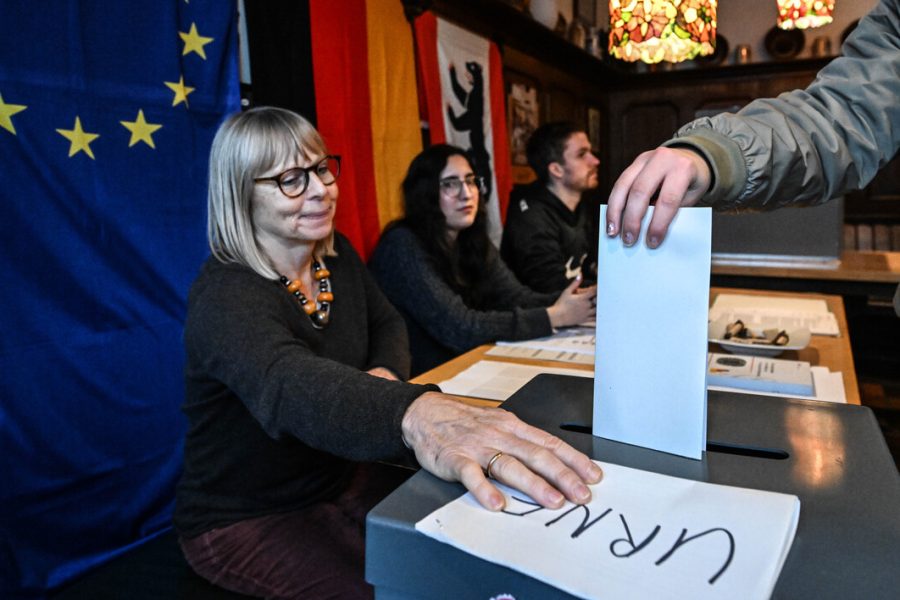
In Berlin, around one million people cannot vote in the city’s state elections. More than 600,000 non-German residents have lived in Berlin for at least five years.

Berlin’s prospective red-green-red coalition wants to extend voting rights at the state and local level to people who have lived in Germany for at least five years, regardless of their nationality.

We welcome the opportunity to debate this fundamental question: Who belongs to our democratic community?

In our current model of democracy, voting means choosing representatives to speak for our values, needs, and interests. The right to vote is also a form of recognition: it acknowledges that you belong to the community and have a say in its future.

Some countries welcome migrant workers for a limited time, without necessarily seeing them as future members of society.

Even the German term Gastarbeiter (guest worker) reveals a similar distinction. You cannot be both a host and a guest at the same time.

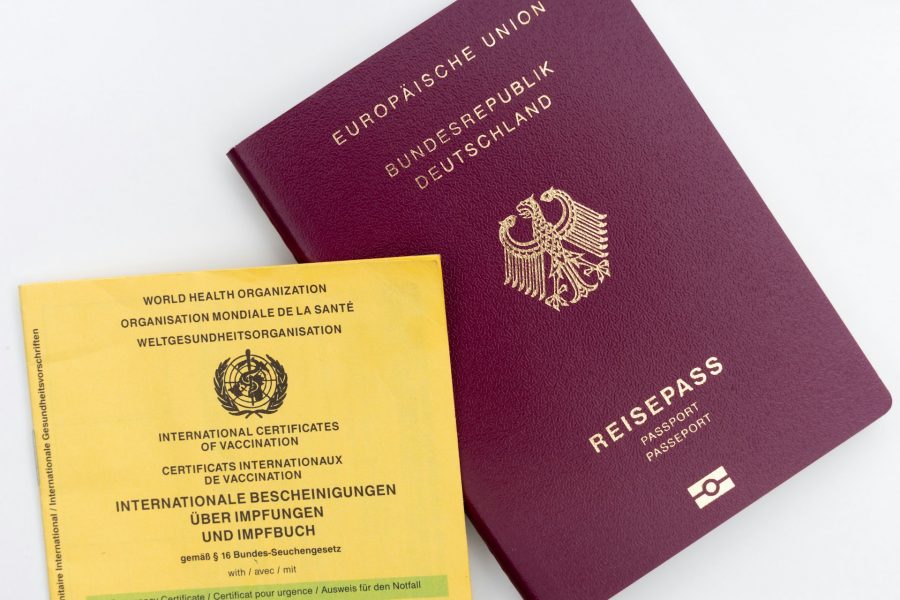
Much has changed in German society since the era of the Gastarbeiter. Yet many people still believe that to truly belong to a community, you need an official status: citizenship. A passport supposedly confirms your lifelong commitment to the country.

But isn’t that an illusion? Anyone who acquires German citizenship can leave the next day. So can anyone born here.

What if, instead of asking people to prove that they belong, we started seeing their presence as an opportunity?

An opportunity to draw on their full potential, knowledge, and experience. An opportunity to build a society that is more open, dynamic, and capable of facing the future.

Trusting one another is not a risk to our society. It is how we move it forward.

Want to learn more about voting rights and political participation in Berlin? Explore our StimmlosTrend section for articles, insights, and survey results!

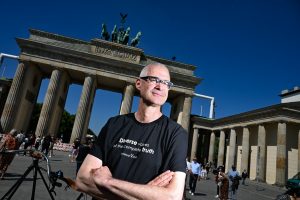
(Header image: © Mario Tuzon | Unsplash)
Author:

More From WahlheYmatPost

  • You Cannot Be Both a Host and a Guest

    You Cannot Be Both a Host and a Guest

    “The major European states are now as multiethnic as the United States,” writes Niall Ferguson in his latest analysis of student demonstrations in Europe. “The foreign-born share of the American population is 16 percent, an all-time high. However, the figures for the UK, Spain, and Germany are even higher.” In Berlin, around one million people…

  • From Corporate Law to Kindergarten: Finding Belonging Between Brazil and Berlin

    From Corporate Law to Kindergarten: Finding Belonging Between Brazil and Berlin

    Bullying, shame, loneliness – this is how Ivan Custódio describes growing up gay in the small town of Populina, Brazil. “I never felt like I belonged. As a child, I was nothing like the other boys around me. I identified much more with the girls and wanted to spend time with them.”   Excluded by…

  • Social Psychologist Ulrich Wagner on How Fear and Prejudice Fuel the Far Right

    Social Psychologist Ulrich Wagner on How Fear and Prejudice Fuel the Far Right

    The rise of the far right has become impossible to ignore in Germany. In the 2026 state elections in Saxony-Anhalt, the AfD mobilized voters on a remarkable scale, with migration and “remigration” playing a prominent role in its political messaging.  But why are narratives that portray immigrants and other social groups as a threat so…

  • From Distrust to Dialogue: Why We Need to Meet

    From Distrust to Dialogue: Why We Need to Meet

    “Immigrants’ political trust starts high – and declines over time,” says the We-ID project, which we have covered in detail. Living in a better society, having a voice and being part of a democracy are among the most important factors people consider when choosing a new place to live. Before the rise of the AfD,…

  • The Participation Paradox: Why Political Trust Doesn’t Always Translate Into Votes

    The Participation Paradox: Why Political Trust Doesn’t Always Translate Into Votes

    Research published earlier this year by researchers at the University of St Andrews as part of the European We-ID project found a striking pattern: across Europe, immigrants tend to have greater trust in political institutions and higher levels of satisfaction with democracy than native-born populations. But the longer they and their families live in their…

  • We talk a lot. But what do we actually do?

    We talk a lot. But what do we actually do?

    “When people co-create, we outperform any master plan.”Audrey Tang, Taiwan’s first Digital Minister described this as one of the lessons of Berlin in 1989. How are we performing today? What is the master plan? And what about co-creation? To answer this, let me start with my three lessons from Taiwan’s democratic process. It took decades…

  • Democracy at the Späti: What Berlin’s Symbolic Election Revealed

    Democracy at the Späti: What Berlin’s Symbolic Election Revealed

    Ahead of Berlin’s September elections, Migrationsrat Berlin e.V. brought the ballot box to an unusual setting: the city’s Spätis. At 11 locations across Berlin, people were invited to take part in a symbolic election and discuss a question that affects a significant part of the city’s population: who gets to have a say in the…

  • From Kyiv to Berlin: War Changed His Path, but Not His Dream

    From Kyiv to Berlin: War Changed His Path, but Not His Dream

    “The war is here – those were the words my mom woke me up with that morning,” Oleks recalls. On February 24th, 2022, the life of 15-year-old Oleksandr (Oleks) Drevytskyi was changed forever. Leading up to the devastating Russian attack, expectations about the future of the ongoing conflict varied across Ukraine. While many had established…

  • Strangers by the Spree: Inside Berlin’s Outdoor Latin Dance Community

    Strangers by the Spree: Inside Berlin’s Outdoor Latin Dance Community

    Feierabend! A busy weekday is coming to an end, and Hauptbahnhof is becoming crowded with tired Berliners: businessmen with briefcases heading home after a long day at work, groups of schoolgirls huddled up on benches apathetically scrolling on TikTok, and exhausted travelers searching for the S-Bahn that will finally take them to their accommodation.  The…

  • StimmlosTrend 2026: 96 Percent Would Vote If They Could

    StimmlosTrend 2026: 96 Percent Would Vote If They Could

    Around one million people living in Berlin do not hold a German passport, 851,000 of whom are adults. They cannot vote in elections to the Berlin House of Representatives – and their political views are therefore largely absent from traditional election polling. WahlheYmat created StimmlosTrend 2026 to make these perspectives visible. Inspired by the BerlinTrend…

  • A Mayor Tandem for Berlin

    A Mayor Tandem for Berlin

    What if Berlin had two Regierende Bürgermeister:innen? One representing the city’s elected voice — and another representing the voice of Berlin’s international residents who live, work and contribute here but do not have German citizenship and therefore cannot vote in Berlin elections. Because in a democratic society, it can’t be right that 25% of the…

  • No German Passport? You May Still Have a Vote in Berlin 

    No German Passport? You May Still Have a Vote in Berlin 

    If you are an EU citizen living in Berlin but do not have German citizenship, you cannot vote in the election for Berlin’s House of Representatives (Abgeordnetenhaus). But you can vote for your local District Assembly (Bezirksverordnetenversammlung, or BVV) if you meet the eligibility requirements. Around 240,000 non-German EU citizens are eligible to take part…

  • “Berlin taught me to dislike the word integration” 

    “Berlin taught me to dislike the word integration” 

    WHP: You worked in humanitarian aid around the world for many years. What ultimately motivated you to found Just-Go-For-It? Marilena Chatziantoniou: I started working in the field of humanitarian aid in 1998. My first assignment was in Albania, where I worked for a small German NGO, just months before the Kosovo crisis. I remember falling…

  • What is Germany’s greatest asset?

    What is Germany’s greatest asset?

    “Football is a simple game. Twenty-two men chase a ball for 90 minutes and, in the end, the Germans always win,” said Gary Lineker after England lost the 1990 World Cup semi-final on penalties against Germany. Times are changing. Germany no longer always wins at major football tournaments. And England now has a German coach.…

  • Migrants With Degrees Are Not What Germany Is Looking For

    Migrants With Degrees Are Not What Germany Is Looking For

    Education is a right, not a privilege. This idea has been a founding principle of modern democracies. In practice, however, access to education is far from guaranteed for everyone. As of this year, Germany has significantly restricted access to state-funded intermediate and advanced German courses for migrants participating voluntarily. Many rejected asylum seekers, people with…

  • The Berlin Election Is Over – The Work Begins

    The Berlin Election Is Over – The Work Begins

    What do the Berlin election results tell us? Our TOP 3 takeaways 1. Housing won Housing is clearly the central issue in Berlin, as StimmlosTrend also showed. Die Linke won by putting housing at the top of its agenda. Many citizens now hope they can deliver. 2. Voting with gloves Many people vote against a…

  • Two birthdays, one dream for Berlin

    Two birthdays, one dream for Berlin

    WahlheYmat was launched as an initiative on 15 September 2023, with Democracy Day providing the occasion. So this week, we turn three years old. Some international Berliners, including our co-founders, asked the question: If Berlin has become diverse and international, wouldn’t it be better to govern the city together? We had almost a hundred conversations…

  • Berlin Wiki: Election Day – From Casting Your Vote to the Results 

    Berlin Wiki: Election Day – From Casting Your Vote to the Results 

    What Happens on Election Day? Election day is when eligible voters in a democracy are called on to cast their ballots. Voting and Counting the Votes In Germany, elections must be held on a Sunday or a public holiday. Polling stations are generally open from 8 a.m. to 6 p.m. They are often located in…

  • Berlin Wiki: How Do You Decide Who to Vote For? 

    Berlin Wiki: How Do You Decide Who to Vote For? 

    How Do You Decide Which Party to Vote For? Many people find it difficult to decide which party to vote for. But instead of not voting at all, it is important to inform yourself thoroughly. Democracy is based on people making decisions together based on their own convictions. To do so, voters need to be…

  • Who Will Lead Germany Into Its International Future?

    Who Will Lead Germany Into Its International Future?

    What does the story of Charles De Gaulle teach us? Antonin Baudry’s La Bataille de Gaulle tells, in five hours, the story of the General during the Second World War. A great movie. I learned a lot. Tenacity. De Gaulle arrives alone in London. On 18 June 1940, he makes his first BBC speech, speaking…

Address

Am Hamburger Bahnhof 3
10557 Berlin
Germany

hey@wahlheymat.de

Social Networks