
A German Passport and a Lesson from History 

Ivan Gabor,

Obtaining German citizenship is often presented as the answer to demands for voting rights. But does citizenship alone determine who should have a say in society? Iván Gábor argues for rethinking political participation in an increasingly international Germany.

“Voting rights for foreigners? No problem: just get German citizenship!” – this is the standard response we often hear from people and political parties when the question of extending voting rights to non-citizens comes up.

Getting citizenship is not that difficult, they say. Just live here for more than five years, get a B1 German certificate, prove that you can support yourself financially, pass a test on German society and its legal system, and declare your commitment to the country.

Germany’s rich history offers a rather extraordinary example of how citizenship can open the door to political power.

There was a man who came to Germany as a foreigner. He spoke the language of Goethe and Schiller – thanks to his Austrian parents. He was fascinated by German culture, especially music. He even adored Wagner. He was deeply involved in political life and became the leader of a far-right, racist political party. Despite his clashes with the law, including a conviction for high treason, he was determined to become a German citizen.

He even renounced his original citizenship.

For almost seven years, he lived as a stateless person. Several attempts to obtain German citizenship failed.

Until finally, a political solution was found.

On 25 February 1932, he was appointed to a government position in the State of Brunswick (Braunschweig). The position was merely a means of obtaining citizenship. He never actually took up the job. But the appointment gave him what he had been seeking: German citizenship.

Just a few weeks later, he stood as a candidate in the German presidential election.

He received almost 37% of the vote in the second round. He did not win, but he was now entitled to stand for the highest political office in the country.

His name? You can probably guess.

Adolf Hitler.

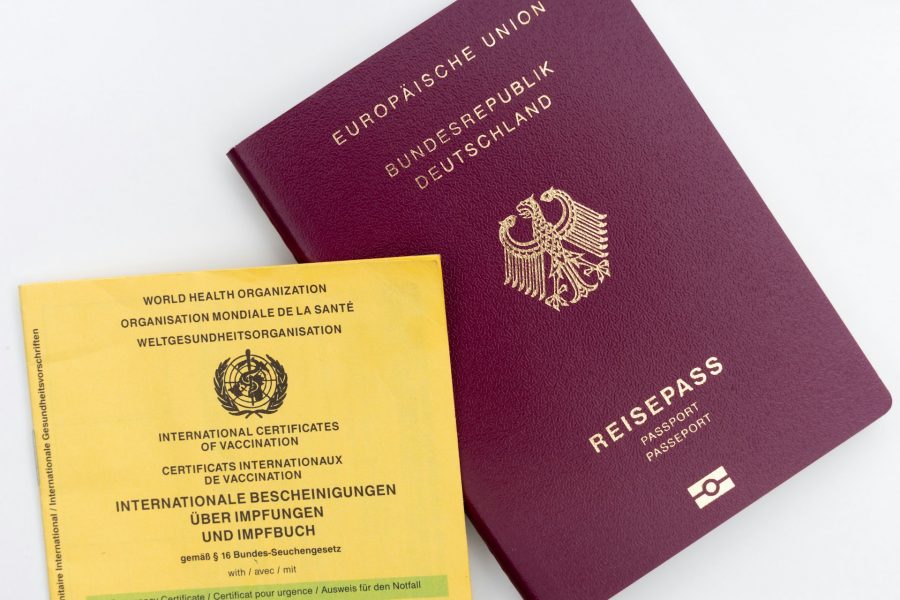
The question is not only who qualifies for a passport but also who should have a voice in shaping the society they call home.

I bring up this provocative historical example for a reason: making citizenship a prerequisite for political participation is not the answer.

It can also become a convenient way of avoiding a much bigger debate: What should democracy look like in an increasingly international society?

It is a routine response – like sending refugees to language courses and believing that integration is complete.

What if we started thinking differently? With open minds, embracing differences rather than seeing them as obstacles.

What if we saw international residents demanding voting rights not as a problem, but as a wonderful expression of civic engagement? As an opportunity to learn, engage with different perspectives and rethink what democracy means today.

Germany needs not only technological innovation but, perhaps even more urgently, social innovation.

We need a thriving, creative, tolerant, inclusive and international society – one in which everyone feels like a host, not a guest.

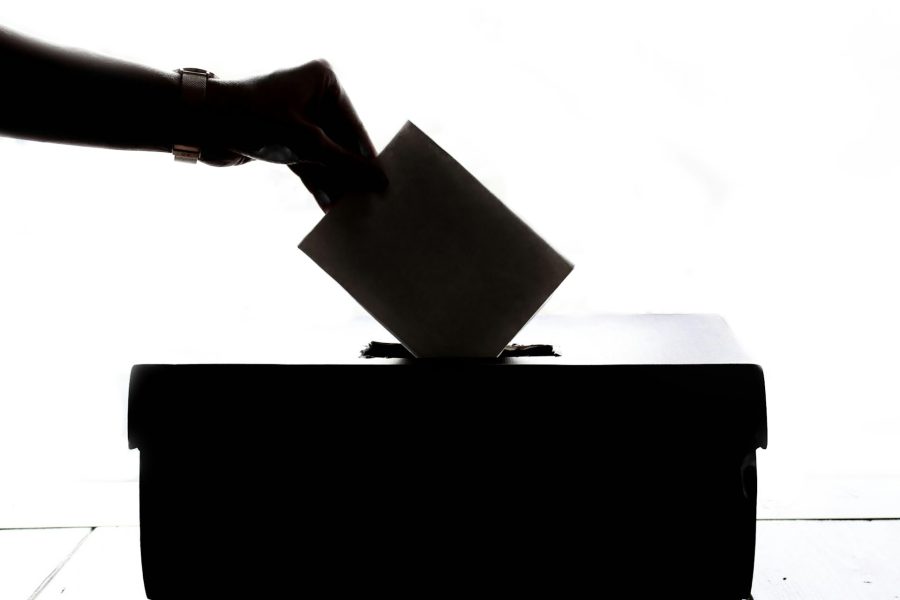
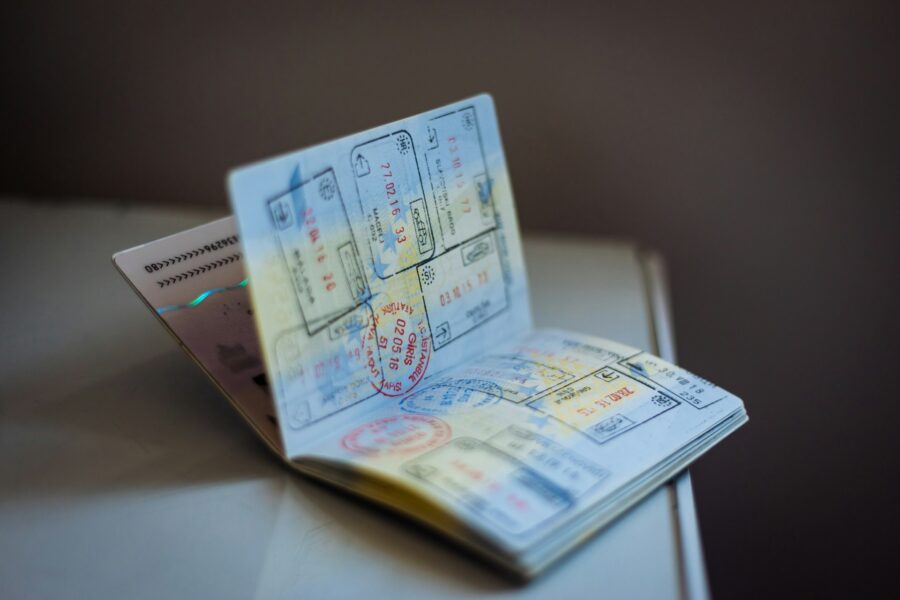
(Header image: © Global Residence Index | Unsplash)
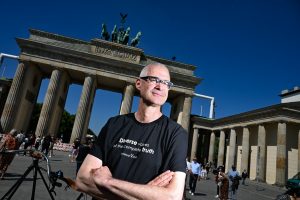
Author:

More From WahlheYmatPost

  • A German Passport and a Lesson from History 

    A German Passport and a Lesson from History 

    “Voting rights for foreigners? No problem: just get German citizenship!” – this is the standard response we often hear from people and political parties when the question of extending voting rights to non-citizens comes up. Getting citizenship is not that difficult, they say. Just live here for more than five years, get a B1 German…

  • Wahl-Kompass: Understanding Berlin Politics Takes More Than Speaking German

    Wahl-Kompass: Understanding Berlin Politics Takes More Than Speaking German

    WHP: How did the idea for Wahl-Kompass come about? What motivated you to create the platform? Nina Harz: It happened rather spontaneously, shortly before Berlin’s September 2026 election. I wanted to understand the parties’ programs better, so I made a table for myself comparing the issues that matter to me. I shared it with my…

  • You Cannot Be Both a Host and a Guest

    You Cannot Be Both a Host and a Guest

    “The major European states are now as multiethnic as the United States,” writes Niall Ferguson in his latest analysis of student demonstrations in Europe. “The foreign-born share of the American population is 16 percent, an all-time high. However, the figures for the UK, Spain, and Germany are even higher.” In Berlin, around one million people…

  • From Corporate Law to Kindergarten: Finding Belonging Between Brazil and Berlin

    From Corporate Law to Kindergarten: Finding Belonging Between Brazil and Berlin

    Bullying, shame, loneliness – this is how Ivan Custódio describes growing up gay in the small town of Populina, Brazil. “I never felt like I belonged. As a child, I was nothing like the other boys around me. I identified much more with the girls and wanted to spend time with them.”   Excluded by…

  • Social Psychologist Ulrich Wagner on How Fear and Prejudice Fuel the Far Right

    Social Psychologist Ulrich Wagner on How Fear and Prejudice Fuel the Far Right

    The rise of the far right has become impossible to ignore in Germany. In the 2026 state elections in Saxony-Anhalt, the AfD mobilized voters on a remarkable scale, with migration and “remigration” playing a prominent role in its political messaging.  But why are narratives that portray immigrants and other social groups as a threat so…

  • From Distrust to Dialogue: Why We Need to Meet

    From Distrust to Dialogue: Why We Need to Meet

    “Immigrants’ political trust starts high – and declines over time,” says the We-ID project, which we have covered in detail. Living in a better society, having a voice and being part of a democracy are among the most important factors people consider when choosing a new place to live. Before the rise of the AfD,…

  • The Participation Paradox: Why Political Trust Doesn’t Always Translate Into Votes

    The Participation Paradox: Why Political Trust Doesn’t Always Translate Into Votes

    Research published earlier this year by researchers at the University of St Andrews as part of the European We-ID project found a striking pattern: across Europe, immigrants tend to have greater trust in political institutions and higher levels of satisfaction with democracy than native-born populations. But the longer they and their families live in their…

  • We talk a lot. But what do we actually do?

    We talk a lot. But what do we actually do?

    “When people co-create, we outperform any master plan.”Audrey Tang, Taiwan’s first Digital Minister described this as one of the lessons of Berlin in 1989. How are we performing today? What is the master plan? And what about co-creation? To answer this, let me start with my three lessons from Taiwan’s democratic process. It took decades…

  • Democracy at the Späti: What Berlin’s Symbolic Election Revealed

    Democracy at the Späti: What Berlin’s Symbolic Election Revealed

    Ahead of Berlin’s September elections, Migrationsrat Berlin e.V. brought the ballot box to an unusual setting: the city’s Spätis. At 11 locations across Berlin, people were invited to take part in a symbolic election and discuss a question that affects a significant part of the city’s population: who gets to have a say in the…

  • From Kyiv to Berlin: War Changed His Path, but Not His Dream

    From Kyiv to Berlin: War Changed His Path, but Not His Dream

    “The war is here – those were the words my mom woke me up with that morning,” Oleks recalls. On February 24th, 2022, the life of 15-year-old Oleksandr (Oleks) Drevytskyi was changed forever. Leading up to the devastating Russian attack, expectations about the future of the ongoing conflict varied across Ukraine. While many had established…

  • Strangers by the Spree: Inside Berlin’s Outdoor Latin Dance Community

    Strangers by the Spree: Inside Berlin’s Outdoor Latin Dance Community

    Feierabend! A busy weekday is coming to an end, and Hauptbahnhof is becoming crowded with tired Berliners: businessmen with briefcases heading home after a long day at work, groups of schoolgirls huddled up on benches apathetically scrolling on TikTok, and exhausted travelers searching for the S-Bahn that will finally take them to their accommodation.  The…

  • StimmlosTrend 2026: 96 Percent Would Vote If They Could

    StimmlosTrend 2026: 96 Percent Would Vote If They Could

    Around one million people living in Berlin do not hold a German passport, 851,000 of whom are adults. They cannot vote in elections to the Berlin House of Representatives – and their political views are therefore largely absent from traditional election polling. WahlheYmat created StimmlosTrend 2026 to make these perspectives visible. Inspired by the BerlinTrend…

  • A Mayor Tandem for Berlin

    A Mayor Tandem for Berlin

    What if Berlin had two Regierende Bürgermeister:innen? One representing the city’s elected voice — and another representing the voice of Berlin’s international residents who live, work and contribute here but do not have German citizenship and therefore cannot vote in Berlin elections. Because in a democratic society, it can’t be right that 25% of the…

  • No German Passport? You May Still Have a Vote in Berlin 

    No German Passport? You May Still Have a Vote in Berlin 

    If you are an EU citizen living in Berlin but do not have German citizenship, you cannot vote in the election for Berlin’s House of Representatives (Abgeordnetenhaus). But you can vote for your local District Assembly (Bezirksverordnetenversammlung, or BVV) if you meet the eligibility requirements. Around 240,000 non-German EU citizens are eligible to take part…

  • “Berlin taught me to dislike the word integration” 

    “Berlin taught me to dislike the word integration” 

    WHP: You worked in humanitarian aid around the world for many years. What ultimately motivated you to found Just-Go-For-It? Marilena Chatziantoniou: I started working in the field of humanitarian aid in 1998. My first assignment was in Albania, where I worked for a small German NGO, just months before the Kosovo crisis. I remember falling…

  • What is Germany’s greatest asset?

    What is Germany’s greatest asset?

    “Football is a simple game. Twenty-two men chase a ball for 90 minutes and, in the end, the Germans always win,” said Gary Lineker after England lost the 1990 World Cup semi-final on penalties against Germany. Times are changing. Germany no longer always wins at major football tournaments. And England now has a German coach.…

  • Migrants With Degrees Are Not What Germany Is Looking For

    Migrants With Degrees Are Not What Germany Is Looking For

    Education is a right, not a privilege. This idea has been a founding principle of modern democracies. In practice, however, access to education is far from guaranteed for everyone. As of this year, Germany has significantly restricted access to state-funded intermediate and advanced German courses for migrants participating voluntarily. Many rejected asylum seekers, people with…

  • The Berlin Election Is Over – The Work Begins

    The Berlin Election Is Over – The Work Begins

    What do the Berlin election results tell us? Our TOP 3 takeaways 1. Housing won Housing is clearly the central issue in Berlin, as StimmlosTrend also showed. Die Linke won by putting housing at the top of its agenda. Many citizens now hope they can deliver. 2. Voting with gloves Many people vote against a…

  • Two birthdays, one dream for Berlin

    Two birthdays, one dream for Berlin

    WahlheYmat was launched as an initiative on 15 September 2023, with Democracy Day providing the occasion. So this week, we turn three years old. Some international Berliners, including our co-founders, asked the question: If Berlin has become diverse and international, wouldn’t it be better to govern the city together? We had almost a hundred conversations…

  • Berlin Wiki: Election Day – From Casting Your Vote to the Results 

    Berlin Wiki: Election Day – From Casting Your Vote to the Results 

    What Happens on Election Day? Election day is when eligible voters in a democracy are called on to cast their ballots. Voting and Counting the Votes In Germany, elections must be held on a Sunday or a public holiday. Polling stations are generally open from 8 a.m. to 6 p.m. They are often located in…

Address

Am Hamburger Bahnhof 3
10557 Berlin
Germany

hey@wahlheymat.de

Social Networks