
Strangers by the Spree: Inside Berlin’s Outdoor Latin Dance Community

Borbála Hanna Dévai,

outdoor dancing Kyle Hinkson
Just a few hundred metres from Berlin Central Station, strangers meet by the Spree to dance salsa and bachata together. Drawing on her own experience of joining the crowd, Borbála Hanna Dévai explores how Berlin’s outdoor Latin dance scene brings together people of different ages, backgrounds and professions.

Feierabend! A busy weekday is coming to an end, and Hauptbahnhof is becoming crowded with tired Berliners: businessmen with briefcases heading home after a long day at work, groups of schoolgirls huddled up on benches apathetically scrolling on TikTok, and exhausted travelers searching for the S-Bahn that will finally take them to their accommodation. 

The night is just about to begin

For some, however, the night is just about to begin. You would never guess that just a couple hundred meters away from Central Station, Berlin’s bailarínes are burning up the dance floor to vibrant Latin tracks.  

Though dance socials might sound like rather formal events, many people only discover open-airs at Hauptbahnhof through a friend who heard about them from another friend, who might have found out about it through another friend. 

Once word had finally reached my social circle, I decided to check out social dancing by the Spree for myself. My friend, who had become a passionate salsera ever since attending these socials, had regularly agreed to be my personal guide for the occasion. Walking across Washingtonplatz, she tells me everything she knows about the origins of the event.  

The fiesta never dies

“Dance socials at Hauptbahnhof debuted in the summer of 2022, as Covid restrictions were finally lifted after two years of the pandemic. It started out as a rather unofficial gathering of Latin dance enthusiasts, but has grown to become one of Berlin’s main outdoor dancing events during the spring and summer. Communication between the organizing DJs and participants happens via WhatsApp groups. These chats can be accessed through direct community invitation links, listed publicly on the “Bachata Berlin” Meetup page and the “OPEN AIR SALSA IN BERLIN” Facebook group,” she explains. 
© Borcila Dorinel photography | Unsplash

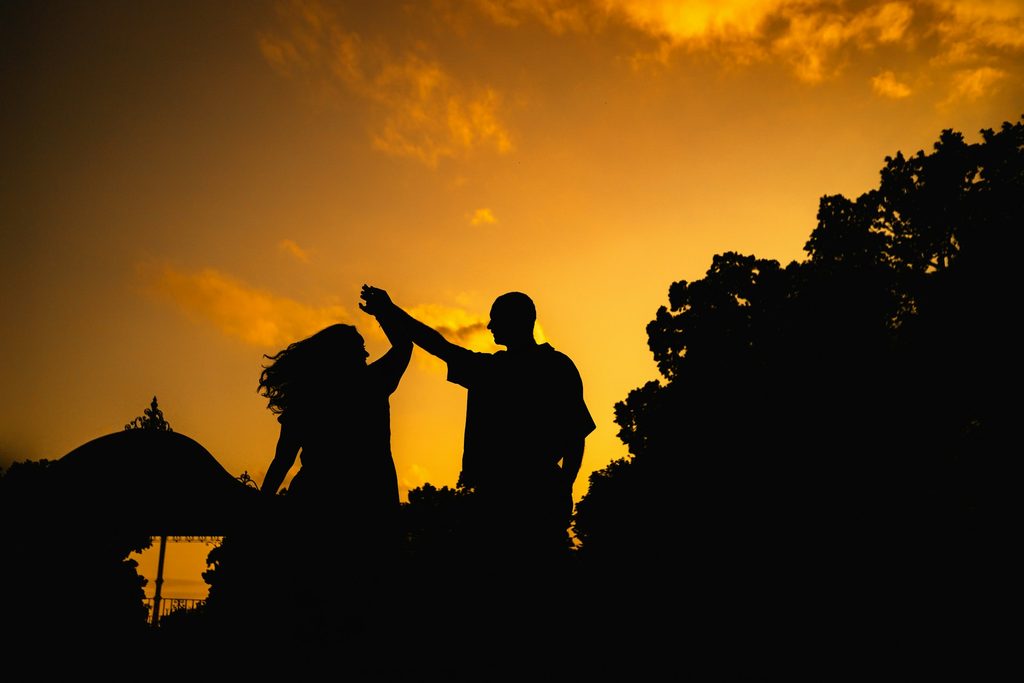
“The outdoor social dancing season typically ends in early September, as the breeze that was much appreciated during the summer becomes increasingly brisk. During the fall and winter, the events are moved indoors, to clubs like Soda in Prenzlauer Berg or Tango Loft in Kreuzberg. So the fiesta never dies, but it definitely thrives during the spring and summer.” 

The joy that social dancing brings

Crossing the Spree via the Gustav-Heinemann Bridge, we find ourselves on the scenic Ludwig-Erhard-Ufer, a perfect spot for after-work drinks, romantic picnics, or – for the particularly energetic – Latin dance socials. After passing by a couple of bars and people chilling in lounge chairs with sunset spritzes in hand, vibrant instrumental tunes guide us to the epicenter of the happy-hour spirit. 

The first group of dancers we encounter resembles a rippling sea. Bachata is a sensual Dominican dance characterized by a close connection between partners, side-to-side steps with hip sways and body rolls. Two large speakers blast Afro-Caribbean beats blended with emotional vocals and guitar-driven melodies. 

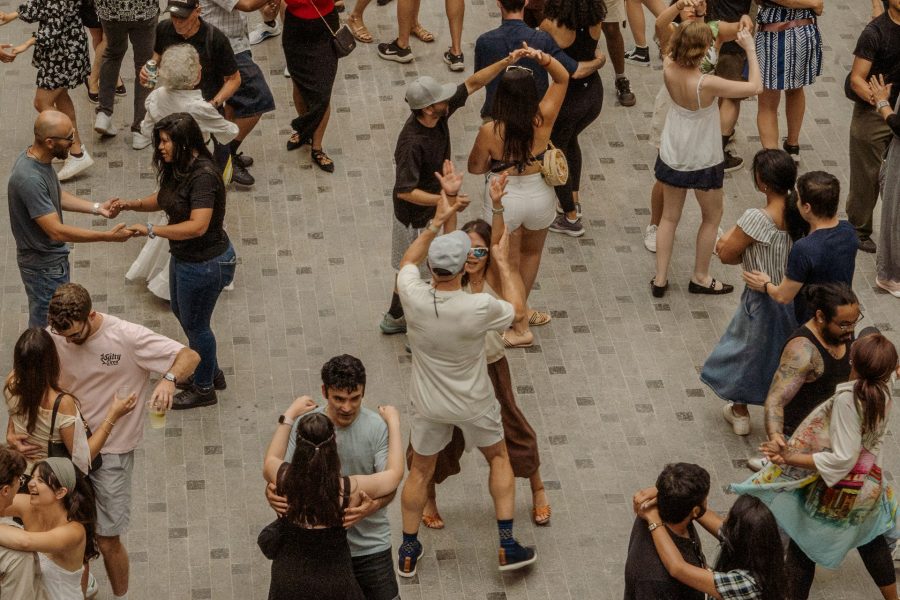
Just by observing the crowd for a few seconds, we can spot various dance styles, facial expressions and personalities peeking through. Whilst some couples dance with their eyes closed in complete harmony, others are utterly focused on staying in rhythm, or giggling at their failed attempts to synchronize their movements. Though beginners and advanced dancers might experience these events differently, they all seem to share the joy that social dancing brings.  

“You have to give up your ego”

As I’m on a mission to get to know this community, I decide to ask participants why they take part in social dancing. Interestingly, there is a strong preference for anonymity among the people I speak to. Many explain that these events are their only opportunity to detach themselves from their everyday responsibilities and work-related identities.  

When I ask a middle-aged, elegantly dressed bachatero about what Latin dance means to him, he offers an unexpectedly philosophical response: “Bachata is able to create connections between two people who have never spoken a word to each other. In order for it to flow, you have to give up your ego and get to know the other person, how they move, how they express themselves and how you can make them shine.”  

The next participant I approach is wearing baggy sweatpants and a cropped pink T-shirt – creating an amusing contrast with the first interviewee’s appearance. “At first, I was scared I’d embarrass myself as a beginner, but the community here is super welcoming. I only started learning bachata a couple of months ago, but I can feel it becoming a healthy addiction,” says the young French girl with her hands in her pockets. “I’m usually quite shy and stressed when talking to new people. Here, you can either have a dance and move on, or start a conversation without having to break the ice,” she adds.  

“Salsa is the cure for my homesickness”

The social aspect of these dance sessions seems to be a common attraction. An elderly woman wearing a bright red dress and heels explains: “When I first became a pensioner, I was going crazy and had no idea what to do with my time. It can get lonely and depressing very quickly, especially with the family living out of town. So, I could either become miserable or take the plunge and do something new. Dancing with young people lights up my heart and is much more enjoyable exercise than seniors’ step aerobics.”  

A few meters away from the bachata crowd, fast-paced steps, elaborate turns and playful improvisations dominate the dance floor. Originating in New York’s Latin American communities, salsa combines Afro-Cuban dance styles like son and mambo with jazz influences. The distinct clave beat, percussion, syncopated piano patterns and brassy horn sections make salsa music infectiously cheerful and energizing.  

In this group, it is more common to see participants taking breaks by the riverside to catch their breath after dancing through multiple songs. These pauses are perfect opportunities to get inspired by others’ moves, chat with the people around you or simply enjoy the sight of strangers dancing the night away together. 
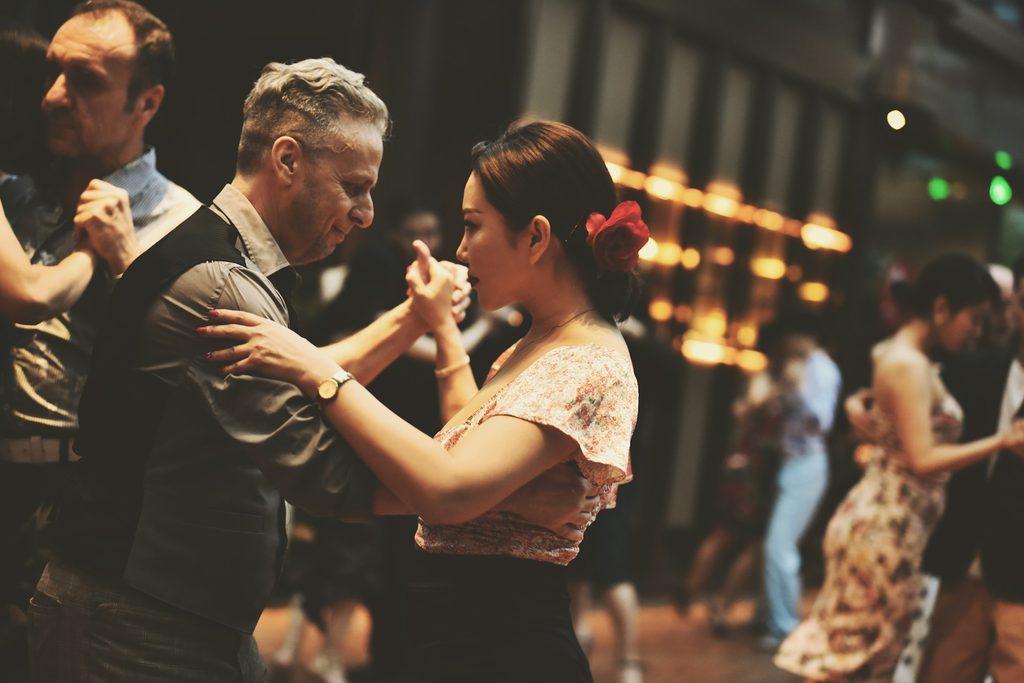
© Preillumination SeTh | Unsplash

“Salsa is the cure for my homesickness. It embodies everything I miss from back home: spontaneity, warmth, playfulness. I’d like to invite anyone who still thinks that Berlin has to be cold and gloomy to come here,” says a young Colombian salsero with an unwavering smile and sweat dripping from his forehead. 

Turning strangers into compañeros

Though salsa may require a certain level of musicality and coordination, the active focus on the next movement and connecting with the music is what makes this dance therapeutic, even meditative for some: “Coming here has become my post-work routine. I’m a psychotherapist and usually spend my days sitting on a couch listening to patients. Here, I can finally move my body and activate a part of my brain I don’t usually engage at work. Concentrating on where to put which foot next instead of analyzing someone else’s psyche has been wonderfully refreshing,” says a tall German gentleman with glasses and flashy sneakers, as he continues to perform the basic salsa step while responding.  

Social dancing can also be a valuable tool for self-discovery. “After high school, I started out with a major everybody told me to choose, and hated it. Once I dropped out of that program, I asked myself for the first time what I actually enjoy doing and what kind of person I want to become. Taking up salsa was far out of my comfort zone at first, but it has slowly brought out a more confident, cheerful side of me I didn’t know I had,” explains a young salsera, wearing red lipstick and a denim skirt, waving hello to her arriving friends as she speaks. “I highly recommend that everyone try something that sounds crazy but intriguing to them during their lifetime, and who knows – it might just become a passion,” she adds with a wink.  

People’s motives for social dancing range from getting exercise and forming new relationships to simply escaping the world of work and personal responsibilities for a moment. Hence, this community perfectly exemplifies what many consider to be the essence of Berlin: diversity. Pensioners and students, hippies and hipsters, beginners and professionals, Berliners and tourists, sweatpants enthusiasts and cocktail-dress wearers – seen from above, this bunch may resemble a kaleidoscope made with randomly assorted beads. But though many of these people might seem like they don’t have a lot in common, it apparently suffices to share a love of a Latin fiesta to turn strangers into compañeros.

(Header image: © Kyle Hinkson | Unsplash)

Author:

More From WahlheYmatPost

  • Strangers by the Spree: Inside Berlin’s Outdoor Latin Dance Community

    Strangers by the Spree: Inside Berlin’s Outdoor Latin Dance Community

    Feierabend! A busy weekday is coming to an end, and Hauptbahnhof is becoming crowded with tired Berliners: businessmen with briefcases heading home after a long day at work, groups of schoolgirls huddled up on benches apathetically scrolling on TikTok, and exhausted travelers searching for the S-Bahn that will finally take them to their accommodation.  The…

  • Berlin Wiki: Election Day – From Casting Your Vote to the Results 

    Berlin Wiki: Election Day – From Casting Your Vote to the Results 

    What Happens on Election Day? Election day is when eligible voters in a democracy are called on to cast their ballots. Voting and Counting the Votes In Germany, elections must be held on a Sunday or a public holiday. Polling stations are generally open from 8 a.m. to 6 p.m. They are often located in…

  • StimmlosTrend 2026: 96 Percent Would Vote If They Could

    StimmlosTrend 2026: 96 Percent Would Vote If They Could

    Around one million people living in Berlin do not hold a German passport, 851,000 of whom are adults. They cannot vote in elections to the Berlin House of Representatives – and their political views are therefore largely absent from traditional election polling. WahlheYmat created StimmlosTrend 2026 to make these perspectives visible. Inspired by the BerlinTrend…

  • Berlin Wiki: How Do You Decide Who to Vote For? 

    Berlin Wiki: How Do You Decide Who to Vote For? 

    How Do You Decide Which Party to Vote For? Many people find it difficult to decide which party to vote for. But instead of not voting at all, it is important to inform yourself thoroughly. Democracy is based on people making decisions together based on their own convictions. To do so, voters need to be…

  • Who Will Lead Germany Into Its International Future?

    Who Will Lead Germany Into Its International Future?

    What does the story of Charles De Gaulle teach us? Antonin Baudry’s La Bataille de Gaulle tells, in five hours, the story of the General during the Second World War. A great movie. I learned a lot. Tenacity. De Gaulle arrives alone in London. On 18 June 1940, he makes his first BBC speech, speaking…

  • Berlin Wiki: What Are the Key Issues in Berlin’s Election?

    Berlin Wiki: What Are the Key Issues in Berlin’s Election?

    Why Is Rent Policy a Central Issue in Berlin’s Election Campaign? Around 85 percent of Berliners live in rented accommodation. At the same time, the housing market in the capital is tight: rents are rising, new housing construction remains sluggish, and legal loopholes frequently allow furnished apartments to be offered at inflated prices. This is…

  • A Mayor Tandem for Berlin

    A Mayor Tandem for Berlin

    What if Berlin had two Regierende Bürgermeister:innen? One representing the city’s elected voice — and another representing the voice of Berlin’s international residents who live, work and contribute here but do not have German citizenship and therefore cannot vote in Berlin elections. Because in a democratic society, it can’t be right that 25% of the…

  • No German Passport? You May Still Have a Vote in Berlin 

    No German Passport? You May Still Have a Vote in Berlin 

    If you are an EU citizen living in Berlin but do not have German citizenship, you cannot vote in the election for Berlin’s House of Representatives (Abgeordnetenhaus). But you can vote for your local District Assembly (Bezirksverordnetenversammlung, or BVV) if you meet the eligibility requirements. Around 240,000 non-German EU citizens are eligible to take part…

  • StimmlosTrend: A New Survey Wants to Hear Berlin’s Missing Voices

    StimmlosTrend: A New Survey Wants to Hear Berlin’s Missing Voices

    Can’t vote in Berlin? There are a million people like you. We’re giving them a voice. That’s the message of WahlheYmat’s new StimmlosTrend campaign, which launches today. Modern democracy is built on elections. In Berlin, the House of Representatives is elected every five years by eligible German citizens (EU citizens can only vote in district…

  • “Berlin taught me to dislike the word integration” 

    “Berlin taught me to dislike the word integration” 

    WHP: You worked in humanitarian aid around the world for many years. What ultimately motivated you to found Just-Go-For-It? Marilena Chatziantoniou: I started working in the field of humanitarian aid in 1998. My first assignment was in Albania, where I worked for a small German NGO, just months before the Kosovo crisis. I remember falling…

  • What is Germany’s greatest asset?

    What is Germany’s greatest asset?

    “Football is a simple game. Twenty-two men chase a ball for 90 minutes and, in the end, the Germans always win,” said Gary Lineker after England lost the 1990 World Cup semi-final on penalties against Germany. Times are changing. Germany no longer always wins at major football tournaments. And England now has a German coach.…

  • Migrants With Degrees Are Not What Germany Is Looking For

    Migrants With Degrees Are Not What Germany Is Looking For

    Education is a right, not a privilege. This idea has been a founding principle of modern democracies. In practice, however, access to education is far from guaranteed for everyone. As of this year, Germany has significantly restricted access to state-funded intermediate and advanced German courses for migrants participating voluntarily. Many rejected asylum seekers, people with…

  • Two birthdays, one dream for Berlin

    Two birthdays, one dream for Berlin

    WahlheYmat was launched as an initiative on 15 September 2023, with Democracy Day providing the occasion. So this week, we turn three years old. Some international Berliners, including our co-founders, asked the question: If Berlin has become diverse and international, wouldn’t it be better to govern the city together? We had almost a hundred conversations…

  • Berlin Wiki: Equal Access to Democracy

    Berlin Wiki: Equal Access to Democracy

    What Impact Does Berlin’s Electoral Reform Have? In September 2023, Berlin’s House of Representatives (AGH) adopted an amendment to the state constitution lowering the voting age from 18 to 16. The aim of the constitutional amendment is to strengthen the democratic participation of young people. The new rule will apply for the first time in…

  • Berlin Wiki: Ways to Influence Politics in Berlin

    Berlin Wiki: Ways to Influence Politics in Berlin

    What is a Volksentscheid? A Volksentscheid, or referendum, allows Berliners to vote directly on proposed legislation and political issues outside regular elections, or to trigger an early election. Anyone who is eligible to vote in elections to the Berlin House of Representatives (Abgeordnetenhaus) is also eligible to take part in a Volksentscheid. A Volksentscheid can…

  • Berlin Wiki: How Berlin’s Government Is Formed

    Berlin Wiki: How Berlin’s Government Is Formed

    How Is the Government Formed? Berlin’s state government is the Senate. It consists of the Governing Mayor and ten senators. Every five years, a new Senate is formed. During coalition negotiations, the parliamentary groups agree on common political goals, the distribution of government portfolios and the budget. Afterwards, the members of the Berlin House of…

  • Berlin Wiki: Democracy and the Principles of Free Elections

    Berlin Wiki: Democracy and the Principles of Free Elections

    What Does Democracy Mean? A great deal could be written about what democracy is. Put simply, in a democracy, all state authority is derived from the people. This means that the citizens of a country determine its political direction. Germany is a parliamentary and representative democracy: citizens elect representatives who make decisions on their behalf.…

  • Berlin Wiki: Who Influences Political Decisions? 

    Berlin Wiki: Who Influences Political Decisions? 

    What Is Lobbying? Lobbying is the organised effort by interest groups to influence political decisions. The term is derived from the word “lobby,” referring to the entrance halls of parliaments where representatives of various interests traditionally met with members of parliament to discuss and promote their concerns. Lobbying takes place in almost every area of…

  • The Signature That Didn’t Count – Finding My Voice in Berlin

    The Signature That Didn’t Count – Finding My Voice in Berlin

    When I moved to Berlin in the spring of 2022, I was approached one sunny afternoon by people carrying clipboards under their arms. Would I like to sign a petition? I was pleasantly surprised by this request – such a sense of community in Berlin, what a place to have come to live. With a…

Address

Am Hamburger Bahnhof 3
10557 Berlin
Germany

hey@wahlheymat.de

Social Networks