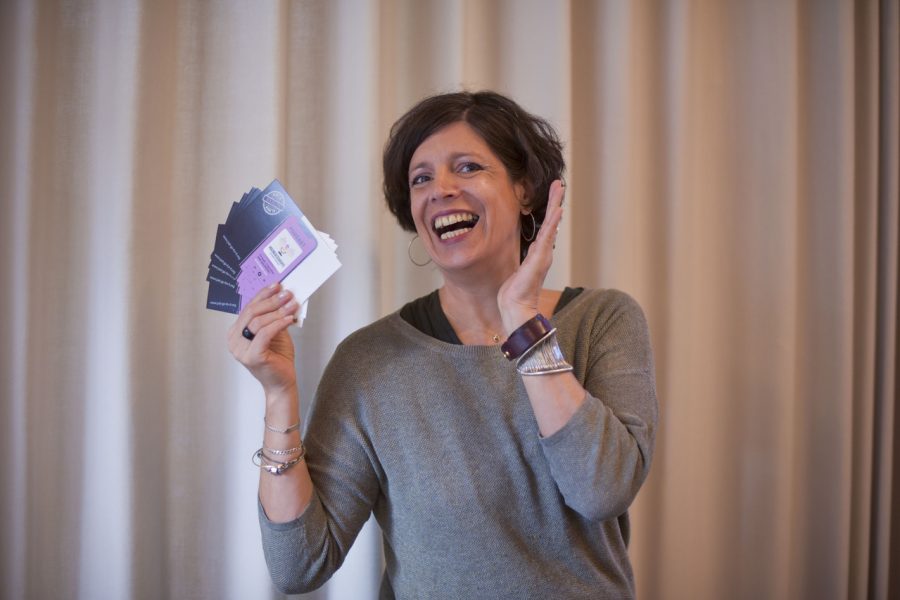


Katarina Stoltz, originally from Sweden, spent her first months in Berlin crying over Prosecco on a friend’s balcony in Prenzlauer Berg.
She’d left behind a thriving career as a Reuters photojournalist in Warsaw. Her work was published in the New York Times, capturing Poland’s entry into the European Union. She’d quit her job, sold her newly renovated apartment, and moved to Berlin for love.
Everyone told her she was crazy.
“I felt slightly depressed, lonely, and I missed the adventurous, high-intensity life I had in Warsaw,” she recalls.
“The first couple of months [in Berlin] I would say I hated it. But of course I wouldn’t admit it to anyone else because I didn’t want anybody to say ‘I told you so.’”
Nearly 20 years later, Katarina is married to the same love she moved here for, raising their 14-year-old daughter, and working as a holistic life coach and Gestalt therapist helping international professionals navigate the exact challenges she once faced.

Her specialty? Katarina supports high-achieving women through career and life transitions using her Inner Compass method. It helps international professionals turn inward and take ownership of their next steps, instead of hoping that a new country, job, or partner will finally bring the fulfillment they’re looking for.
The Pattern Katarina Sees
Today, approximately 80% of Katarina’s coaching clients are based in Berlin, and they’re struggling with something she knows intimately.
“A lot of people coming here feel very lost,” she observes.
“They say people are not reliable, not accountable, not committed… both in relationships and friendships. There’s so much to choose between, so many people coming and going. They don’t want committed relationships because they don’t know when they’ll move again.”
Sound familiar?
If you’re living in Berlin, you may be familiar with consistent complaints such as: Germans are rude. The dating scene is terrible. Everything was better back home.
People are isolated, comparing constantly, stuck in a loop of temporary thinking that prevents them from ever truly arriving.
Katarina sees this pattern clearly because she lived it. Her breakthrough came when she stopped waiting for Berlin to make her feel at home and started building home within herself.
The Turning Point
“I found a yoga studio in Prenzlauer Berg called Yoga Circle,” she remembers. “I had a Hungarian teacher there who was amazing. She really helped me with techniques of going much more within, working on myself, being calm and not so stressed about the situation.”
This wasn’t about positive thinking or gratitude journals. It was about something more fundamental: learning to listen to herself, recognize her own needs, and build an internal stability that didn’t depend on Berlin being friendly, familiar, or easy.
“I think it’s really important that we learn to work within ourselves and build a strong inner connection, so we can feel grounded and stable, rather than expecting something external to do that work for us,” Katarina explains.
“We’re just setting ourselves up for disappointment if we think a place needs to do that for us, or people need to do that for us.”
But here’s what makes her approach different from typical self-help advice: the inner work is only half of the equation.
The Part Most People Miss
While Katarina was building that internal foundation, she was also doing something else… something that changed everything.
She invested in everyday relationships.
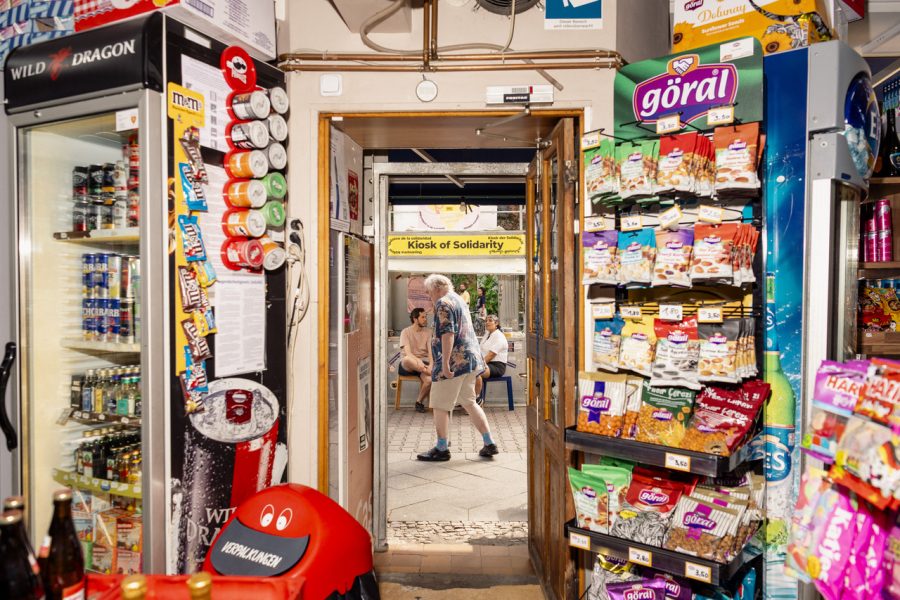
“When I go out on the streets, I say hi to my opera-singing neighbor from Australia, and have a little chat with him about how his parents are doing,” she describes.
“Then the other neighbor comes out with her dog… she has a problem with her knee… and I say hi to her. Then I cross the park and bump into somebody else. I can immediately feel that my day starts on a good note. I’m connecting.”
This isn’t about networking events or expat meetups…
“The everyday relationships with people we meet in our everyday life — the neighbor, the person in the bakery or restaurant, the people you see regularly — It’s important to make a little bit of an effort to be kind, be open, and build relationships with these people,” she advises.
“This is your support network.”

In fact, Katarina described decades of research, including the Harvard Study of Adult Development, showing that the quality of everyday social connections — even small, regular interactions with neighbours, shopkeepers, and familiar faces — are one of the strongest predictors of long-term happiness and health.
For example, when Katarina needed a doctor recommendation, she asked her neighbor. This is how home is built — not through perfect German or the ideal friend group, but through showing up with presence in the life you’re actually living and receiving what’s already in front of you.
The Two Things Working Together
One of Katarina’s most successful coaching clients came to her feeling unrooted in Berlin and unhappy with her job. Through their work together, the client established Faircado, now one of Europe’s largest online secondhand stores.
What shifted?
“When clients go offline and into the real world and speak with people longing for the same things they are, things start to shift,” she says.
The inner work gave the client permission to want what she wanted and the clarity to pursue it. The outer practice of real-world connection gave her the support network and opportunities to make it real. Neither works without the other.
The Temporary Thinking Trap
Perhaps Katarina’s most important insight for newcomers: “I think a lot of people when they move think it’s temporary, and we never know how long temporary will be. If we’re always looking at things as temporary, we never really arrive, we never really feel rooted anywhere.”
This is why Katarina started learning German immediately when she got here. Not because she knew she’d stay forever, but because she knew that treating Berlin as temporary would prevent her from actually living here.
“Even if you don’t speak fluently, at least try and show a bit of an effort,” she says. “It’s also a very nice gesture.”
Your Move
So what’s the one thing Katarina would tell someone who just moved to Berlin or still feels lost after years?
Start with your everyday relationships. Say hi to your neighbors. Learn your barista’s name. Ask the person with the dog in the park how their day is going.
Build the small connections that create a sense of place and belonging.
And simultaneously, do the inner work.
Stop waiting for Berlin to feel like home before you let yourself be at home.
“Offline is the new status symbol,” Katarina reminds us.
The formula isn’t complicated: inner stability plus outer presence equals home.
Katarina built it. Her clients are building it. And you can too.
Working with Katarina
With circa 10 years of experience working one-on-one with clients, Katarina has recently expanded into group work. She runs her coaching program The Catalyst for women navigating career transitions, and The Bold Collective, a transformational mastermind for driven international professionals who want to lead boldly without sacrificing their well-being.
She also offers Gestalt therapy for those dealing with deeper wounds, “The difference between Gestalt therapy and holistic life coaching is that therapy is definitely a much longer journey and it’s more aimed towards healing past trauma,” she explains.

“For example, some of my clients come to me with grief, a lot of anxiety, or panic attacks. That’s something I don’t work with in coaching. Gestalt therapy is relational at its core. I take an active role, often reflecting what I notice in myself during the session, which helps clients see how their patterns show up in relationships beyond the therapy room.”
“You don’t have to be mentally ill to go to therapy. Some of my clients stayed four years and didn’t come in with any diagnosis… they were just very curious to get to know themselves better and learn about the dynamics in relationships.”
Recognizing the mental health needs she’s observed across Berlin’s international community, Katarina plans to start offering therapy groups in the future — especially for people on long waiting lists who can’t access traditional therapy.
Alongside her therapy work, Katarina offers holistic life coaching for women at a crossroads. Her upcoming workshop, Your Next Chapter, is for mid-career women who have done everything “right” on paper, yet feel called to something more meaningful. Rather than chasing the next promotion, the work invites a deeper kind of clarity. The workshop runs from 10–12 February, and you can sign up here.