

What Does Democracy Mean?
A great deal could be written about what democracy is. Put simply, in a democracy, all state authority is derived from the people. This means that the citizens of a country determine its political direction. Germany is a parliamentary and representative democracy: citizens elect representatives who make decisions on their behalf. These elected members of parliament meet in legislative bodies such as the German Bundestag.
In Berlin, eligible voters elect a new state parliament, the House of Representatives (Abgeordnetenhaus, AGH), every five years. While the AGH is elected directly, the Senate, as the state government, is formed indirectly. The House of Representatives elects the Governing Mayor, who then appoints the senators.
The Constitution of Berlin allows citizens to participate directly in legislation through instruments of direct democracy, such as popular initiatives and referendums. Young people aged 16 and over may also take part in these procedures. For example, in 2021 a majority of voters supported the socialisation of large housing companies, and in 2014 a majority voted against the development of Tempelhofer Feld.
What Are Free Elections?
In Germany, citizens are able to elect their democratic representatives without coercion, pressure, or fear of consequences. Free and fair elections are a core element of every functioning democracy.
Eligible voters are free to decide whether to vote and whom to vote for—there is no compulsory voting. They may not be influenced, threatened, or disadvantaged before or after the election. In addition, voters must be able to form their political opinions freely: information about the political parties standing for election and their programmes must be freely accessible.
What Are Secret Elections?
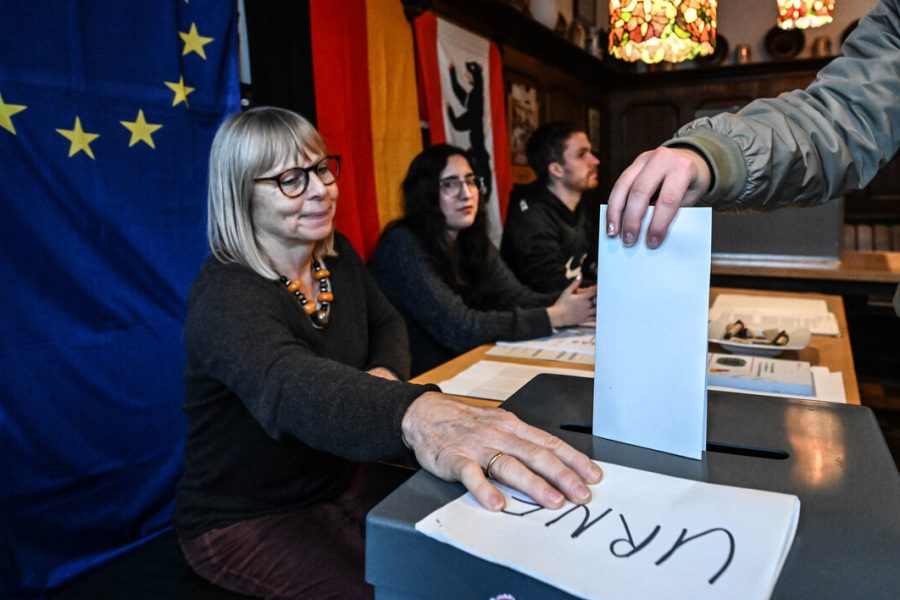
A secret election guarantees that each vote remains anonymous. This right is enshrined in Article 38 of the German Basic Law.
The state is obliged to ensure that eligible voters are able to vote in secret. In Germany, ballot papers must be completed alone and out of sight in polling booths. Before leaving the polling booth, the ballot paper is folded so that the markings cannot be seen. Handwritten notes or other additions that could make it possible to identify a voter render the ballot invalid.
The secrecy of the ballot is intended to prevent citizens from being blackmailed, intimidated, or bribed when voting. Since no one is allowed to verify how a person marked their ballot paper, eligible voters can cast their vote without fear of social or political consequences. Before or after the election, voters are free to decide whether to talk about how they voted.
What Are the Five Electoral Principles?
The electoral principles are laid down in the German Basic Law. They provide that elections in Germany must be universal, direct, free, equal, and secret. These principles apply to Bundestag elections as well as to state and local elections.
The five electoral principles mean:
Universal: All eligible citizens have the right to vote.
Direct: Voters elect their representatives directly, rather than through intermediaries such as the Electoral College in the United States.
Free: Voting decisions are made without coercion or undue influence. This also includes the right not to vote.
Equal: Every voter receives the same number of votes. Every vote has the same weight.
Secret: Eligible voters are not required to reveal how they voted. Voting takes place by secret ballot.
Here you can find the Berlin Wiki page of Berliner Morgenpost.
(Header image: © FUNKE Foto Services | Florian Bouillot)