

How Do You Decide Which Party to Vote For?
Many people find it difficult to decide which party to vote for. But instead of not voting at all, it is important to inform yourself thoroughly. Democracy is based on people making decisions together based on their own convictions. To do so, voters need to be aware of their own views and the options available to them. How do you decide which party to vote for?
There are a variety of resources designed to help people make an informed decision before an election. First of all, it is important to find out what the individual parties stand for. Each party publishes an election manifesto. These documents are often several pages long.
Understandably, not everyone has the time to read all of them. That is why it is advisable to research reliable sources for summaries and comparisons of party positions. The Federal Agency for Civic Education (bpb), for example, provides texts summarising the political parties and their positions.
The bpb also recommends the following: choosing a party whose goals you support, that campaigns on an issue that is especially important to you, or whose candidates you find convincing.
If different issues are difficult to reconcile and you are not completely satisfied with any party, identify which issues matter most to you.
You can also watch sessions of the Bundestag on television or online to see how politicians interact with one another.
The bpb website is available in German and English. Reliable media are also a good starting point for learning more about different issues. If you think you have found a party that suits you, you can then take a closer look at its election manifesto.
If you still do not have a clear answer, it may be worth using the Wahl-O-Mat. This is an online questionnaire covering various political issues. At the end, it shows which party most closely matches your views.
It can also be helpful to exchange ideas with other people. Good conversations are at the heart of democracy. Discussing thoughts, arguments and concerns with someone else can help you form your own opinion. You should also talk to people who do not share your views.
What Is Voter Behaviour?
Voter behaviour describes the characteristics that can influence how a person votes. The combination of these various factors can be analysed in electoral research in order to draw conclusions about the voting behaviour of an individual or a group of people. Voters choose a political party that most closely corresponds to their individual goals.
These are the factors that can influence citizens when voting:
- Regional factors: The economic and political conditions of a region can influence what citizens want for their federal state.
- Sociodemographic characteristics: Age, gender, origin, level of education, income, marital status and household size often determine which political goals a voter may pursue.
- Party identification: If a person already has a basic political orientation, this can have a long-term influence on their voting behaviour.
- External influences: The media landscape, media consumption and exchanges with others can shape a voter’s opinion and perception of a political issue.
What Is Meant by Motivation to Vote?
Motivation to vote refers to an eligible voter’s willingness to participate in an election.
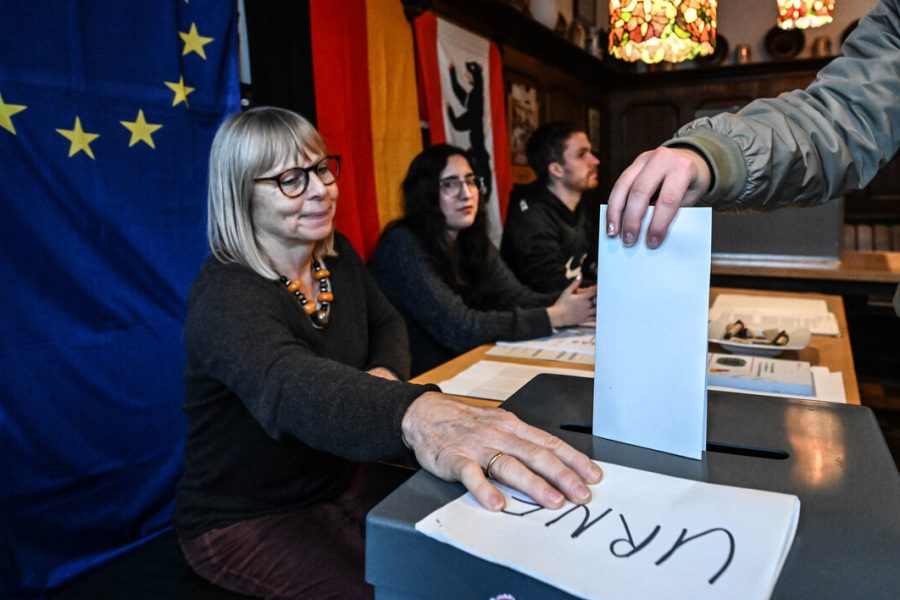
Voting is highly important because elections are an essential foundation of our democracy and help strengthen it. The right to vote is an important privilege. At the same time, it offers an opportunity to actively express one’s own political opinion. Democracy and the freedoms associated with it cannot be taken for granted. Not everyone in the world has the opportunity to vote freely. Every single vote counts.
Those who do not vote give up the opportunity to help shape political developments. As a result, other people determine political majorities and the future direction of the country. Even those who do not vote as a form of protest do not weaken any particular party by doing so. Instead, their decision not to vote may benefit other parties whose political positions may not correspond to their own views.
Through elections, citizens also have the opportunity to demand political accountability. They can vote governments out of office, change majorities and hold politicians accountable for their decisions. Political decisions affect many areas of everyday life, from education and work to the environment, the economy and social issues. Those who vote therefore actively participate in decision-making and take responsibility for their own future and for society as a whole.
(Header image: © Unsplash | Phil Scroggs)