

Tempelhofer Feld: Berlin’s Most Emotional Urban Conflict Is Back 

Walter Phippeny,

Tempelhofer Feld Fahrrad
A heated argument during a live podcast recording in Neukölln revealed just how deeply Berliners care about the future of Tempelhofer Feld. While some see new housing opportunities, others fear the privatization of public space and the erosion of democratic decisions. Walter Phippeny reflects on the conflict in his latest commentary.

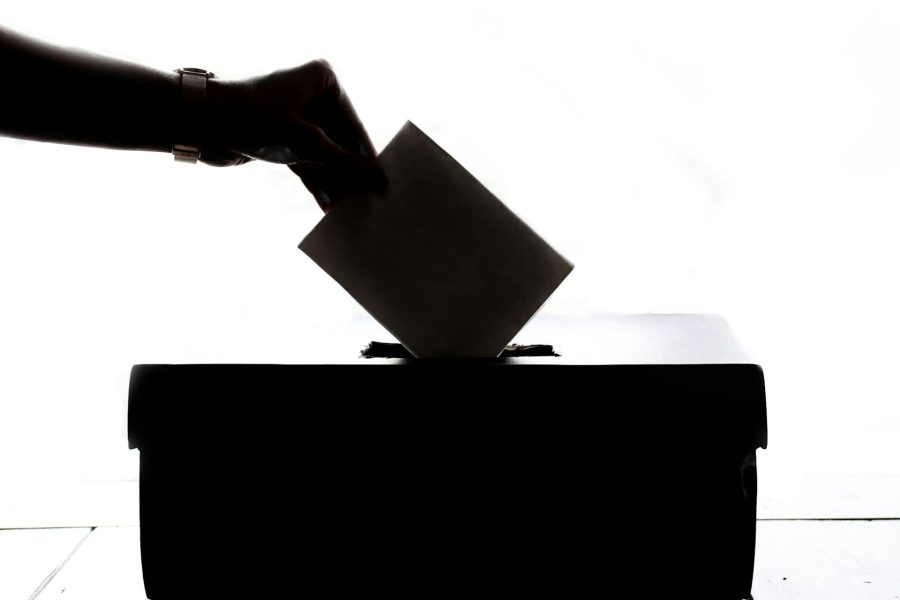
We are approaching an election in September. Hopefully, you’re reading along in the Berlin Wiki to bone up on how stuff works in German elections, the lexicon, and the issues. Well, one of the issues we’re going to see debated concerns the Tempelhofer Feld. So let’s talk about that for a bit. 

The other night, I was at 20% Berlin’s live taping of their podcast down in Neukölln, and when they got to this proposal for the Tempelhofer Feld that came out last week, tempers flared and arguments got heated. The whole podcast stopped as different people in the small backroom of the bar we were in started chiming in with their two cents. One attendee wanted the whole space left untouched, and another was terrified of the terrible buildings and miserable spaces the construction would produce. There was even a bit of name-calling – if you think being called a NIMBY counts. So what’s all the hubbub, bub?

The ghouls never let things like this go

Tempelhof was turned into aprestige project by Adolf Hitler and his buddies back in 1936. After that whole war thing started, construction dragged out to 1941. And then the Americans took it over and it became a big part of the “Air Bridge” campaign, back when the West and East were having a difference of opinion. We won’t go too far into the issue of airports in Berlin, but Tempelhof ceased being one in 2008. It was officially turned into a large public park in 2010. But we all knew that it wouldn’t be long before developers started eyeing all that empty public land… 

And four years later in 2014, the Berlin Senat and Klaus “Poor but Sexy” Wowereit got the idea to turn this public space into apartments and commercial zoning. The money ghouls arrived, rubbing their hands together, and dreaming of all that glorious lucre they were going to steal from the public. It was something that everyone with eyes saw coming. 
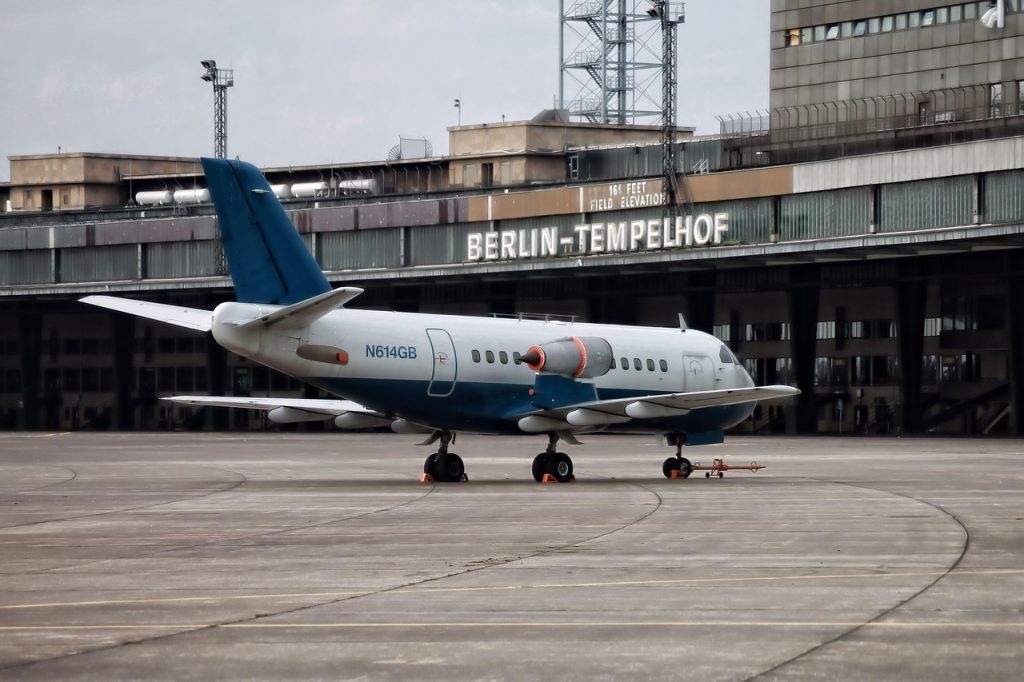
Tempelhofer Feld

And a citizens’ initiative called 100% Tempelhofer Feld organized, got signatures, got a referendum vote and the people of Berlin with 69% of the vote said, “vade retro Satanas!” and were able to hold the ghouls off for the time being. But the ghouls never let things like this go. They went back into their lair – probably in secret catacombs under the Zionskirche – and started plotting their next move. Seriously, if you haven’t walked past the Zionskirche at night, you really have to check that out; it totally looks like a vampire prince lives there.

Get out the popcorn and the opera glasses

I’m actually surprised that 100% Tempelhofer Feld was able to pull this off. I remember a little kerfuffle from Seattle politics back in 1995. The ghouls wanted to build a new stadium for the baseball team, The Mariners, and they wanted taxpayers to foot the bill. I really will never understand how nonsense like this gets through; so, you want the taxpayers to build the venue for ultra-wealthy people to put on their sporting events; entry will be expensive, parking expensive, and food and drink at the event will be worse than airport prices. 

But there’s some nebulous benefit for the local economy to justify public funds for essentially private use… Um, ok. Well, the King County voters took it to the polls much like our 100% friends, and they voted no on the proposal. So, the ghouls just went to the state capital – Olympia – and found a way to override the county vote at the state level. The voters said no, and the ghouls built it anyway, and the voters paid for it. Very nice. 

And this is exactly what makes Tempelhofer Feld such a spark. It’s less about building more apartments and more about the voice of the people being respected. This is our city, and we don’t want the ghouls turning our public land into private profit. Especially at a time when we all feel financially squeezed. The rents are going up everywhere, and a euro doesn’t buy what it once did at the grocery store. Why the hell is everything so expensive now, and why do I feel like a damn sheep waiting to get shorn? 

We hate feeling powerless and we hate it even more when ghouls show up, talking about what’s good for us – you want more apartments, right? – when they haven’t really acted in our interest for ages. So I get the anger. And if you’re new to the city, you should keep your eyes on this debate and try to understand the different sides. I think it’s going to spark a lot of frustration all around, but maybe we’ll have a chance here, like we did in 2014, to have our voices heard and respected again. That would be the best thing that the Berlin government could do to restore public trust. Get out the popcorn and the opera glasses; let’s see what happens.


Author:

More From WahlheYmatPost

  • Finding Trauma Instead of Belonging: A Review of I Keep My Shadow Light 

    Finding Trauma Instead of Belonging: A Review of I Keep My Shadow Light 

    TL;DR “I Keep My Shadow Light” is the self-published debut novel by Fionnuala Kavanagh. This challenging work follows a cast of four characters from different backgrounds as they try to find a home in Berlin. Very dark in places, the book gives us a chance to read something that would probably never come out of…

  • Berlin Wiki: Who Makes Decisions in the Districts?

    Berlin Wiki: Who Makes Decisions in the Districts?

    What Does a District Office Do? A Berlin district office (Bezirksamt) manages the administration of one of Berlin’s twelve districts and serves as the district’s political leadership. It consists of the district mayor and five district councillors (Bezirksstadträte), who are elected by the district assembly (Bezirksverordnetenversammlung, BVV). The district office implements adopted laws and policies.…

  • Berlin Wiki: How Berlin’s Government Works 

    Berlin Wiki: How Berlin’s Government Works 

    What Makes Berlin’s Governing Mayor Special? Whoever holds the office of Governing Mayor is both the head of government and the ceremonial head of the city of Berlin. The House of Representatives (Abgeordnetenhaus) votes on who will hold the position. There has even been a case in which someone won the election without being their…

  • Migrants With Degrees Are Not What Germany Is Looking For

    Migrants With Degrees Are Not What Germany Is Looking For

    Education is a right, not a privilege. This idea has been a founding principle of modern democracies. In practice, however, access to education is far from guaranteed for everyone. As of this year, Germany has significantly restricted access to state-funded intermediate and advanced German courses for migrants participating voluntarily. Many rejected asylum seekers, people with…

  • Berlin Wiki: How Do the First and Second Vote Work? 

    Berlin Wiki: How Do the First and Second Vote Work? 

    What Does the First Vote Decide? The article looks at how voters elect candidates and parties in Bundestag elections and elections to the Berlin House of Representatives, and how seats in parliament are distributed through proportional representation. In Bundestag elections or elections to the House of Representatives, voters cast both a first vote and a…

  • Tempelhofer Feld: Berlin’s Most Emotional Urban Conflict Is Back 

    Tempelhofer Feld: Berlin’s Most Emotional Urban Conflict Is Back 

    We are approaching an election in September. Hopefully, you’re reading along in the Berlin Wiki to bone up on how stuff works in German elections, the lexicon, and the issues. Well, one of the issues we’re going to see debated concerns the Tempelhofer Feld. So let’s talk about that for a bit.  The other night,…

  • Berlin Wiki: Parties, Direct Mandates and the Five-Percent Threshold 

    Berlin Wiki: Parties, Direct Mandates and the Five-Percent Threshold 

    What Is a Political Party? A political party is an association of citizens regulated by the German Federal Party Law. Political parties aim to influence political decision-making at federal or state level over a longer period of time and may represent voters in state parliaments or in the Bundestag. First of all, a party needs…

  • Good Intentions Are Not Democratic Enough

    Good Intentions Are Not Democratic Enough

    “What you do for me, but without me, you do against me” — the exact origin of this quote is unclear. Nevertheless, it captures something that frequently happens in Germany when it comes to the political participation of historically excluded groups. Policies are supposedly made for migrants, yet not with them. Gender equality is debated…

  • What Happened When I Tried to Organize My Neighbors 

    What Happened When I Tried to Organize My Neighbors 

    There’s a lot of talk today about building community. At our March WahlheYmat Talk, the crowd brought up the subject, specifically that we should be creating more of it. Ideas flew around the room. We are living in an era of schism, where the people pulling the levers of power are trying to create an…

  • Home Is Not a Place: A Berlin Exhibition Rethinks Migration

    Home Is Not a Place: A Berlin Exhibition Rethinks Migration

    How do people change after moving from one place to another? What do they leave behind and what do they carry with them? Is it possible to feel at home in a space that is vastly different from the one we left? In her latest installation “Remembering Space (how much past can the present hold)”,…

  • Berlin Wiki: Who Is Allowed to Vote – and Why Not Everyone Can

    Berlin Wiki: Who Is Allowed to Vote – and Why Not Everyone Can

    Who is allowed to vote, and who is not? In a democratic state like Germany, the right to vote is of central importance. It allows citizens to take part in political decision-making and help determine the composition of the government. In Germany, voters must meet certain requirements in order to vote. They must hold German…

  • Berlin Wiki: Party Profiles II – The Greens, The Left, the AfD and the BSW party

    Berlin Wiki: Party Profiles II – The Greens, The Left, the AfD and the BSW party

    What is the Green Party? Bündnis 90/Die Grünen is an important political force in the Berlin House of Representatives. Although the party has not been part of the government since the 2023 election, it operates from the opposition within parliament. Its guiding principle is ecological, economic, and social sustainability. It focuses on stronger climate protection,…

  • Berlin Wiki: Party Profiles I — Which Parties Shape the Capital?

    Berlin Wiki: Party Profiles I — Which Parties Shape the Capital?

    Which parties are important in Berlin? Berlin has many political parties, each pursuing its own agenda. These parties are organized at different levels. Many have a Berlin state association, as well as several district and local branches. The parties that receive the most votes form parliamentary groups in the House of Representatives, Berlin’s parliament. The…

  • The Good, the Bad, and the Arbeitsamt

    The Good, the Bad, and the Arbeitsamt

      Most places have an arm of the government to help folks out when they’re unemployed; governments like their citizens to have jobs and pay taxes. It tends to keep the governments – and the citizens – happy. There’s also the matter of not letting people starve in the street when they’re out of work.…

  • Berlin Wiki: Your Guide to the 2026 Berlin Election

    Berlin Wiki: Your Guide to the 2026 Berlin Election

    What will be elected in Berlin in 2026? On September 20, 2026, a new House of Representatives will be elected in Berlin. At the same time, the district assemblies of Berlin’s twelve districts will also be elected. The electoral term is always five years. Voters therefore decide which parties and politicians will serve in these…

Address

Am Hamburger Bahnhof 3
10557 Berlin
Germany

hey@wahlheymat.de

Social Networks