
TL;DR
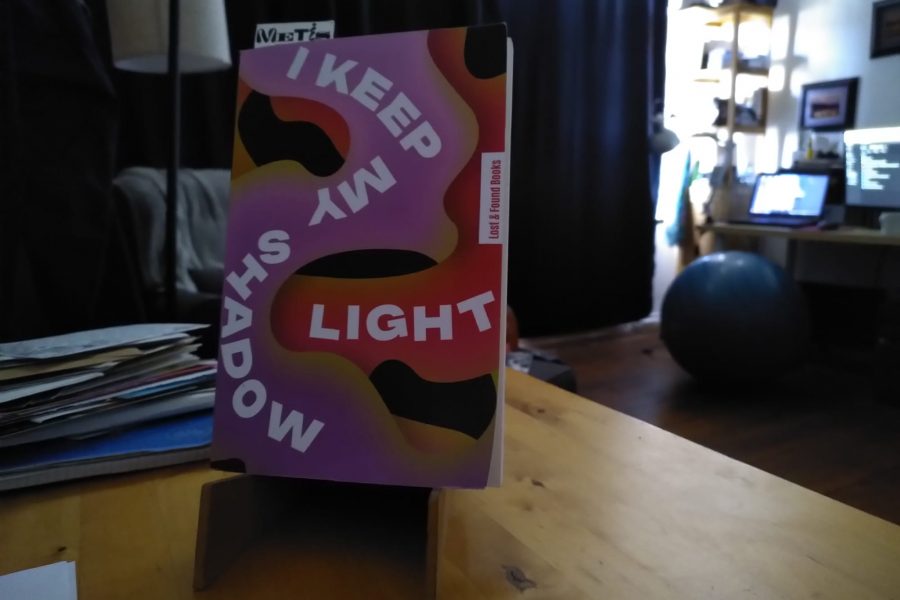
“I Keep My Shadow Light” is the self-published debut novel by Fionnuala Kavanagh. This challenging work follows a cast of four characters from different backgrounds as they try to find a home in Berlin. Very dark in places, the book gives us a chance to read something that would probably never come out of any publishing house. Its uniqueness alone makes it worth your time. You can get a physical copy at Metis Books in Prenzlauer Berg – and maybe a coffee while you’re there – or order it from Metis online.
The Berliner Interview and Release Event
In the May issue of The Berliner I came across a short interview with Fionnuala Kavanagh ahead of the release of her debut novel, “I Keep My Shadow Light.” Wahlheymat’s mission focuses on figuring out how to throw a lifeline to newcomers in Berlin; it’s why we write this newsletter and put on our events. So when Ceri Savage, the author of the interview, summed up the book as, “It’s a novel that asks a simple question with no easy answer. What does it mean to belong in Berlin?” Well, I had to know more. Luckily for me, the release party was just around the corner from my apartment.
After finishing up work at the office, I headed over to Metis and dawdled a little on the way. Taking a look at my watch, I thought, “Oh, I’m too early. I’ll just have a coffee around the corner. Be a little fashionably late.” This was a mistake. When I got to the shop, it was packed wall to wall in there. I spent the first half of the reading standing in the doorway, and there were even people on the sidewalk. Ms. Kavanagh and friends had carried out a guerrilla marketing campaign through Neukölln, putting up quotes from the book on green sheets of A4 paper. And it worked. This book had momentum. And that’s a unique accomplishment in itself.
The work is largely autobiographical and pastiched from real experiences. At a round table in the front, Kavanagh and friends took turns reading excerpts from the book and talking about the text and its themes. I picked up my copy and spoke briefly with the author; my first plan was an interview instead of a review, but the scheduling never worked out. Instead, you get my own opinions and impressions. Your mileage may vary.
The Plot
Maeve is a young English woman who comes to Berlin, finds herself unemployed and struggling with the short-term sublet shuffle. She shares her current flat with Carolin, Roman and Karam. Karam is from Syria and came to Berlin to flee the violence and chaos back home.
The unemployment office offers Maeve a nearly year-long integration course in two parts, where she meets Zehra – a young Turkish woman from a tiny village who has recently married a Berliner in an arranged marriage – and Viktor, who fled Chechnya after being persecuted for his sexuality. We follow these four characters – Maeve, Karam, Zehra and Viktor – as they try to navigate the city, the language, the culture and even themselves.
The Title
The title struck me first. At the beginning, I assumed “light” here was an adjective as in “light as a feather.” There’s something about it that sits with you and pokes at your brain: the difficulty of resolving how something that has no weight can be light. What could it mean? And then I thought, maybe “light” is the noun, as in “light from the sun.” So maybe it means I cast no shadow or that I keep my shadow gray? And then, in a conversation between Maeve and Karam, we get this from Karam:
“If I don’t talk about this [experiences of war and persecution in Karam’s homeland], I kind of forget about it. You have to get on with your new life. And when you arrive in a new place, meeting people, making friends. Me, I keep my shadow light. But then, sometimes when Berlin is getting too much, that’s when I have to stop and think, ‘Why did I come here? What did I run from?’”

You said it, Karam! What an amazing way to express keeping your trauma to yourself. Sharing your trauma doesn’t just leave you vulnerable; it can also feel like putting the burden of your pain on other people, and you can’t do that with strangers. It takes close community and trust to open up like that; it takes support. And there’s a lot of that in this book: people trying to navigate the hand they were dealt with little support.
From the title onward, Kavanagh shows a developed instinct for evocative metaphor and porosity, giving the language and scenes a lot of power. Hey, it’s still a first novel! She has a ways to go, but the talent and ability are definitely there and show through in the language. But that brings us to another aspect of this book.
Who Is the Target Audience?
As I read through Shadow I kept asking myself, “Who was this book written for? Who was the reader Kavanagh had in mind as she wrote it and put it through drafts?” Kavanagh is a native English speaker. I think you could argue that this is a native English speaker writing either for other native speakers or for people with a very high command of the language. And yet, she slathers the text with German. In the first chapter, Maeve is accosted by a man in Neukölln who speaks to her in Berlinerish… well, kind of… Berlinerish-esque:
“Tach, die Dame! Ham’ Se Lust auf ‘nen Rätsel? Se müssen mir dit auch nich’ bezahlen. Ich nehme auch ‘ne Stulle oder ‘ne Limo. Hilfe, hab ick’n Brand. Na? Wie sieht’s aus… ‘N jutes Rätsel für ‘ne Limo?”
Maeve has no idea what this scary dude is asking for, and none of it is translated. And this is in the first chapter. German is practically a character in this book. Each chapter title appears first in English and then in German.
If we assume the reader is a native English speaker, is Kavanagh using German to drive home the sense of foreignness? Did Kavanagh also expect the reader to have a decent grasp of German? I’m still not sure who the audience is supposed to be. People often get annoyed when a text comes at them in a language they don’t understand. I mean, I had all the tools I needed to breeze through this book, but I didn’t exactly see my name in the dedication.
But, at the same time, this is also what makes the book special. Kavanagh just went ahead and self-published this thing, and you can buy a copy. I don’t think any publishing house would touch it; they would look at it, not see any real market or audience for it, and reject it. In Shadow we get this special view into a personal world that you won’t find anywhere else: a voice outside the machine.
Intimacy
We get very detailed scenes of intimacy and sexuality across all the characters, but it’s really dark stuff. Sexuality is portrayed as an amplifier of loneliness and confusion. Whether in Maeve’s encounters or Zehra’s marriage, sex is tainted by the use of power, becomes a source of shame, or feels purely alienating.
I was not so much surprised by the details as by what they meant. In this book, there is no solace in sex: it is a meditation on a doomed erotic economy. An erotic economy, as I understand it, consists of the entirety of lived erotic experience and desire. What makes the novel’s erotic economy doomed is its total inability to produce meaningful experiences: Maeve describes a Tinder fling from early on in the book as “performative and empty”; Zehra’s experience of sex is a desperate attempt to get pregnant and please the matriarch of her new husband’s family with grandchildren; Viktor is raped in a gut-wrenching scene of sexual violence; Viktor’s roommate is a prostitute; and then there’s Maeve and the Poet. None of this is connection. And the very human, erotic impulse pushing these characters to find connection is simply left worse than empty.
Balanced Arguments
I loved, though, the balance in this book. Germans get a lot of heat, but there are also sympathetic German characters like Lea, one of the teachers in the class. We have the four main characters, but they express a variety of opinions like real people. We veer off into sockpuppet territory with characters like the Poet, Roman and Carolin. Still, even with the bad faith of privileged progressives in Neukölln, horrible German bureaucrats, or even the “big bad Berlin” itself, there’s humanity here. The book kept my interest as I followed its characters through the narrative and it didn’t get too preachy.
There’s one scene in the book where Maeve is balancing a text conversation with three different characters, and it captures the confusion of our time so well: the way we multitask between streams of communication with radically different emotional weights.
I haven’t read much modern literature but I loved the subtle, “and then he got bored and whipped out his phone,” or the one student in the class who is constantly watching weight-training videos on his phone while class is in session. Spot-on observations of what it’s like to be in a public space when everyone has private space and escape in their pocket.
“Which Berlin do you want to see?”
A stranger visiting the city for the first time once asked me what they should see in Berlin. My answer was: “Which Berlin do you want to see? There are a lot of them.” This city has all these neighborhoods with their own style and atmosphere. And there are so many crossovers and outliers.
In Shadow you’re going to get an intense look at Neukölln from the perspective of a young English woman encountering trauma she didn’t imagine existed: trauma from people living on the edge of Berlin society. It’s poignant, with a lot of good social commentary about our “Wahlheimat,” but it’s less about belonging, as The Berliner claimed, and more about trauma.
Finding belonging is about peace and acceptance; in Shadow we find only struggle and trauma. Still, I think this is a good first outing from a promising writer, with keen observations about our city and the people who live on the edge of it.