

What Does a District Office Do?
A Berlin district office (Bezirksamt) manages the administration of one of Berlin’s twelve districts and serves as the district’s political leadership. It consists of the district mayor and five district councillors (Bezirksstadträte), who are elected by the district assembly (Bezirksverordnetenversammlung, BVV). The district office implements adopted laws and policies. Like the Senate, the district office votes on decisions; in the event of a tie, the mayor’s vote is decisive. The district office may object to decisions made by the BVV, while the BVV, in turn, oversees the work of the district office.
At the beginning of the term of office, each district councillor is assigned a specific area of responsibility by the district mayor (for example, youth, family or health). The district administration consists of around ten specialized departments. For example, every district has a youth welfare office, a public order office and a health office. These departments are allocated among the district councillors, who may be responsible for more than one area.
The positions of district councillors are distributed proportionally according to the parties’ strength in the BVV. Since Berlin is a unified municipality, the district offices are subordinate administrative authorities that report to the Berlin Senate.
The district office deals with all local matters on the ground. Typical responsibilities include citizen services such as registering a residence, school construction, and the management of green spaces. It has administrative powers to implement laws but does not have the authority to enact laws itself.
Elsewhere in Germany, the closest equivalent in rural districts is the district administration office (Landratsamt). In independent cities, the city administration is the closest equivalent to a district office.
What Does a District Mayor Do?
The district mayor heads the district office and is the political face of a Berlin district. They are elected by the district assembly (BVV) for a five-year term.
As head of the district administration, the district mayor chairs the district office and assigns areas of responsibility to the five councillors. In addition, the district mayor has the authority to set policy guidelines, which provide direction for the district councillors. In votes within the district office, the mayor’s vote decides the outcome in the event of a tie.
He or she represents the district externally and works closely with the Berlin Senate through the Council of Mayors (Rat der Bürgermeister). Since Berlin is a unified municipality, the district office is subordinate to the Senate.
These are the current district mayors:
- Mitte: Stefanie Remlinger (Alliance 90/The Greens)
- Friedrichshain-Kreuzberg: Clara Herrmann (Alliance 90/The Greens)
- Pankow: Dr. Cordelia Koch (Alliance 90/The Greens)
- Charlottenburg-Wilmersdorf: Kirstin Bauch (Alliance 90/The Greens)
- Spandau: Frank Bewig (CDU)
- Steglitz-Zehlendorf: Maren Schellenberg (Alliance 90/The Greens)
- Tempelhof-Schöneberg: Jörn Oltmann (Alliance 90/The Greens)
- Neukölln: Martin Hikel (SPD)
- Treptow-Köpenick: Oliver Igel (SPD)
- Marzahn-Hellersdorf: Nadja Zivkovic (CDU)
- Lichtenberg: Martin Schaefer (CDU)
- Reinickendorf: Emine Demirbüken-Wegner (CDU)
What Is Local Politics?
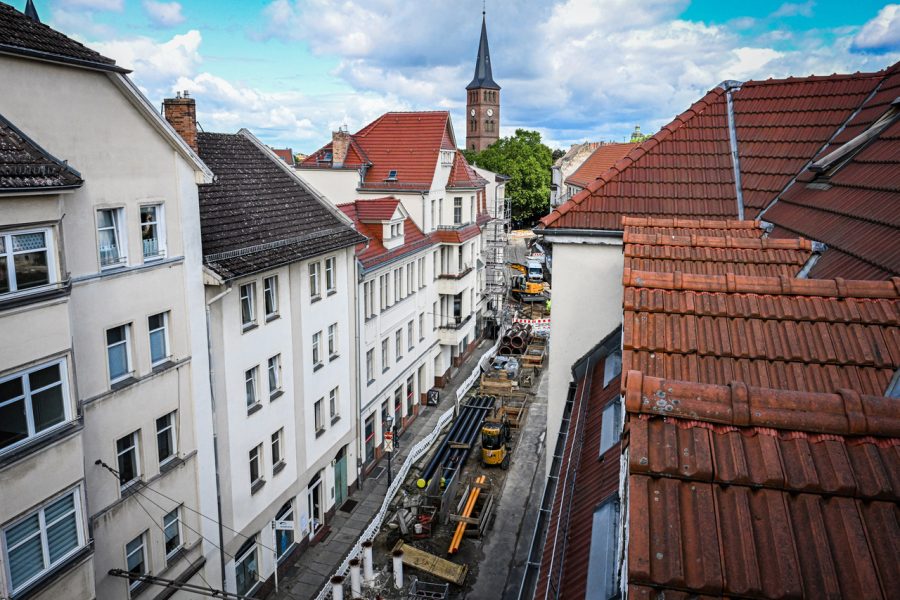
Local politics in Berlin is organized differently because Berlin is a city-state. At the state level, the Senate decides on matters that affect the entire city, such as the police, major roads and the underground railway system. At the lower level, the twelve districts are responsible for everyday matters directly affecting residents in their local communities. These include the construction and maintenance of schools, daycare centres and playgrounds, the upkeep of parks, the operation of libraries, and citizen service offices (for example, for identity cards).
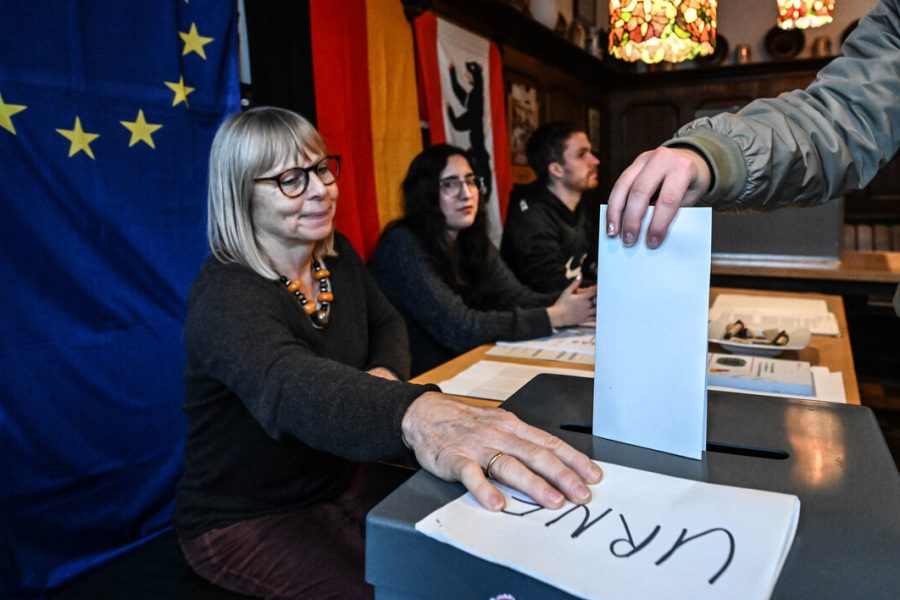
In Berlin, local politics is shaped by the interaction between the district assembly (BVV) and the district office, both of which are formed every five years as part of the Berlin elections. The BVV is elected directly by the residents of the district. All persons aged 16 and over who hold German or EU citizenship are eligible to vote. The BVV adopts motions and policy guidelines for the district, oversees the administration, and elects the second important body: the district office.
The district office manages the district administration and implements the decisions of the BVV. It consists of the district mayor and five district councillors, who are elected by the members of the newly elected BVV. They lead the various departments (for example, the school office, youth welfare office or public order office) and make day-to-day administrative decisions.
The districts may not pass their own laws or levy their own taxes. Since Berlin is a unified municipality, the districts do not constitute separate legal entities. They are subordinate to the Berlin Senate (the state government). The Senate provides funding, oversees the work of the districts and, if necessary, can overturn their decisions.
In other German federal states, local politics is shaped by the district administrator (Landrat) and district council (Kreistag) in rural districts, or by the city council or municipal council in towns and municipalities. Unlike Berlin’s districts, these bodies are generally independent legal entities that can manage their own finances and make decisions independently.
Here you can find the Berlin Wiki page of Berliner Morgenpost.
(Header image: © FUNKE Foto Services | Kerstin Kokoska)