
Berlin Wiki: Who Is Allowed to Vote – and Why Not Everyone Can

WahlheYmatPost,

Wahlen, Urne
In the latest part of Berlin Wiki, we explore the question of who is allowed to vote in Germany – and why not everyone can. The article looks at active and passive voting rights, the importance of citizenship, and the requirements for political participation. It explains the rules that apply to federal, European, and Berlin state elections and why voting eligibility plays a central role in every democracy.

Who is allowed to vote, and who is not?

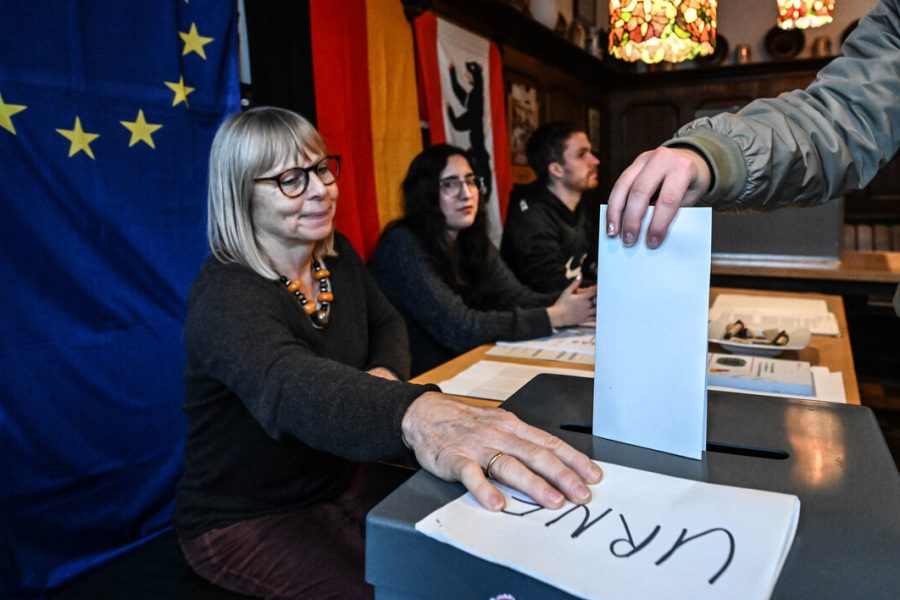
In a democratic state like Germany, the right to vote is of central importance. It allows citizens to take part in political decision-making and help determine the composition of the government. In Germany, voters must meet certain requirements in order to vote. They must hold German citizenship and have reached the age of 18 (for certain elections, the minimum voting age is 16). In addition, eligible voters must have had a residence in Germany for at least three months or otherwise habitually reside there.

The right to vote in democratic systems follows certain fundamental principles. Elections should be:

  • universal, so that as many citizens as possible can participate,
  • free, meaning that everyone votes without coercion or pressure,
  • equal, so that every vote has the same value,
  • and direct, without any intermediary bodies.

These principles ensure that elections are fair and democratic.

Active and passive voting rights

There is a distinction between active and passive voting rights. Active voting rights refer to the right to vote itself, meaning the ability to cast a ballot in an election. Passive voting rights, by contrast, refer to the right to stand for election and run for political office. In Germany, citizens can generally vote in Bundestag elections from the age of 18, provided they have lived there for at least three months. 

The rules are somewhat different for elections to the Berlin House of Representatives, the district assemblies, and the European Parliament elections: here, Germans can already vote from the age of 16, provided that they have also lived in Germany or another EU country for at least three months. Citizens of other EU member states are also allowed to vote in the European elections in Germany. They must live in Germany, be at least 16 years old, and have lived in Germany or another EU country for at least three months.

Both forms of voting rights are closely connected. Active voting rights ensure that people can choose their representatives, while passive voting rights determine who is allowed to stand for election in the first place.

Voting eligibility

Voting eligibility refers to the question of who is allowed to participate in an election at all. It is a central component of voting rights and determines which people are allowed to help shape political decisions. In a democratic state like Germany, the fundamental goal is to enable as many citizens as possible to participate in elections.

In democracies, voting eligibility is based on the principle of universal suffrage. Accordingly, no groups should be excluded without a legitimate, objective reason. At the same time, however, there are still clear criteria such as age or nationality that determine who may participate. Voting eligibility therefore plays an important role in determining how fair and representative a political system is.

Citizenship

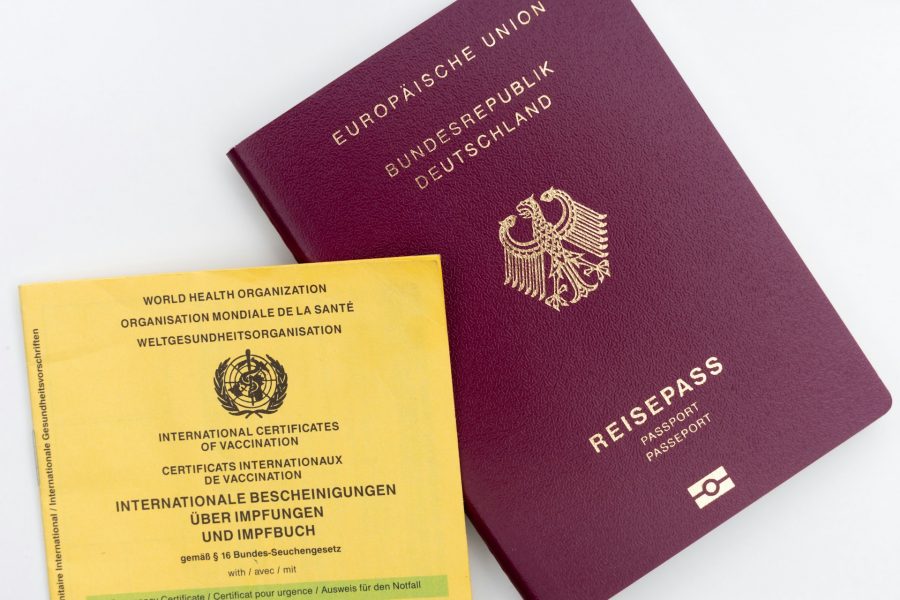
Citizenship is the legal relationship between an individual and a state. It is a formal connection between the individual and the state that comes with certain rights and obligations on both sides. In Germany, citizenship means, for example, that a person is entitled to state protection, can hold a German passport, and enjoys certain political and social rights. At the same time, citizenship also comes with obligations. These include obeying the law, fulfilling civic obligations such as paying taxes, or, in some countries, compulsory military service. In Germany, citizenship is also tied to a special historical responsibility to protect Jewish life.

There are several ways of obtaining German citizenship. The process is complicated. One possible route is descent, if both parents are already citizens. In Germany, as in many countries, citizenship can also be acquired through naturalization, for example if a person has lived in the country for a longer period, meets certain requirements, and commits to the constitutional order. In other states, the place of birth also plays a role.

The requirements for naturalization in Germany include the following:

  • lawful and habitual residence in Germany, usually for a period of five years,
  • financial independence without reliance on social welfare or Bürgergeld,
  • sufficient language skills, usually at around B1 level,
  • commitment to the free democratic basic order of the constitution and to Germany’s special historical responsibility for the injustices of the National Socialist dictatorship and its consequences. This particularly includes the protection of Jewish life.

In many cases, dual or multiple citizenship is also permitted. Once these requirements are largely fulfilled, an application for naturalization can be submitted to the naturalization authority responsible for the applicant’s place of residence. The time until actual naturalization varies considerably. By law, the process is supposed to take up to three months, but in many cases this deadline has been exceeded. Berlin has since digitalized its procedures and thereby accelerated the process. In 2025, around 39,000 people were naturalized, approximately twice as many as in 2024.

Here you can find the Berlin Wiki page of Berliner Morgenpost.

Author:

More From WahlheYmatPost

  • Berlin Wiki: How Berlin’s Government Works 

    Berlin Wiki: How Berlin’s Government Works 

    What Makes Berlin’s Governing Mayor Special? Whoever holds the office of Governing Mayor is both the head of government and the ceremonial head of the city of Berlin. The House of Representatives (Abgeordnetenhaus) votes on who will hold the position. There has even been a case in which someone won the election without being their…

  • Migrants With Degrees Are Not What Germany Is Looking For

    Migrants With Degrees Are Not What Germany Is Looking For

    Education is a right, not a privilege. This idea has been a founding principle of modern democracies. In practice, however, access to education is far from guaranteed for everyone. As of this year, Germany has significantly restricted access to state-funded intermediate and advanced German courses for migrants participating voluntarily. Many rejected asylum seekers, people with…

  • Berlin Wiki: How Do the First and Second Vote Work? 

    Berlin Wiki: How Do the First and Second Vote Work? 

    What Does the First Vote Decide? The article looks at how voters elect candidates and parties in Bundestag elections and elections to the Berlin House of Representatives, and how seats in parliament are distributed through proportional representation. In Bundestag elections or elections to the House of Representatives, voters cast both a first vote and a…

  • Tempelhofer Feld: Berlin’s Most Emotional Urban Conflict Is Back 

    Tempelhofer Feld: Berlin’s Most Emotional Urban Conflict Is Back 

    We are approaching an election in September. Hopefully, you’re reading along in the Berlin Wiki to bone up on how stuff works in German elections, the lexicon, and the issues. Well, one of the issues we’re going to see debated concerns the Tempelhofer Feld. So let’s talk about that for a bit.  The other night,…

  • Berlin Wiki: Parties, Direct Mandates and the Five-Percent Threshold 

    Berlin Wiki: Parties, Direct Mandates and the Five-Percent Threshold 

    What Is a Political Party? A political party is an association of citizens regulated by the German Federal Party Law. Political parties aim to influence political decision-making at federal or state level over a longer period of time and may represent voters in state parliaments or in the Bundestag. First of all, a party needs…

  • Good Intentions Are Not Democratic Enough

    Good Intentions Are Not Democratic Enough

    “What you do for me, but without me, you do against me” — the exact origin of this quote is unclear. Nevertheless, it captures something that frequently happens in Germany when it comes to the political participation of historically excluded groups. Policies are supposedly made for migrants, yet not with them. Gender equality is debated…

  • What Happened When I Tried to Organize My Neighbors 

    What Happened When I Tried to Organize My Neighbors 

    There’s a lot of talk today about building community. At our March WahlheYmat Talk, the crowd brought up the subject, specifically that we should be creating more of it. Ideas flew around the room. We are living in an era of schism, where the people pulling the levers of power are trying to create an…

  • Home Is Not a Place: A Berlin Exhibition Rethinks Migration

    Home Is Not a Place: A Berlin Exhibition Rethinks Migration

    How do people change after moving from one place to another? What do they leave behind and what do they carry with them? Is it possible to feel at home in a space that is vastly different from the one we left? In her latest installation “Remembering Space (how much past can the present hold)”,…

  • Berlin Wiki: Who Is Allowed to Vote – and Why Not Everyone Can

    Berlin Wiki: Who Is Allowed to Vote – and Why Not Everyone Can

    Who is allowed to vote, and who is not? In a democratic state like Germany, the right to vote is of central importance. It allows citizens to take part in political decision-making and help determine the composition of the government. In Germany, voters must meet certain requirements in order to vote. They must hold German…

  • Berlin Wiki: Party Profiles II – The Greens, The Left, the AfD and the BSW party

    Berlin Wiki: Party Profiles II – The Greens, The Left, the AfD and the BSW party

    What is the Green Party? Bündnis 90/Die Grünen is an important political force in the Berlin House of Representatives. Although the party has not been part of the government since the 2023 election, it operates from the opposition within parliament. Its guiding principle is ecological, economic, and social sustainability. It focuses on stronger climate protection,…

  • Berlin Wiki: Party Profiles I — Which Parties Shape the Capital?

    Berlin Wiki: Party Profiles I — Which Parties Shape the Capital?

    Which parties are important in Berlin? Berlin has many political parties, each pursuing its own agenda. These parties are organized at different levels. Many have a Berlin state association, as well as several district and local branches. The parties that receive the most votes form parliamentary groups in the House of Representatives, Berlin’s parliament. The…

  • The Good, the Bad, and the Arbeitsamt

    The Good, the Bad, and the Arbeitsamt

      Most places have an arm of the government to help folks out when they’re unemployed; governments like their citizens to have jobs and pay taxes. It tends to keep the governments – and the citizens – happy. There’s also the matter of not letting people starve in the street when they’re out of work.…

  • Berlin Wiki: Your Guide to the 2026 Berlin Election

    Berlin Wiki: Your Guide to the 2026 Berlin Election

    What will be elected in Berlin in 2026? On September 20, 2026, a new House of Representatives will be elected in Berlin. At the same time, the district assemblies of Berlin’s twelve districts will also be elected. The electoral term is always five years. Voters therefore decide which parties and politicians will serve in these…

  • “Das Volk” in 2026: Time to Redefine the People

    “Das Volk” in 2026: Time to Redefine the People

    “Do you behave as the person you truly want to be?” I ask myself this question in moments when I clearly fall short. Yes, it is hard to live up to one’s ideal self—I’m probably not the only one who feels this way. The same applies for societies. Over the past ten years, I have…

  • “Treat Every Case as Your Own”: How Zaki e.V. Supports Berlin’s Overlooked Migrants

    “Treat Every Case as Your Own”: How Zaki e.V. Supports Berlin’s Overlooked Migrants

    WHP: Can you briefly introduce Zaki e.V.? What is your main mission in Berlin? Pia Bergmann: Zaki – Bildung und Kultur e.V. is a migrant-led organization, with its main office located at the Berlin Global Village in Neukölln and another office in Pankow. The organization’s focus can be summed up in one sentence: arrival and…

Address

Am Hamburger Bahnhof 3
10557 Berlin
Germany

hey@wahlheymat.de

Social Networks