
Berlin Wiki: Party Profiles I — Which Parties Shape the Capital?

WahlheYmatPost,

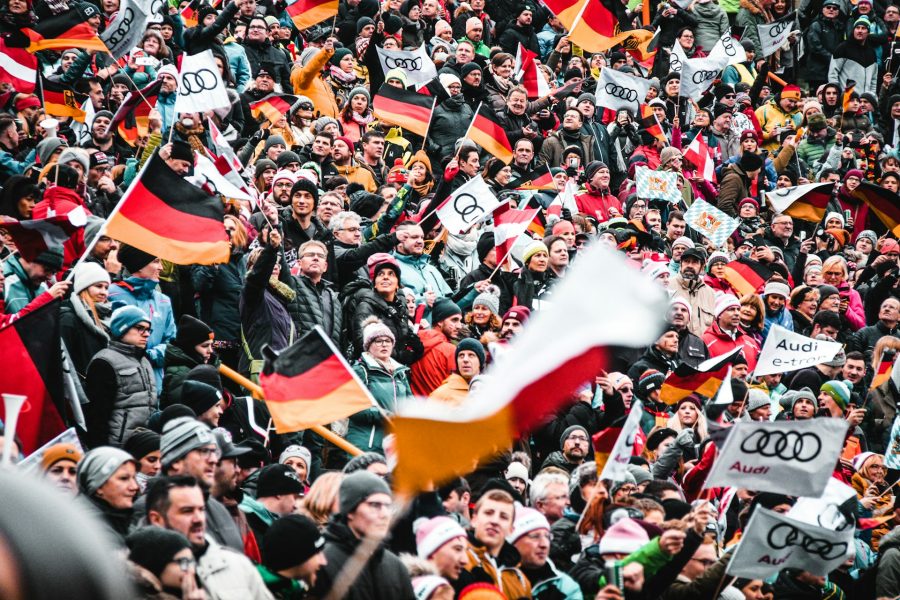
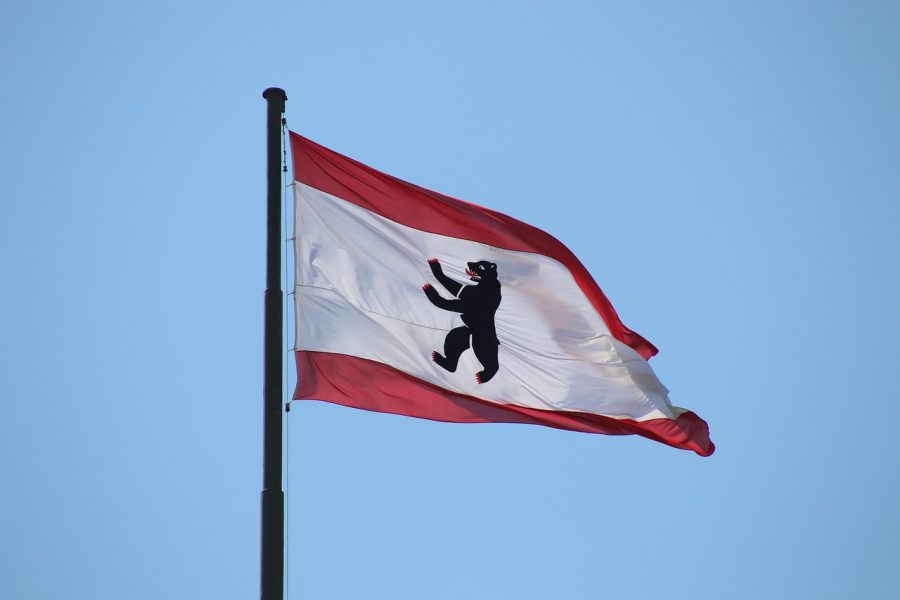
Berlin Flagge
As the 2026 House of Representatives election approaches, Berlin’s party landscape is coming into focus. But who are the key players—and what role do the CDU and SPD currently play? This week, we take a closer look at the parties shaping politics in the capital.

Which parties are important in Berlin?

Berlin has many political parties, each pursuing its own agenda. These parties are organized at different levels. Many have a Berlin state association, as well as several district and local branches.

The parties that receive the most votes form parliamentary groups in the House of Representatives, Berlin’s parliament. The largest group there is the CDU, which governs together with the SPD. Berlin’s Governing Mayor, Kai Wegner, is a member of the CDU. 

Other parties represented in the House of Representatives include Bündnis 90/Die Grünen, Die Linke, and the AfD. One member of parliament joined the BSW after the election. In addition, there are many other parties that are currently not represented in the Berlin parliament.

What is the CDU?

The CDU is an important party in Berlin. The abbreviation stands for “Christian Democratic Union.” The party is generally considered conservative and economically liberal.

The CDU is the party with the most members in Germany, and most German chancellors—including Angela Merkel—have come from the CDU. In Berlin, the party has frequently led the government and currently holds the mayoralty, with Kai Wegner as Governing Mayor.

Other key CDU politicians in Berlin include Stefan Evers (Finance Senator), Ute Bonde (Mobility, Transport, Climate Protection and Environment), Katharina Günther-Wünsch (Education, Youth and Family) and Felor Badenberg (Justice and Consumer Protection). Important issues for the CDU in Berlin include security and the economy.

What is the SPD?

The SPD is one of the major political parties in Berlin and is positioned on the center-left. The abbreviation stands for “Social Democratic Party of Germany.”

It is particularly committed to social issues such as affordable housing, good working conditions, and education. In Berlin, several thousand members are active in district branches, local associations, and working groups. As of December last year, the Berlin SPD had 17,673 members.

It is currently in coalition with the CDU. Key figures for the 2026 House of Representatives election include Steffen Krach and Bettina König. Steffen Krach is running as the SPD’s lead candidate for Governing Mayor of Berlin. Bettina König is expected to co-lead the Berlin SPD together with him.

Other well-known SPD politicians in Berlin include Franziska Giffey, currently serving as Senator for Economic Affairs, and Raed Saleh, parliamentary group leader of the SPD in the Berlin House of Representatives.

The Senate also includes Cansel Kiziltepe (Senator for Labor, Social Affairs, Equality, Integration, Diversity and Anti-Discrimination), Iris Spranger (Senator for the Interior and Sport), Christian Gaebler (Senator for Urban Development, Building and Housing) and Ina Czyborra (Senator for Science, Health and Care).

Here you can find the Berlin Wiki page of Berliner Morgenpost.
Author:

More From WahlheYmatPost

  • Berlin Wiki: How Berlin’s Government Works 

    Berlin Wiki: How Berlin’s Government Works 

    What Makes Berlin’s Governing Mayor Special? Whoever holds the office of Governing Mayor is both the head of government and the ceremonial head of the city of Berlin. The House of Representatives (Abgeordnetenhaus) votes on who will hold the position. There has even been a case in which someone won the election without being their…

  • Migrants With Degrees Are Not What Germany Is Looking For

    Migrants With Degrees Are Not What Germany Is Looking For

    Education is a right, not a privilege. This idea has been a founding principle of modern democracies. In practice, however, access to education is far from guaranteed for everyone. As of this year, Germany has significantly restricted access to state-funded intermediate and advanced German courses for migrants participating voluntarily. Many rejected asylum seekers, people with…

  • Berlin Wiki: How Do the First and Second Vote Work? 

    Berlin Wiki: How Do the First and Second Vote Work? 

    What Does the First Vote Decide? The article looks at how voters elect candidates and parties in Bundestag elections and elections to the Berlin House of Representatives, and how seats in parliament are distributed through proportional representation. In Bundestag elections or elections to the House of Representatives, voters cast both a first vote and a…

  • Tempelhofer Feld: Berlin’s Most Emotional Urban Conflict Is Back 

    Tempelhofer Feld: Berlin’s Most Emotional Urban Conflict Is Back 

    We are approaching an election in September. Hopefully, you’re reading along in the Berlin Wiki to bone up on how stuff works in German elections, the lexicon, and the issues. Well, one of the issues we’re going to see debated concerns the Tempelhofer Feld. So let’s talk about that for a bit.  The other night,…

  • Berlin Wiki: Parties, Direct Mandates and the Five-Percent Threshold 

    Berlin Wiki: Parties, Direct Mandates and the Five-Percent Threshold 

    What Is a Political Party? A political party is an association of citizens regulated by the German Federal Party Law. Political parties aim to influence political decision-making at federal or state level over a longer period of time and may represent voters in state parliaments or in the Bundestag. First of all, a party needs…

  • Good Intentions Are Not Democratic Enough

    Good Intentions Are Not Democratic Enough

    “What you do for me, but without me, you do against me” — the exact origin of this quote is unclear. Nevertheless, it captures something that frequently happens in Germany when it comes to the political participation of historically excluded groups. Policies are supposedly made for migrants, yet not with them. Gender equality is debated…

  • What Happened When I Tried to Organize My Neighbors 

    What Happened When I Tried to Organize My Neighbors 

    There’s a lot of talk today about building community. At our March WahlheYmat Talk, the crowd brought up the subject, specifically that we should be creating more of it. Ideas flew around the room. We are living in an era of schism, where the people pulling the levers of power are trying to create an…

  • Home Is Not a Place: A Berlin Exhibition Rethinks Migration

    Home Is Not a Place: A Berlin Exhibition Rethinks Migration

    How do people change after moving from one place to another? What do they leave behind and what do they carry with them? Is it possible to feel at home in a space that is vastly different from the one we left? In her latest installation “Remembering Space (how much past can the present hold)”,…

  • Berlin Wiki: Who Is Allowed to Vote – and Why Not Everyone Can

    Berlin Wiki: Who Is Allowed to Vote – and Why Not Everyone Can

    Who is allowed to vote, and who is not? In a democratic state like Germany, the right to vote is of central importance. It allows citizens to take part in political decision-making and help determine the composition of the government. In Germany, voters must meet certain requirements in order to vote. They must hold German…

  • Berlin Wiki: Party Profiles II – The Greens, The Left, the AfD and the BSW party

    Berlin Wiki: Party Profiles II – The Greens, The Left, the AfD and the BSW party

    What is the Green Party? Bündnis 90/Die Grünen is an important political force in the Berlin House of Representatives. Although the party has not been part of the government since the 2023 election, it operates from the opposition within parliament. Its guiding principle is ecological, economic, and social sustainability. It focuses on stronger climate protection,…

  • Berlin Wiki: Party Profiles I — Which Parties Shape the Capital?

    Berlin Wiki: Party Profiles I — Which Parties Shape the Capital?

    Which parties are important in Berlin? Berlin has many political parties, each pursuing its own agenda. These parties are organized at different levels. Many have a Berlin state association, as well as several district and local branches. The parties that receive the most votes form parliamentary groups in the House of Representatives, Berlin’s parliament. The…

  • The Good, the Bad, and the Arbeitsamt

    The Good, the Bad, and the Arbeitsamt

      Most places have an arm of the government to help folks out when they’re unemployed; governments like their citizens to have jobs and pay taxes. It tends to keep the governments – and the citizens – happy. There’s also the matter of not letting people starve in the street when they’re out of work.…

  • Berlin Wiki: Your Guide to the 2026 Berlin Election

    Berlin Wiki: Your Guide to the 2026 Berlin Election

    What will be elected in Berlin in 2026? On September 20, 2026, a new House of Representatives will be elected in Berlin. At the same time, the district assemblies of Berlin’s twelve districts will also be elected. The electoral term is always five years. Voters therefore decide which parties and politicians will serve in these…

  • “Das Volk” in 2026: Time to Redefine the People

    “Das Volk” in 2026: Time to Redefine the People

    “Do you behave as the person you truly want to be?” I ask myself this question in moments when I clearly fall short. Yes, it is hard to live up to one’s ideal self—I’m probably not the only one who feels this way. The same applies for societies. Over the past ten years, I have…

  • “Treat Every Case as Your Own”: How Zaki e.V. Supports Berlin’s Overlooked Migrants

    “Treat Every Case as Your Own”: How Zaki e.V. Supports Berlin’s Overlooked Migrants

    WHP: Can you briefly introduce Zaki e.V.? What is your main mission in Berlin? Pia Bergmann: Zaki – Bildung und Kultur e.V. is a migrant-led organization, with its main office located at the Berlin Global Village in Neukölln and another office in Pankow. The organization’s focus can be summed up in one sentence: arrival and…

Address

Am Hamburger Bahnhof 3
10557 Berlin
Germany

hey@wahlheymat.de

Social Networks