
How Does Postal Voting Work?
In Germany, voters can choose to vote by post instead of going to a polling station on election day.
Information on how to apply for postal voting can be found in the voter notification that eligible voters receive in the weeks before the election. Depending on the municipality, voter notifications may also include a QR code that leads directly to an online application.
Once the application has been submitted, the polling card and postal voting documents are usually sent by post. These documents contain envelopes in different colours, which are determined by the municipalities. The completed ballot paper is placed in one envelope, which is then placed together with the signed polling card in another envelope. The postal ballot return letter can then be sent within Germany by post free of charge. Postal voting documents mailed from abroad must have sufficient postage.
Polling cards can be requested until the Friday before the election at the latest. In exceptional cases, such as illness, applications can still be submitted until 3 p.m. on election Sunday. In this case, however, the documents must be collected in person or by an authorized representative.
Anyone who has received their postal voting documents but has not sent them in on time can deliver them in person to the responsible election office until 6 p.m. on election day. Postal ballots arriving after 6 p.m. will not be counted.
What Is a Polling Station?
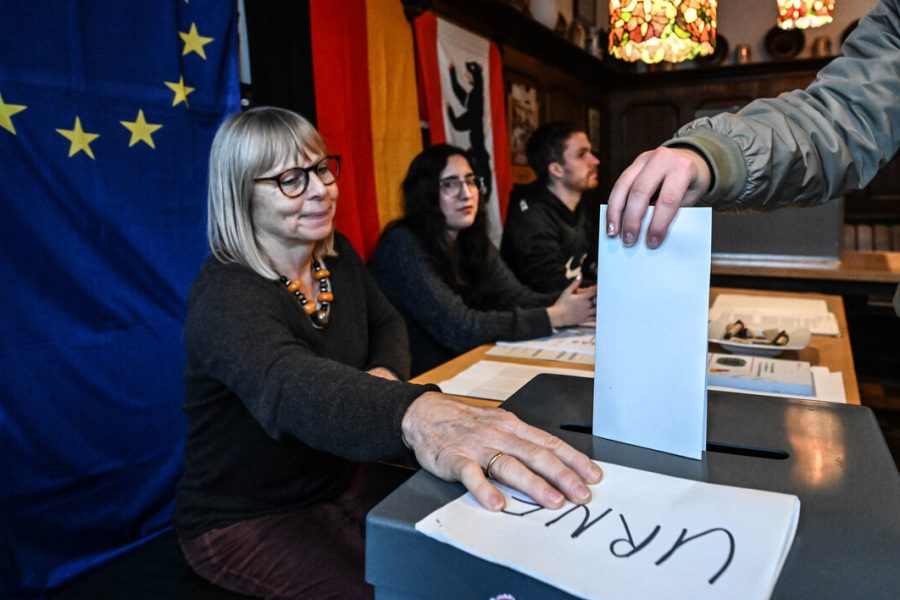
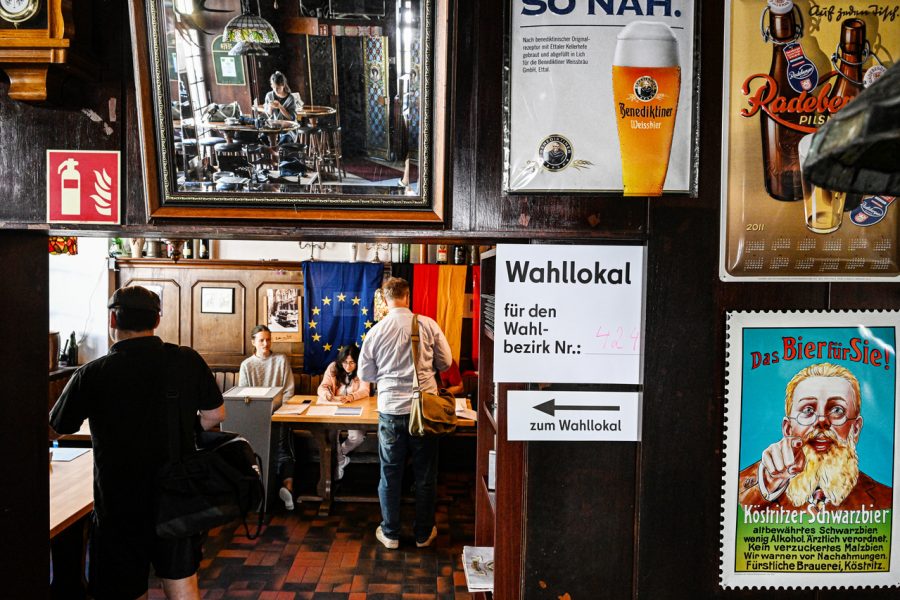
Most Germans vote at polling stations. There, ballot papers are placed directly into a ballot box. Polling stations do not exist all year round. Rather, public facilities, often schools, are converted into polling stations. Cities are divided into many electoral districts. In Berlin, for example, there are 2,220 polling districts with ballot boxes and just as many polling stations. Polling stations are also often located in restaurants or pubs. This is where the German word Wahllokal comes from. Lokal is another word for a restaurant or pub.
Voters can find out which polling station – and which room – they are assigned to from their voter notification, which arrives by post. This should be brought to the polling station, along with an identity card. Election workers then check whether the person is listed in the electoral register and hand out a ballot paper.
The ballot paper is marked behind a privacy screen because voting is secret. The folded ballot paper is then placed into the ballot box.
If the voter notification has been lost, the responsible election office can be contacted by phone to find out the correct polling station. This is often also possible through an online service portal. An identity card alone is sufficient for voting at the polling station.
What Is a Voter Notification?
Anyone who is eligible to vote, is registered as a resident in a municipality and is listed in the electoral register, normally receives a voter notification by post in good time before elections. The voter notification is generally sent four to six weeks before the election by the municipalities or, in Berlin, by the district election offices.
The voter notification must be sent to eligible voters no later than the 21st day before the election. The document states which election is taking place and when it will be held. It also indicates the polling station and room where the voter can cast their ballot and whether the location is accessible. Ideally, the voter notification should be kept and brought to the polling station, but it is not mandatory; an official identification document (such as an identity card or passport) is sufficient.
The voter notification also contains an explanation of how to apply for a polling card, which allows a person either to vote by post or at another polling station within their own constituency.
If a voter notification has still not arrived several days after the legally prescribed mailing date, it may mean that the eligible voter is not entered in the electoral register. In that case, the person concerned should contact the municipality or, in Berlin, the responsible district election office. During a legally defined period before the election, it is possible to inspect the electoral register and file an objection if one’s name has been omitted by mistake; in federal elections, this is usually possible from the 20th to the 16th day before the election.
How Do You Fill Out a Ballot Paper?
Whether it is a federal election or a local election, ballot papers in German elections can look different. At the top, the ballot paper states which election it is for. Below this, depending on the election, there is a list of parties, electoral lists or candidates. The arrangement of this information varies depending on the election.
In federal elections, voters have two votes. The second vote is used to vote for a party’s state list rather than an individual candidate. Both votes can be cast independently of one another.
Depending on the election, the voting options may appear on one or several ballot papers. The top of the ballot paper also states how many marks may be made on it.
Depending on the election, voters may receive additional ballot papers, for example for another election, a referendum, or a popular initiative taking place at the same time. It is important to pay attention to which election is named at the top of the ballot paper.
Ballot papers are marked in secret behind a privacy screen. A circle is printed next to each option for marking the choice. No additional or ambiguous markings should be made outside the designated fields. Otherwise, the vote may be considered invalid.
Here you can find the Berlin Wiki page of Berliner Morgenpost.
(Header image: © FUNKE Foto Services | Maurizio Gambarini)