
Berlin Wiki: Understanding Political Parties

WahlheYmatPost,

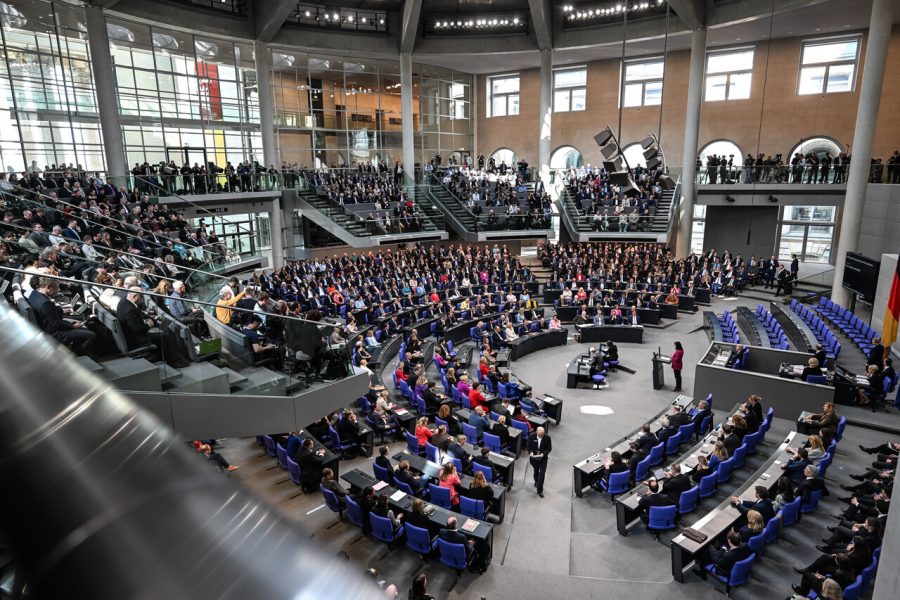
Bundestag
In the next part of our Berlin Wiki series, we explore how political parties present their ideas and values. Learn what election manifestos, party profiles, and political positions are, and why they matter when choosing which party to vote for.

What Is an Election Manifesto?

Before an election, political parties present their election manifestos. This applies in federal, state, and local elections. In the manifestos, parties set out in writing the goals they intend to pursue. These goals reflect the issues that are important to the party during the upcoming legislative term—that is, the electoral term. The manifesto serves as the basis for the election campaign. By presenting it to the public, party representatives explain why voters should vote for them.

An election manifesto should not be confused with a party programme. A party programme usually remains in force for several years and sets out the values and issues that the party fundamentally stands for, regardless of whether an election is approaching.

Political parties publish their election manifestos on their websites. Before an election, extracts from the manifesto are also usually distributed at party information stands in the form of brochures or flyers.

What Is a Party Profile?

As soon as a political party is founded, all of its goals are set out in writing. This ensures that voters know what the party stands for and which issues it considers important. These issues and goals shape the party’s profile and are published in the party programme.

Unlike the election manifesto, which is rewritten before every election, the party programme—and therefore the party profile—remains valid for several years. It serves as a long-term guideline. A party’s political position can be understood directly from its party profile or party programme.

Most parties also have state programmes for each federal state, including Berlin.. This allows political parties to highlight regional political priorities that are important to people in that particular state.

What Is a Political Position?

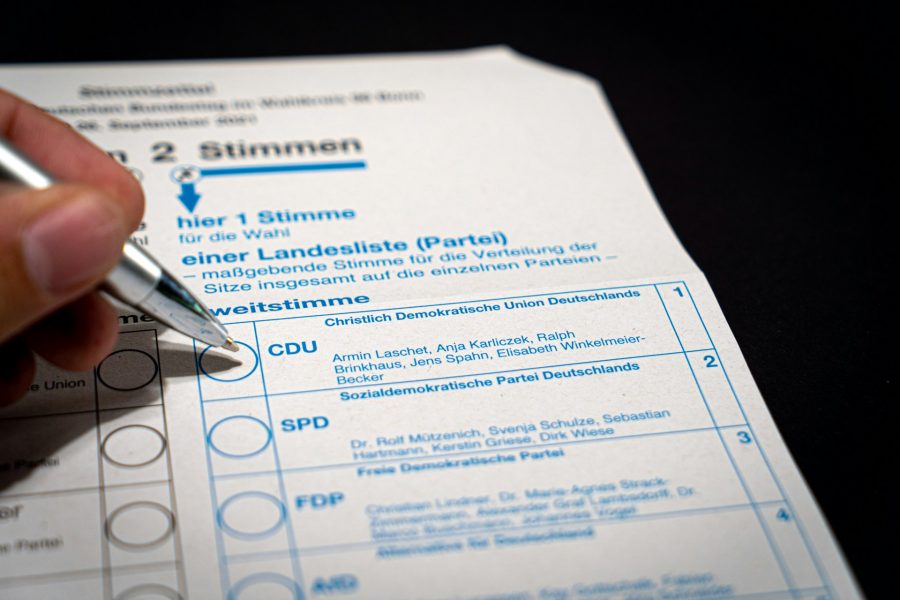
A political position describes where a person or political party stands on a particular issue. Decisions are then made on the basis of this position. These may be personal decisions, such as which party to vote for in an upcoming election. They may also be political decisions, for example during a vote or in the process of passing a new law.

The political positions of individuals and parties are often shaped by the so-called left-right spectrum. This spectrum illustrates the wide range of political views. It extends from positions strongly oriented toward change on the left, through liberal positions in the centre, to strongly conservative positions on the right. Political parties in Germany can also be placed within this spectrum.

Die Linke, for example, advocates policies that focus on social justice. As its name suggests, it belongs to the left of the political spectrum. The Alternative for Germany (AfD), on the other hand, is positioned within the right-wing populist spectrum and, in some respects, even the far-right.

It is important to remember that political positions are held not only by politicians and parties, but by every individual. Anyone who reflects on political debates often develops their own political position on these issues.

Here you can find the Berlin Wiki page of Berliner Morgenpost.

(Header image: © FUNKE Foto Services | Reto Klar)
Author:

More From WahlheYmatPost

  • StimmlosTrend: A New Survey Wants to Hear Berlin’s Missing Voices

    StimmlosTrend: A New Survey Wants to Hear Berlin’s Missing Voices

    Can’t vote in Berlin? There are a million people like you. We’re giving them a voice. That’s the message of WahlheYmat’s new StimmlosTrend campaign, which launches today. Modern democracy is built on elections. In Berlin, the House of Representatives is elected every five years by eligible German citizens (EU citizens can only vote in district…

  • “Berlin taught me to dislike the word integration” 

    “Berlin taught me to dislike the word integration” 

    WHP: You worked in humanitarian aid around the world for many years. What ultimately motivated you to found Just-Go-For-It? Marilena Chatziantoniou: I started working in the field of humanitarian aid in 1998. My first assignment was in Albania, where I worked for a small German NGO, just months before the Kosovo crisis. I remember falling…

  • Berlin Wiki: Understanding Political Parties

    Berlin Wiki: Understanding Political Parties

    What Is an Election Manifesto? Before an election, political parties present their election manifestos. This applies in federal, state, and local elections. In the manifestos, parties set out in writing the goals they intend to pursue. These goals reflect the issues that are important to the party during the upcoming legislative term—that is, the electoral…

  • What is Germany’s greatest asset?

    What is Germany’s greatest asset?

    “Football is a simple game. Twenty-two men chase a ball for 90 minutes and, in the end, the Germans always win,” said Gary Lineker after England lost the 1990 World Cup semi-final on penalties against Germany. Times are changing. Germany no longer always wins at major football tournaments. And England now has a German coach.…

  • Berlin Wiki: Who Votes – and Who Stays Home?

    Berlin Wiki: Who Votes – and Who Stays Home?

    How Many People Participate in Elections? After every election in Germany, one figure receives particular attention: voter turnout, the share of eligible voters who actually cast their ballots. In German public debate, close attention is paid to how voter turnout develops over time. For example, in the 2025 federal election, 82.5 percent of eligible voters…

  • No True German — What It Means to Be German in 2026

    No True German — What It Means to Be German in 2026

    Is there really one German identity that defines all Germans? One German identity to rule them all? We’re going to get into this question, but bear with me for a few paragraphs. I want to take a moment up front to provide a little context, tell you where I’m coming from.  We’re going to dip…

  • Finding Trauma Instead of Belonging: A Review of I Keep My Shadow Light 

    Finding Trauma Instead of Belonging: A Review of I Keep My Shadow Light 

    TL;DR “I Keep My Shadow Light” is the self-published debut novel by Fionnuala Kavanagh. This challenging work follows a cast of four characters from different backgrounds as they try to find a home in Berlin. Very dark in places, the book gives us a chance to read something that would probably never come out of…

  • Migrants With Degrees Are Not What Germany Is Looking For

    Migrants With Degrees Are Not What Germany Is Looking For

    Education is a right, not a privilege. This idea has been a founding principle of modern democracies. In practice, however, access to education is far from guaranteed for everyone. As of this year, Germany has significantly restricted access to state-funded intermediate and advanced German courses for migrants participating voluntarily. Many rejected asylum seekers, people with…

  • Berlin Wiki: From Postal Voting to the Ballot Box 

    Berlin Wiki: From Postal Voting to the Ballot Box 

    How Does Postal Voting Work? In Germany, voters can choose to vote by post instead of going to a polling station on election day. Information on how to apply for postal voting can be found in the voter notification that eligible voters receive in the weeks before the election. Depending on the municipality, voter notifications…

  • From Peru to Berlin: Building Bridges Between Different Ways of Knowing 

    From Peru to Berlin: Building Bridges Between Different Ways of Knowing 

    Are degrees really the only measure of knowledge? Should humans focus on altering nature or adapting to it? Do international studies actually include perspectives from all around the world? Academic credentials, adapting nature to suit modern lifestyles and Eurocentric education are standards that are rarely questioned.  Marita Orbegoso Alvarez, Peruvian educator, community organizer and activist,…

  • Berlin Wiki: The Overlooked Election — BVV and Local Democratic Participation

    Berlin Wiki: The Overlooked Election — BVV and Local Democratic Participation

    How Does the BVV Election Work? On September 20, Berlin goes to the polls. On that day, the election to the House of Representatives (Abgeordnetenhaus) will take place, along with the elections to the District Council Assemblies (Bezirksverordnetenversammlungen, BVV). Berlin is divided into twelve districts, each of which elects its own District Council Assembly. This…

  • Berlin Wiki: Who Makes Decisions in the Districts?

    Berlin Wiki: Who Makes Decisions in the Districts?

    What Does a District Office Do? A Berlin district office (Bezirksamt) manages the administration of one of Berlin’s twelve districts and serves as the district’s political leadership. It consists of the district mayor and five district councillors (Bezirksstadträte), who are elected by the district assembly (Bezirksverordnetenversammlung, BVV). The district office implements adopted laws and policies.…

  • Berlin Wiki: How Berlin’s Government Works 

    Berlin Wiki: How Berlin’s Government Works 

    What Makes Berlin’s Governing Mayor Special? Whoever holds the office of Governing Mayor is both the head of government and the ceremonial head of the city of Berlin. The House of Representatives (Abgeordnetenhaus) votes on who will hold the position. There has even been a case in which someone won the election without being their…

  • Berlin Wiki: How Do the First and Second Vote Work? 

    Berlin Wiki: How Do the First and Second Vote Work? 

    What Does the First Vote Decide? The article looks at how voters elect candidates and parties in Bundestag elections and elections to the Berlin House of Representatives, and how seats in parliament are distributed through proportional representation. In Bundestag elections or elections to the House of Representatives, voters cast both a first vote and a…

  • Tempelhofer Feld: Berlin’s Most Emotional Urban Conflict Is Back 

    Tempelhofer Feld: Berlin’s Most Emotional Urban Conflict Is Back 

    We are approaching an election in September. Hopefully, you’re reading along in the Berlin Wiki to bone up on how stuff works in German elections, the lexicon, and the issues. Well, one of the issues we’re going to see debated concerns the Tempelhofer Feld. So let’s talk about that for a bit.  The other night,…

Address

Am Hamburger Bahnhof 3
10557 Berlin
Germany

hey@wahlheymat.de

Social Networks