
Berlin’s Silent 25 Percent

Wahl
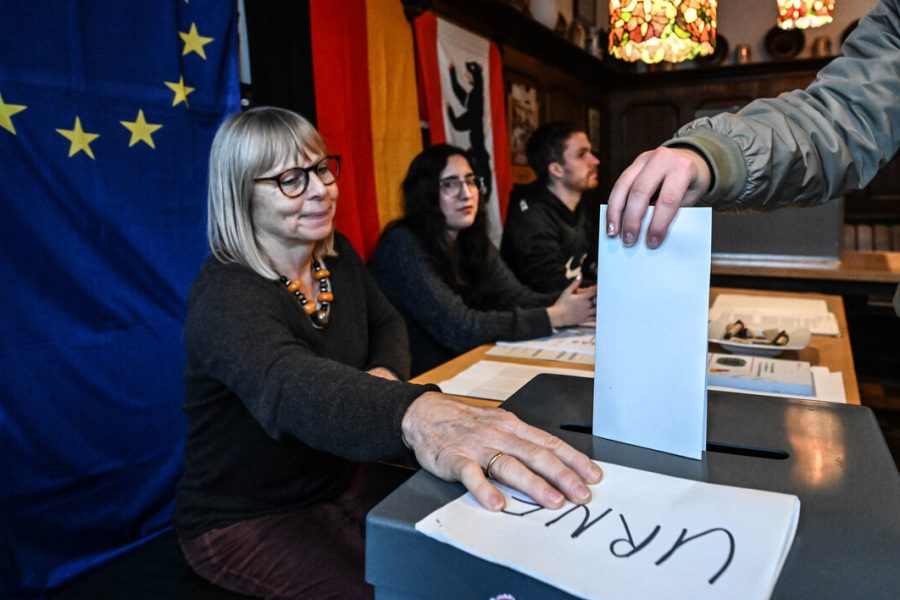
Record numbers of non-voters and growing distrust toward institutions are not abstract trends. In Berlin, they are everyday reality. Maybe it’s time to redesign participation itself.

“We are in a very tense situation with a record number of non-voters and a great distrust in society towards institutions, so it was the right time to convene this citizens’ assembly.”

This quote does not come from Berlin — although the record number of non-voters is also the case here. It was said by the elected representative of Paris’ 15th arrondissement after the creation of a permanent citizens’ assembly in 2021.

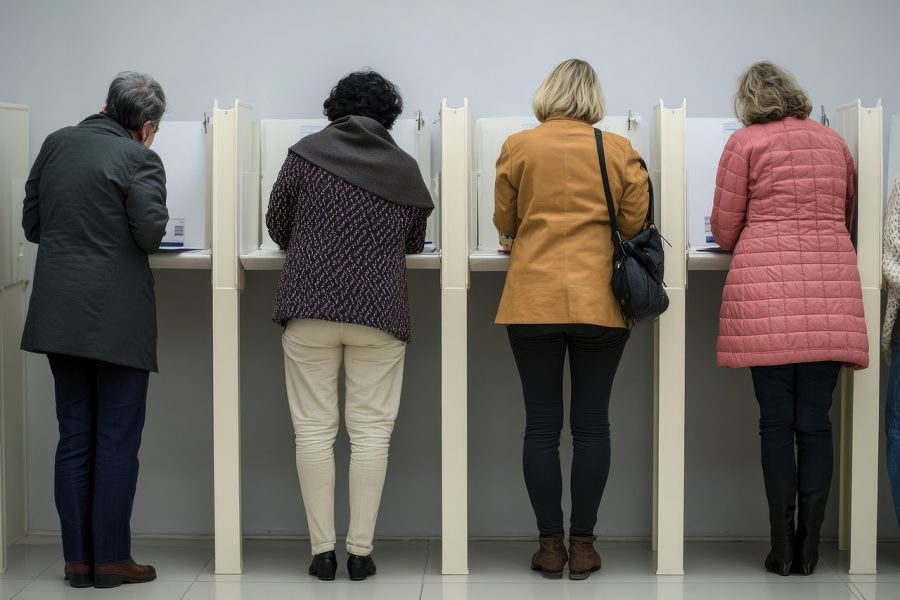
I do not have statistical data on distrust towards institutions — you can judge this based on your own experience. But there is one clear fact: 25% of Berlin’s population cannot vote. Why not change this? We actually have a plan — seriously.

What if we used this year’s elections to invite all international residents to register for a permanent citizens’ assembly of non-voters? From this group, 100 people would be selected by lot — each from a different country. In parallel, the new city government could create a Chief Citizen Officer (CCO) — similar to a deputy mayor. The CCO would serve as a bridge between civic engagement, Vereine, and the citizens’ assembly, involving residents more strongly in decision-making.

A permanent assembly of international citizens and a CCO — starting this September.

I can already hear your thoughts: Berlin already has countless Beiräte, Beauftragte, and an overcomplicated bureaucracy—why make it even more complex?

My answer: we must start taking citizen participation seriously. We can no longer afford NOT to. What we have now is not effective, and we can all see it — simply by walking on the icy sidewalks while looking at empty tram tracks.

If you meet people in Berlin working in companies, startups, media outlets, consultancies, creative businesses, arts, or NGOs — the list is long — you quickly realize how much latent potential there is in our shared public life. Potential to make life easier, more enjoyable, more trusting. To unlock creativity, we need to innovate, try things out, and learn from other places. Pick the best examples, implement them quickly, try, fail, correct. If this works in companies, it can work in a city. Let’s transfer the best Kieze, networks, and local initiatives to the city level. 

That is why we adopted Richard Scarry’s Busy World for the WahlheYmatPost campaign. We dream of a city where shaping our shared life is a joy. We truly believe that the international residents of Berlin can help us see things differently—hand in hand with all other residents, old and new, born in Berlin or elsewhere — and create something we genuinely enjoy.

This is the vision behind WahlheYmat: why we organize the WahlheYmat Talks and help people understand Berlin through WahlheYmatPost.

Read. Discuss. Join. Believe that we can change how our beloved city works.
Author:

More From WahlheYmatPost

  • “Discrimination is not an individual problem, but a structural one”

    “Discrimination is not an individual problem, but a structural one”

    WHP: Can you briefly introduce Yekmal? What is your main task in Berlin? Remziye Uykun: Yekmal e.V. is a migrant education, parent and community organisation based in Berlin that now operates nationwide, with locations in several federal states. Our main task is to strengthen multilingualism as a democratic resource, enable equal participation and structurally anchor…

  • Berlin’s Silent 25 Percent

    Berlin’s Silent 25 Percent

    “We are in a very tense situation with a record number of non-voters and a great distrust in society towards institutions, so it was the right time to convene this citizens’ assembly.” This quote does not come from Berlin — although the record number of non-voters is also the case here. It was said by…

  • Building Home in Berlin: The Inside-Out Approach with Katarina Stoltz

    Building Home in Berlin: The Inside-Out Approach with Katarina Stoltz

    Katarina Stoltz, originally from Sweden, spent her first months in Berlin crying over Prosecco on a friend’s balcony in Prenzlauer Berg. She’d left behind a thriving career as a Reuters photojournalist in Warsaw. Her work was published in the New York Times, capturing Poland’s entry into the European Union. She’d quit her job, sold her…

  • 35 Years of Integration Work: CLUB DIALOG and the Power of Community Networks

    35 Years of Integration Work: CLUB DIALOG and the Power of Community Networks

    WHP: Can you briefly introduce your initiative? What is its main task in Berlin? Dr. Natalia Roesler: CLUB DIALOG e.V. is a migrant organisation that was founded in Berlin in 1988 to stimulate social dialogue between Russian-speaking migrants and local Berliners, as well as to promote the integration of immigrants. Over the course of more…

  • Rising Ukrainian Engagement Powers Berlin’s Civic Scene

    Rising Ukrainian Engagement Powers Berlin’s Civic Scene

    WHP: Can you briefly introduce your initiative? What is its main mission in Berlin? Tetyana Lavuta: Svoji.de is an online platform that increases the visibility of Ukrainian civic initiatives in Berlin and Brandenburg and supports their networking with other migrant communities. The name evokes a sense of belonging and safety: the Ukrainian word “svoji” (written…

  • Newcomers Are Not a Problem to Solve: How SINGA Deutschland Builds Participation

    Newcomers Are Not a Problem to Solve: How SINGA Deutschland Builds Participation

    WHP: Could you briefly introduce SINGA Deutschland? What is its main mission in Berlin? Sen Zhan: SINGA Deutschland was founded in 2016 by a brilliant team of three co-founders — Luisa Seiler, Sima Gatea, and Vinzenz Himmighofen — as a humanitarian response at a moment when many newcomers were arriving in Germany. From the beginning,…

  • Papers, please! — How I Turned a 90-Day Visa into a Home in Berlin

    Papers, please! — How I Turned a 90-Day Visa into a Home in Berlin

    When you’re trying to set up your life in Berlin, visas are one of the first things you need to get in order. Unless you’re an EU citizen, you can’t live and work in Germany without one. Simple as that! But there are a whole bunch of different visa options. Should you try for the…

  • Berlin’s Rental Maze: What an American Learns When the Landlord Plays Games

    Berlin’s Rental Maze: What an American Learns When the Landlord Plays Games

    If you moved to Berlin from another European country, then you probably already know how many protections renters have here. My German friends hate it when I go on about how awful the US is – especially the low-level injustice and exploitative chicanery – but as a renter, you have essentially no rights in the…

  • Monsieur Ibrahim’s Magic in Kreuzberg: From Runaway to Community Maker

    Monsieur Ibrahim’s Magic in Kreuzberg: From Runaway to Community Maker

    I set out to conduct my first-ever interview for WahlheYmatPost on a grey and rainy Friday afternoon in Charlottenburg. The founder of WahlheYmat e.V., Ivan Gabor, mentioned meeting a man named Jaybo, a Frenchman living in the heart of Kreuzberg who is positively impacting his community. I happily took the opportunity to try out being…

  • Stay: The New Migration Challenge Germany Can’t Ignore

    Stay: The New Migration Challenge Germany Can’t Ignore

    If nothing changes demographically, Germany will have 16 million fewer workers by 2060 than today. According to most projections, the country needs around 400,000 new workers every year from abroad. We often hear this fact in the news, but what we hear much less about is how many international people leave Germany again—and this seems…

  • Berlin, Hold My Book: Why Physical Still Beats Digital

    Berlin, Hold My Book: Why Physical Still Beats Digital

    Ok. This is going to sound like a typical “back in my day” kind of old man rant. But hear me out, because I’m not talking about a world swallowed by time. Despite claims to the contrary, Berlin is still full of places that offer a key to a door that still stands today: a…

  • Remembering as Resistance – How AKEBI Confronts Racism in Berlin

    Remembering as Resistance – How AKEBI Confronts Racism in Berlin

    WahlheYmatPost: Can you briefly introduce your organization? What is its main mission in Berlin? Erkin Erdoğan: AKEBI e.V. is a Berlin-based non-profit association, founded by migrants from Turkey in 2014. The name “AKEBI” is the acronym of “Association of Activists Against Racism, Nationalism, and Discrimination” from the Turkish language. We had a preceding anti-racist network…

  • From Glitter to Growth: How Taylor Coburn Found Her Shine in Berlin

    From Glitter to Growth: How Taylor Coburn Found Her Shine in Berlin

    I had the pleasure of sitting down with an immigrant change-maker who encourages fellow immigrants from all walks of life to build their lives here in Berlin, instead of just scraping by and letting social norms, visas, or rules rob them of their ability to thrive.  Taylor Coburn is involved in many projects around the…

  • Giving Voice to Eastern European Migrants: The Polnischer Sozialrat’s Work for Equality

    Giving Voice to Eastern European Migrants: The Polnischer Sozialrat’s Work for Equality

    WHP: Can you briefly introduce your organization? What is its main task in Berlin? Dr. Kamila Schöll-Mazurek: The Polnischer Sozialrat (Polish Social Council – PSR) is one of the oldest Polish migrant organizations in Germany. Since our founding in 1982, we have advocated for the social participation and equal rights of Polish people in Berlin.…

  • Nebenkostenabrechnung: The Reckoning No One Explains

    Nebenkostenabrechnung: The Reckoning No One Explains

    TL;DR If you’re in Germany, be ready for big costs at the end of the year. You should also always have a savings pool to deal with random, crazy, unexpected bills that might show up. They tend to do that as the year ends.   We just had another Christmas in Germany. And wasn’t it magical,…

  • “We Can’t Let Protection Become a Privilege”

    “We Can’t Let Protection Become a Privilege”

    WahlheYmatPost: Can you briefly introduce your organization? What is its main mission in Berlin? Vicky Germain: The Migrationsrat Berlin e.V. (Migration Council Berlin) is an umbrella organization of more than 90 BIPoC (Black, Indigenous, and People of Color) and/or migrant self-organizations and post-migrant groups in Berlin. Its central mission is to improve the social, political,…

  • Neustart Berlin: A Fresh Start Without Everyone in the Room

    Neustart Berlin: A Fresh Start Without Everyone in the Room

    Berliner Morgenpost — together with Tagesspiegel, EUREF Campus, and radioeins — launched a strong new initiative: Neustart Berlin. Everyone was invited to submit an ongoing project that could revitalize Berlin and give the city a fresh start for the 21st century and beyond. More than 70 initiatives applied; a jury selected eight of them to…

Address

Am Hamburger Bahnhof 3
10557 Berlin
Germany

hey@wahlheymat.de

Social Networks