
The Kiez: Where Berlin Becomes Personal

By
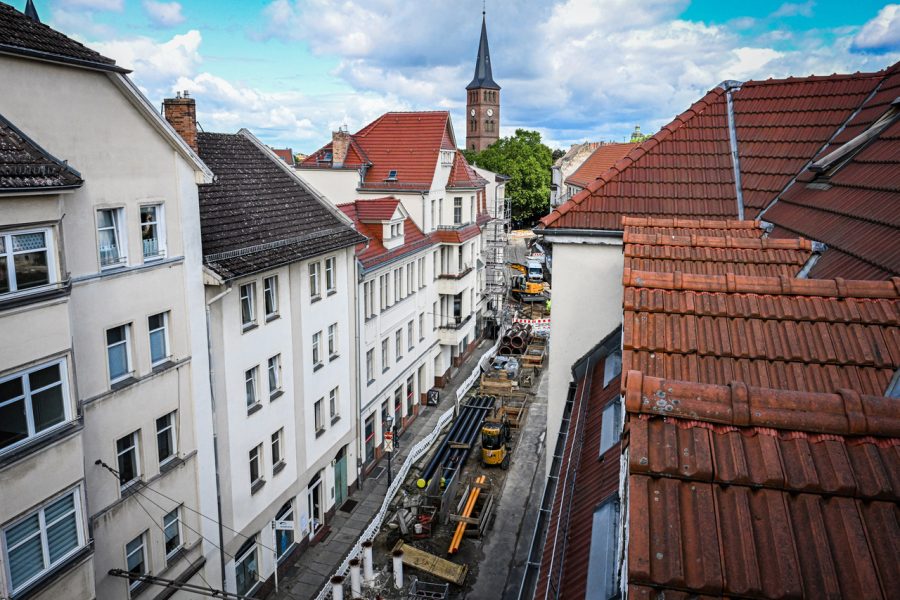
Berlin Kreuzberg Kiez
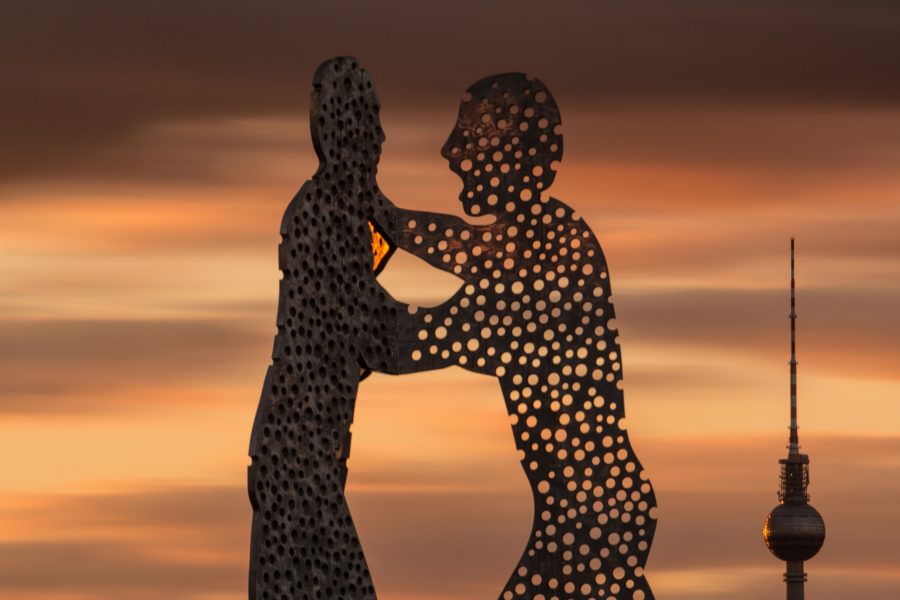
Berliners love to talk about their Kiez — a word that means much more than just “neighborhood.” It’s a slice of the city that feels like home, defined not by borders on a map but by the places and people you know by heart. Walter Phippeny explores what makes the Kiez such a deeply personal part of Berlin life.

I’ve often said that in France every region has its dish, its wine, and its cheese; in Germany, every region has its dish, beer, sausage…and language. If we learned German before coming here, we learned “High German” (Hochdeutsch) – because it’s spoken in the high country… not because it’s lofty, or something – and then we landed in the country and we soon found ourselves confronted with dialect. 

I’ve heard that other countries, like Italy, also have very different dialects, but I haven’t experienced that firsthand. A dialect is not a different language but it has its own accent and vocabulary. We don’t really have anything like it in the US – Germans will often point to the Deep South for dialect, but it’s not really dialect, just accent. Still, from dialects we get these interesting words, giving each region its own flavor. “Kiez” is one of those words. 

It’s a neighborhood

The word Kiez, though, is not originally German. It’s a loanword from one of the slavic languages that used to be spoken by the original inhabitants of the Northeast, like the name “Berlin” itself. It probably comes from “chysa” or “hyža”, meaning hut or fishermen’s hut. Originally, it referred to an inhabited area that would provide goods and services to a local castle or fortification and it goes all the way back to the Middle Ages. I’ve heard that Kiez is used throughout the Northeast, but, aside from Usedom, I haven’t spent much time there and couldn’t say for sure. 

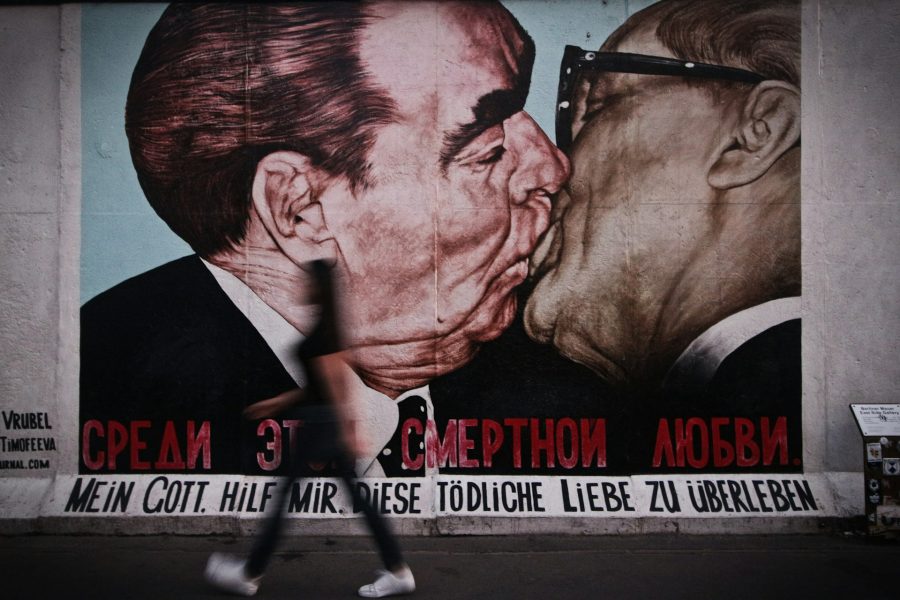
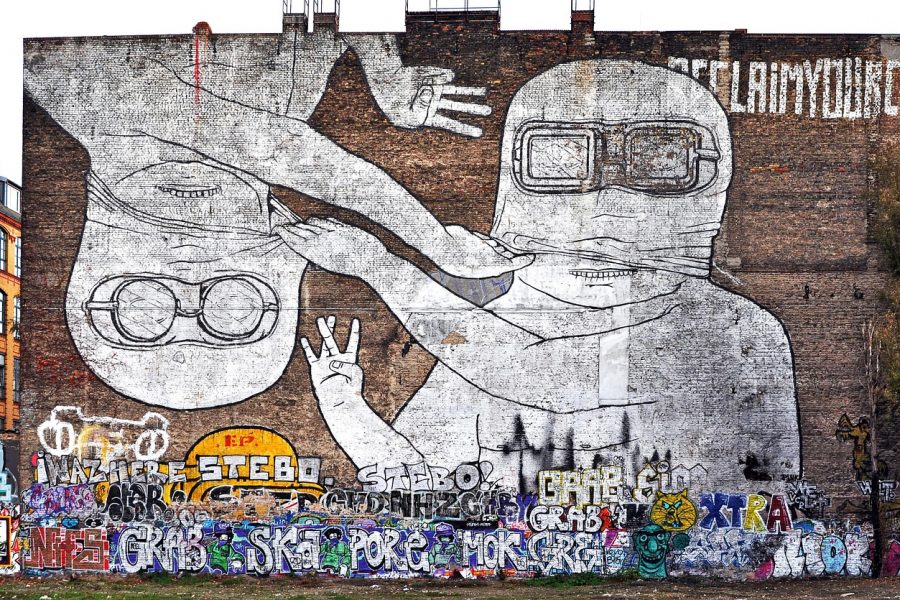
East Side Gallery

The idea of a Kiez exists in just about every urban center. Traditional Cockney in London is a Kiez: folks who grew up within earshot of the Bow Bells. Paris has the idea of an arrondissement. It’s a neighborhood – The place where you spend most of your time, do all your shopping, where you have your local, where people know your name. 

“A Kiez is something personal and intimate”

I’ve had Berliners explain it even a little further to say specifically that your Kiez is everything within easy walking distance from your house. It’s different from a quarter or a district; I live in Prenzlauer Berg, but that’s not my Kiez. Prenzlauer Berg is too big to be a Kiez. 

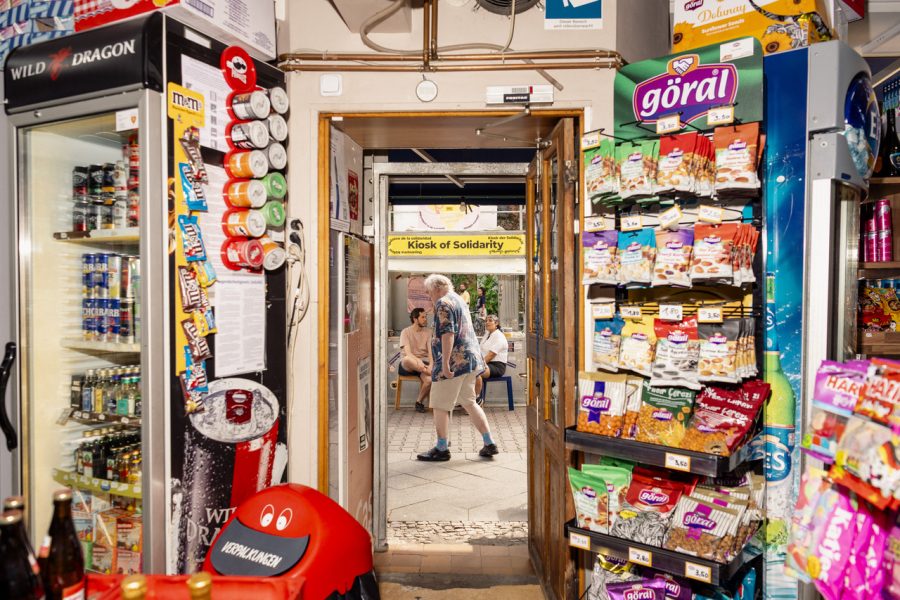
No, my Kiez is the Rewe I go to and the guy who works behind the deli counter who is always friendly, and, surprisingly, always in a good mood; my Kiez is my local and the bar keep who is already pouring my drink before I sit down on the stool; my Kiez is my barber shop where everyone calls out my name when I walk through the door. My Kiez are all my neighbors in my apartment building and the chats that we have on the stairs. A Kiez is something personal and intimate even when city living can be so anonymous. 

Walk your Kiez

You’ll hear people throwing the word Kiez around a lot, trying to show their Berlin cred; it’s probably one of the first words in Berlinerisch that you’ll pick up next to “jut” and “schön jewesen”. I’ve seen comedy sketches making fun of people from Schwabenland, peppering their small talk with it. But the more you live with it, the more it DOES become a part of you, just like all the other little Berlin bits that leave their mark. Rather than a social cue, showing off how well you’ve integrated into the city, it becomes a much more tangible thing. It starts to become part of you. 

So, walk your Kiez, get to know it, and get to know the people who live in it. Go back to the same places and get to know the people who work there, live there, play there. It’s worth your time.      
Author:

More From WahlheYmatPost

  • “Treat Every Case as Your Own”: How Zaki e.V. Supports Berlin’s Overlooked Migrants

    “Treat Every Case as Your Own”: How Zaki e.V. Supports Berlin’s Overlooked Migrants

    WHP: Can you briefly introduce Zaki e.V.? What is your main mission in Berlin? Pia Bergmann: Zaki – Bildung und Kultur e.V. is a migrant-led organization, with its main office located at the Berlin Global Village in Neukölln and another office in Pankow. The organization’s focus can be summed up in one sentence: arrival and…

  • Germany Has an Energy Crisis — Just Not the One You Think

    Germany Has an Energy Crisis — Just Not the One You Think

    Energy – scarcity.We talk about energy all the time—but only in physical terms.I find myself thinking more and more about our social energy, which may matter even more. Because a society also needs energy. This energy, I would call social energy—a concept that appears in the social sciences under terms like collective intelligence or social…

  • Multilingualism, Participation, and Power: A Berlin Case Study

    Multilingualism, Participation, and Power: A Berlin Case Study

    Local migrant organizations often play a crucial yet underrecognized role in shaping participation, representation, and social cohesion within urban districts. Based on my experience directing the migraUp! Pankow project in Berlin between 2015 and 2025, this reflection highlights how community-based initiatives can strengthen migrant organizations while simultaneously contributing to local governance and democratic participation. migraUp!…

  • One In Four Berliners Cannot Vote: Europe Still Struggles With Migrant Political Participation

    One In Four Berliners Cannot Vote: Europe Still Struggles With Migrant Political Participation

    A recent report by the Migration Policy Group, a think tank based in Brussels, shows that Germany is among the best of the worst when it comes to enabling and encouraging the political participation of immigrants. Germany’s score in this is only a small part of the bleak findings from the report’s Political Participation Index,…

  • ‘Migrants’ Are The Greatest Opportunity For Germany

    ‘Migrants’ Are The Greatest Opportunity For Germany

    “Change begins with a conversation.” That’s why I was glad to be invited to the SharedTableDinner by the Oneliness Project. How do we find a sense of home in each other? How are loneliness and democracy connected? These were the questions that shaped the evening. Amazing people shared deeply personal thoughts about how they connect…

  • “Democracy Is More Than Voting”: Sami Atris on Organising Communities in Berlin

    “Democracy Is More Than Voting”: Sami Atris on Organising Communities in Berlin

    WHP: Can you briefly introduce the Berliner Bürgerplattformen? What is its main purpose in Berlin? Sami Atris: Who actually decides what happens in our lives? How much influence do we have over how high our rent is — or whether we can even afford to stay in our neighbourhood? Who decides whether our children go…

  • Ukrainian Voices in Berlin: “People Are Not Objects for Integration Debates”

    Ukrainian Voices in Berlin: “People Are Not Objects for Integration Debates”

    WHP: Can you briefly introduce the Allianz Ukrainischer Organisationen e.V (Alliance of Ukrainian Organizations)? What is its main task in Berlin? Oleksandra Bienert: The Allianz Ukrainischer Organisationen e.V. is a nationwide association currently bringing together 23 civil society organizations in eight federal states. These organizations were founded by people with a Ukrainian migration background and…

  • WahlheYmat Turns Two — And Invites You In

    WahlheYmat Turns Two — And Invites You In

    WahlheYmat is looking for new members.That is the message I would like to write about today. Before my life in Berlin, I was never this direct. I am learning a lot here. And I don’t just mean the famous Berliner Schnauze — like going into a bakery and saying: “Good morning, so sorry for disturbing…

  • The Berlin Blueprint: Participation as the Ultimate Act of Self-Determination

    The Berlin Blueprint: Participation as the Ultimate Act of Self-Determination

    In the glossy catalogs of modern wellness, “self-help” is often sold as a retreat from the world: a private journey of healing through products and quiet contemplation. Berlin’s history, however, offers a more rugged, democratic alternative. In this city, wellbeing has never been found in isolation. It has been forged through participation. To be a…

  • No Permission, More Love: Building Your Vision in Berlin Like Nalan Sipar

    No Permission, More Love: Building Your Vision in Berlin Like Nalan Sipar

    When Nalan Sipar asked her boss at Deutsche Welle if she could create content in Turkish to help inform the German-Turkish community during the early days of the 2020 global pandemic in Berlin, the answer was no.  Her boss at the time told her that a state contract prevented the government-funded broadcaster from covering information…

  • “Discrimination is not an individual problem, but a structural one”

    “Discrimination is not an individual problem, but a structural one”

    WHP: Can you briefly introduce Yekmal? What is your main task in Berlin? Remziye Uykun: Yekmal e.V. is a migrant education, parent and community organisation based in Berlin that now operates nationwide, with locations in several federal states. Our main task is to strengthen multilingualism as a democratic resource, enable equal participation and structurally anchor…

  • 35 Years of Integration Work: CLUB DIALOG and the Power of Community Networks

    35 Years of Integration Work: CLUB DIALOG and the Power of Community Networks

    WHP: Can you briefly introduce your initiative? What is its main task in Berlin? Dr. Natalia Roesler: CLUB DIALOG e.V. is a migrant organisation that was founded in Berlin in 1988 to stimulate social dialogue between Russian-speaking migrants and local Berliners, as well as to promote the integration of immigrants. Over the course of more…

  • Monsieur Ibrahim’s Magic in Kreuzberg: From Runaway to Community Maker

    Monsieur Ibrahim’s Magic in Kreuzberg: From Runaway to Community Maker

    I set out to conduct my first-ever interview for WahlheYmatPost on a grey and rainy Friday afternoon in Charlottenburg. The founder of WahlheYmat e.V., Ivan Gabor, mentioned meeting a man named Jaybo, a Frenchman living in the heart of Kreuzberg who is positively impacting his community. I happily took the opportunity to try out being…

  • Berlin’s Silent 25 Percent

    Berlin’s Silent 25 Percent

    “We are in a very tense situation with a record number of non-voters and a great distrust in society towards institutions, so it was the right time to convene this citizens’ assembly.” This quote does not come from Berlin — although the record number of non-voters is also the case here. It was said by…

  • From Hate Brands to Love Brands: A Different Vision for Democracy

    From Hate Brands to Love Brands: A Different Vision for Democracy

    “We need impactful love brands… that blend purpose, impact, innovation, and emotion.”This challenge was launched by the GICA Impact Network, founded and led by our amazing friend Alexander Sascha Wolf. Sure, Sascha is right — but using the term love brand made me think. What are the love brands of our democratic and political life?…

  • Building Home in Berlin: The Inside-Out Approach with Katarina Stoltz

    Building Home in Berlin: The Inside-Out Approach with Katarina Stoltz

    Katarina Stoltz, originally from Sweden, spent her first months in Berlin crying over Prosecco on a friend’s balcony in Prenzlauer Berg. She’d left behind a thriving career as a Reuters photojournalist in Warsaw. Her work was published in the New York Times, capturing Poland’s entry into the European Union. She’d quit her job, sold her…

Address

Am Hamburger Bahnhof 3
10557 Berlin
Germany

hey@wahlheymat.de

Social Networks