
Neustart Berlin: A Fresh Start Without Everyone in the Room

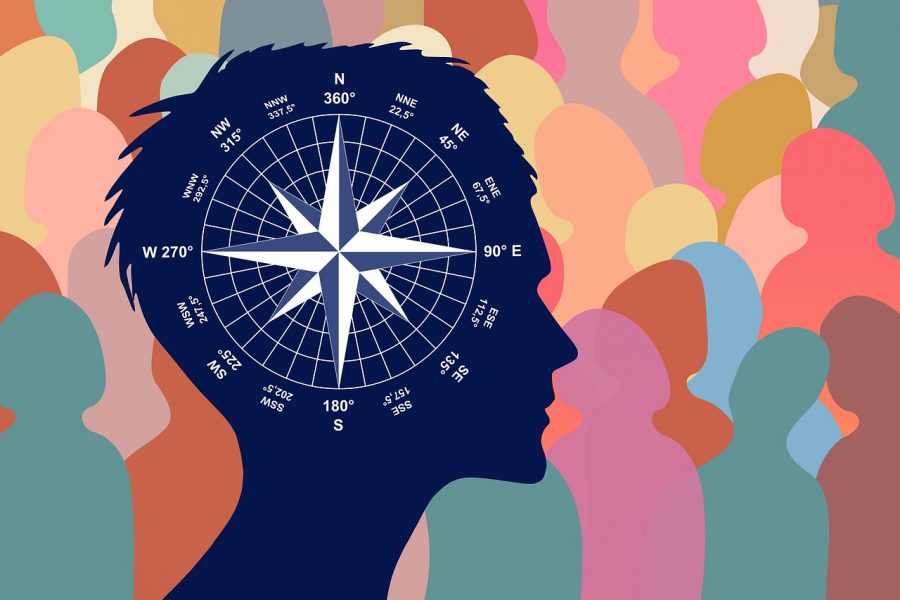
Kompass, Mensch, Denken
We were at the Neustart Berlin Conference — to see how Berliners imagine a bright new future for their city.

Berliner Morgenpost — together with Tagesspiegel, EUREF Campus, and radioeins — launched a strong new initiative: Neustart Berlin. Everyone was invited to submit an ongoing project that could revitalize Berlin and give the city a fresh start for the 21st century and beyond. More than 70 initiatives applied; a jury selected eight of them to present their ideas on stage at the Gasometer Conference Center at Euref Campus on November 21, 2025. Thanks to the Morgenpost, WahlheYmatPost was also invited.

There were three longer presentations on stage. Two of them addressed the housing crisis — still the city’s most urgent problem. We especially liked the idea of Transiträume, presented by Alexander Sascha Wolf: tiny Japanese-style houses, about 10 m², built inside unused office spaces. It sounds completely logical, since Berlin currently has 1.8 million square meters of empty office and retail space. The landlord gets rent; young people get affordable micro-homes. They claim they could build 10,000 units within half a year. Fast, effective, and helping to increase rental supply so that prices can finally come down. A strong concept and a perfect presentation.

The second housing idea revisited the old Siemens model: companies building apartments for their employees, using existing German legal frameworks. Beyond housing, other inspiring concepts emerged: more eco-friendly asphalt; more trees and greenery, supported by digital tools for watering and planting; mini-festivals in Kieze; and a hip-hop academy. In the project exhibition, we especially liked the “Three-Religion Kindergarten” — perhaps a smaller, faster alternative to the House of One.

Organizing a conference like this is a huge achievement. It is remarkable that Berlin’s major media houses — normally competing daily — decided to cooperate. It is remarkable that everyone was invited to apply. And all initiative owners were companies or NGOs, showing clearly: this is our city, and we are the ones who must change it for the better.

So everything could have been perfect. Except for one thing — something we found deeply symbolic.

On stage there were not only the presenters, but also a Judge Community: three prominent figures — the Managing Director of the IHK (Chamber of Commerce), the former Senator for Urban Development and ex-CEO of Berlin Airport, and a board member of Investitionsbank Berlin. Their role was to ask critical, reality-check questions. On paper, that sounds logical — and surely that was the intention. But the biggest mistake was that all three represented “official Berlin.”

So what actually happened on stage was exactly what happens in real life: good intentions and excellent ideas were met with heavy criticism from what felt like an Idea-Killer Commando. Depending on — quite subjectively — how much they liked the idea, the presenter, or the organization behind it, they were either extremely critical or surprisingly supportive.

We took away three lessons:

1. Authenticity

Nothing happens by accident. The whole situation was a mirror of Berlin: a cat-and-mouse game between creative citizens and bureaucracy. Citizens try to change things; bureaucrats try to catch them. The results are visible everywhere: Pergamon Museum delays, broken trash bins, decade-old construction sites. In that sense, the dynamic on stage was painfully authentic.

2. Energy

The number-one rule of brainstorming is: no criticism. Of course, anything can be criticised. But energy comes from ideas, from dreaming big, from naïveté, from the belief that everything is possible. When criticism enters the vulnerable early stages of innovation, energy dies — and the “Neustart” dies with it.

3. How

Maybe the most important question today is not what we need to do, but how we can make change possible.
How do we unlock energy?
How do we find new sources of creativity and innovation?
How do we create the conditions for people to try, experiment, and believe again?

But here is where we found hope.

We were at the conference together with Taylor Coburn. As everyone was sitting in the room, she looked around and whispered to me:
“This event is super white and super German!”

What if, as a next step, we created a similar conference — but truly inclusive?
Mixing Berlin’s international society.
Including people from different countries, from different Bundesländer, and those born in Berlin.

A conference to exchange ideas on what we can learn from each other.
What people from other places bring to Berlin.
What Berlin can learn from other cities.
How we imagine social innovation, digitalisation, mobility, road construction, administration, and housing.

It would be especially important because what Berlin needs most is an inclusive, collaborative, international society. A society where we all learn and practice – every day – how to move beyond language and cultural barriers, how to take the step beyond our instinctive feelings and biases toward others. An inclusive conference could symbolise the future of Berlin’s society and be a real step forward on this path.

Author:

More From WahlheYmatPost

  • “Treat Every Case as Your Own”: How Zaki e.V. Supports Berlin’s Overlooked Migrants

    “Treat Every Case as Your Own”: How Zaki e.V. Supports Berlin’s Overlooked Migrants

    WHP: Can you briefly introduce Zaki e.V.? What is your main mission in Berlin? Pia Bergmann: Zaki – Bildung und Kultur e.V. is a migrant-led organization, with its main office located at the Berlin Global Village in Neukölln and another office in Pankow. The organization’s focus can be summed up in one sentence: arrival and…

  • Germany Has an Energy Crisis — Just Not the One You Think

    Germany Has an Energy Crisis — Just Not the One You Think

    Energy – scarcity.We talk about energy all the time—but only in physical terms.I find myself thinking more and more about our social energy, which may matter even more. Because a society also needs energy. This energy, I would call social energy—a concept that appears in the social sciences under terms like collective intelligence or social…

  • Multilingualism, Participation, and Power: A Berlin Case Study

    Multilingualism, Participation, and Power: A Berlin Case Study

    Local migrant organizations often play a crucial yet underrecognized role in shaping participation, representation, and social cohesion within urban districts. Based on my experience directing the migraUp! Pankow project in Berlin between 2015 and 2025, this reflection highlights how community-based initiatives can strengthen migrant organizations while simultaneously contributing to local governance and democratic participation. migraUp!…

  • One In Four Berliners Cannot Vote: Europe Still Struggles With Migrant Political Participation

    One In Four Berliners Cannot Vote: Europe Still Struggles With Migrant Political Participation

    A recent report by the Migration Policy Group, a think tank based in Brussels, shows that Germany is among the best of the worst when it comes to enabling and encouraging the political participation of immigrants. Germany’s score in this is only a small part of the bleak findings from the report’s Political Participation Index,…

  • ‘Migrants’ Are The Greatest Opportunity For Germany

    ‘Migrants’ Are The Greatest Opportunity For Germany

    “Change begins with a conversation.” That’s why I was glad to be invited to the SharedTableDinner by the Oneliness Project. How do we find a sense of home in each other? How are loneliness and democracy connected? These were the questions that shaped the evening. Amazing people shared deeply personal thoughts about how they connect…

  • “Democracy Is More Than Voting”: Sami Atris on Organising Communities in Berlin

    “Democracy Is More Than Voting”: Sami Atris on Organising Communities in Berlin

    WHP: Can you briefly introduce the Berliner Bürgerplattformen? What is its main purpose in Berlin? Sami Atris: Who actually decides what happens in our lives? How much influence do we have over how high our rent is — or whether we can even afford to stay in our neighbourhood? Who decides whether our children go…

  • Ukrainian Voices in Berlin: “People Are Not Objects for Integration Debates”

    Ukrainian Voices in Berlin: “People Are Not Objects for Integration Debates”

    WHP: Can you briefly introduce the Allianz Ukrainischer Organisationen e.V (Alliance of Ukrainian Organizations)? What is its main task in Berlin? Oleksandra Bienert: The Allianz Ukrainischer Organisationen e.V. is a nationwide association currently bringing together 23 civil society organizations in eight federal states. These organizations were founded by people with a Ukrainian migration background and…

  • WahlheYmat Turns Two — And Invites You In

    WahlheYmat Turns Two — And Invites You In

    WahlheYmat is looking for new members.That is the message I would like to write about today. Before my life in Berlin, I was never this direct. I am learning a lot here. And I don’t just mean the famous Berliner Schnauze — like going into a bakery and saying: “Good morning, so sorry for disturbing…

  • The Berlin Blueprint: Participation as the Ultimate Act of Self-Determination

    The Berlin Blueprint: Participation as the Ultimate Act of Self-Determination

    In the glossy catalogs of modern wellness, “self-help” is often sold as a retreat from the world: a private journey of healing through products and quiet contemplation. Berlin’s history, however, offers a more rugged, democratic alternative. In this city, wellbeing has never been found in isolation. It has been forged through participation. To be a…

  • No Permission, More Love: Building Your Vision in Berlin Like Nalan Sipar

    No Permission, More Love: Building Your Vision in Berlin Like Nalan Sipar

    When Nalan Sipar asked her boss at Deutsche Welle if she could create content in Turkish to help inform the German-Turkish community during the early days of the 2020 global pandemic in Berlin, the answer was no.  Her boss at the time told her that a state contract prevented the government-funded broadcaster from covering information…

  • “Discrimination is not an individual problem, but a structural one”

    “Discrimination is not an individual problem, but a structural one”

    WHP: Can you briefly introduce Yekmal? What is your main task in Berlin? Remziye Uykun: Yekmal e.V. is a migrant education, parent and community organisation based in Berlin that now operates nationwide, with locations in several federal states. Our main task is to strengthen multilingualism as a democratic resource, enable equal participation and structurally anchor…

  • 35 Years of Integration Work: CLUB DIALOG and the Power of Community Networks

    35 Years of Integration Work: CLUB DIALOG and the Power of Community Networks

    WHP: Can you briefly introduce your initiative? What is its main task in Berlin? Dr. Natalia Roesler: CLUB DIALOG e.V. is a migrant organisation that was founded in Berlin in 1988 to stimulate social dialogue between Russian-speaking migrants and local Berliners, as well as to promote the integration of immigrants. Over the course of more…

  • Monsieur Ibrahim’s Magic in Kreuzberg: From Runaway to Community Maker

    Monsieur Ibrahim’s Magic in Kreuzberg: From Runaway to Community Maker

    I set out to conduct my first-ever interview for WahlheYmatPost on a grey and rainy Friday afternoon in Charlottenburg. The founder of WahlheYmat e.V., Ivan Gabor, mentioned meeting a man named Jaybo, a Frenchman living in the heart of Kreuzberg who is positively impacting his community. I happily took the opportunity to try out being…

  • Berlin’s Silent 25 Percent

    Berlin’s Silent 25 Percent

    “We are in a very tense situation with a record number of non-voters and a great distrust in society towards institutions, so it was the right time to convene this citizens’ assembly.” This quote does not come from Berlin — although the record number of non-voters is also the case here. It was said by…

  • From Hate Brands to Love Brands: A Different Vision for Democracy

    From Hate Brands to Love Brands: A Different Vision for Democracy

    “We need impactful love brands… that blend purpose, impact, innovation, and emotion.”This challenge was launched by the GICA Impact Network, founded and led by our amazing friend Alexander Sascha Wolf. Sure, Sascha is right — but using the term love brand made me think. What are the love brands of our democratic and political life?…

  • Building Home in Berlin: The Inside-Out Approach with Katarina Stoltz

    Building Home in Berlin: The Inside-Out Approach with Katarina Stoltz

    Katarina Stoltz, originally from Sweden, spent her first months in Berlin crying over Prosecco on a friend’s balcony in Prenzlauer Berg. She’d left behind a thriving career as a Reuters photojournalist in Warsaw. Her work was published in the New York Times, capturing Poland’s entry into the European Union. She’d quit her job, sold her…

Address

Am Hamburger Bahnhof 3
10557 Berlin
Germany

hey@wahlheymat.de

Social Networks