
“We Can’t Let Protection Become a Privilege”

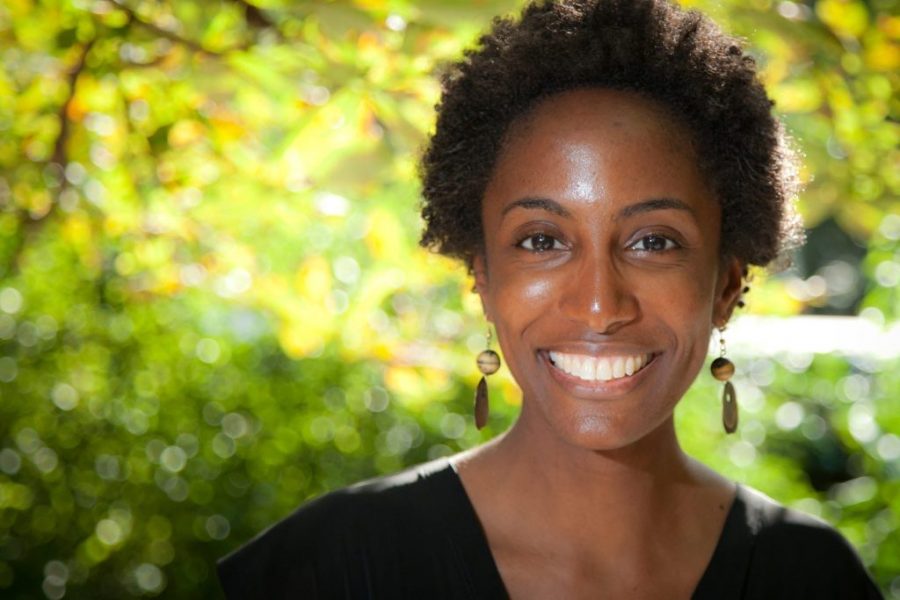
Vicky Germain
Representing over 90 organizations, the Migrationsrat e.V. (Migration Council Berlin) works at the intersection of policy, community empowerment, and rights advocacy. In this interview, project manager Vicky Germain explains why racialized migrants from Ukraine still face exclusion, how shrinking funding threatens essential support structures, and why solidarity must be practiced — not merely proclaimed.

WahlheYmatPost: Can you briefly introduce your organization? What is its main mission in Berlin?

Vicky Germain: The Migrationsrat Berlin e.V. (Migration Council Berlin) is an umbrella organization of more than 90 BIPoC (Black, Indigenous, and People of Color) and/or migrant self-organizations and post-migrant groups in Berlin. Its central mission is to improve the social, political, and legal situation of migrants living in Berlin – regardless of nationality, religion, age, social status, disability, gender, sexual orientation, or educational background. We are working towards a good, just and dignified life for everyone who lives in Berlin.

Our work focuses on political advocacy, community empowerment, critical policy and legislative analysis, and building concrete support structures for people who are frequently excluded from existing protection and participation systems. 

My main responsibility within this work is political and practical advocacy for BIPoC migrants from Ukraine and their families. This includes individual case counseling and support, as well as monitoring and critically assessing how the EU Temporary Protection Directive (EU 2001/55/EC) is interpreted and implemented in Germany. I work to ensure that racialized migrants are not excluded from protection mechanisms that are meant to apply universally.

WHP: What personally motivated you to get involved?

Vicky Germain: When the war began, I originally planned to volunteer at Berlin Central Station for no more than five weeks. As a Black third-country national, I was deeply shaken by the treatment of Black non-Ukrainian third-country nationals who were trying to flee the Russian invasion of Ukraine. Based on my own experiences as a Black migrant in Berlin, I could anticipate how their reception here would unfold — and I felt compelled to intervene. 

It soon became clear that my experience and skills as a coordinator in emergency relief could be helpful. At the same time, it became evident that the extraordinary, spontaneous support from people across different walks of life — as impactful as it was — needed stronger coordination and structure to be sustainable in the long term. 

Five weeks became nearly four years. What began as emergency assistance developed into a medium-term and eventually long-term commitment in the context of displacement, bureaucracy, exclusion, and structural racism. It was an extraordinary opportunity not only to support people upon arrival but also to accompany them throughout their settlement and new beginnings in Germany.

In many ways, I am now providing the kind of support I wish I had received when I first arrived in this country. It is empowering — not only to advocate for migrants like myself, but also to see directly how this advocacy and care work improves people’s real, everyday lives.

WHP: What challenges do people with a migration background face in Berlin — and how does your organization address them?

Vicky Germain: People with migration histories in Berlin face a wide range of structural and everyday challenges. These include discrimination in the housing and labor markets, limited access to adequate healthcare and psychosocial support, language barriers, complex and often arbitrary bureaucratic procedures, as well as growing societal hostility fueled by right-wing political narratives.

For many, insecurity about residence status, work permits, and family reunification results in constant instability. Racialized migrants are particularly affected by heightened surveillance, exclusion from protection systems, and restricted access to integration services.

The Migrationsrat Berlin responds to these challenges through a multi-layered approach: we provide individual case counseling, legal and bureaucratic orientation, political education, and community support. At the same time, we conduct structural advocacy and work with institutions to ensure that systemic discrimination is recognized and addressed. We strengthen migrant self-organization, bring migrant voices into political processes, and build alliances — with the aim that migrants are not merely “integrated” but actively participate in shaping the society they live in.

WHP: Do you have a project, event, or initiative coming up that you would recommend to our readers?

Vicky Germain: As part of the Communities First project, a new podcast series has recently been launched that highlights the experiences of non-Ukrainian third-country nationals who fled from Ukraine to Germany — told from their own perspectives. The stories are direct, personal, at times humorous, painful, and deeply thought-provoking.

The series encourages listeners to question dominant narratives of “welcoming culture” and invites reflection on humanity, solidarity, racism, and belonging in times of crisis and politically controlled migration.

The podcast can be found on YouTube at @cusbu.
Listen. Like. Subscribe. But above all — reflect.

WHP: How can interested people support your work or get involved themselves?

Vicky Germain: We are grateful to have been able to continue this work for almost four years now. Without the financial support of the Berlin Senate, CUSBU: CommUnities Support for BIPoC Refugees from Ukraine would not have been possible. The CommUnities First project also allowed two displaced persons from Ukraine to implement an empowerment project in Berlin Mitte – supported by the Integration Fund Mitte.

However, funding for diversity, equity, and inclusion is currently shrinking — and we are also affected by these cuts. Without new financial support, we will have to end our small but essential projects on 31 December 2025.

The most direct form of support is to donate to the Migrationsrat Berlin as well as organizations and projects that work for diversity, justice, inclusion, and migrant rights.

If financial support is not possible, there are still meaningful ways to act in solidarity: write to your elected representatives. Tag political decision-makers on Instagram, LinkedIn, X, Threads, or Facebook. Draw attention to projects like ours and demand that they continue.

We need less suffering on the streets of this city. The Migrationsrat Berlin and its partner organizations work every day to reduce this suffering — through projects such as CUSBU, CommUnities First, i-PÄD, ComE-In, Härtefallberatung (hardship case counseling), and many others.

Solidarity is an action — and every action counts.

Author:

More From WahlheYmatPost

  • “Treat Every Case as Your Own”: How Zaki e.V. Supports Berlin’s Overlooked Migrants

    “Treat Every Case as Your Own”: How Zaki e.V. Supports Berlin’s Overlooked Migrants

    WHP: Can you briefly introduce Zaki e.V.? What is your main mission in Berlin? Pia Bergmann: Zaki – Bildung und Kultur e.V. is a migrant-led organization, with its main office located at the Berlin Global Village in Neukölln and another office in Pankow. The organization’s focus can be summed up in one sentence: arrival and…

  • Germany Has an Energy Crisis — Just Not the One You Think

    Germany Has an Energy Crisis — Just Not the One You Think

    Energy – scarcity.We talk about energy all the time—but only in physical terms.I find myself thinking more and more about our social energy, which may matter even more. Because a society also needs energy. This energy, I would call social energy—a concept that appears in the social sciences under terms like collective intelligence or social…

  • Multilingualism, Participation, and Power: A Berlin Case Study

    Multilingualism, Participation, and Power: A Berlin Case Study

    Local migrant organizations often play a crucial yet underrecognized role in shaping participation, representation, and social cohesion within urban districts. Based on my experience directing the migraUp! Pankow project in Berlin between 2015 and 2025, this reflection highlights how community-based initiatives can strengthen migrant organizations while simultaneously contributing to local governance and democratic participation. migraUp!…

  • One In Four Berliners Cannot Vote: Europe Still Struggles With Migrant Political Participation

    One In Four Berliners Cannot Vote: Europe Still Struggles With Migrant Political Participation

    A recent report by the Migration Policy Group, a think tank based in Brussels, shows that Germany is among the best of the worst when it comes to enabling and encouraging the political participation of immigrants. Germany’s score in this is only a small part of the bleak findings from the report’s Political Participation Index,…

  • ‘Migrants’ Are The Greatest Opportunity For Germany

    ‘Migrants’ Are The Greatest Opportunity For Germany

    “Change begins with a conversation.” That’s why I was glad to be invited to the SharedTableDinner by the Oneliness Project. How do we find a sense of home in each other? How are loneliness and democracy connected? These were the questions that shaped the evening. Amazing people shared deeply personal thoughts about how they connect…

  • “Democracy Is More Than Voting”: Sami Atris on Organising Communities in Berlin

    “Democracy Is More Than Voting”: Sami Atris on Organising Communities in Berlin

    WHP: Can you briefly introduce the Berliner Bürgerplattformen? What is its main purpose in Berlin? Sami Atris: Who actually decides what happens in our lives? How much influence do we have over how high our rent is — or whether we can even afford to stay in our neighbourhood? Who decides whether our children go…

  • Ukrainian Voices in Berlin: “People Are Not Objects for Integration Debates”

    Ukrainian Voices in Berlin: “People Are Not Objects for Integration Debates”

    WHP: Can you briefly introduce the Allianz Ukrainischer Organisationen e.V (Alliance of Ukrainian Organizations)? What is its main task in Berlin? Oleksandra Bienert: The Allianz Ukrainischer Organisationen e.V. is a nationwide association currently bringing together 23 civil society organizations in eight federal states. These organizations were founded by people with a Ukrainian migration background and…

  • WahlheYmat Turns Two — And Invites You In

    WahlheYmat Turns Two — And Invites You In

    WahlheYmat is looking for new members.That is the message I would like to write about today. Before my life in Berlin, I was never this direct. I am learning a lot here. And I don’t just mean the famous Berliner Schnauze — like going into a bakery and saying: “Good morning, so sorry for disturbing…

  • The Berlin Blueprint: Participation as the Ultimate Act of Self-Determination

    The Berlin Blueprint: Participation as the Ultimate Act of Self-Determination

    In the glossy catalogs of modern wellness, “self-help” is often sold as a retreat from the world: a private journey of healing through products and quiet contemplation. Berlin’s history, however, offers a more rugged, democratic alternative. In this city, wellbeing has never been found in isolation. It has been forged through participation. To be a…

  • No Permission, More Love: Building Your Vision in Berlin Like Nalan Sipar

    No Permission, More Love: Building Your Vision in Berlin Like Nalan Sipar

    When Nalan Sipar asked her boss at Deutsche Welle if she could create content in Turkish to help inform the German-Turkish community during the early days of the 2020 global pandemic in Berlin, the answer was no.  Her boss at the time told her that a state contract prevented the government-funded broadcaster from covering information…

  • “Discrimination is not an individual problem, but a structural one”

    “Discrimination is not an individual problem, but a structural one”

    WHP: Can you briefly introduce Yekmal? What is your main task in Berlin? Remziye Uykun: Yekmal e.V. is a migrant education, parent and community organisation based in Berlin that now operates nationwide, with locations in several federal states. Our main task is to strengthen multilingualism as a democratic resource, enable equal participation and structurally anchor…

  • 35 Years of Integration Work: CLUB DIALOG and the Power of Community Networks

    35 Years of Integration Work: CLUB DIALOG and the Power of Community Networks

    WHP: Can you briefly introduce your initiative? What is its main task in Berlin? Dr. Natalia Roesler: CLUB DIALOG e.V. is a migrant organisation that was founded in Berlin in 1988 to stimulate social dialogue between Russian-speaking migrants and local Berliners, as well as to promote the integration of immigrants. Over the course of more…

  • Monsieur Ibrahim’s Magic in Kreuzberg: From Runaway to Community Maker

    Monsieur Ibrahim’s Magic in Kreuzberg: From Runaway to Community Maker

    I set out to conduct my first-ever interview for WahlheYmatPost on a grey and rainy Friday afternoon in Charlottenburg. The founder of WahlheYmat e.V., Ivan Gabor, mentioned meeting a man named Jaybo, a Frenchman living in the heart of Kreuzberg who is positively impacting his community. I happily took the opportunity to try out being…

  • Berlin’s Silent 25 Percent

    Berlin’s Silent 25 Percent

    “We are in a very tense situation with a record number of non-voters and a great distrust in society towards institutions, so it was the right time to convene this citizens’ assembly.” This quote does not come from Berlin — although the record number of non-voters is also the case here. It was said by…

  • From Hate Brands to Love Brands: A Different Vision for Democracy

    From Hate Brands to Love Brands: A Different Vision for Democracy

    “We need impactful love brands… that blend purpose, impact, innovation, and emotion.”This challenge was launched by the GICA Impact Network, founded and led by our amazing friend Alexander Sascha Wolf. Sure, Sascha is right — but using the term love brand made me think. What are the love brands of our democratic and political life?…

  • Building Home in Berlin: The Inside-Out Approach with Katarina Stoltz

    Building Home in Berlin: The Inside-Out Approach with Katarina Stoltz

    Katarina Stoltz, originally from Sweden, spent her first months in Berlin crying over Prosecco on a friend’s balcony in Prenzlauer Berg. She’d left behind a thriving career as a Reuters photojournalist in Warsaw. Her work was published in the New York Times, capturing Poland’s entry into the European Union. She’d quit her job, sold her…

Address

Am Hamburger Bahnhof 3
10557 Berlin
Germany

hey@wahlheymat.de

Social Networks