
The Power of Ehrenamt: Finding Connection Through Volunteering in Berlin

Walter Phippeny,

Ehrenamt
When the world feels heavy and isolating, one of the best ways to push back is simple: help someone else. In his latest piece, Walter Phippeny reflects on volunteering in Berlin — from washing dishes at the Bahnhofsmission to helping out at Give Something Back to Berlin — and discovers how Ehrenamt can offer both purpose and belonging in a city that often feels too big and too fast.

The news is grim these days. Everywhere we look things are going off the rails. The cost of living, and the political maneuverings… everything seems like too much, too soon, and too fast. And it’s easy to give in to the atomization of 21st century life; we are millions of people living alone. Alone in a crowd. 

Last week I wrote here about “Vereine”, and they certainly are an answer to this isolation and desperation. But there’s also another you should think about as you’re trying to navigate the city and make it our own. Another that helps with anxiety while enriching the community: volunteering, or ‘Eherämterarbeit’.

The mission at Zoo

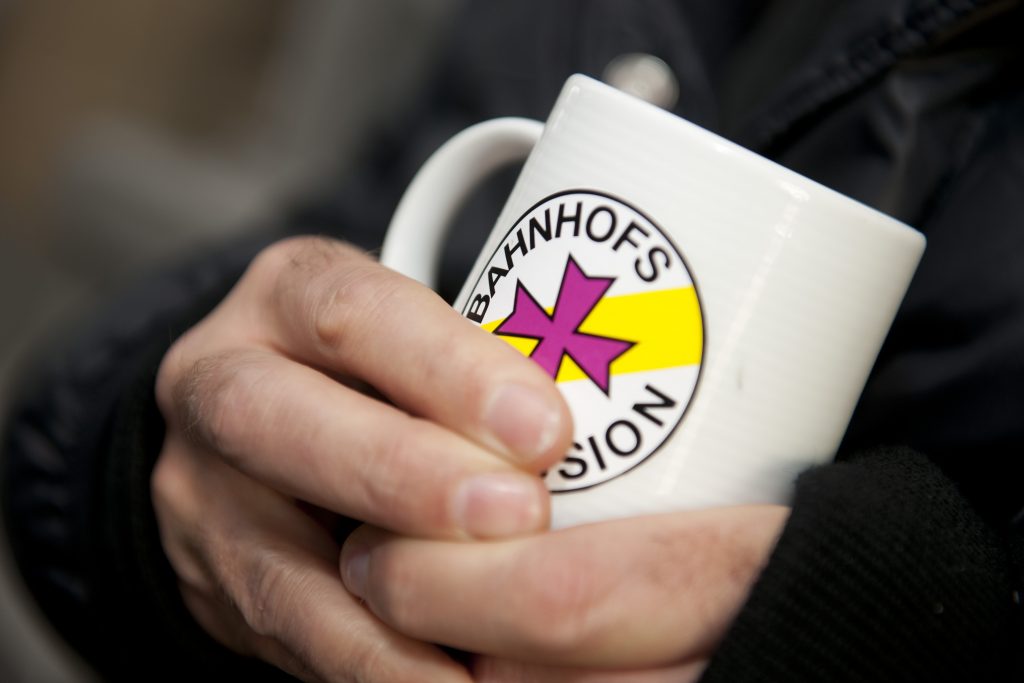
In the summer of 2013 I volunteered at the Zoologischer Garten Bahnhofsmission for a spell. Most major German cities have a mission in one or more of their big train stations. And they have a long history going back to the 19th century. They were mostly put in place to confront the problem of young girls from the country, coming into the cities and falling into prostitution, though they also helped unlucky travelers. 
© Werner Krüper

If you had your baggage, money, and wallet stolen – like in “Emil and the Detectives” – you could show up at a mission and get help contacting your people, even have a place to stay and a meal. Today, the Bahnhofsmissionen are more like soup kitchens; the mission at Zoo still has beds, but they’re not offered to guests anymore. 

The guests today form a line outside, get handed a ticket, and then can come in, get a hot meal and a change of clothes if they need it. In the winter they can pick up a sleeping bag or a backpack. The missions serve about 2 full meals a day, and the food is actually really good. It all comes from the Berliner Tafel, and much of it is restaurant quality. 

There’s something zen about doing dishes

I wouldn’t recommend this kind of volunteering for the faint of heart. I only made it a few months and there was plenty… how should I put this… “local color”. Most of the guests are sleeping rough and struggling with addiction issues. A lot of them aren’t German, which is why they’ve fallen through the social safety net here. It could get scary. It was funny how a volunteer or three would ask me, “so what did you do?”, assuming I wasn’t there of my free will. 

You see, certain crimes come with community service, crimes like riding the metro without a ticket: “Schwarzfahren.” Get caught without a ticket thrice, and you’ll find yourself volunteering or doing time. Folks were often shocked to hear that I was there by choice. And, if I’m being honest, I would hide out doing the dishes to avoid interacting with the guests. 

There’s something zen about putting your head down and doing dishes; it can really put you in the zone… and also ensure that you don’t have to talk to anyone. I know that this sounds horrible – and it’s definitely not for everyone – but it’s still a great experience with a lot to teach! If you can hang, give it a go. 

A chance to polish up your German

For those who don’t want to get that down and dirty with volunteering, there are organizations like “Gute Tat”: They have a huge selection of ongoing projects in the city, looking for kind souls with some free time. And, when I say huge, just let your mind wander. I went to a few of their orientations where they try to hook you up with a project and the list just didn’t end. 

And there’s something so hopeful in that: a hope that you lose when you just go back and forth from your job and your apartment and, God forbid, listen to the news. There’s so much happening in this city and so many people willing to give their time and labor to make it a better place to live. 

The one thing, though, is that it’s mostly in German. That’s something to keep in mind. But if you’re looking to polish up your German, this is just as good as a club. I guarantee that you will come away from volunteering with better German, and you’ll be helping folks to boot. 

Great places to help or participate

These days I’ve been helping out at “Give Something Back to Berlin,” where I assist in the Open Music School and the Sprachcafé. GSBTB has several things going on Monday through Friday, and they’re always looking for folks to lend a hand. Just head over to their website and check out their schedule: GSBTB is mainly in English among an international crowd. 

So, if you’re still getting used to German, this would be a great place to either help or participate. Try the community kitchen where you can make and enjoy a meal with a bunch of strangers… who hopefully won’t stay strangers for very long. There are other language groups aside from the German one on Wednesday night. Language groups are always looking for native or proficient speakers to lend a hand. 

There’s not a lot that we can do about the various conflicts going on, or the economic pressure that we’re all under. But there ARE things we can do to help out the communities where we live. This is actually something that human beings are really good at, even amid the endless stream of daunting headlines. 

Community is one of the greatest gifts we have

Our ability to help each other is one of our greatest strengths – and one that actually keeps our societies functioning. We aren’t really a winner-take-all species, despite what you hear. As we all feel the crush of external stress, it’s important to remember that there IS some direct action you can take, some great projects inviting you in with open arms. 

Community, at the end of the day, is one of the greatest gifts we have. To paraphrase ol’ Kennedy, ask not what your city can do for you. There are tons of opportunities to volunteer. I can’t encourage you enough to give it a try. There are projects in this city that desperately need a helping hand; go find the one that’s right for you. You won’t regret it.             
Author:

More From WahlheYmatPost

  • Who Will Lead Germany Into Its International Future?

    Who Will Lead Germany Into Its International Future?

    What does the story of Charles De Gaulle teach us? Antonin Baudry’s La Bataille de Gaulle tells, in five hours, the story of the General during the Second World War. A great movie. I learned a lot. Tenacity. De Gaulle arrives alone in London. On 18 June 1940, he makes his first BBC speech, speaking…

  • Berlin Wiki: What Are the Key Issues in Berlin’s Election?

    Berlin Wiki: What Are the Key Issues in Berlin’s Election?

    Why Is Rent Policy a Central Issue in Berlin’s Election Campaign? Around 85 percent of Berliners live in rented accommodation. At the same time, the housing market in the capital is tight: rents are rising, new housing construction remains sluggish, and legal loopholes frequently allow furnished apartments to be offered at inflated prices. This is…

  • A Mayor Tandem for Berlin

    A Mayor Tandem for Berlin

    What if Berlin had two Regierende Bürgermeister:innen? One representing the city’s elected voice — and another representing the voice of Berlin’s international residents who live, work and contribute here but do not have German citizenship and therefore cannot vote in Berlin elections. Because in a democratic society, it can’t be right that 25% of the…

  • Berlin Wiki: Equal Access to Democracy

    Berlin Wiki: Equal Access to Democracy

    What Impact Does Berlin’s Electoral Reform Have? In September 2023, Berlin’s House of Representatives (AGH) adopted an amendment to the state constitution lowering the voting age from 18 to 16. The aim of the constitutional amendment is to strengthen the democratic participation of young people. The new rule will apply for the first time in…

  • No German Passport? You May Still Have a Vote in Berlin 

    No German Passport? You May Still Have a Vote in Berlin 

    If you are an EU citizen living in Berlin but do not have German citizenship, you cannot vote in the election for Berlin’s House of Representatives (Abgeordnetenhaus). But you can vote for your local District Assembly (Bezirksverordnetenversammlung, or BVV) if you meet the eligibility requirements. Around 240,000 non-German EU citizens are eligible to take part…

  • The Signature That Didn’t Count – Finding My Voice in Berlin

    The Signature That Didn’t Count – Finding My Voice in Berlin

    When I moved to Berlin in the spring of 2022, I was approached one sunny afternoon by people carrying clipboards under their arms. Would I like to sign a petition? I was pleasantly surprised by this request – such a sense of community in Berlin, what a place to have come to live. With a…

  • StimmlosTrend: A New Survey Wants to Hear Berlin’s Missing Voices

    StimmlosTrend: A New Survey Wants to Hear Berlin’s Missing Voices

    Can’t vote in Berlin? There are a million people like you. We’re giving them a voice. That’s the message of WahlheYmat’s new StimmlosTrend campaign, which launches today. Modern democracy is built on elections. In Berlin, the House of Representatives is elected every five years by eligible German citizens (EU citizens can only vote in district…

  • “Berlin taught me to dislike the word integration” 

    “Berlin taught me to dislike the word integration” 

    WHP: You worked in humanitarian aid around the world for many years. What ultimately motivated you to found Just-Go-For-It? Marilena Chatziantoniou: I started working in the field of humanitarian aid in 1998. My first assignment was in Albania, where I worked for a small German NGO, just months before the Kosovo crisis. I remember falling…

  • What is Germany’s greatest asset?

    What is Germany’s greatest asset?

    “Football is a simple game. Twenty-two men chase a ball for 90 minutes and, in the end, the Germans always win,” said Gary Lineker after England lost the 1990 World Cup semi-final on penalties against Germany. Times are changing. Germany no longer always wins at major football tournaments. And England now has a German coach.…

  • Migrants With Degrees Are Not What Germany Is Looking For

    Migrants With Degrees Are Not What Germany Is Looking For

    Education is a right, not a privilege. This idea has been a founding principle of modern democracies. In practice, however, access to education is far from guaranteed for everyone. As of this year, Germany has significantly restricted access to state-funded intermediate and advanced German courses for migrants participating voluntarily. Many rejected asylum seekers, people with…

  • Berlin Wiki: Ways to Influence Politics in Berlin

    Berlin Wiki: Ways to Influence Politics in Berlin

    What is a Volksentscheid? A Volksentscheid, or referendum, allows Berliners to vote directly on proposed legislation and political issues outside regular elections, or to trigger an early election. Anyone who is eligible to vote in elections to the Berlin House of Representatives (Abgeordnetenhaus) is also eligible to take part in a Volksentscheid. A Volksentscheid can…

  • Berlin Wiki: How Berlin’s Government Is Formed

    Berlin Wiki: How Berlin’s Government Is Formed

    How Is the Government Formed? Berlin’s state government is the Senate. It consists of the Governing Mayor and ten senators. Every five years, a new Senate is formed. During coalition negotiations, the parliamentary groups agree on common political goals, the distribution of government portfolios and the budget. Afterwards, the members of the Berlin House of…

  • Berlin Wiki: Democracy and the Principles of Free Elections

    Berlin Wiki: Democracy and the Principles of Free Elections

    What Does Democracy Mean? A great deal could be written about what democracy is. Put simply, in a democracy, all state authority is derived from the people. This means that the citizens of a country determine its political direction. Germany is a parliamentary and representative democracy: citizens elect representatives who make decisions on their behalf.…

  • Berlin Wiki: Who Influences Political Decisions? 

    Berlin Wiki: Who Influences Political Decisions? 

    What Is Lobbying? Lobbying is the organised effort by interest groups to influence political decisions. The term is derived from the word “lobby,” referring to the entrance halls of parliaments where representatives of various interests traditionally met with members of parliament to discuss and promote their concerns. Lobbying takes place in almost every area of…

  • Berlin Wiki: Finding Reliable Information Before You Vote

    Berlin Wiki: Finding Reliable Information Before You Vote

    What Is the Wahl-O-Mat? The Wahl-O-Mat has been provided by the Federal Agency for Civic Education (Bundeszentrale für politische Bildung, bpb) since 2002. It is an online voting advice tool that allows users to compare their own political positions with those of political parties in Germany. Anyone using the Wahl-O-Mat can respond to a series…

  • Berlin Wiki: Understanding Political Parties

    Berlin Wiki: Understanding Political Parties

    What Is an Election Manifesto? Before an election, political parties present their election manifestos. This applies in federal, state, and local elections. In the manifestos, parties set out in writing the goals they intend to pursue. These goals reflect the issues that are important to the party during the upcoming legislative term—that is, the electoral…

Address

Am Hamburger Bahnhof 3
10557 Berlin
Germany

hey@wahlheymat.de

Social Networks