

Welcome to the Club: How Vereine Can Turn Berlin from a City of Strangers into a Home

Verein
Twenty-five years after Bowling Alone warned of fading community life, the problem feels more urgent than ever. In Berlin, newcomers often struggle to find belonging amid the city’s famous aloofness — yet Germany’s culture of Vereine, from choir groups to hacker clubs, holds a timeless antidote. For one Berliner-by-choice, joining a gaming Verein didn’t just improve his German — it gave him a home.

In 2000 Robert D. Putnam published a book, “Bowling Alone”, in which he argued that Americans were becoming increasingly isolated and removed from community and social capital. He took the institution of the Bowling League as his prime example. I remember when the book came out – though, admittedly, I never got around to reading it – and people in my circles talked about it. Bowling leagues DID seem like something out of the past, like the Masons, or Rotary, or local commerce associations, or cultural heritage foundations. 

In my home town of Tacoma there was a huge club hall for the Swiss heritage foundation that had been abandoned for years; in the 90s some folks took over the property, fumigated all the silver fish, refurbished it, and turned it into a bar called The Swiss where they served higher priced food and drinks to great success: dead community space turned into market space. 

America used to be lousy with clubs! And you could see this reflected in sitcoms from earlier generations like “The Flintstones” where Fred and Barney were members of The Loyal Order of Water Buffaloes, led by the Grand Poobah: an obvious parody of fraternal organizations in the real world, including the silly hats. And Fred also played in a bowling league at the Bedrock Bowl. 

My grandfather was a Mason and my grandmother was a member of the Eastern Stars, doing all kinds of organized charity around town. 25 years after the publication of “Bowling Alone”, things just feel worse. Increasingly in the discourse of daily life we hear about the “epidemic of loneliness”.In 2018, the UK even appointed a Minister of  Loneliness. 

When you change the context to a Verein, the whole scene changes with it

General society is expressing concern about the cultural fragmentation, and no one knows this better than newcomers to Berlin. It can be a real struggle to find your place and people here, despite all of the stuff going on every night of the week. So what’s my first piece of advice when talking to newbies? “Go find a club”! 

The name for a non-profit club in German is “Verein“, which you often see as “e.V.” at the end of a name. A Verein – meaning “united or making as one” – can be a club for virtually anything. We often see it in a sports context, like Hertha e.V. or F.C. Union e.V., but that’s just the beginning. Probably one of the most popular types of Verein is a choral Verein. 

Germans sure do love a singing group! But there are literary Vereine as well, or sewing Vereine, Hacker Vereine (Chaos Computer Club or C-Base)… Basically, whatever you’re interested in, there’s a Verein for it: an organized group of people doing that activity and doing it in German. 

And here’s something else that people don’t tell you: everything is context in German interactions. Walk around Berlin and you’re received with either the cold aloofness of the big city, or, worse, the ‘Berliner Schnautzer’. The Germans have this rep for being cold and distant and hard to get to know. You go into a bar and struggle to order a beer; the waiter clocks your German as needing work and will immediately switch to English. It’s like no one has time for you, or your struggle with the language. 

When you change the context to a Verein, the whole scene changes with it. Suddenly the other members are welcoming and engaged; they want to get to know you and share stories or just passion for whatever the Verein is about.  They are also delighted to extend patience and aid with your German. They’re thrilled that you’re trying. You see, you’ve stepped into a living community of like-minded people, interested in a communal activity. They’re excited to have you, in a way that some stranger on the metro or server in a bar will never be. You can find place and acceptance in a Verein, and it’s just waiting for you to raise your hand and show interest.  

Whatever it is you’re into, there’s a Verein for that

I landed in Berlin on September 3rd, 2012. I had signed up for a two-month course from the Goethe-Institut that came with lodging, and my host family’s apartment was in Friedenau – I was 35 years old and staying with a host family, but sometimes that’s just how it goes. 

Poking around in my neighborhood, I found a store a few stops away on the U9 called Morgenwelt; they specialize in fantasy and sci-fi books, but also board games and roleplaying games. When I was living in Seattle between 2006 and 2012, a game shop opened around the corner from my apartment and that got me into the modern board game scene. 

This is the kind of thing that flies under most folks’ radar, but I was tuned into it. And roleplaying games? Well, like those kids in “Stranger Things”, I grew up with TSR and all their titles. More than games though, I really wanted to buy a copy of “Die unendliche Geschichte” which I had only recently learned was originally written in German; checking out the games would just be icing on the cake. I took the metro those few stops and looked through the store, finding the Michael Ende book. On one wall, the management had put up a community corkboard, and people were advertising their gaming groups, looking for players. 

My eye fell across a flyer for some retro-gaming RPG sessions and the illustration they had chosen came straight from a title I had owned as a boy. I noted the email address and sent off an email asking if I could join and pointing out that my German was pretty bad. I received a warm response, explaining that I was welcome and that my German would not be a problem. And that’s how I found Irrlicht e.V. Those gaming nights were like four- or five-hour free German lessons, and I got to know people. I’m still a member in good standing; in fact I was there last Friday and plan on heading down again this Thursday. 

So, whatever it is you’re into, there’s a Verein for that. Start looking, and when you find something, just reach out. It’s not like ordering a sandwich at Steinecke or trying to get a coffee at a local café. This system has a lot to offer for inclusion and community building, and, if Berlin IS your ‘Wahlheimat’, joining a Verein will give you a sense of place and a group of people to share it with. It might be scary at first, but I think you’ll be surprised at the welcome. Besides, you’ve already found your first one right here at Wahlheymat e.V. – Welcome to the club!  
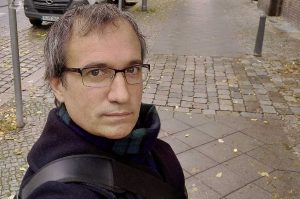
Author:

More From WahlheYmatPost

  • “Treat Every Case as Your Own”: How Zaki e.V. Supports Berlin’s Overlooked Migrants

    “Treat Every Case as Your Own”: How Zaki e.V. Supports Berlin’s Overlooked Migrants

    WHP: Can you briefly introduce Zaki e.V.? What is your main mission in Berlin? Pia Bergmann: Zaki – Bildung und Kultur e.V. is a migrant-led organization, with its main office located at the Berlin Global Village in Neukölln and another office in Pankow. The organization’s focus can be summed up in one sentence: arrival and…

  • Germany Has an Energy Crisis — Just Not the One You Think

    Germany Has an Energy Crisis — Just Not the One You Think

    Energy – scarcity.We talk about energy all the time—but only in physical terms.I find myself thinking more and more about our social energy, which may matter even more. Because a society also needs energy. This energy, I would call social energy—a concept that appears in the social sciences under terms like collective intelligence or social…

  • Multilingualism, Participation, and Power: A Berlin Case Study

    Multilingualism, Participation, and Power: A Berlin Case Study

    Local migrant organizations often play a crucial yet underrecognized role in shaping participation, representation, and social cohesion within urban districts. Based on my experience directing the migraUp! Pankow project in Berlin between 2015 and 2025, this reflection highlights how community-based initiatives can strengthen migrant organizations while simultaneously contributing to local governance and democratic participation. migraUp!…

  • One In Four Berliners Cannot Vote: Europe Still Struggles With Migrant Political Participation

    One In Four Berliners Cannot Vote: Europe Still Struggles With Migrant Political Participation

    A recent report by the Migration Policy Group, a think tank based in Brussels, shows that Germany is among the best of the worst when it comes to enabling and encouraging the political participation of immigrants. Germany’s score in this is only a small part of the bleak findings from the report’s Political Participation Index,…

  • ‘Migrants’ Are The Greatest Opportunity For Germany

    ‘Migrants’ Are The Greatest Opportunity For Germany

    “Change begins with a conversation.” That’s why I was glad to be invited to the SharedTableDinner by the Oneliness Project. How do we find a sense of home in each other? How are loneliness and democracy connected? These were the questions that shaped the evening. Amazing people shared deeply personal thoughts about how they connect…

  • “Democracy Is More Than Voting”: Sami Atris on Organising Communities in Berlin

    “Democracy Is More Than Voting”: Sami Atris on Organising Communities in Berlin

    WHP: Can you briefly introduce the Berliner Bürgerplattformen? What is its main purpose in Berlin? Sami Atris: Who actually decides what happens in our lives? How much influence do we have over how high our rent is — or whether we can even afford to stay in our neighbourhood? Who decides whether our children go…

  • Ukrainian Voices in Berlin: “People Are Not Objects for Integration Debates”

    Ukrainian Voices in Berlin: “People Are Not Objects for Integration Debates”

    WHP: Can you briefly introduce the Allianz Ukrainischer Organisationen e.V (Alliance of Ukrainian Organizations)? What is its main task in Berlin? Oleksandra Bienert: The Allianz Ukrainischer Organisationen e.V. is a nationwide association currently bringing together 23 civil society organizations in eight federal states. These organizations were founded by people with a Ukrainian migration background and…

  • WahlheYmat Turns Two — And Invites You In

    WahlheYmat Turns Two — And Invites You In

    WahlheYmat is looking for new members.That is the message I would like to write about today. Before my life in Berlin, I was never this direct. I am learning a lot here. And I don’t just mean the famous Berliner Schnauze — like going into a bakery and saying: “Good morning, so sorry for disturbing…

  • The Berlin Blueprint: Participation as the Ultimate Act of Self-Determination

    The Berlin Blueprint: Participation as the Ultimate Act of Self-Determination

    In the glossy catalogs of modern wellness, “self-help” is often sold as a retreat from the world: a private journey of healing through products and quiet contemplation. Berlin’s history, however, offers a more rugged, democratic alternative. In this city, wellbeing has never been found in isolation. It has been forged through participation. To be a…

  • No Permission, More Love: Building Your Vision in Berlin Like Nalan Sipar

    No Permission, More Love: Building Your Vision in Berlin Like Nalan Sipar

    When Nalan Sipar asked her boss at Deutsche Welle if she could create content in Turkish to help inform the German-Turkish community during the early days of the 2020 global pandemic in Berlin, the answer was no.  Her boss at the time told her that a state contract prevented the government-funded broadcaster from covering information…

  • “Discrimination is not an individual problem, but a structural one”

    “Discrimination is not an individual problem, but a structural one”

    WHP: Can you briefly introduce Yekmal? What is your main task in Berlin? Remziye Uykun: Yekmal e.V. is a migrant education, parent and community organisation based in Berlin that now operates nationwide, with locations in several federal states. Our main task is to strengthen multilingualism as a democratic resource, enable equal participation and structurally anchor…

  • 35 Years of Integration Work: CLUB DIALOG and the Power of Community Networks

    35 Years of Integration Work: CLUB DIALOG and the Power of Community Networks

    WHP: Can you briefly introduce your initiative? What is its main task in Berlin? Dr. Natalia Roesler: CLUB DIALOG e.V. is a migrant organisation that was founded in Berlin in 1988 to stimulate social dialogue between Russian-speaking migrants and local Berliners, as well as to promote the integration of immigrants. Over the course of more…

  • Monsieur Ibrahim’s Magic in Kreuzberg: From Runaway to Community Maker

    Monsieur Ibrahim’s Magic in Kreuzberg: From Runaway to Community Maker

    I set out to conduct my first-ever interview for WahlheYmatPost on a grey and rainy Friday afternoon in Charlottenburg. The founder of WahlheYmat e.V., Ivan Gabor, mentioned meeting a man named Jaybo, a Frenchman living in the heart of Kreuzberg who is positively impacting his community. I happily took the opportunity to try out being…

  • Berlin’s Silent 25 Percent

    Berlin’s Silent 25 Percent

    “We are in a very tense situation with a record number of non-voters and a great distrust in society towards institutions, so it was the right time to convene this citizens’ assembly.” This quote does not come from Berlin — although the record number of non-voters is also the case here. It was said by…

  • From Hate Brands to Love Brands: A Different Vision for Democracy

    From Hate Brands to Love Brands: A Different Vision for Democracy

    “We need impactful love brands… that blend purpose, impact, innovation, and emotion.”This challenge was launched by the GICA Impact Network, founded and led by our amazing friend Alexander Sascha Wolf. Sure, Sascha is right — but using the term love brand made me think. What are the love brands of our democratic and political life?…

  • Building Home in Berlin: The Inside-Out Approach with Katarina Stoltz

    Building Home in Berlin: The Inside-Out Approach with Katarina Stoltz

    Katarina Stoltz, originally from Sweden, spent her first months in Berlin crying over Prosecco on a friend’s balcony in Prenzlauer Berg. She’d left behind a thriving career as a Reuters photojournalist in Warsaw. Her work was published in the New York Times, capturing Poland’s entry into the European Union. She’d quit her job, sold her…

Address

Am Hamburger Bahnhof 3
10557 Berlin
Germany

hey@wahlheymat.de

Social Networks