
Berlin Wiki: Who Votes – and Who Stays Home?

WahlheYmatPost,

Wahlen, Wahlurne
In the next part of our Berlin Wiki series, we take a closer look at voter turnout in Germany. How many people actually participate in elections, how do first-time voters cast their ballots, and why do some eligible voters choose not to vote? We explain what election statistics reveal about political participation and democratic engagement.

How Many People Participate in Elections?

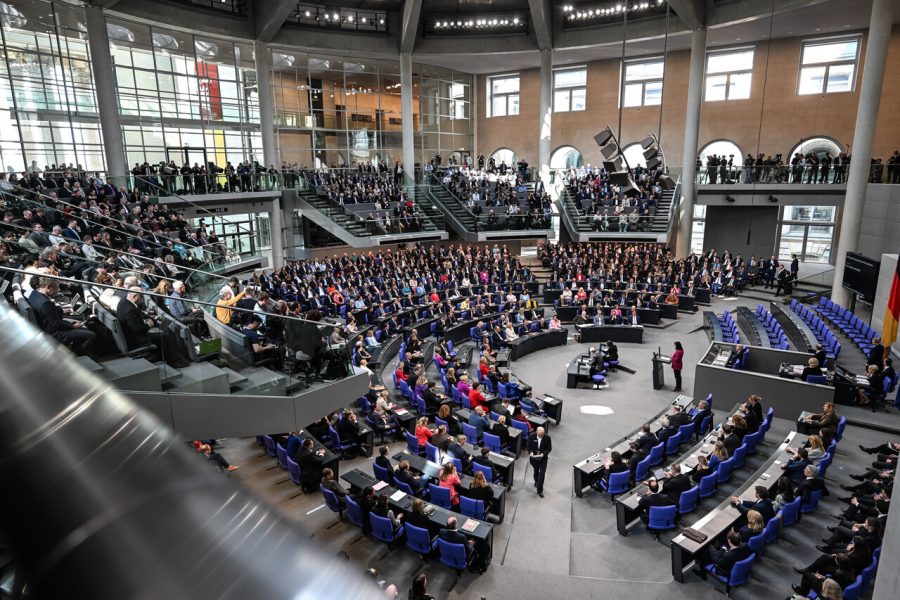
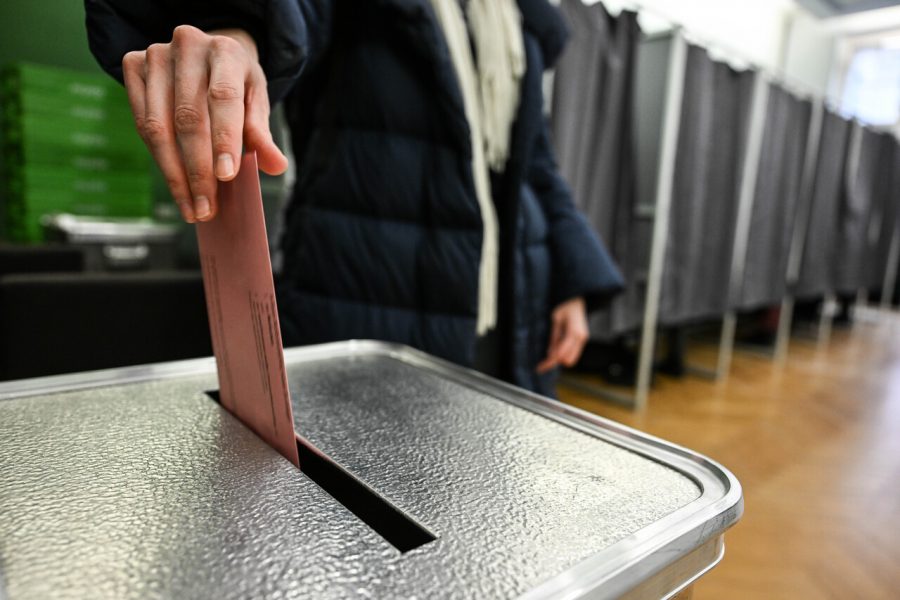
After every election in Germany, one figure receives particular attention: voter turnout, the share of eligible voters who actually cast their ballots. In German public debate, close attention is paid to how voter turnout develops over time.

For example, in the 2025 federal election, 82.5 percent of eligible voters across Germany cast their ballots. This was the highest voter turnout in a federal election since 1987, when it stood at 84.3 percent. Turnout reached its lowest point in 2009 at just 70.8 percent.

Many welcomed this upward trend, as low voter turnout is often regarded as a sign of widespread dissatisfaction with the political system and political parties. Low turnout also raises questions about how representative elected politicians are of the population.

However, voter turnout in state and local elections is generally much lower. In Berlin, for example, voter turnout in the 2023 House of Representatives election was only 63.1 percent.

How Do First-Time Voters Vote?

After every election, public discussion often turns to how first-time voters cast their ballots. These are people who were eligible to vote in an election for the very first time.

The minimum voting age for federal elections is 18. For state and local elections, the voting age varies depending on the federal state and is either 18 or 16. People who were already eligible in previous elections but did not vote are not counted as first-time voters.

In the 2025 federal election, there were around 2.3 million first-time voters in Germany. By comparison, 60.51 million people were eligible to vote overall.

According to the post-election analysis conducted by the polling institute Infratest dimap, first-time voters most frequently voted for Die Linke (around 25 to 26 percent). This was significantly higher than the party’s overall result (around 9 percent). Die Linke is politically left-wing and describes itself as democratic socialist.

Among first-time voters, the AfD came in second (19 to 21 percent). Compared with its overall result (20.8 percent), the right-wing party performed at a similar level among first-time voters. Various experts classify it as right-wing populist or right-wing extremist.

The Christian Democratic CDU/CSU, which won the election overall with 28.5 percent of the vote, came only third among first-time voters, with 14 percent.

Why Do People Not Vote?

In Germany, voter turnout has never reached 100 percent in a major federal election. In the most recent federal election in 2025, 17.5 percent of eligible voters did not cast a ballot. This corresponds to just over 10 million people.

In previous federal elections since the 2000s, the share of non-voters had generally remained between 20 and 30 percent. Non-voters are not included in parties’ vote shares, which are calculated only from valid votes cast.

Why some people do not vote cannot be answered universally. Nevertheless, many studies have examined the issue. For example, after the 2025 federal election, Infratest dimap surveyed more than 500 non-voters. Among other things, they were asked about their reasons for not voting.

One of the most important reasons was general dissatisfaction with politics. Many respondents said they had not found a party they supported or that all parties seemed the same to them. Many non-voters also said they believed their vote would not make any difference.

Studies suggest that whether or not someone votes is also related to their socioeconomic background. Accordingly, the likelihood of not voting is particularly high among people with low incomes and lower levels of education.

Here you can find the Berlin Wiki page of Berliner Morgenpost.

(Header image: © FUNKE Foto Services | Reto Klar)
Author:

More From WahlheYmatPost

  • What is Germany’s greatest asset?

    What is Germany’s greatest asset?

    “Football is a simple game. Twenty-two men chase a ball for 90 minutes and, in the end, the Germans always win,” said Gary Lineker after England lost the 1990 World Cup semi-final on penalties against Germany. Times are changing. Germany no longer always wins at major football tournaments. And England now has a German coach.…

  • Berlin Wiki: Who Votes – and Who Stays Home?

    Berlin Wiki: Who Votes – and Who Stays Home?

    How Many People Participate in Elections? After every election in Germany, one figure receives particular attention: voter turnout, the share of eligible voters who actually cast their ballots. In German public debate, close attention is paid to how voter turnout develops over time. For example, in the 2025 federal election, 82.5 percent of eligible voters…

  • No True German — What It Means to Be German in 2026

    No True German — What It Means to Be German in 2026

    Is there really one German identity that defines all Germans? One German identity to rule them all? We’re going to get into this question, but bear with me for a few paragraphs. I want to take a moment up front to provide a little context, tell you where I’m coming from.  We’re going to dip…

  • Berlin Wiki: From Postal Voting to the Ballot Box 

    Berlin Wiki: From Postal Voting to the Ballot Box 

    How Does Postal Voting Work? In Germany, voters can choose to vote by post instead of going to a polling station on election day. Information on how to apply for postal voting can be found in the voter notification that eligible voters receive in the weeks before the election. Depending on the municipality, voter notifications…

  • From Peru to Berlin: Building Bridges Between Different Ways of Knowing 

    From Peru to Berlin: Building Bridges Between Different Ways of Knowing 

    Are degrees really the only measure of knowledge? Should humans focus on altering nature or adapting to it? Do international studies actually include perspectives from all around the world? Academic credentials, adapting nature to suit modern lifestyles and Eurocentric education are standards that are rarely questioned.  Marita Orbegoso Alvarez, Peruvian educator, community organizer and activist,…

  • Finding Trauma Instead of Belonging: A Review of I Keep My Shadow Light 

    Finding Trauma Instead of Belonging: A Review of I Keep My Shadow Light 

    TL;DR “I Keep My Shadow Light” is the self-published debut novel by Fionnuala Kavanagh. This challenging work follows a cast of four characters from different backgrounds as they try to find a home in Berlin. Very dark in places, the book gives us a chance to read something that would probably never come out of…

  • Migrants With Degrees Are Not What Germany Is Looking For

    Migrants With Degrees Are Not What Germany Is Looking For

    Education is a right, not a privilege. This idea has been a founding principle of modern democracies. In practice, however, access to education is far from guaranteed for everyone. As of this year, Germany has significantly restricted access to state-funded intermediate and advanced German courses for migrants participating voluntarily. Many rejected asylum seekers, people with…

  • Berlin Wiki: The Overlooked Election — BVV and Local Democratic Participation

    Berlin Wiki: The Overlooked Election — BVV and Local Democratic Participation

    How Does the BVV Election Work? On September 20, Berlin goes to the polls. On that day, the election to the House of Representatives (Abgeordnetenhaus) will take place, along with the elections to the District Council Assemblies (Bezirksverordnetenversammlungen, BVV). Berlin is divided into twelve districts, each of which elects its own District Council Assembly. This…

  • Berlin Wiki: Who Makes Decisions in the Districts?

    Berlin Wiki: Who Makes Decisions in the Districts?

    What Does a District Office Do? A Berlin district office (Bezirksamt) manages the administration of one of Berlin’s twelve districts and serves as the district’s political leadership. It consists of the district mayor and five district councillors (Bezirksstadträte), who are elected by the district assembly (Bezirksverordnetenversammlung, BVV). The district office implements adopted laws and policies.…

  • Berlin Wiki: How Berlin’s Government Works 

    Berlin Wiki: How Berlin’s Government Works 

    What Makes Berlin’s Governing Mayor Special? Whoever holds the office of Governing Mayor is both the head of government and the ceremonial head of the city of Berlin. The House of Representatives (Abgeordnetenhaus) votes on who will hold the position. There has even been a case in which someone won the election without being their…

  • Berlin Wiki: How Do the First and Second Vote Work? 

    Berlin Wiki: How Do the First and Second Vote Work? 

    What Does the First Vote Decide? The article looks at how voters elect candidates and parties in Bundestag elections and elections to the Berlin House of Representatives, and how seats in parliament are distributed through proportional representation. In Bundestag elections or elections to the House of Representatives, voters cast both a first vote and a…

  • Tempelhofer Feld: Berlin’s Most Emotional Urban Conflict Is Back 

    Tempelhofer Feld: Berlin’s Most Emotional Urban Conflict Is Back 

    We are approaching an election in September. Hopefully, you’re reading along in the Berlin Wiki to bone up on how stuff works in German elections, the lexicon, and the issues. Well, one of the issues we’re going to see debated concerns the Tempelhofer Feld. So let’s talk about that for a bit.  The other night,…

  • Berlin Wiki: Parties, Direct Mandates and the Five-Percent Threshold 

    Berlin Wiki: Parties, Direct Mandates and the Five-Percent Threshold 

    What Is a Political Party? A political party is an association of citizens regulated by the German Federal Party Law. Political parties aim to influence political decision-making at federal or state level over a longer period of time and may represent voters in state parliaments or in the Bundestag. First of all, a party needs…

  • Good Intentions Are Not Democratic Enough

    Good Intentions Are Not Democratic Enough

    “What you do for me, but without me, you do against me” — the exact origin of this quote is unclear. Nevertheless, it captures something that frequently happens in Germany when it comes to the political participation of historically excluded groups. Policies are supposedly made for migrants, yet not with them. Gender equality is debated…

  • What Happened When I Tried to Organize My Neighbors 

    What Happened When I Tried to Organize My Neighbors 

    There’s a lot of talk today about building community. At our March WahlheYmat Talk, the crowd brought up the subject, specifically that we should be creating more of it. Ideas flew around the room. We are living in an era of schism, where the people pulling the levers of power are trying to create an…

Address

Am Hamburger Bahnhof 3
10557 Berlin
Germany

hey@wahlheymat.de

Social Networks