
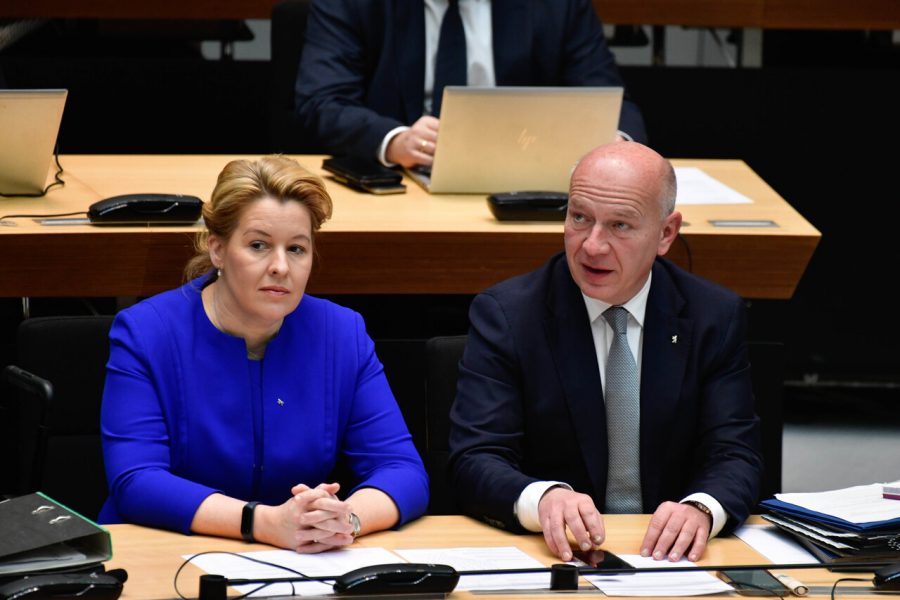
What Makes Berlin’s Governing Mayor Special?
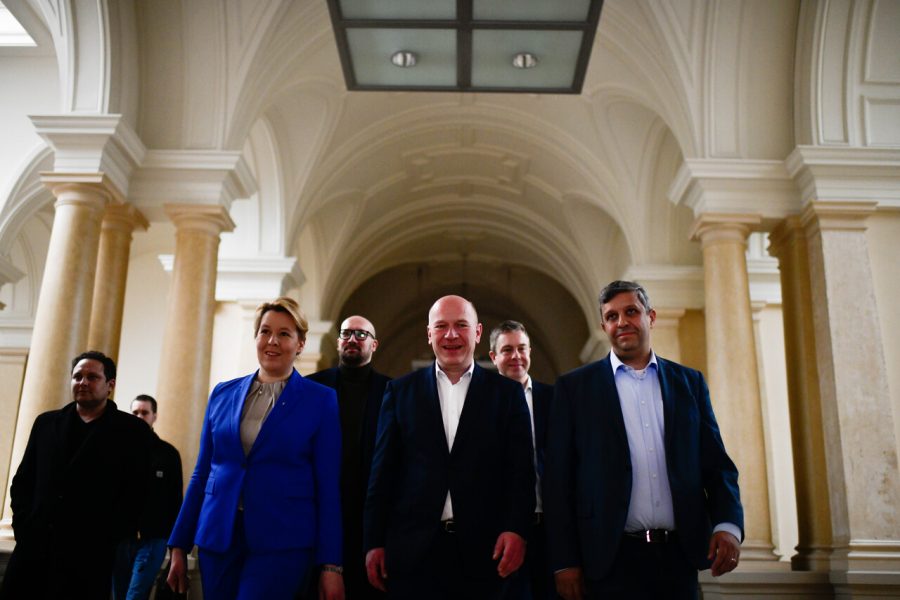
Whoever holds the office of Governing Mayor is both the head of government and the ceremonial head of the city of Berlin. The House of Representatives (Abgeordnetenhaus) votes on who will hold the position. There has even been a case in which someone won the election without being their party’s lead candidate.
Since Berlin is a city-state, the Governing Mayor has a dual role: on the one hand, he or she heads the city administration and legally represents Berlin externally, similar to the mayor of a municipality. On the other hand, he or she serves as the head of the Berlin Senate, comparable to a Minister-President in other German federal states.
As head of government, the Governing Mayor is part of the executive branch. He or she appoints two deputies and the members of the Senate. In addition, the office includes setting and overseeing policy guidelines for the Senate. This means that the Governing Mayor initiates projects (for example, draft legislation), which the senators then further develop within their respective areas of responsibility.
A special feature in Berlin is that the Governing Mayor’s policy guidelines require the approval of the House of Representatives. This usually takes the form of a government policy statement that is presented for a vote at the beginning of the term of office. In other German state parliaments, the head of government does not require such approval.
What Does a Senator Do?
The Senate is Berlin’s state government. It consists of a maximum of ten senators and the Governing Mayor. Senators are appointed by the Governing Mayor and are assigned a specific area of government responsibility, such as education or finance. Their work is comparable to that of ministers at the state or federal level. The Senate meets in the Senate Chamber of the Red Town Hall (Rotes Rathaus).
The principle of collegiality applies among senators. This means that decisions can only be implemented or submitted to the House of Representatives if a majority of senators have voted in favor of them. In the event of a tie, the Governing Mayor’s vote decides the outcome.
What Is a Senate Administration?
The Senate Administrations are the highest authorities of the State of Berlin and correspond to the ministries of other German federal states. Since Berlin is both a city and a federal state, the Senate Administrations perform both municipal and state-level functions. Each Senate Administration is headed by a senator who is a member of the Berlin Senate, the state government.
Within their respective fields, the Senate Administrations are responsible for developing and implementing state policy (for example in education, transport, or finance). They supervise the subordinate authorities under their responsibility and manage the budget allocated to their area.
These are the Senate Administrations:
- Senate Administration for Labour, Social Affairs, Equality, Integration, Diversity and Anti-Discrimination
- Senate Administration for Education, Youth and Family
- Senate Administration for Finance
- Senate Administration for the Interior and Sport (abbreviated: SenInnSport)
- Senate Administration for Justice and Consumer Protection
- Senate Administration for Culture and Social Cohesion
- Senate Administration for Mobility, Transport, Climate Protection and the Environment
- Senate Administration for Urban Development, Building and Housing
- Senate Administration for Economic Affairs, Energy and Public Enterprises
- Senate Department for Higher Education and Research, Health and Long-Term Care
- Governing Mayor of Berlin – Senate Chancellery
Here you can find the Berlin Wiki page of Berliner Morgenpost.
(Header image: © FUNKE Foto Services | Reto Klar)