
In the glossy catalogs of modern wellness, “self-help” is often sold as a retreat from the world: a private journey of healing through products and quiet contemplation. Berlin’s history, however, offers a more rugged, democratic alternative. In this city, wellbeing has never been found in isolation. It has been forged through participation.
To be a Berliner is to understand that wellbeing isn’t a state you achieve by withdrawing from life. It is a byproduct of self-determination. It is the result of real people doing real things, shaping their individual and collective reality — one heart-led action at a time.
Solidarity as Survival
In 1945, Berlin was a graveyard of 400 million cubic meters of debris. No government. No infrastructure. No one was coming to save anyone. It was the women who survived, the Trümmerfrauen (the Rubble Women), who understood intuitively what had to be done. Together, they used the raw power of self-determination to literally clear the ruins so that rebuilding could begin.
They didn’t wait for a bureaucratic “healing plan.” They formed Eimerketten (bucket chains) passing bricks from hand to hand. It was not a therapy session. And yet it was profoundly therapeutic. By physically clearing the ruins, they were clearing the space for a future. Their wellbeing was found in the Eigendynamik, the self-momentum of collective action. They didn’t heal first and then act. They healed by acting.
Women’s Health is a Woman’s Thing
In the 1970s, the West Berlin Women’s Movement took the concept of “self-help” and made it a political act. Groups like the Frauenzentrum Westberlin argued that women’s mental and physical health was being managed by a paternalistic state, diagnosed and treated on someone else’s terms.
Their response was radical and practical: they founded the Feministisches Frauengesundheitszentrum. They didn’t just talk about health; they learned to examine themselves, published their own medical guides, and created the first self-organized counseling centers for survivors of domestic violence. To participate in your own diagnosis was the ultimate act of reclaiming power from a system that had never made room for your experience.
Art as Self-Help
In the early 1980s, the Geniale Dilettanten movement turned the city’s decay into a playground. This wasn’t art made for galleries or critics. It was existential self-help. When the world felt like a Cold War dead-end, they used the ruins to create noise, film, and community.
They practiced Do-It-Yourself not as an aesthetic choice, but as a way to combat nihilism and maintain mental sovereignty in a divided, suffocating city. By creating something out of nothing, they proved to themselves that creation — and their very existence — was still possible.
Squatters and the Radical Commons
During the peak of Berlin’s housing crisis in the 1980s, the Instandbesetzung movement (rehabilitation-squatting) made the case that housing is a human right, not a commodity. Squatters didn’t just occupy buildings; they repaired them.
They created Autonome Zentren, autonomous centers that offered free communal kitchens (Volksküche), childcare, and workshops. The Rauchhaus became a symbol of what becomes possible when a community stops waiting for the system and starts providing for itself. Self-reliance wasn’t a backup plan. It was THE plan.
Kiez Villages: The Spirit Lives On
That same spirit pulses through Berlin today in the Kiez (the neighborhood) as a living, breathing form of self-help. Rent freeze initiatives like Deutsche Wohnen & Co. enteignen use the same peer-support logic of the 1980s to help tenants reclaim agency over their living spaces. Repair Cafés gather neighbors around broken toasters and electronics — not to be efficient, but to keep practical knowledge alive and remind each other that we don’t have to throw everything away.
Urban gardening projects like Prinzessinnengarten and Himmelbeet transform forgotten wasteland into social hubs, where mental health flourishes because people are connected to the earth, to each other, and to something they built together. These aren’t wellness trends. They are a direct lineage of a city that has always known that showing up for each other is natural medicine.
The Fourth Pillar
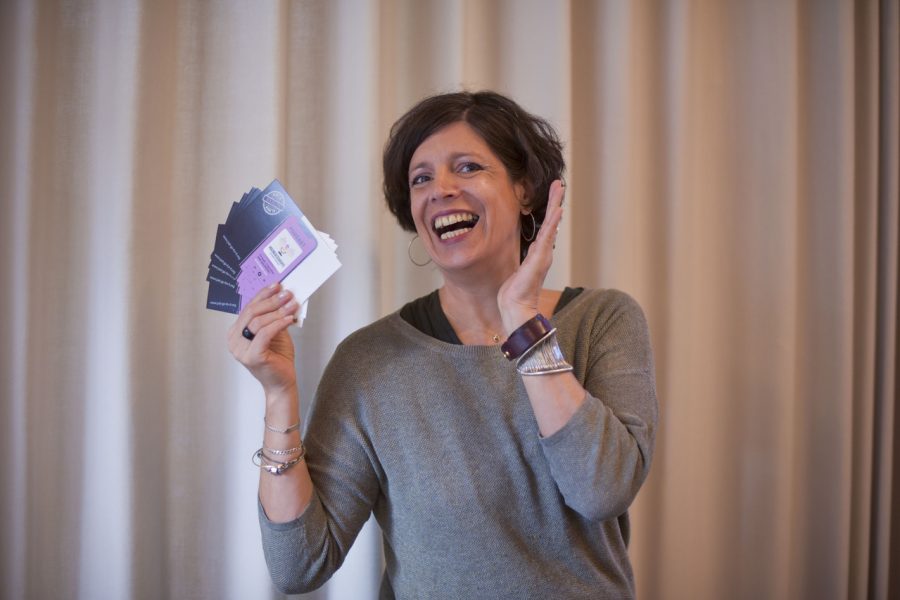
By 1982, Berlin was vibrating with self-determined energy, but it was fragmented. Groups were fighting for space and recognition without a shared map. The founding of SEKIS Berlin (Self-Help Contact and Information Point) was the moment when “village life” was given a structural backbone.
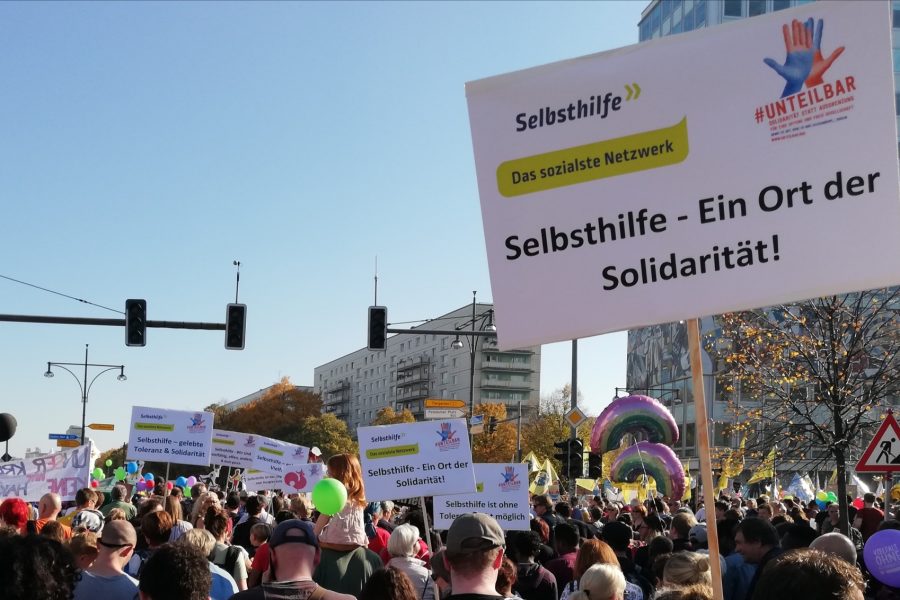
In Germany, the healthcare system is often described through its formal pillars. Berlin championed a fourth: self-help. SEKIS recognized that professional medical intervention is only half the equation; the other half lives in the shared experience of peers who know what you’re carrying because they’re carrying it too. Today, Berlin hosts over 2,000 self-help groups, all coordinated through the SEKIS database, with affordable or free, fully equipped meeting spaces available all across the city.
A Blueprint for a Heart-Based Berlin
What if we stopped treating Berlin’s history of self-help as a curiosity and started using it as a blueprint? First, we could become more aware of what has already worked and what is still working right here in this city, instead of constantly reinventing the wheel or chasing the most innovative approach.
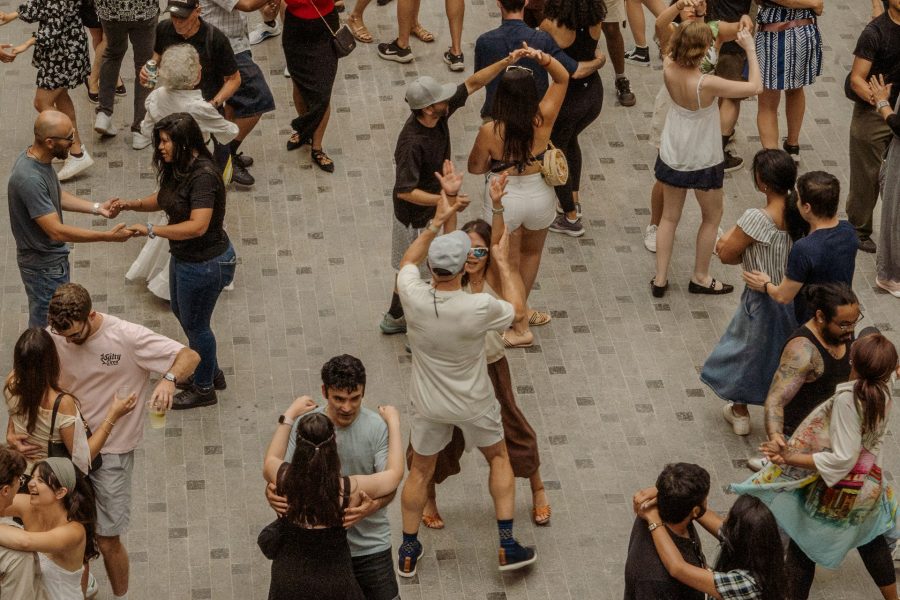
The structures for connection already exist, especially in the Kiez. They are waiting to be used. Second, we could expand on what’s working, building toward a city-wide embodiment of something more heart-based. Not by waiting for governments or experts to show us the way, but by each of us contributing in a way that is true to our own nature and purpose, trusting that when everyone brings their piece, the puzzle finds its own shape.
When we stop being passive consumers of “wellness” and start being active participants in our community, we discover something that no product can sell us: we were never broken. We just needed to be involved. In Berlin, the act of showing up ready to serve where it’s needed, to the best of our ability, has always been the ultimate act of self-determination. It is how a city full of people took back their wellbeing, one brick, one bucket, one neighbor at a time.
(Header image: © SEKIS Archive)