
“We Can’t Let Protection Become a Privilege”

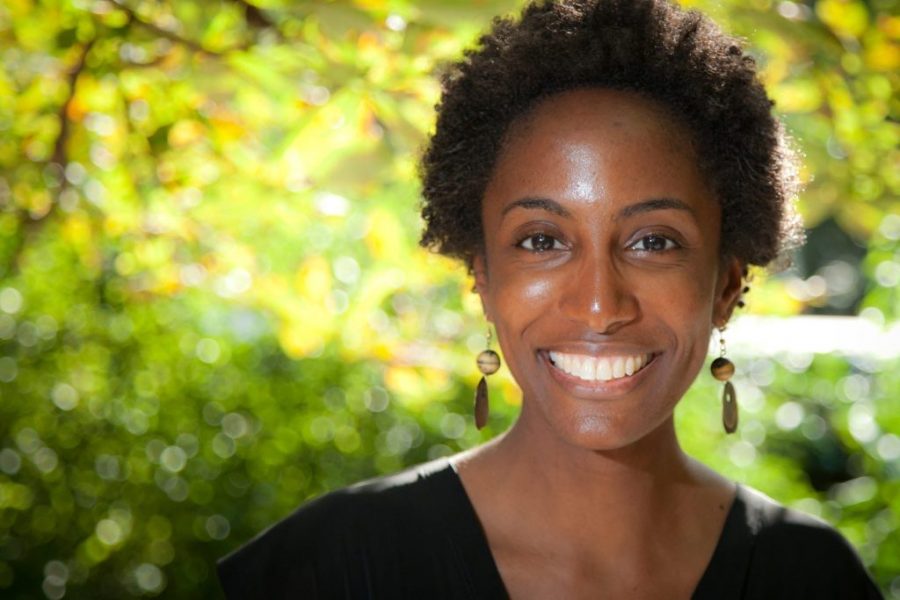
Vicky Germain
Representing over 90 organizations, the Migrationsrat e.V. (Migration Council Berlin) works at the intersection of policy, community empowerment, and rights advocacy. In this interview, project manager Vicky Germain explains why racialized migrants from Ukraine still face exclusion, how shrinking funding threatens essential support structures, and why solidarity must be practiced — not merely proclaimed.

WahlheYmatPost: Can you briefly introduce your organization? What is its main mission in Berlin?

Vicky Germain: The Migrationsrat Berlin e.V. (Migration Council Berlin) is an umbrella organization of more than 90 BIPoC (Black, Indigenous, and People of Color) and/or migrant self-organizations and post-migrant groups in Berlin. Its central mission is to improve the social, political, and legal situation of migrants living in Berlin – regardless of nationality, religion, age, social status, disability, gender, sexual orientation, or educational background. We are working towards a good, just and dignified life for everyone who lives in Berlin.

Our work focuses on political advocacy, community empowerment, critical policy and legislative analysis, and building concrete support structures for people who are frequently excluded from existing protection and participation systems. 

My main responsibility within this work is political and practical advocacy for BIPoC migrants from Ukraine and their families. This includes individual case counseling and support, as well as monitoring and critically assessing how the EU Temporary Protection Directive (EU 2001/55/EC) is interpreted and implemented in Germany. I work to ensure that racialized migrants are not excluded from protection mechanisms that are meant to apply universally.

WHP: What personally motivated you to get involved?

Vicky Germain: When the war began, I originally planned to volunteer at Berlin Central Station for no more than five weeks. As a Black third-country national, I was deeply shaken by the treatment of Black non-Ukrainian third-country nationals who were trying to flee the Russian invasion of Ukraine. Based on my own experiences as a Black migrant in Berlin, I could anticipate how their reception here would unfold — and I felt compelled to intervene. 

It soon became clear that my experience and skills as a coordinator in emergency relief could be helpful. At the same time, it became evident that the extraordinary, spontaneous support from people across different walks of life — as impactful as it was — needed stronger coordination and structure to be sustainable in the long term. 

Five weeks became nearly four years. What began as emergency assistance developed into a medium-term and eventually long-term commitment in the context of displacement, bureaucracy, exclusion, and structural racism. It was an extraordinary opportunity not only to support people upon arrival but also to accompany them throughout their settlement and new beginnings in Germany.

In many ways, I am now providing the kind of support I wish I had received when I first arrived in this country. It is empowering — not only to advocate for migrants like myself, but also to see directly how this advocacy and care work improves people’s real, everyday lives.

WHP: What challenges do people with a migration background face in Berlin — and how does your organization address them?

Vicky Germain: People with migration histories in Berlin face a wide range of structural and everyday challenges. These include discrimination in the housing and labor markets, limited access to adequate healthcare and psychosocial support, language barriers, complex and often arbitrary bureaucratic procedures, as well as growing societal hostility fueled by right-wing political narratives.

For many, insecurity about residence status, work permits, and family reunification results in constant instability. Racialized migrants are particularly affected by heightened surveillance, exclusion from protection systems, and restricted access to integration services.

The Migrationsrat Berlin responds to these challenges through a multi-layered approach: we provide individual case counseling, legal and bureaucratic orientation, political education, and community support. At the same time, we conduct structural advocacy and work with institutions to ensure that systemic discrimination is recognized and addressed. We strengthen migrant self-organization, bring migrant voices into political processes, and build alliances — with the aim that migrants are not merely “integrated” but actively participate in shaping the society they live in.

WHP: Do you have a project, event, or initiative coming up that you would recommend to our readers?

Vicky Germain: As part of the Communities First project, a new podcast series has recently been launched that highlights the experiences of non-Ukrainian third-country nationals who fled from Ukraine to Germany — told from their own perspectives. The stories are direct, personal, at times humorous, painful, and deeply thought-provoking.

The series encourages listeners to question dominant narratives of “welcoming culture” and invites reflection on humanity, solidarity, racism, and belonging in times of crisis and politically controlled migration.

The podcast can be found on YouTube at @cusbu.
Listen. Like. Subscribe. But above all — reflect.

WHP: How can interested people support your work or get involved themselves?

Vicky Germain: We are grateful to have been able to continue this work for almost four years now. Without the financial support of the Berlin Senate, CUSBU: CommUnities Support for BIPoC Refugees from Ukraine would not have been possible. The CommUnities First project also allowed two displaced persons from Ukraine to implement an empowerment project in Berlin Mitte – supported by the Integration Fund Mitte.

However, funding for diversity, equity, and inclusion is currently shrinking — and we are also affected by these cuts. Without new financial support, we will have to end our small but essential projects on 31 December 2025.

The most direct form of support is to donate to the Migrationsrat Berlin as well as organizations and projects that work for diversity, justice, inclusion, and migrant rights.

If financial support is not possible, there are still meaningful ways to act in solidarity: write to your elected representatives. Tag political decision-makers on Instagram, LinkedIn, X, Threads, or Facebook. Draw attention to projects like ours and demand that they continue.

We need less suffering on the streets of this city. The Migrationsrat Berlin and its partner organizations work every day to reduce this suffering — through projects such as CUSBU, CommUnities First, i-PÄD, ComE-In, Härtefallberatung (hardship case counseling), and many others.

Solidarity is an action — and every action counts.

Author:

More From WahlheYmatPost

  • Stay: The New Migration Challenge Germany Can’t Ignore

    Stay: The New Migration Challenge Germany Can’t Ignore

    If nothing changes demographically, Germany will have 16 million fewer workers by 2060 than today. According to most projections, the country needs around 400,000 new workers every year from abroad. We often hear this fact in the news, but what we hear much less about is how many international people leave Germany again—and this seems…

  • “We Can’t Let Protection Become a Privilege”

    “We Can’t Let Protection Become a Privilege”

    WahlheYmatPost: Can you briefly introduce your organization? What is its main mission in Berlin? Vicky Germain: The Migrationsrat Berlin e.V. (Migration Council Berlin) is an umbrella organization of more than 90 BIPoC (Black, Indigenous, and People of Color) and/or migrant self-organizations and post-migrant groups in Berlin. Its central mission is to improve the social, political,…

  • Neustart Berlin: A Fresh Start Without Everyone in the Room

    Neustart Berlin: A Fresh Start Without Everyone in the Room

    Berliner Morgenpost — together with Tagesspiegel, EUREF Campus, and radioeins — launched a strong new initiative: Neustart Berlin. Everyone was invited to submit an ongoing project that could revitalize Berlin and give the city a fresh start for the 21st century and beyond. More than 70 initiatives applied; a jury selected eight of them to…

  • Berlin, Hold My Book: Why Physical Still Beats Digital

    Berlin, Hold My Book: Why Physical Still Beats Digital

    Ok. This is going to sound like a typical “back in my day” kind of old man rant. But hear me out, because I’m not talking about a world swallowed by time. Despite claims to the contrary, Berlin is still full of places that offer a key to a door that still stands today: a…

  • Remembering as Resistance – How AKEBI Confronts Racism in Berlin

    Remembering as Resistance – How AKEBI Confronts Racism in Berlin

    WahlheYmatPost: Can you briefly introduce your organization? What is its main mission in Berlin? Erkin Erdoğan: AKEBI e.V. is a Berlin-based non-profit association, founded by migrants from Turkey in 2014. The name “AKEBI” is the acronym of “Association of Activists Against Racism, Nationalism, and Discrimination” from the Turkish language. We had a preceding anti-racist network…

  • The Berlin Lesson: Trust People, Not Bureaucracies

    The Berlin Lesson: Trust People, Not Bureaucracies

    I was reading Walter’s article about volunteering, and made me think deeply. I come from a society where volunteering was never a tradition. The imperative was: everyone takes care of themselves. If someone works unpaid, they are considered a loser or being taken advantage of. Applying to university never required any kind of volunteer experience,…

  • How Audrey Tang Is Rebooting Democracy — and What Berlin Can Learn from Taiwan

    How Audrey Tang Is Rebooting Democracy — and What Berlin Can Learn from Taiwan

    “The engine behind reshaping democracy has been young people and immigrants,” Audrey Tang – Taiwan’s Cyber Ambassador and first Digital Minister – told me. I was fortunate enough to meet Audrey at the Berlin Freedom Conference on 10 November. To tell you the truth: Audrey was the main reason I went. Ever since I read…

  • From Glitter to Growth: How Taylor Coburn Found Her Shine in Berlin

    From Glitter to Growth: How Taylor Coburn Found Her Shine in Berlin

    I had the pleasure of sitting down with an immigrant change-maker who encourages fellow immigrants from all walks of life to build their lives here in Berlin, instead of just scraping by and letting social norms, visas, or rules rob them of their ability to thrive.  Taylor Coburn is involved in many projects around the…

  • The Power of Ehrenamt: Finding Connection Through Volunteering in Berlin

    The Power of Ehrenamt: Finding Connection Through Volunteering in Berlin

    The news is grim these days. Everywhere we look things are going off the rails. The cost of living, and the political maneuverings… everything seems like too much, too soon, and too fast. And it’s easy to give in to the atomization of 21st century life; we are millions of people living alone. Alone in…

  • Giving Voice to Eastern European Migrants: The Polnischer Sozialrat’s Work for Equality

    Giving Voice to Eastern European Migrants: The Polnischer Sozialrat’s Work for Equality

    WHP: Can you briefly introduce your organization? What is its main task in Berlin? Dr. Kamila Schöll-Mazurek: The Polnischer Sozialrat (Polish Social Council – PSR) is one of the oldest Polish migrant organizations in Germany. Since our founding in 1982, we have advocated for the social participation and equal rights of Polish people in Berlin.…

  • Six Pictures from the Future — A Glimpse into Tomorrow’s Berlin

    Six Pictures from the Future — A Glimpse into Tomorrow’s Berlin

    For a campaign, you need many elements — but everything starts with funding. That’s why we first want to give enormous thanks to the supporters of WahlheYmatPost, to everyone who believes in what we do and why we do it: the Welcome Alliance Fund by ProjectTogether and the Bundesministerium des Inneren. And a heartfelt thank-you…

  • “Berlin Modern” — Is This the Modern Berlin?

    “Berlin Modern” — Is This the Modern Berlin?

    Last weekend, I had the chance to see inside Berlin’s newest museum: Berlin Modern.The visit made me think about how we imagine the future Berlin. If you’ve walked near the Kulturforum, between the Neue Nationalgalerie and the Philharmonie, you’ve surely noticed that enormous construction site. That is where Berlin Modern is rising — a new…

  • Welcome to the Club: How Vereine Can Turn Berlin from a City of Strangers into a Home

    Welcome to the Club: How Vereine Can Turn Berlin from a City of Strangers into a Home

    In 2000 Robert D. Putnam published a book, “Bowling Alone”, in which he argued that Americans were becoming increasingly isolated and removed from community and social capital. He took the institution of the Bowling League as his prime example. I remember when the book came out – though, admittedly, I never got around to reading…

  • “Civil Courage Begins in Everyday Life – and Ends Where We Look Away” – Diana Henniges on 12 Years of Moabit hilft

    “Civil Courage Begins in Everyday Life – and Ends Where We Look Away” – Diana Henniges on 12 Years of Moabit hilft

    WHP: Can you briefly introduce your organization? What is its main mission in Berlin? Diana Henniges: Moabit hilft e.V. is an independent, civil society association that emerged in 2013 from a spontaneous neighborhood initiative. We support people in urgent need – whether they are refugees, have a migration background, or need help for entirely different…

  • Bürgerbeteiligung: Participation or Paperwork?

    Bürgerbeteiligung: Participation or Paperwork?

    Berlin invites its citizens to participate — but only after the decisions are made. A visit to the Bürgerbeteiligungsbüro: where good intentions meet German bureaucracy. I was so happy when I first discovered the Bürgerbeteiligungsbüro. Yes! Finally, a place for participation! It took me quite some time, though, to understand what this institution is actually…

Address

Am Hamburger Bahnhof 3
10557 Berlin
Germany

hey@wahlheymat.de

Social Networks