
“Without Migrants, Berlin Wouldn’t Be Berlin” – Berlin Polyphon on Visibility, Resistance, and Building a Society for All

Michaela Vas,

Berlin Polyphon, an alliance of migrant organizations founded in 2024, is challenging anti-migration narratives and pushing for a more inclusive Berlin. Their mission: to make migrant voices heard in politics, media, and everyday life. 5 questions, 5 answers – an interview with David Häußer, Coordinator of Public Relations at Berlin Polyphon.

WahlheYmatPost: Can you briefly introduce your organization? What is its main mission in Berlin?

David Häußer: Berlin Polyphon was founded in the summer of 2024 in response to the debate and protests against the “remigration” plans earlier that year. At the invitation of the State Commissioner for Participation, Katarina Niewiedzial, about a dozen migrant associations met to discuss what kind of response was needed. After several meetings, the idea emerged to establish a structure focused on the narrative around migration—because that narrative is under heavy attack and being used as part of a campaign to stir up public opinion at the expense of those affected.

What drives us now is the visibility of migration society. We want to amplify the voices of migrants on these issues because—unlike those who peddle misinformation to stoke hate and ultimately dismantle democracy—we know from our own lives what the diversity of migration can truly mean.

Without immigrants, Berlin would never have become the global city it is. Migration has always been part of humanity’s default condition—the way we settled the planet and learned to adapt to changing circumstances. Everything that makes us human—language, culture, art, recipes—exists only through exchange with history, through influence and transformation shaped by circumstances and encounters, and through exchange with other people.
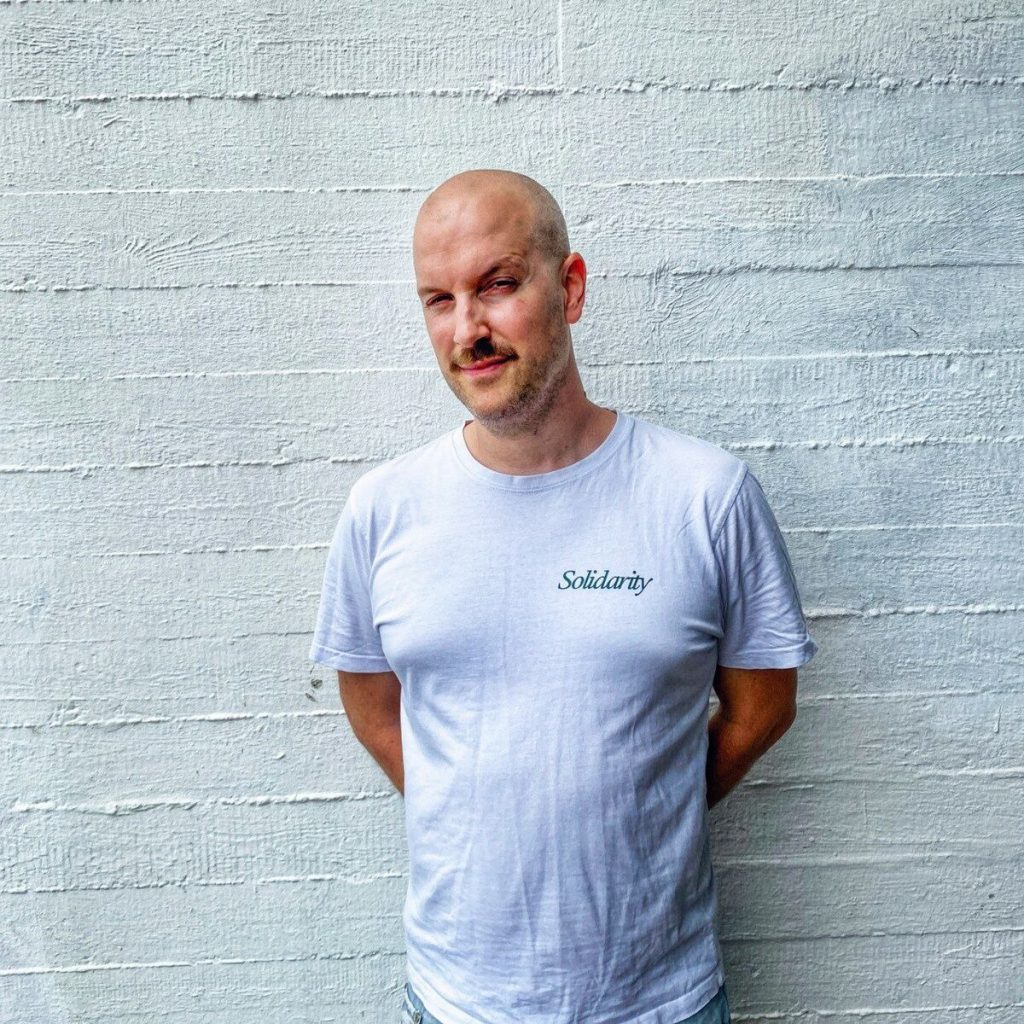
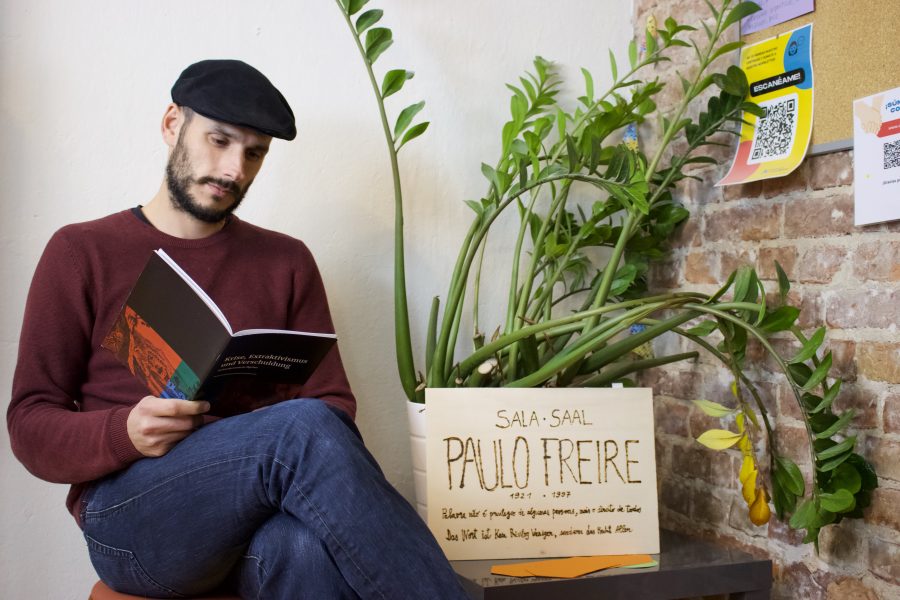
David Häußer (Foto: Christian Ottum)

And this more solemn, philosophical dimension is reached, through the voices of those whom society casts as “others” under the rule of so-called “normality.” As an alliance of explicitly migrant associations and organizations, Berlin Polyphon tries to bring these voices together—to pull the narrative around migration closer to reality.

WHP: What personally motivated you to get involved?

David Häußer: The urgent desire to have a roof over my head and to be able to buy myself something to eat every now and then has always been a powerful motivator! While billion-euro corporations like Vonovia—blessed by Berlin’s governing CDU and SPD—get more than a billion in property tax simply waived (hello, budget hole!), folks like us depend on wage labor. Luckily, the work is genuinely fun, and I’m good at what I do. So I’m not just surviving.

Another motivation is the marching advance of fascism—be it Trump, Putin, Khamenei, or their German offshoots—who for years have set the tone in talk shows, headlines, and on election posters.

The next few years will decide whether we were serious about democracy, and I’m glad I don’t have to watch that debate from the sidelines.

WHP: What challenges do people with a migration background face in Berlin—and how does your organization respond?

David Häußer: First, there are the issues that affect everyone. After all, even people with the infamous migration background live in migration society; there is no “outside” to spaces shaped by migration. The housing crisis is a catastrophe for anyone who isn’t rich. Current transport policy poses a serious risk to everyone who doesn’t drive.

Of course, there are also problems that affect migrants specifically—above all, racism. Structurally, in the form of deep-seated prejudices; disadvantages when looking for jobs, housing, healthcare, or meaningful support from public agencies—never mind the skewed coverage in much of the media. And individually, in the form of everyday hostility that can escalate to physical attacks and even murder.

We intend to speak out on this, to oppose it, and to organize against it. Since our launch in November 2024, we’ve been doing that with campaigns, posters, podcasts, and events. But we don’t want to stop at just opposition. We’re even more focused on the question: what kind of society do we want to live in? What are our goals? Our wishes? Our vision? We’ve just wrapped up the #gesellschaftfürALLE campaign and are now preparing a campaign for the 2026 Berlin elections.

WHP: Do you have an upcoming project, event, or initiative you’d recommend to our readers?

David Häußer: Yes—this week already, on September 27th, we’re running a workshop on our election campaign at the opening of the Zentral- und Landesbibliothek (Amerika-Gedenk-Bibliothek). Admission is free; we start at 13:15. Come by!

We’re also running a simple survey: which issues should urgently be addressed in Berlin’s elections next year?
Survey here.

And on Wednesday,  October 2nd, we’re holding our general plenary, to which all member organizations are invited—as well as any other interested migrant associations, initiatives, and federations.

WHP: How can interested people support your work or get involved?

David Häußer: We don’t accept individual members; official membership is limited to migrant organizations. But if you represent one, you’re warmly invited to come to the general plenary mentioned above or to email kasia.wojcik@polyphon.berlin.

But if you’re still interested as an individual—and since you, Wahlheymat’s readers, are most likely individuals and not from Berlin—here’s your chance to get involved around migration, right-wing backlash, and all related issues. Come take a look at Berlin Polyphon by joining our monthly Volunteer Community meeting.

The next date in October isn’t finalized yet, but it will probably be during the week of October 20th. Otherwise, feel free to write to community@polyphon.berlin

Berlin Polyphon – Mission and Vision

Berlin Polyphon is an alliance of migrant and refugee organizations based in Berlin, uniting over 40 groups, associations, and umbrella organizations to intervene in and shape the public discourse on migration. 
They aim to counter narratives that portray migration as a threat or a symptom of societal decay, by bringing forward the voices and perspectives of those who live the reality of migration in everyday life. 
Berlin Polyphon works both outwardly and inwardly: outwardly through events, public statements, campaigns, podcasts, and media work; inwardly by providing workshops, media training, and facilitating exchange between migrant organizations and public institutions. 
They also run specific projects such as CUSBU (Community Support for BIPoC Refugees from Ukraine), offering referral services, case management, empowerment, and care work in cooperation with community-led initiatives. 
At its core, Berlin Polyphon is committed to a vision of a rights-based society where everyone can participate, and where diversity is seen as a strength, not a crisis.

Author:

More From WahlheYmatPost

  • What Happened When I Tried to Organize My Neighbors 

    What Happened When I Tried to Organize My Neighbors 

    There’s a lot of talk today about building community. At our March WahlheYmat Talk, the crowd brought up the subject, specifically that we should be creating more of it. Ideas flew around the room. We are living in an era of schism, where the people pulling the levers of power are trying to create an…

  • Berlin Wiki: Who Is Allowed to Vote – and Why Not Everyone Can

    Berlin Wiki: Who Is Allowed to Vote – and Why Not Everyone Can

    Who is allowed to vote, and who is not? In a democratic state like Germany, the right to vote is of central importance. It allows citizens to take part in political decision-making and help determine the composition of the government. In Germany, voters must meet certain requirements in order to vote. They must hold German…

  • The Good, the Bad, and the Arbeitsamt

    The Good, the Bad, and the Arbeitsamt

      Most places have an arm of the government to help folks out when they’re unemployed; governments like their citizens to have jobs and pay taxes. It tends to keep the governments – and the citizens – happy. There’s also the matter of not letting people starve in the street when they’re out of work.…

  • Home Is Not a Place: A Berlin Exhibition Rethinks Migration

    Home Is Not a Place: A Berlin Exhibition Rethinks Migration

    How do people change after moving from one place to another? What do they leave behind and what do they carry with them? Is it possible to feel at home in a space that is vastly different from the one we left? In her latest installation “Remembering Space (how much past can the present hold)”,…

  • Berlin Wiki: Party Profiles II – The Greens, The Left, the AfD and the BSW party

    Berlin Wiki: Party Profiles II – The Greens, The Left, the AfD and the BSW party

    What is the Green Party? Bündnis 90/Die Grünen is an important political force in the Berlin House of Representatives. Although the party has not been part of the government since the 2023 election, it operates from the opposition within parliament. Its guiding principle is ecological, economic, and social sustainability. It focuses on stronger climate protection,…

  • Berlin Wiki: Which Parties Shape the Capital?

    Berlin Wiki: Which Parties Shape the Capital?

    Which parties are important in Berlin? Berlin has many political parties, each pursuing its own agenda. These parties are organized at different levels. Many have a Berlin state association, as well as several district and local branches. The parties that receive the most votes form parliamentary groups in the House of Representatives, Berlin’s parliament. The…

  • Berlin Wiki: Your Guide to the 2026 Berlin Election

    Berlin Wiki: Your Guide to the 2026 Berlin Election

    What will be elected in Berlin in 2026? On September 20, 2026, a new House of Representatives will be elected in Berlin. At the same time, the district assemblies of Berlin’s twelve districts will also be elected. The electoral term is always five years. Voters therefore decide which parties and politicians will serve in these…

  • “Das Volk” in 2026: Time to Redefine the People

    “Das Volk” in 2026: Time to Redefine the People

    “Do you behave as the person you truly want to be?” I ask myself this question in moments when I clearly fall short. Yes, it is hard to live up to one’s ideal self—I’m probably not the only one who feels this way. The same applies for societies. Over the past ten years, I have…

  • “Treat Every Case as Your Own”: How Zaki e.V. Supports Berlin’s Overlooked Migrants

    “Treat Every Case as Your Own”: How Zaki e.V. Supports Berlin’s Overlooked Migrants

    WHP: Can you briefly introduce Zaki e.V.? What is your main mission in Berlin? Pia Bergmann: Zaki – Bildung und Kultur e.V. is a migrant-led organization, with its main office located at the Berlin Global Village in Neukölln and another office in Pankow. The organization’s focus can be summed up in one sentence: arrival and…

  • Germany Has an Energy Crisis — Just Not the One You Think

    Germany Has an Energy Crisis — Just Not the One You Think

    Energy – scarcity.We talk about energy all the time—but only in physical terms.I find myself thinking more and more about our social energy, which may matter even more. Because a society also needs energy. This energy, I would call social energy—a concept that appears in the social sciences under terms like collective intelligence or social…

  • Multilingualism, Participation, and Power: A Berlin Case Study

    Multilingualism, Participation, and Power: A Berlin Case Study

    Local migrant organizations often play a crucial yet underrecognized role in shaping participation, representation, and social cohesion within urban districts. Based on my experience directing the migraUp! Pankow project in Berlin between 2015 and 2025, this reflection highlights how community-based initiatives can strengthen migrant organizations while simultaneously contributing to local governance and democratic participation. migraUp!…

  • One In Four Berliners Cannot Vote: Europe Still Struggles With Migrant Political Participation

    One In Four Berliners Cannot Vote: Europe Still Struggles With Migrant Political Participation

    A recent report by the Migration Policy Group, a think tank based in Brussels, shows that Germany is among the best of the worst when it comes to enabling and encouraging the political participation of immigrants. Germany’s score in this is only a small part of the bleak findings from the report’s Political Participation Index,…

  • ‘Migrants’ Are The Greatest Opportunity For Germany

    ‘Migrants’ Are The Greatest Opportunity For Germany

    “Change begins with a conversation.” That’s why I was glad to be invited to the SharedTableDinner by the Oneliness Project. How do we find a sense of home in each other? How are loneliness and democracy connected? These were the questions that shaped the evening. Amazing people shared deeply personal thoughts about how they connect…

  • “Democracy Is More Than Voting”: Sami Atris on Organising Communities in Berlin

    “Democracy Is More Than Voting”: Sami Atris on Organising Communities in Berlin

    WHP: Can you briefly introduce the Berliner Bürgerplattformen? What is its main purpose in Berlin? Sami Atris: Who actually decides what happens in our lives? How much influence do we have over how high our rent is — or whether we can even afford to stay in our neighbourhood? Who decides whether our children go…

  • Ukrainian Voices in Berlin: “People Are Not Objects for Integration Debates”

    Ukrainian Voices in Berlin: “People Are Not Objects for Integration Debates”

    WHP: Can you briefly introduce the Allianz Ukrainischer Organisationen e.V (Alliance of Ukrainian Organizations)? What is its main task in Berlin? Oleksandra Bienert: The Allianz Ukrainischer Organisationen e.V. is a nationwide association currently bringing together 23 civil society organizations in eight federal states. These organizations were founded by people with a Ukrainian migration background and…

Address

Am Hamburger Bahnhof 3
10557 Berlin
Germany

hey@wahlheymat.de

Social Networks