
WHP: You worked in humanitarian aid around the world for many years. What ultimately motivated you to found Just-Go-For-It?
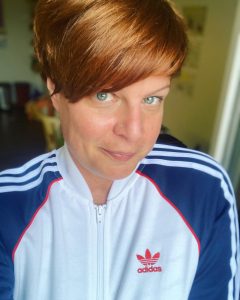
Marilena Chatziantoniou: I started working in the field of humanitarian aid in 1998. My first assignment was in Albania, where I worked for a small German NGO, just months before the Kosovo crisis. I remember falling in love with the job and realising that I did not want to do anything else in my life – I had found my calling. At the same time I met humanitarian aid workers of all ages, and some of the older ones were very cynical and bitter. They talked about previous disasters as if it were some kind of competition.
As though they themselves were the heroes who lived through the pain and ordeals that come with any crisis, rather than the people actually affected. I clearly remember telling myself to be careful and if I ever even came close – even in the slightest way – to reaching that stage of bitterness, to stop working in the field.
More than two decades, a few continents and countless experiences later, I realised it was time for a change – at least if I wanted to stay true to myself. Not that I had become cynical, but somehow I felt I had lost my voice. I felt I was hiding behind the neutrality of humanitarian aid. So I left the job I used to love so much and, in search of my own way to contribute, I founded Just-Go-For-It GmbH.
Today, Just-Go-For-It works in two main areas. Our core strand is recruiting and HR consulting, through which we match people – many of them with an international background – with careers and jobs that value what they bring. Our second strand is SELFI, a programme that supports women approaching retirement in actively shaping the next chapter of their lives on their own terms. As different as these areas seem, both come from the same place for me: helping people recognise and make use of the choices they have.
WHP: What shaped you most on your own journey? Was there a moment or experience that fundamentally changed your view of integration and equal opportunity?
Marilena Chatziantoniou: The questions of nationality and integration were relatively prominent in my own life from a young age. You see, my father is a first-generation Athenian; his parents had come to Greece as refugees from Smyrna, today’s Izmir. My mom is Swiss; however, she was born in Königsberg, today’s Kaliningrad – her mom, my grandmother, was German and had married a Swiss man. In 1944 my mother and grandmother had to flee to Switzerland because of the war and my Swiss-born grandfather was mistaken for a German soldier. Having no papers to prove otherwise, he was taken prisoner by the Soviets, spending two years in a prison camp in Siberia. He was eventually reunited with his family by the Red Cross. You could say that both my parents had very particular migration stories of their own that of course shaped my own. They met some 60+ years ago on the Greek island of Rhodes.
I grew up bilingual with German and Greek in Athens and always felt a bit out of place. Without understanding it fully, I became aware of the different versions of integration, the notions of “good” and “bad” foreigners – the frenzy of it all. Tell people you are half Swiss and they immediately think you are rich, good at skiing and progressive.
Few know that Swiss mothers could not pass on their citizenship to their children before 1985 or that in Appenzell Innerrhoden women only gained the right to vote in 1991, when it was forced by Federal law. In Greece I was considered lucky for being half Swiss. In Switzerland I was not considered truly Swiss, as I did not speak the dialect, only “high German”.
When I first came to Berlin in 1994 as part of a year abroad from my university in London, I was thrilled and immediately fell in love with the city. Here everyone had a story of their own. Here you were not different for having more than one background or story. Berlin was the actual experience that fundamentally changed and shaped my view on integration.
My years in Berlin taught me that people with the same nationality, passport, mother tongue and cultural upbringing could still be treated differently by the system. Countless East German citizens experienced this when their degrees or work experience were neither fully recognised nor valued.
It was Berlin that taught me that the passport one holds matters because having a German passport opens the door to social welfare (Jobcentre), irrespective of whether you speak the language or not. An EU or other passport does not grant you this privilege. And it was Berlin again that taught me, passport and degrees aside, the German system places far more emphasis on speaking German than it really needs.
And finally it was Berlin that taught me to dislike the word integration. In my mind it carries a hint of “assimilation”. People themselves are so different, and even if they come from the same country or from similar cultural backgrounds, they are still unique. As far as possible, I therefore try not to use the word “integration”.
When I came to Berlin in 1994, I was considered a “foreigner” – an Ausländer, using the generic masculine. Then I became a gendered foreigner, an Ausländerin. A few years later, I was labelled a person with a migration background or, to use the new buzzword, someone with a migration biography. I myself became naturalised four years ago, because having the right to vote is ever so important to me. Every single day I choose to participate in this society, to contribute, to grow — but surely not to “integrate”.
WHP: Many people with an international background bring valuable experience and skills with them, yet still encounter obstacles in Germany. Which barriers do you encounter most often in your work – and which ones are often overlooked in the public debate?
Marilena Chatziantoniou: For me, the most misunderstood and real obstacle is the language barrier, coupled with a complex visa system. If you think about it, we are acting in a completely absurd way: on the one hand, we offer many high-quality academic degrees free of charge entirely in English, which gives the impression that you can work in Germany without speaking German. On the other hand, we tell those same graduates that finding a job in Germany without German will be almost impossible. Or we are abolishing state-funded integration courses, which are really German-language classes, while refusing to offer public services in English. After all, we are in Germany; people ought to speak our language…
Then we have some 15 different visa application procedures, from the “Chancenkarte” and the EU Blue card to the lesser-known freelance visa, as well as bilateral agreements that apply only to certain countries – it is really tough to figure out which one to apply for. Some visas are only for regulated jobs like doctors, engineers etc., some have certain salary thresholds, others require a binding work contract beforehand.
While the statistics clearly show that we need around 400,000 additional workers per year if we want to keep our economy up and running, a chemist from country X is wondering whether their profession is regulated and ends up applying for a visa in Canada, the Netherlands or Sweden rather than Germany. Not to mention the countless small and medium-sized enterprises (SMEs) that would rather leave a position vacant because the system for hiring a foreign national is too complex.
WHP: Just-Go-For-It doesn’t just want to bring people into work, but to empower them. What does empowerment mean to you personally? How do you know that your work is really making a difference?
Marilena Chatziantoniou: At Just-Go-For-It, we work according to an idea attributed to Carl Gustav Jung “I am not what happened to me, I am what I choose to become”. Empowerment, to me, means acting from a position of choice. It means to have the tools to recognise the choices available to you.
We measure our success through direct feedback from the people who have worked with us. This guides and nourishes us. Concretely, this can mean something as simple as a client having an “Aha!” moment or telling us how much they loved working with us because we actually listened to them rather than to trends. We believe that makes all the difference.
WHP: Berlin is considered an international and diverse city. Does this image match your experience – especially when it comes to access to the job market and social participation?
Marilena Chatziantoniou: I would definitely say that Berlin is an international and diverse city, much more so now than it was in the 1990s. Although I would also say that Berlin has become a highly polarised city, with quite a lot of bubbles living alongside each other.
We are definitely not building enough bridges between those bubbles, and polarisation is therefore worsening. Take language, for example: German-language proficiency still plays a very prominent role in today’s job market. Given all the translation and AI tools at our disposal, I am not quite sure why this is the case, but it is.
The majority of the jobs require very good German, in my experience without any real consideration of whether that level of German is actually necessary. An accountant’s job, for example, should require a good knowledge of accounting and perhaps of specific German accounting software like DATEV and Lexware. But I do not understand why fluency in German is necessarily required. I suspect it is because fellow colleagues do not speak other languages, because companies do not want to translate policies and contracts into another language, or simply because of fear of the unknown. I also expect this to change out of sheer necessity rather than because of social considerations.
Furthermore, we should definitely build more bridges between generations within Berlin’s German and international communities. The recently arrived international workforce could learn a great deal from the established one, and vice versa. Again, the main reason is the language barrier.
The child of a Gastarbeiter*in will probably be fluent in German but not necessarily in English. A recently arrived compatriot may be the exact opposite. So we each stay in our own corners and remain passive observers, complaining that integration has once again failed.
WHP: At WahlheYmat, we often talk about how participation is more than a residence status or a job. What role do community, belonging, and mutual support play in successful integration?
Marilena Chatziantoniou: For me, community plays the most important role of all. Community is us, it is you and me. Community takes you out of your passive, observer role and catapults you into an active, engaged one. And for that, Berlin is fantastic – it has a variety of great projects and initiatives that seek to build exactly the bridges we need. Most notably your very own WahlheYmat or neighbourhood initiatives like Dütti-Treff, with which we work very closely, are some great examples.
WHP: If you could give Berlin’s policymakers or employers one concrete change that would noticeably improve the lives of international Berliners – what would it be?
Marilena Chatziantoniou: Simplify bureaucracy, simplify the visa system and find a way to recognise foreign qualifications – for instance, by allowing people to take a test to demonstrate that they meet the required level of expertise. This would make life easier for all Berliners, international or otherwise. The complexity of the current system creates too much scope for exploitation and unethical working conditions.
WHP: Berlin attracts people from all over the world. What does Berlin mean to you personally today? What makes this city special – and what would need to change to make it even more open and liveable for international Berliners?
Marilena Chatziantoniou: For me, Berlin was love at first sight, and I have always said if it were a person, I would marry it straight away. That was true back in 1994, and it remains true today. The city has changed a great deal, but so have I. What makes it special to me is its unique history, its melting-pot culture, its people and its humour. Berlin has flaws and ugly sides, no doubt, but it also has an incredible beauty, an industrial romanticism that I have not encountered elsewhere. Here, I feel I can be whoever I choose to become.
(Header image: © Liz Soto Rivas)