

“Darth Vader speaks Amtssprache”: The Chilling Poetry of German Bureaucracy

Walter Phippeny,

Darth Vader, Star Wars
Between the menace of Darth Vader’s diction and the cold formality of a German official letter lies the same force: Amtssprache, the bureaucratic language that can make even ordinary correspondence feel like a summons from the Empire. In this essay, Walter Phippeny dissects how Germany’s administrative speech—precise, impersonal, and eerily poetic—turns everyday life into a linguistic duel between citizen and state.

Every bureaucracy has its language; one might even go further to say that language is bureaucracy’s main tool. The characteristics of bureaucratic speech are well known: thick, complicated sentences, dripping with precision and impersonality. It is intentionally difficult to understand, requiring a certain amount of skill and training in its dark art. Most people will accept without hesitation documents that they could not have possibly read and on whatever terms. We are forced to do this on a weekly basis. 

Different bureaucracies have their unique charms. American bureaucracy is relatively light, but, once you’ve run afoul of it, it’s really hard to escape the relentless gravity. French bureaucracy shares something with the US; you can find yourself in a simple dead-end with nowhere else to go and all moves exhausted. 

The slang term for office speech in the US is ‘legalese’; and it’s no coincidence that the term legalese sounds like Chinese or Japanese – languages also largely considered to be inscrutable to the American ear. The Americans laugh at legalese, and make fun of it. They find it silly and tend to look at bureaucrats themselves with the same mocking tone and very little patience. So different from Germany. 

Amtssprache has its own phobia

Germany – and the collection of states that existed before it – have produced some truly amazing thinkers of this modern bureaucratic condition: Weber, Kafka, et al. But, where the American makes jokes about the pencil-pushing bureaucrats or the bean counters, the German has a pronounced fear. Just using “Amtssprache” can instantly provoke a response of terror. 
Amtssprache

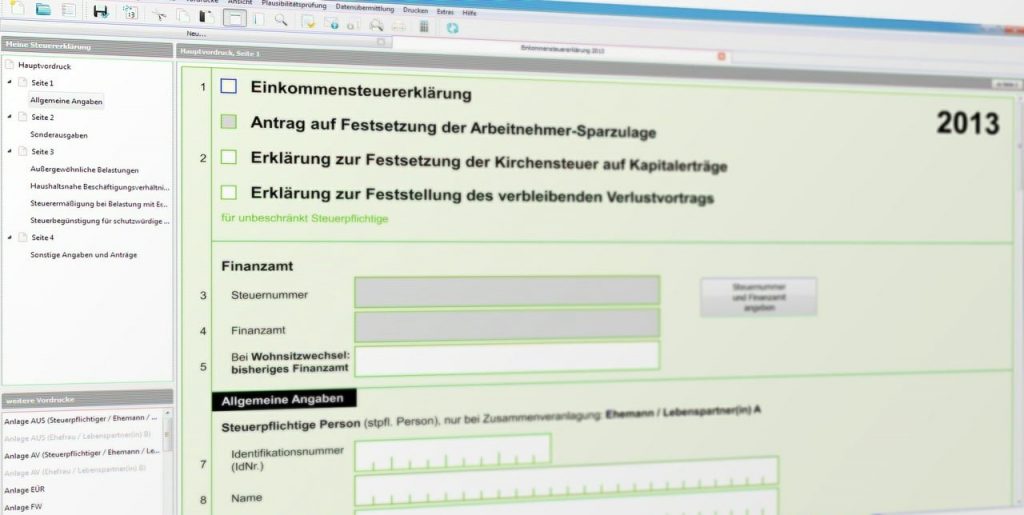
You come home one day and check your mail. There’s something in there from the Hausverwaltung or Finanzamt; you rip open the envelope and see the business format, the standard greeting, “Sehr geehrter Herr Phippeny”, and that dry tone, dry with a crack of ice in its veins. Now you’re struggling to read this text. How bad is it? Is this just a polite notification, or is it something darker? Do I owe money? Have I been hit with another mysterious bill for breaking some rule that I didn’t know existed? An American friend of mine ran into so much trouble with his health insurance, they wanted 25,000 Euros and had just sent him to Inkasso. Is that what I have in my hand now? 

Amtssprache (noun, German):
The term Amtssprache refers to the officially designated language used by governmental and administrative bodies to conduct their affairs, issue documents, and communicate with the public. It determines the language in which laws, regulations, and official records are written, as well as the language required for formal applications, court proceedings, and correspondence with authorities.
In most countries, the Amtssprache reflects the primary national language, but in multilingual states there may be several Amtssprachen depending on the region or institution. For example, in Germany the Amtssprache is German, while in Switzerland there are four official administrative languages: German, French, Italian, and Romansh.
Thus, the concept of Amtssprache plays an important role in ensuring clarity, legal consistency, and accessibility in public administration.

Amtssprache has its own phobia, and it’s one I’ve only heard about here in Germany. People develop a genuine fear of opening their mailboxes. I’ve known some who went years without checking theirs. Never do this, by the way, you can really blow up your life here by not keeping up on your mail. Very bad idea! But, this phobia is still a thing. It can really rattle people to get that letter: a small piece of paper that is about to blow up your life. 

Darth Vader speaks Amtssprache

So, in my first years in Berlin, I would watch movies dubbed in German that I knew by heart in English. “Lord of the Rings”, “Star Wars”, and so on. I’d put on the subtitles and take notes, trying to expand my vocabulary. We often talk about what gets lost in translation, but sometimes things get added. The original “Star Wars” trilogy offers a good example. It’s where I experienced the first use of aristocratic speech. Leia is a princess after all, and so the other characters are using the second person plural with her, something you only hear with royalty. 

But one of the most devilish translation choices is Vader; you see, Darth Vader speaks Amtssprache. I don’t know who made this decision, but it’s absolutely perfect! No notes! Vader, through the use of Amtssprache, just becomes so much more villainous. Sure, in English Vader has that amazing voice, but his baddy cred is largely communicated through his size and his ability with a laser sword; in German it’s dripping through his very speech. Want an example?

Ok. “Empire”. The Millenium Falcon loses the Empire in the asteroid field. Captain Needa tells one of his underlings that he will take responsibility, and, in the next scene, Needa collapses to the deck plating while Vader force chokes him. In German, Vader says, “Ich nehme Ihre Entschuldigung zur Kenntnis, Captain Needa.” Without a good feel for the language, it’s hard to understand just how threatening this is. And it’s also a very typical formula you’ll find in one of those letters from the Finanzamt. This is total Amtssprache! It means “your apology has been noted”, but the apology is neither accepted nor rejected; it is simply noted. The next time a German friend apologizes, say this to them and see what kind of reaction you get.   

You’ll slowly get a feel for Amtssprache

As you navigate through your life in Berlin, you’ll slowly get a feel for Amtssprache. And, like with any bureaucracy anywhere else, it’s rough for even the native speakers to parse. We all have to get into a little trouble now and then, and then get ourselves back out of it. 

Also, despite the fact that it’s Vader’s language of choice, and also despite how much the Germans will complain about it, I have found that bureaucracy in Berlin is relatively easy to navigate and shouldn’t inspire as much fear as it does. Generally, the case workers will give you a map – a check list of what they want to see – and once you have everything on the check list, you’re done. 

I’ll admit that as far as Amt challenges go, I haven’t taken on anything truly difficult. I’ve never worked as a Freelancer here, which has a whole lot more that can go wrong. In France, ‘no’ rarely means ‘no’, usually it means ‘convince me.” I think the Germans have a bit of that too. Not as much as France, but a bit.  

Author:

More From WahlheYmatPost

  • Berlin Wiki: Party Profiles II – The Greens, The Left, the AfD and the BSW party

    Berlin Wiki: Party Profiles II – The Greens, The Left, the AfD and the BSW party

    What is the Green Party? Bündnis 90/Die Grünen is an important political force in the Berlin House of Representatives. Although the party has not been part of the government since the 2023 election, it operates from the opposition within parliament. Its guiding principle is ecological, economic, and social sustainability. It focuses on stronger climate protection,…

  • Berlin Wiki: Which Parties Shape the Capital?

    Berlin Wiki: Which Parties Shape the Capital?

    Which parties are important in Berlin? Berlin has many political parties, each pursuing its own agenda. These parties are organized at different levels. Many have a Berlin state association, as well as several district and local branches. The parties that receive the most votes form parliamentary groups in the House of Representatives, Berlin’s parliament. The…

  • The Good, the Bad, and the Arbeitsamt

    The Good, the Bad, and the Arbeitsamt

      Most places have an arm of the government to help folks out when they’re unemployed; governments like their citizens to have jobs and pay taxes. It tends to keep the governments – and the citizens – happy. There’s also the matter of not letting people starve in the street when they’re out of work.…

  • Home Is Not a Place: A Berlin Exhibition Rethinks Migration

    Home Is Not a Place: A Berlin Exhibition Rethinks Migration

    How do people change after moving from one place to another? What do they leave behind and what do they carry with them? Is it possible to feel at home in a space that is vastly different from the one we left? In her latest installation “Remembering Space (how much past can the present hold)”,…

  • Berlin Wiki: Your Guide to the 2026 Berlin Election

    Berlin Wiki: Your Guide to the 2026 Berlin Election

    What will be elected in Berlin in 2026? On September 20, 2026, a new House of Representatives will be elected in Berlin. At the same time, the district assemblies of Berlin’s twelve districts will also be elected. The electoral term is always five years. Voters therefore decide which parties and politicians will serve in these…

  • Multilingualism, Participation, and Power: A Berlin Case Study

    Multilingualism, Participation, and Power: A Berlin Case Study

    Local migrant organizations often play a crucial yet underrecognized role in shaping participation, representation, and social cohesion within urban districts. Based on my experience directing the migraUp! Pankow project in Berlin between 2015 and 2025, this reflection highlights how community-based initiatives can strengthen migrant organizations while simultaneously contributing to local governance and democratic participation. migraUp!…

  • “Democracy Is More Than Voting”: Sami Atris on Organising Communities in Berlin

    “Democracy Is More Than Voting”: Sami Atris on Organising Communities in Berlin

    WHP: Can you briefly introduce the Berliner Bürgerplattformen? What is its main purpose in Berlin? Sami Atris: Who actually decides what happens in our lives? How much influence do we have over how high our rent is — or whether we can even afford to stay in our neighbourhood? Who decides whether our children go…

  • “Das Volk” in 2026: Time to Redefine the People

    “Das Volk” in 2026: Time to Redefine the People

    “Do you behave as the person you truly want to be?” I ask myself this question in moments when I clearly fall short. Yes, it is hard to live up to one’s ideal self—I’m probably not the only one who feels this way. The same applies for societies. Over the past ten years, I have…

  • “Treat Every Case as Your Own”: How Zaki e.V. Supports Berlin’s Overlooked Migrants

    “Treat Every Case as Your Own”: How Zaki e.V. Supports Berlin’s Overlooked Migrants

    WHP: Can you briefly introduce Zaki e.V.? What is your main mission in Berlin? Pia Bergmann: Zaki – Bildung und Kultur e.V. is a migrant-led organization, with its main office located at the Berlin Global Village in Neukölln and another office in Pankow. The organization’s focus can be summed up in one sentence: arrival and…

  • Germany Has an Energy Crisis — Just Not the One You Think

    Germany Has an Energy Crisis — Just Not the One You Think

    Energy – scarcity.We talk about energy all the time—but only in physical terms.I find myself thinking more and more about our social energy, which may matter even more. Because a society also needs energy. This energy, I would call social energy—a concept that appears in the social sciences under terms like collective intelligence or social…

  • One In Four Berliners Cannot Vote: Europe Still Struggles With Migrant Political Participation

    One In Four Berliners Cannot Vote: Europe Still Struggles With Migrant Political Participation

    A recent report by the Migration Policy Group, a think tank based in Brussels, shows that Germany is among the best of the worst when it comes to enabling and encouraging the political participation of immigrants. Germany’s score in this is only a small part of the bleak findings from the report’s Political Participation Index,…

  • ‘Migrants’ Are The Greatest Opportunity For Germany

    ‘Migrants’ Are The Greatest Opportunity For Germany

    “Change begins with a conversation.” That’s why I was glad to be invited to the SharedTableDinner by the Oneliness Project. How do we find a sense of home in each other? How are loneliness and democracy connected? These were the questions that shaped the evening. Amazing people shared deeply personal thoughts about how they connect…

  • Ukrainian Voices in Berlin: “People Are Not Objects for Integration Debates”

    Ukrainian Voices in Berlin: “People Are Not Objects for Integration Debates”

    WHP: Can you briefly introduce the Allianz Ukrainischer Organisationen e.V (Alliance of Ukrainian Organizations)? What is its main task in Berlin? Oleksandra Bienert: The Allianz Ukrainischer Organisationen e.V. is a nationwide association currently bringing together 23 civil society organizations in eight federal states. These organizations were founded by people with a Ukrainian migration background and…

  • WahlheYmat Turns Two — And Invites You In

    WahlheYmat Turns Two — And Invites You In

    WahlheYmat is looking for new members.That is the message I would like to write about today. Before my life in Berlin, I was never this direct. I am learning a lot here. And I don’t just mean the famous Berliner Schnauze — like going into a bakery and saying: “Good morning, so sorry for disturbing…

  • The Berlin Blueprint: Participation as the Ultimate Act of Self-Determination

    The Berlin Blueprint: Participation as the Ultimate Act of Self-Determination

    In the glossy catalogs of modern wellness, “self-help” is often sold as a retreat from the world: a private journey of healing through products and quiet contemplation. Berlin’s history, however, offers a more rugged, democratic alternative. In this city, wellbeing has never been found in isolation. It has been forged through participation. To be a…

Address

Am Hamburger Bahnhof 3
10557 Berlin
Germany

hey@wahlheymat.de

Social Networks