
How Does the BVV Election Work?
On September 20, Berlin goes to the polls. On that day, the election to the House of Representatives (Abgeordnetenhaus) will take place, along with the elections to the District Council Assemblies (Bezirksverordnetenversammlungen, BVV). Berlin is divided into twelve districts, each of which elects its own District Council Assembly. This is the elected representative body of a district. The BVV elects the members of the district office, including the district mayor. The BVV can then make decisions on certain local issues such as schools, leisure facilities, or local transport matters. In Berlin, the BVV election is equivalent to the local elections held in most other cities.
All major political parties compete with candidate lists, but smaller parties may also participate in BVV elections. People who have lived in Berlin for at least three months may cast their votes in the district where they reside. To vote, they must be German citizens or citizens of another member state of the European Union (EU) and be at least 16 years old. In principle, anyone who is eligible to vote and at least 18 years old may stand as a candidate for the BVV.
BVV elections are normally held every five years. However, the District Council Assemblies were most recently elected in 2023. There is a simple explanation for this: during the 2021 BVV election, serious organizational errors occurred. As a result, the election was repeated in 2023. However, the five-year cycle did not restart, meaning elections are already scheduled again for 2026.
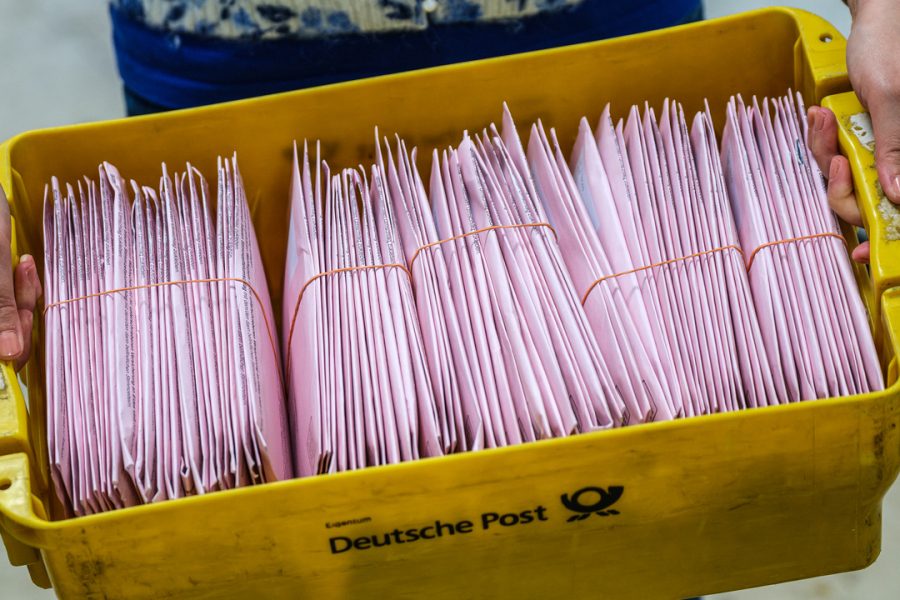
All eligible voters will receive a voter notification by post before September 20, containing all important information about the election.
What Is a Local Election?
In Germany, there are different political levels at which citizens can participate democratically. These are the federal level, the state level, and the local level.
In local elections, citizens elect the people who will later sit on the council of their city or municipality. They also elect a mayor. In some federal states, however, the mayor is not elected directly by the people but by the council or municipal council. Depending on the federal state, local elections take place every four to six years.
Mayors or lord mayors head the administration of their respective cities. For many important decisions, such as determining how money in the municipal budget is allocated, however, they need a majority on the city council.
There are three cities in Germany that are also federal states, and Berlin is one of them. Therefore, the system in Berlin differs somewhat from that of most other major German cities. Berlin’s BVV election is broadly equivalent to local elections elsewhere. However, Berlin’s districts are not independent municipalities, so this comparison is not strictly accurate. In Berlin, district mayors are not elected directly.
How EU Citizens Can Vote in Local Elections
EU citizens who live in another EU member state may participate in local elections there under the conditions applicable in that country. They have both active and passive voting rights in local elections, meaning they may cast their votes and also stand as candidates themselves. An EU directive regulating this has been in place since 1994.
The specific rules governing when EU citizens from other countries may participate in local elections vary somewhat between the German federal states. In elections to the District Council Assemblies (BVV), which most closely correspond to local elections in Berlin, EU citizens may vote if they are at least 16 years old and have had their residence in Berlin for at least three months. As a rule, they must be registered in the register of residents and included in the electoral register. From the age of 18, they may also stand as candidates in BVV elections.
Like all eligible voters in Berlin, they receive a voter notification by post.
Here you can find the Berlin Wiki page of Berliner Morgenpost.
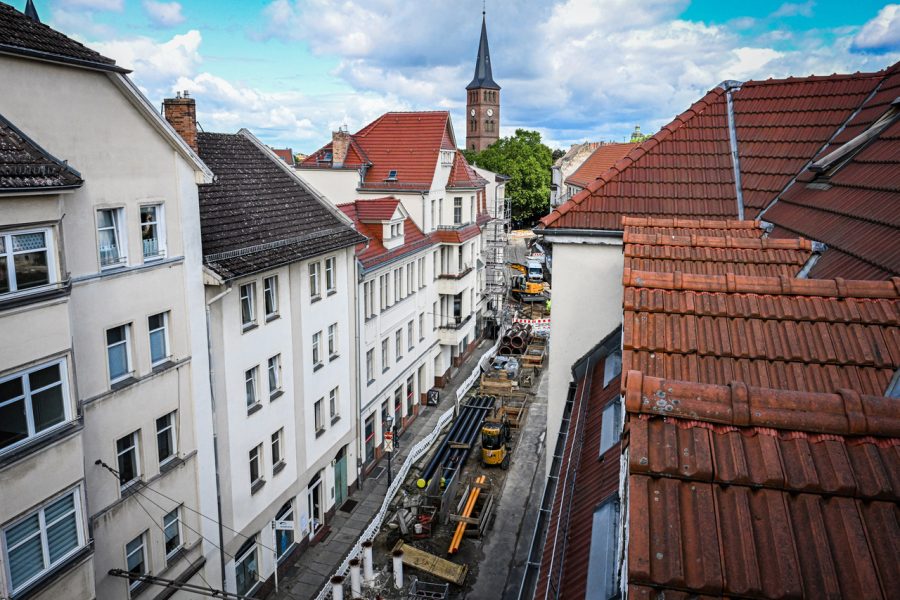
(Header image: © FUNKE Foto Services | Christoph Wojtyczka)