
Berlin Wiki: Party Profiles II – The Greens, The Left, the AfD and the BSW party

WahlheYmatPost,

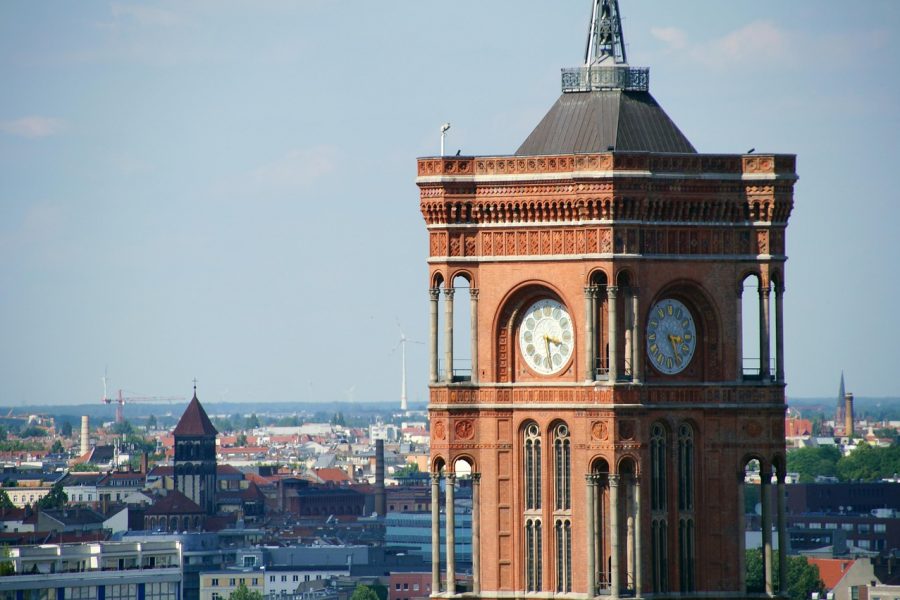
Rotes Rathaus Berlin
Which parties shape Berlin politics—and what do they actually stand for? In this edition of “Berlin Wiki,” we take a look at Bündnis 90/Die Grünen, Die Linke, and the AfD: their key issues, their central figures, and their role in the House of Representatives ahead of the 2026 election.

What is the Green Party?

Bündnis 90/Die Grünen is an important political force in the Berlin House of Representatives. Although the party has not been part of the government since the 2023 election, it operates from the opposition within parliament.

Its guiding principle is ecological, economic, and social sustainability. It focuses on stronger climate protection, affordable housing, and a shift in transport policy away from fossil fuels.

In January this year, the Berlin Greens announced that the party had reached a milestone in membership growth and, with 17,852 members, has the largest membership of any party in Berlin.

Key figures ahead of the 2026 House of Representatives election are Werner Graf and Bettina Jarasch, who form the party’s lead duo. Werner Graf is the Greens’ lead candidate and parliamentary group leader in the House of Representatives. Bettina Jarasch is co-lead candidate and former Senator for Environment and Transport in Berlin.

Nina Stahr and Philmon Ghirmai are also important figures in the Berlin Greens. Together, they have led the Berlin branch of the party since 2023 and are organizing the election campaign.

What is Die Linke?

Die Linke (The Left) is one of the parties represented in Berlin’s parliament, the House of Representatives.

The party historically emerged from the merger of two parties: the West German WASG and the PDS. The latter was the successor party to the Socialist Unity Party of Germany (SED), which led the GDR dictatorship until 1989. The merger also marked a political realignment for The Left.

Today, it focuses on social issues and supports democratic socialism. In the last Berlin election in 2023, The Left received 12.2 percent of the vote.

For the 2026 House of Representatives election, the party is running with lead candidate Elif Eralp. The Left’s parliamentary group in the House of Representatives is led by Tobias Schulze and Anne Helm.

What is the AfD?

The AfD (Alternative for Germany) is a right-wing populist party in Germany and is also represented in the Berlin House of Representatives, where it sits as in opposition.

Key figures of the Berlin AfD include Kristin Brinker and Thorsten Weiß. Kristin Brinker serves as both state and parliamentary group leader and is the lead candidate for the 2026 election in Berlin. Thorsten Weiß, as deputy parliamentary group leader, is particularly associated with the issue of internal security.

Politically, the party is clearly positioned on the right and focuses on topics such as migration, internal security, and criticism of the government. At the same time, it is highly controversial, and other parties in Berlin reject cooperation with it. As a result, its direct influence on political decision-making remains limited.

What is the BSW party?

The BSW currently has one member in Berlin’s House of Representatives. The party’s full name is “Alliance Sahra Wagenknecht – Reason and Justice” (“Bündnis Sahra Wagenknecht – Vernunft und Gerechtigkeit”). The name points to the party’s founder, Sahra Wagenknecht, who was for many years an important politician in Die Linke (The Left). In 2023, Wagenknecht and several other politicians from Die Linke left the party and founded the BSW. One of the reasons for this was disagreements in areas such as migration policy. On these socio-political issues, the BSW is more conservative than Die Linke.

At present, Alexander King is the BSW’s only member in the Berlin House of Representatives. He was elected as a member of parliament for the Left Party and later joined the BSW. King is also the BSW Berlin’s lead candidate for the upcoming House of Representatives election.

Here you can find the Berlin Wiki page of Berliner Morgenpost.
Author:

More From WahlheYmatPost

  • What is Germany’s greatest asset?

    What is Germany’s greatest asset?

    “Football is a simple game. Twenty-two men chase a ball for 90 minutes and, in the end, the Germans always win,” said Gary Lineker after England lost the 1990 World Cup semi-final on penalties against Germany. Times are changing. Germany no longer always wins at major football tournaments. And England now has a German coach.…

  • Berlin Wiki: Who Votes – and Who Stays Home?

    Berlin Wiki: Who Votes – and Who Stays Home?

    How Many People Participate in Elections? After every election in Germany, one figure receives particular attention: voter turnout, the share of eligible voters who actually cast their ballots. In German public debate, close attention is paid to how voter turnout develops over time. For example, in the 2025 federal election, 82.5 percent of eligible voters…

  • No True German — What It Means to Be German in 2026

    No True German — What It Means to Be German in 2026

    Is there really one German identity that defines all Germans? One German identity to rule them all? We’re going to get into this question, but bear with me for a few paragraphs. I want to take a moment up front to provide a little context, tell you where I’m coming from.  We’re going to dip…

  • Berlin Wiki: From Postal Voting to the Ballot Box 

    Berlin Wiki: From Postal Voting to the Ballot Box 

    How Does Postal Voting Work? In Germany, voters can choose to vote by post instead of going to a polling station on election day. Information on how to apply for postal voting can be found in the voter notification that eligible voters receive in the weeks before the election. Depending on the municipality, voter notifications…

  • From Peru to Berlin: Building Bridges Between Different Ways of Knowing 

    From Peru to Berlin: Building Bridges Between Different Ways of Knowing 

    Are degrees really the only measure of knowledge? Should humans focus on altering nature or adapting to it? Do international studies actually include perspectives from all around the world? Academic credentials, adapting nature to suit modern lifestyles and Eurocentric education are standards that are rarely questioned.  Marita Orbegoso Alvarez, Peruvian educator, community organizer and activist,…

  • Finding Trauma Instead of Belonging: A Review of I Keep My Shadow Light 

    Finding Trauma Instead of Belonging: A Review of I Keep My Shadow Light 

    TL;DR “I Keep My Shadow Light” is the self-published debut novel by Fionnuala Kavanagh. This challenging work follows a cast of four characters from different backgrounds as they try to find a home in Berlin. Very dark in places, the book gives us a chance to read something that would probably never come out of…

  • Migrants With Degrees Are Not What Germany Is Looking For

    Migrants With Degrees Are Not What Germany Is Looking For

    Education is a right, not a privilege. This idea has been a founding principle of modern democracies. In practice, however, access to education is far from guaranteed for everyone. As of this year, Germany has significantly restricted access to state-funded intermediate and advanced German courses for migrants participating voluntarily. Many rejected asylum seekers, people with…

  • Berlin Wiki: The Overlooked Election — BVV and Local Democratic Participation

    Berlin Wiki: The Overlooked Election — BVV and Local Democratic Participation

    How Does the BVV Election Work? On September 20, Berlin goes to the polls. On that day, the election to the House of Representatives (Abgeordnetenhaus) will take place, along with the elections to the District Council Assemblies (Bezirksverordnetenversammlungen, BVV). Berlin is divided into twelve districts, each of which elects its own District Council Assembly. This…

  • Berlin Wiki: Who Makes Decisions in the Districts?

    Berlin Wiki: Who Makes Decisions in the Districts?

    What Does a District Office Do? A Berlin district office (Bezirksamt) manages the administration of one of Berlin’s twelve districts and serves as the district’s political leadership. It consists of the district mayor and five district councillors (Bezirksstadträte), who are elected by the district assembly (Bezirksverordnetenversammlung, BVV). The district office implements adopted laws and policies.…

  • Berlin Wiki: How Berlin’s Government Works 

    Berlin Wiki: How Berlin’s Government Works 

    What Makes Berlin’s Governing Mayor Special? Whoever holds the office of Governing Mayor is both the head of government and the ceremonial head of the city of Berlin. The House of Representatives (Abgeordnetenhaus) votes on who will hold the position. There has even been a case in which someone won the election without being their…

  • Berlin Wiki: How Do the First and Second Vote Work? 

    Berlin Wiki: How Do the First and Second Vote Work? 

    What Does the First Vote Decide? The article looks at how voters elect candidates and parties in Bundestag elections and elections to the Berlin House of Representatives, and how seats in parliament are distributed through proportional representation. In Bundestag elections or elections to the House of Representatives, voters cast both a first vote and a…

  • Tempelhofer Feld: Berlin’s Most Emotional Urban Conflict Is Back 

    Tempelhofer Feld: Berlin’s Most Emotional Urban Conflict Is Back 

    We are approaching an election in September. Hopefully, you’re reading along in the Berlin Wiki to bone up on how stuff works in German elections, the lexicon, and the issues. Well, one of the issues we’re going to see debated concerns the Tempelhofer Feld. So let’s talk about that for a bit.  The other night,…

  • Berlin Wiki: Parties, Direct Mandates and the Five-Percent Threshold 

    Berlin Wiki: Parties, Direct Mandates and the Five-Percent Threshold 

    What Is a Political Party? A political party is an association of citizens regulated by the German Federal Party Law. Political parties aim to influence political decision-making at federal or state level over a longer period of time and may represent voters in state parliaments or in the Bundestag. First of all, a party needs…

  • Good Intentions Are Not Democratic Enough

    Good Intentions Are Not Democratic Enough

    “What you do for me, but without me, you do against me” — the exact origin of this quote is unclear. Nevertheless, it captures something that frequently happens in Germany when it comes to the political participation of historically excluded groups. Policies are supposedly made for migrants, yet not with them. Gender equality is debated…

  • What Happened When I Tried to Organize My Neighbors 

    What Happened When I Tried to Organize My Neighbors 

    There’s a lot of talk today about building community. At our March WahlheYmat Talk, the crowd brought up the subject, specifically that we should be creating more of it. Ideas flew around the room. We are living in an era of schism, where the people pulling the levers of power are trying to create an…

Address

Am Hamburger Bahnhof 3
10557 Berlin
Germany

hey@wahlheymat.de

Social Networks