
Berliner Morgenpost — together with Tagesspiegel, EUREF Campus, and radioeins — launched a strong new initiative: Neustart Berlin. Everyone was invited to submit an ongoing project that could revitalize Berlin and give the city a fresh start for the 21st century and beyond. More than 70 initiatives applied; a jury selected eight of them to present their ideas on stage at the Gasometer Conference Center at Euref Campus on November 21, 2025. Thanks to the Morgenpost, WahlheYmatPost was also invited.
There were three longer presentations on stage. Two of them addressed the housing crisis — still the city’s most urgent problem. We especially liked the idea of Transiträume, presented by Alexander Sascha Wolf: tiny Japanese-style houses, about 10 m², built inside unused office spaces. It sounds completely logical, since Berlin currently has 1.8 million square meters of empty office and retail space. The landlord gets rent; young people get affordable micro-homes. They claim they could build 10,000 units within half a year. Fast, effective, and helping to increase rental supply so that prices can finally come down. A strong concept and a perfect presentation.
The second housing idea revisited the old Siemens model: companies building apartments for their employees, using existing German legal frameworks. Beyond housing, other inspiring concepts emerged: more eco-friendly asphalt; more trees and greenery, supported by digital tools for watering and planting; mini-festivals in Kieze; and a hip-hop academy. In the project exhibition, we especially liked the “Three-Religion Kindergarten” — perhaps a smaller, faster alternative to the House of One.
Organizing a conference like this is a huge achievement. It is remarkable that Berlin’s major media houses — normally competing daily — decided to cooperate. It is remarkable that everyone was invited to apply. And all initiative owners were companies or NGOs, showing clearly: this is our city, and we are the ones who must change it for the better.
So everything could have been perfect. Except for one thing — something we found deeply symbolic.
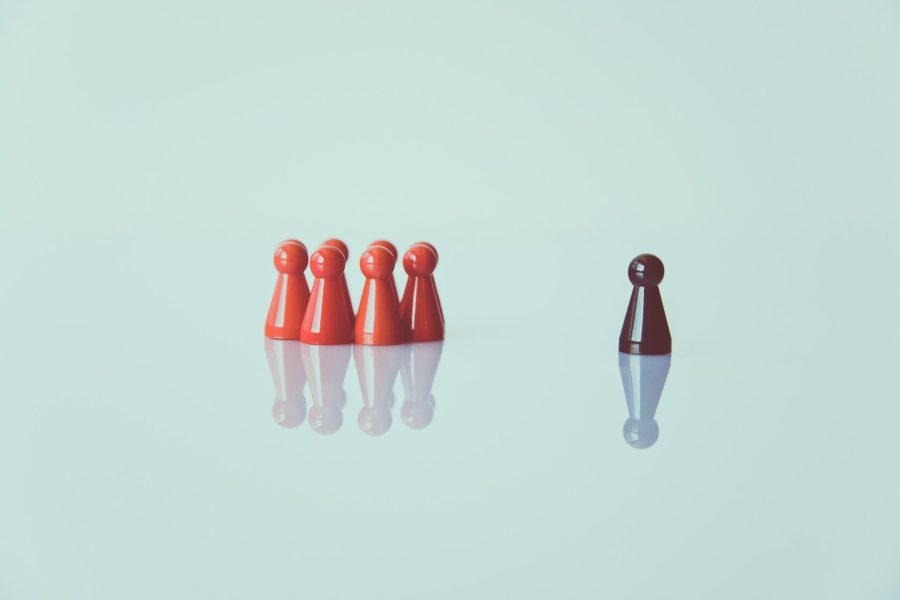
On stage there were not only the presenters, but also a Judge Community: three prominent figures — the Managing Director of the IHK (Chamber of Commerce), the former Senator for Urban Development and ex-CEO of Berlin Airport, and a board member of Investitionsbank Berlin. Their role was to ask critical, reality-check questions. On paper, that sounds logical — and surely that was the intention. But the biggest mistake was that all three represented “official Berlin.”
So what actually happened on stage was exactly what happens in real life: good intentions and excellent ideas were met with heavy criticism from what felt like an Idea-Killer Commando. Depending on — quite subjectively — how much they liked the idea, the presenter, or the organization behind it, they were either extremely critical or surprisingly supportive.
We took away three lessons:
1. Authenticity
Nothing happens by accident. The whole situation was a mirror of Berlin: a cat-and-mouse game between creative citizens and bureaucracy. Citizens try to change things; bureaucrats try to catch them. The results are visible everywhere: Pergamon Museum delays, broken trash bins, decade-old construction sites. In that sense, the dynamic on stage was painfully authentic.
2. Energy
The number-one rule of brainstorming is: no criticism. Of course, anything can be criticised. But energy comes from ideas, from dreaming big, from naïveté, from the belief that everything is possible. When criticism enters the vulnerable early stages of innovation, energy dies — and the “Neustart” dies with it.
3. How
Maybe the most important question today is not what we need to do, but how we can make change possible.
How do we unlock energy?
How do we find new sources of creativity and innovation?
How do we create the conditions for people to try, experiment, and believe again?
But here is where we found hope.
We were at the conference together with Taylor Coburn. As everyone was sitting in the room, she looked around and whispered to me:
“This event is super white and super German!”
What if, as a next step, we created a similar conference — but truly inclusive?
Mixing Berlin’s international society.
Including people from different countries, from different Bundesländer, and those born in Berlin.
A conference to exchange ideas on what we can learn from each other.
What people from other places bring to Berlin.
What Berlin can learn from other cities.
How we imagine social innovation, digitalisation, mobility, road construction, administration, and housing.
It would be especially important because what Berlin needs most is an inclusive, collaborative, international society. A society where we all learn and practice – every day – how to move beyond language and cultural barriers, how to take the step beyond our instinctive feelings and biases toward others. An inclusive conference could symbolise the future of Berlin’s society and be a real step forward on this path.