
Peter Schink: “We want to make this city more accessible to people”

Peter Schink

At the S-Bahn station Greifswalder Straße, you can find one of my favorite lines: “The best thing about Berlin is the Berliners.” However, the majority of people here, like myself, weren’t actually born in Berlin (we mapped this out geographically a long time ago). I myself came to the city in 1999, and still believe today that diversity is what fundamentally makes Berlin charming.

This can even be shown empirically: Those who have moved here think less in rigid structures, are on average more creative and enterprising. Additionally, in a place where many different people come together, more creative things emerge through exchange. Among all German cities, Berlin has the greatest potential in this regard – nowhere else do so many people from all directions come together.
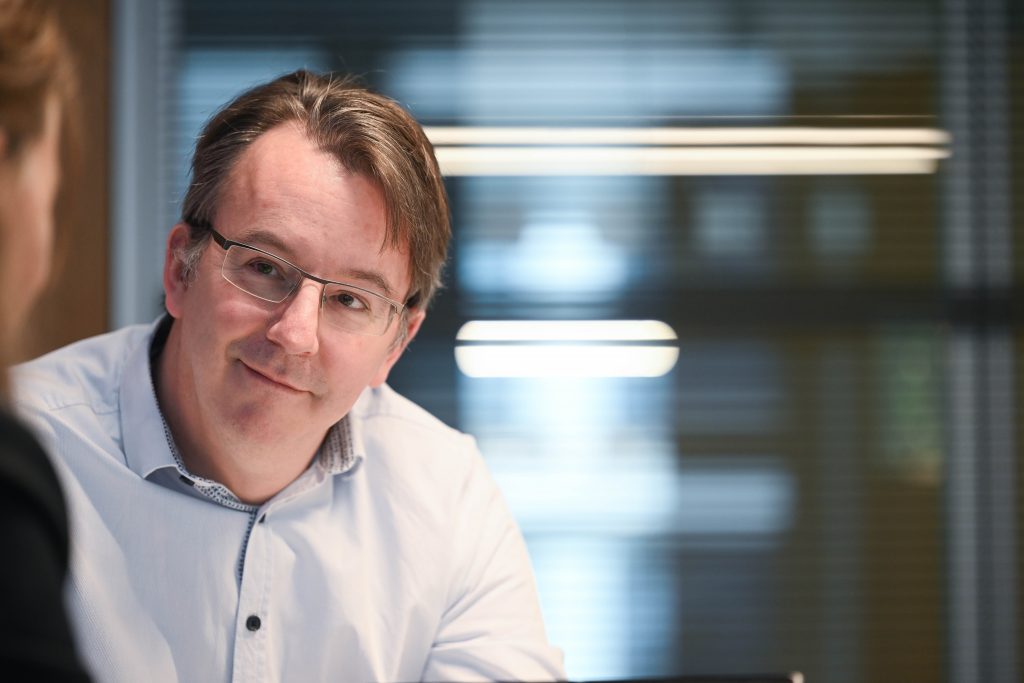
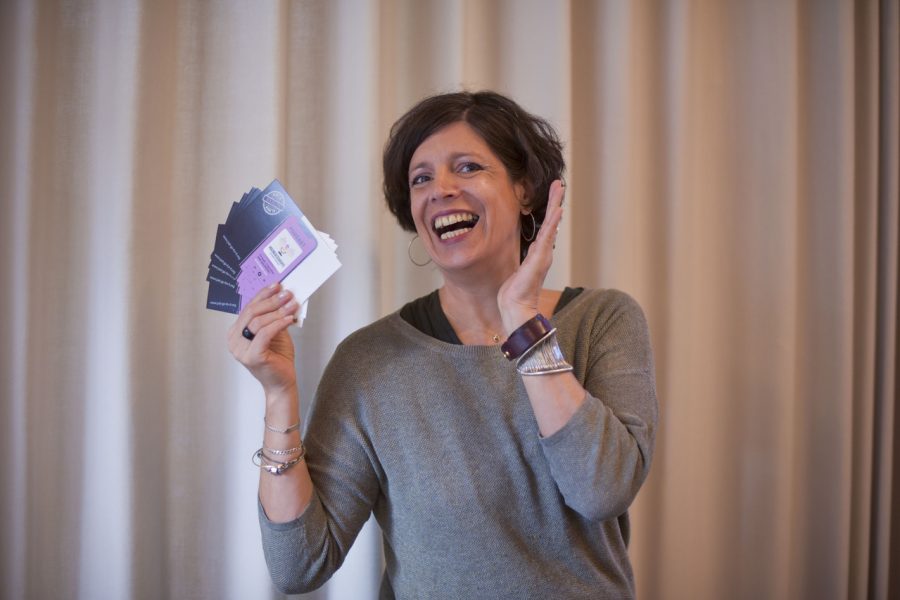
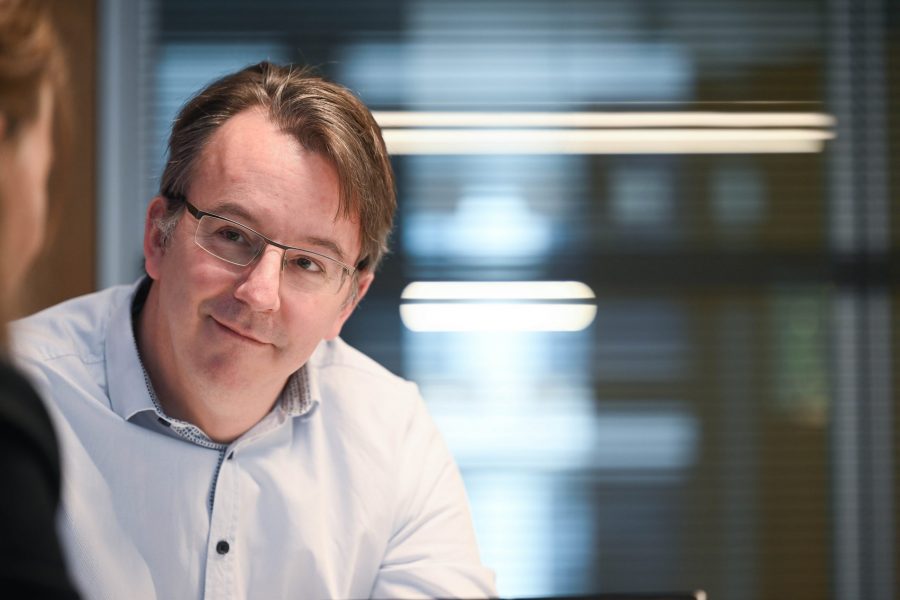
Peter Schink der Chefredakteur Berliner Morgenpost am 11. Dezember 2024 in der Redaktion. Foto: Reto Klar / FUNKE Foto Services

At the same time, I know from my own experience that it took me several years until I truly felt at home in Berlin. Even though I was born in Munich and culture and language weren’t barriers, Berlin is simply a tough place. I was shocked when my old acquaintance Ivan Gabor (who moved from Budapest to Berlin) told me a few months ago that even after more than ten years, he still doesn’t feel like he’s really arrived in the city. Therefore, he wants to help enable genuine arrival and participation for new Berliners with an initiative. This is also where the idea for this newsletter came from.

We’re doing this in English to avoid creating language barriers. In addition to this newsletter, we’ll also translate selected texts from Berliner Morgenpost into English. As editor-in-chief of Berliner Morgenpost, I’m very excited about this experiment. We want to make this city more accessible to people. And at the same time give their issues more space. After all, the majority of Berliners are immigrants.

Peter Schink 

Editor-in-Chief of Berliner Morgenpost

Author:

More From WahlheYmatPost

  • The Signature That Didn’t Count – Finding My Voice in Berlin

    The Signature That Didn’t Count – Finding My Voice in Berlin

    When I moved to Berlin in the spring of 2022, I was approached one sunny afternoon by people carrying clipboards under their arms. Would I like to sign a petition? I was pleasantly surprised by this request – such a sense of community in Berlin, what a place to have come to live. With a…

  • Berlin Wiki: Finding Reliable Information Before You Vote

    Berlin Wiki: Finding Reliable Information Before You Vote

    What Is the Wahl-O-Mat? The Wahl-O-Mat has been provided by the Federal Agency for Civic Education (Bundeszentrale für politische Bildung, bpb) since 2002. It is an online voting advice tool that allows users to compare their own political positions with those of political parties in Germany. Anyone using the Wahl-O-Mat can respond to a series…

  • StimmlosTrend: A New Survey Wants to Hear Berlin’s Missing Voices

    StimmlosTrend: A New Survey Wants to Hear Berlin’s Missing Voices

    Can’t vote in Berlin? There are a million people like you. We’re giving them a voice. That’s the message of WahlheYmat’s new StimmlosTrend campaign, which launches today. Modern democracy is built on elections. In Berlin, the House of Representatives is elected every five years by eligible German citizens (EU citizens can only vote in district…

  • “Berlin taught me to dislike the word integration” 

    “Berlin taught me to dislike the word integration” 

    WHP: You worked in humanitarian aid around the world for many years. What ultimately motivated you to found Just-Go-For-It? Marilena Chatziantoniou: I started working in the field of humanitarian aid in 1998. My first assignment was in Albania, where I worked for a small German NGO, just months before the Kosovo crisis. I remember falling…

  • Berlin Wiki: Understanding Political Parties

    Berlin Wiki: Understanding Political Parties

    What Is an Election Manifesto? Before an election, political parties present their election manifestos. This applies in federal, state, and local elections. In the manifestos, parties set out in writing the goals they intend to pursue. These goals reflect the issues that are important to the party during the upcoming legislative term—that is, the electoral…

  • What is Germany’s greatest asset?

    What is Germany’s greatest asset?

    “Football is a simple game. Twenty-two men chase a ball for 90 minutes and, in the end, the Germans always win,” said Gary Lineker after England lost the 1990 World Cup semi-final on penalties against Germany. Times are changing. Germany no longer always wins at major football tournaments. And England now has a German coach.…

  • Berlin Wiki: Who Votes – and Who Stays Home?

    Berlin Wiki: Who Votes – and Who Stays Home?

    How Many People Participate in Elections? After every election in Germany, one figure receives particular attention: voter turnout, the share of eligible voters who actually cast their ballots. In German public debate, close attention is paid to how voter turnout develops over time. For example, in the 2025 federal election, 82.5 percent of eligible voters…

  • No True German — What It Means to Be German in 2026

    No True German — What It Means to Be German in 2026

    Is there really one German identity that defines all Germans? One German identity to rule them all? We’re going to get into this question, but bear with me for a few paragraphs. I want to take a moment up front to provide a little context, tell you where I’m coming from.  We’re going to dip…

  • Finding Trauma Instead of Belonging: A Review of I Keep My Shadow Light 

    Finding Trauma Instead of Belonging: A Review of I Keep My Shadow Light 

    TL;DR “I Keep My Shadow Light” is the self-published debut novel by Fionnuala Kavanagh. This challenging work follows a cast of four characters from different backgrounds as they try to find a home in Berlin. Very dark in places, the book gives us a chance to read something that would probably never come out of…

  • Migrants With Degrees Are Not What Germany Is Looking For

    Migrants With Degrees Are Not What Germany Is Looking For

    Education is a right, not a privilege. This idea has been a founding principle of modern democracies. In practice, however, access to education is far from guaranteed for everyone. As of this year, Germany has significantly restricted access to state-funded intermediate and advanced German courses for migrants participating voluntarily. Many rejected asylum seekers, people with…

  • Berlin Wiki: From Postal Voting to the Ballot Box 

    Berlin Wiki: From Postal Voting to the Ballot Box 

    How Does Postal Voting Work? In Germany, voters can choose to vote by post instead of going to a polling station on election day. Information on how to apply for postal voting can be found in the voter notification that eligible voters receive in the weeks before the election. Depending on the municipality, voter notifications…

  • From Peru to Berlin: Building Bridges Between Different Ways of Knowing 

    From Peru to Berlin: Building Bridges Between Different Ways of Knowing 

    Are degrees really the only measure of knowledge? Should humans focus on altering nature or adapting to it? Do international studies actually include perspectives from all around the world? Academic credentials, adapting nature to suit modern lifestyles and Eurocentric education are standards that are rarely questioned.  Marita Orbegoso Alvarez, Peruvian educator, community organizer and activist,…

  • Berlin Wiki: The Overlooked Election — BVV and Local Democratic Participation

    Berlin Wiki: The Overlooked Election — BVV and Local Democratic Participation

    How Does the BVV Election Work? On September 20, Berlin goes to the polls. On that day, the election to the House of Representatives (Abgeordnetenhaus) will take place, along with the elections to the District Council Assemblies (Bezirksverordnetenversammlungen, BVV). Berlin is divided into twelve districts, each of which elects its own District Council Assembly. This…

  • Berlin Wiki: Who Makes Decisions in the Districts?

    Berlin Wiki: Who Makes Decisions in the Districts?

    What Does a District Office Do? A Berlin district office (Bezirksamt) manages the administration of one of Berlin’s twelve districts and serves as the district’s political leadership. It consists of the district mayor and five district councillors (Bezirksstadträte), who are elected by the district assembly (Bezirksverordnetenversammlung, BVV). The district office implements adopted laws and policies.…

  • Berlin Wiki: How Berlin’s Government Works 

    Berlin Wiki: How Berlin’s Government Works 

    What Makes Berlin’s Governing Mayor Special? Whoever holds the office of Governing Mayor is both the head of government and the ceremonial head of the city of Berlin. The House of Representatives (Abgeordnetenhaus) votes on who will hold the position. There has even been a case in which someone won the election without being their…

Address

Am Hamburger Bahnhof 3
10557 Berlin
Germany

hey@wahlheymat.de

Social Networks