

Research published earlier this year by researchers at the University of St Andrews as part of the European We-ID project found a striking pattern: across Europe, immigrants tend to have greater trust in political institutions and higher levels of satisfaction with democracy than native-born populations. But the longer they and their families live in their new countries, the smaller that difference becomes.
The researchers analysed data from the European Social Survey (ESS), focusing on political attitudes and participation in 15 European countries, with a closer look at Germany, France and the United Kingdom. They compared native-born populations with first-generation immigrants and their descendants.
Immigrants’ political trust starts high – and declines over time
Overall, immigrants reported higher levels of political trust and satisfaction with democracy than native-born respondents. By the second generation, however, attitudes were generally much closer to those of the native-born population.
There are several possible explanations.
For some immigrants, political institutions in their new country may initially look better compared with those in their country of origin. Others may arrive with relatively low expectations of political representatives, which their new political environment exceeds. But as time passes, the country of origin becomes less important as a point of comparison. Experiences in the new country – including unmet expectations, exclusion or discrimination – increasingly shape perceptions of its institutions.
Germany fits this broader pattern, although the gap in political trust between immigrants and native-born respondents was smaller than in France and the UK. The study also found considerable differences depending on migrants’ regions of origin, demonstrating why “immigrants” should not be treated as one politically homogeneous group.
The voting paradox
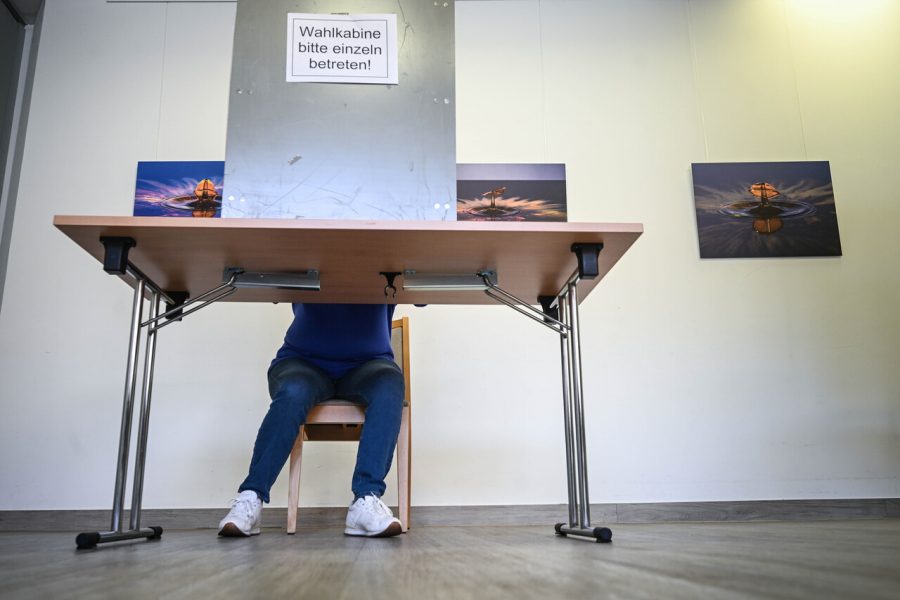
Here is where the findings become particularly interesting. Greater political trust does not necessarily mean greater political participation. Among people who actually had the right to vote, first- and second-generation immigrants in Germany, France and the UK were less likely to vote than native-born citizens.
Again, the picture differs considerably between groups and generations. In Germany, for example, first-generation immigrants from former Soviet countries had a particularly low probability of voting, while participation increased in the second generation. Among immigrants from Turkey and their descendants, the researchers found the opposite pattern: the probability of voting was lower in the second generation than the first.
The study also found that immigrants and their descendants from Turkey were more likely than other groups analysed in Germany to report belonging to a group that experiences discrimination.
Language barriers, limited familiarity with political institutions and participation rights, and social alienation can all make political participation more difficult. But the researchers point to another possible factor: the contrast between high initial expectations and the realities immigrants encounter after arriving, including discrimination.
Citizenship matters too. Previous research has found higher levels of political participation among immigrants who acquire citizenship. Naturalisation can remove a fundamental institutional barrier to participation and may also reflect a stronger investment in the country where someone lives.
In theory, other barriers to participation might also diminish over time. The findings suggest that this is not necessarily the case.
And then there are those who cannot vote
This distinction is particularly important in Berlin. The We-ID findings about voting behaviour concern immigrants and their descendants who have the right to vote. But a substantial part of Berlin’s international population faces an even more fundamental barrier: they are not eligible to vote in state elections in the first place.
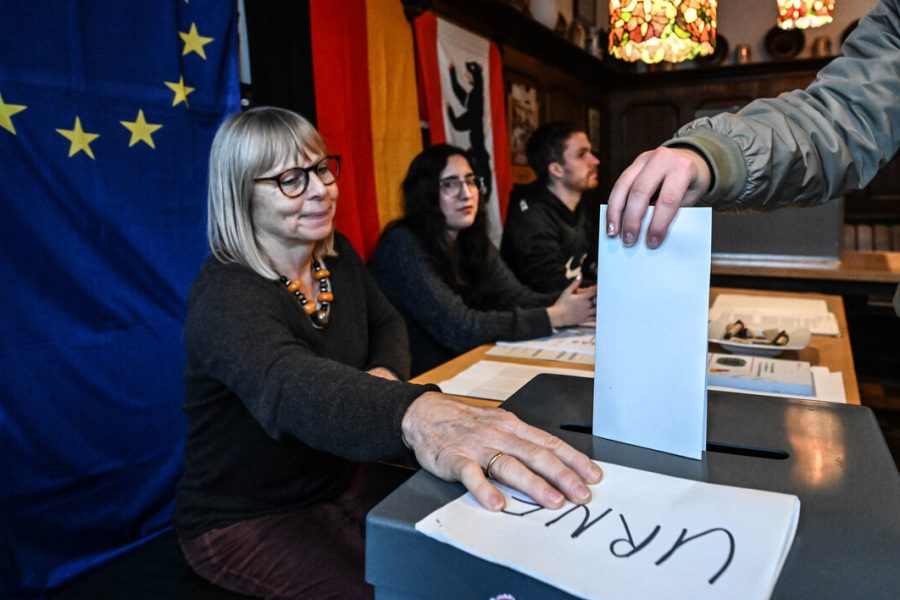
In Berlin’s September 2026 election, 2,487,318 people were eligible to vote for the Abgeordnetenhaus. Eligibility requires German citizenship, along with other legal requirements.
The picture changes at district level. EU citizens living in Berlin are allowed to vote in elections for the Bezirksverordnetenversammlungen (BVV). As a result, 2,729,396 people were eligible to participate in the BVV elections — 242,078 more than in the state election.
Non-German residents from outside the EU could vote in neither election.
This creates two different democratic participation gaps that should not be confused.
One concerns people who have the right to vote but are less likely to use it. The other concerns people who live, work, pay taxes, raise families and build their lives in the city but do not have that right at all.
Ahead of the Berlin election, WahlheYmat tried to make the perspectives of this second group visible through StimmlosTrend 2026. Around one million people living in Berlin do not hold a German passport, including some 851,000 adults who could not vote in the election for the Berlin House of Representatives.
The results suggest that the absence of voting rights should not be confused with a lack of willingness to participate. Among StimmlosTrend respondents who answered the voting question, 90.8 percent said they would vote if they were allowed to, while another 5.2 percent said they would do so under certain circumstances. Together, 96 percent said they would potentially vote if given the opportunity.
At the same time, the survey revealed a strong sense of political powerlessness. While 72.4 percent of respondents said they were somewhat or very concerned about Berlin’s future, 73.9 percent felt they had little or no influence over it. More than half – 55.5 percent – expressed both: concern about the city’s future and a sense that they had little power to change its direction.
StimmlosTrend was an open online survey and is not representative of all Berliners without voting rights. Its findings therefore cannot be extrapolated to the entire population. But they offer an important perspective on the participation paradox: for many people, not voting does not necessarily mean political disengagement. Sometimes the willingness to participate is there – while the right to do so is not.
Trust alone is not enough
This is where the findings go beyond migration policy. Political attitudes are not fixed. They respond to people’s experiences of institutions, representation, discrimination, inclusion and belonging. The fact that immigrants often begin with comparatively high levels of political trust but that this advantage diminishes over time suggests that integration into a democracy is not simply a matter of learning how its institutions work.
It also depends on what people experience once they are here.
Policies can make political systems easier to understand and access. Governments and civil society can provide better information about participation rights, support civic engagement, tackle discrimination and create more opportunities for people to take part in decisions that affect their communities.
Representation and ownership matter as well. Participation is more than casting a ballot every few years: it also happens through neighbourhood initiatives, associations, workplaces, citizens’ assemblies and other spaces where people can influence their surroundings.
The researchers behind We-ID argue for precisely this broader understanding of integration. In their policy recommendations, they call for integration to be treated as part of democratic infrastructure, with greater investment in civic engagement, fair representation, social trust and local participation.
(Header image: © Element5 Digital | Unsplash)