

The rise of the far right has become impossible to ignore in Germany. In the 2026 state elections in Saxony-Anhalt, the AfD mobilized voters on a remarkable scale, with migration and “remigration” playing a prominent role in its political messaging.
But why are narratives that portray immigrants and other social groups as a threat so effective? What makes people divide the world into “us” and “them”? Why do some social groups become targets of prejudice and hostility, particularly in times of uncertainty? And what can help reduce polarization?
Social psychologist Prof. Dr. Ulrich Wagner has spent decades researching intergroup relations, prejudice and discrimination. Drawing on his research, he explains the psychological mechanisms behind current political developments – and why direct contact between people from different groups can be part of the solution.
What is your field of research, and how is it relevant to current political and societal developments in Germany?
My research focuses on violence and, in particular, on intergroup relations – that is, on describing and identifying the reasons why people develop prejudices, discriminate against members of other groups, or even behave violently toward those they perceive as outsiders.
Why are people prone to thinking in categories?
An important psychological factor underlying the emergence of prejudice, discrimination, and intergroup violence is that we perceive those whom we treat in these ways as members of an outgroup.
Our psychological system is well equipped to classify both ourselves and others into categories. When we talk to another person, for example, we may become aware that the person we are speaking to is of a different gender, has a different skin color, belongs to a different political party, or supports a different football club. Once this occurs, there is a considerable risk that the subsequent course of the conversation and our interaction with the other person will be dominated by this attributed group membership.
Prof. Dr. Ulrich Wagner is a German social psychologist and professor emeritus who taught at the Philipps-Universität Marburg from 1992 to 2017. His research focuses on intergroup conflicts, prejudice, and integration, with particular emphasis on developing and evaluating practical violence prevention programs. For his outstanding achievements in migration and integration research, alongside his successful transfer of science into public practice, he was awarded the German Psychology Prize in 2023. Today, he continues to work as a scientific consultant, political advisor, and media commentator.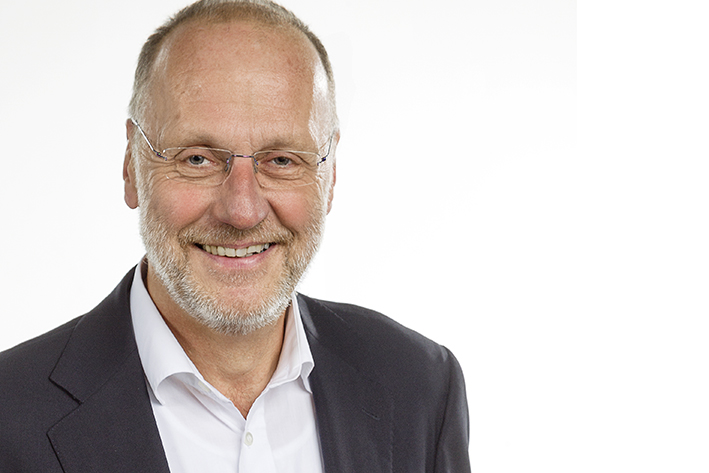 |
The person’s assigned group membership is then factored into our interpretation of everything he or she says or does. We interpret the person’s behavior along the following lines: he or she speaks and acts this way because of their gender, skin color, and so forth.
In making such attributions, we often draw on stereotypes about the assigned outgroup that are prevalent in our society: the other person behaves this way because they are a woman or a man – and, as is supposedly well known, women or men typically tend to behave in certain ways.
According to Eleanor Rosch’s foundational theory of cognitive economy, categorizing people and things into broader groups is necessary for navigating a world that would otherwise overwhelm the brain with stimuli. When does this ‘power-saving mechanism’ – now our default mode of thinking – turn into prejudice and discrimination?
Categorization mechanisms help us navigate a complex world, especially when we need answers quickly. For example, when we arrive at the emergency room with an injury, it’s extremely helpful to quickly categorize those wearing white coats as medical staff – and not the person in the gray jumpsuit, who is presumably the facility manager. However, this ability is also dangerous because we’re very quick to view everyone we assign to a category as the same. This can very quickly lead to prejudice and discrimination. We need to be aware of this. Categorization helps – we can’t do without it – but it’s also dangerous.
What is group-focused enmity, and which psychological mechanisms underlie this phenomenon?
The term group-focused enmity was coined by Wilhelm Heitmeyer, a sociologist at Bielefeld University. The concept is intended to highlight that we do not merely place other people into categories or groups and subsequently judge them according to the stereotypes we associate with those groups, but that we also tend to devalue the groups to which we assign them.
One reason for this is that devaluing an outgroup often serves to enhance our own group and, in turn, our self-image. When nationalists, for example, speak of the inferiority of people who do not belong to their own nation or ethnic group, this serves to elevate the status of their own nationality or ethnic group and, by extension, their individual self-worth.
The concept of group-focused enmity also points to a second phenomenon: people who are particularly inclined to devalue one outgroup often tend to devalue other outgroups as well. In other words, people who hold antisemitic attitudes frequently also harbor anti-Muslim prejudices and display hostility toward queer people.
Why are hostile images of immigrants so frequently promoted?
Immigrants are perceived as a threat – both to one’s own culture and identity and as a physical threat. This is partly related to incidents of violence and other offenses committed by refugees, but also to the fact that such threats are repeatedly amplified in political and media discourse.
The AfD does this particularly intensively. In its election manifestos, refugees are held responsible for a wide range of social problems. Such narratives have the advantage of apparently providing solutions: according to this logic, all that is required is to stop immigration and expel all recent arrivals from the country, and the other problems facing Germany and Europe will supposedly be resolved as well.
Promises of quick fixes will likely always attract many voters, especially in times of societal tension or financial uncertainty. Is it possible for political leaders to win voters’ trust without resorting to oversimplified solutions or naming a scapegoat for everything that is wrong in society?
Politics must be communicated in a way that voters can understand, and we must hope that voters are willing to listen. This is indeed an enormous task. Political communication must be simple and build on what voters know and what interests them. And it must use the media platforms that potential AfD voters use. More complex statements are always at a disadvantage here. But there’s no getting around it: serious democratic politicians must take on this task, and academia could help them figure out how to do it effectively.
What are possible reasons for the current shift to the political right in various Western countries?
From an objective perspective, Germany, Europe, and North America are clearly facing substantial problems. The gap in income and wealth between rich and poor continues to widen, while people on low incomes are experiencing increasing difficulties in securing adequate housing and gaining a foothold in the labor market.
This generates anxieties that far-right parties capitalize on and intensify, with substantial support from the dynamics of the internet. The shift to the political right is also related to the fact that established political parties have failed to offer an adequate alternative – a credible vision for the future that conveys the prospect that conditions will improve and that everyone will have a fair opportunity to participate.
How can hostile attitudes toward social groups be reduced?
Political actors need to develop and implement credible visions for the future that can help reduce people’s feelings of threat. They also need to invite everyone who is part of society to participate in shaping that future. German and European societies must also engage in a discussion about how they intend to address the expected increase in migration to the Global North.
Economic considerations should not be the sole guiding principle in this process. Article 1 of the German Basic Law must also serve as a fundamental point of reference: “Human dignity shall be inviolable.” The burden of prejudice and racism that has accumulated in our societies must be addressed through education and public awareness, but above all through direct encounters between people.
What does contact theory propose?
Contact between people from different groups can effectively contribute to reducing prejudice. Such contact is particularly effective when the individuals involved interact as equals, pursue common goals, and receive support from society and political institutions. Talking to one another, participating in sports together, jointly shaping the communities in which we live, and collectively developing policies grounded in respect for human dignity can help reduce mutual rejection. However, this requires spaces in which encounters and shared activities can take place.
The settlement patterns of immigrants in recent years have contributed to segregated residential and educational environments – that is, neighborhoods and regions in which large numbers of immigrants live and others in which very few do. Such segregation makes it more difficult to establish intergroup contact and facilitates the development of mutual prejudice. Policymakers and spatial planners need to counteract these processes.
How does your work bridge the gap between scientific research and political and societal developments?
When I make recommendations in my capacity as a scientist, I base them on findings supported by scientific evidence. Consequently, what I can state or recommend has a stronger empirical basis than claims made without such a scientific foundation. If our common goal as a society is to reduce prejudice, discrimination, and far-right orientations, I can recommend, on the basis of scientific evidence, promoting contact between people from different groups. I seek to contribute to public debate, to inform my fellow citizens, and also to exert pressure on political and societal decision-makers to pursue effective policies that bring people in Germany and Europe closer together.
(Header image: © Markus Spiske | Unsplash)