
We talk a lot. But what do we actually do?

Ivan Gabor,

Berlin
We vote, governments govern, and we expect politics to solve our problems. But what if democracy needs more from us? Drawing lessons from Taiwan and Berlin 1989, Ivan Gabor asks how civic movements can reclaim the power to shape society – instead of waiting for someone else to do it.

“When people co-create, we outperform any master plan.”

Audrey Tang, Taiwan’s first Digital Minister described this as one of the lessons of Berlin in 1989.

How are we performing today? What is the master plan? And what about co-creation?

To answer this, let me start with my three lessons from Taiwan’s democratic process. It took decades for Taiwan to move from Chiang Kai-shek’s authoritarian rule to today’s highly developed democracy.

  1. Civic leadership – the recurring pattern
    Strong grassroots movements create pressure for political change, which is then taken up by political leaders and institutions.
  2. Consistency – wave after wave
    Civic initiatives keep pushing the democratic process forward, again and again, without major setbacks.
  3. Mindset – different movements reinforcing each other
    Very different civic movements strengthen each other. Minority languages, climate, digital democracy, LGBTQ+ rights, freedom of press – different issues can all become part of a democratic co-creation process.

So, where are we today in Berlin?

We talk a lot, but we do very little.

What is the master plan?

The success story of post-war West Germany and the Merkel years have led many people to believe that being German means enjoying a privileged status: the state provides solutions to ensure a high quality of life. Our civic contribution is to vote for democratic parties – parties that seem increasingly focused on managing the present rather than shaping the future. They form a government that is expected to solve our problems.

All done. Let’s go party. Mallorca.

But democratic parties seem to have lost their big vision. They are stuck. They don’t lead us anywhere.

What if we could bring back the mindset of doing things together?

What if we developed solutions through civic initiatives, tested them, improved them – and then gave them to the state to implement?

What if we developed our vision for the future of German society – and challenged politics to make it happen?

What if we took our future into our own hands, my fellow Berliners?

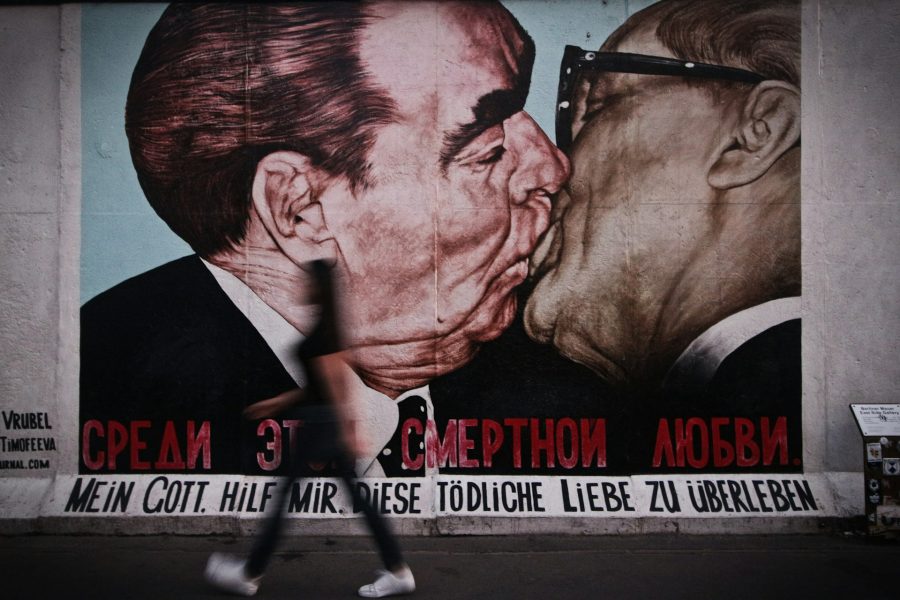
How can we rediscover the energy of 1989? A time when no one was waiting for Erich Honecker or Günter Schabowski to solve the problems. Not for Eberhard Diepgen. Not for Walter Momper.

We have to find our own way. Otherwise, others will decide our future.

(Header image: © Jeison Higuita | Unsplash)
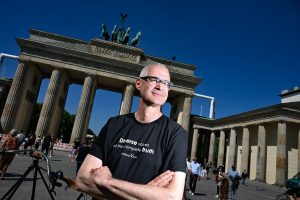
Author:

More From WahlheYmatPost

  • We talk a lot. But what do we actually do?

    We talk a lot. But what do we actually do?

    “When people co-create, we outperform any master plan.”Audrey Tang, Taiwan’s first Digital Minister described this as one of the lessons of Berlin in 1989. How are we performing today? What is the master plan? And what about co-creation? To answer this, let me start with my three lessons from Taiwan’s democratic process. It took decades…

  • Democracy at the Späti: What Berlin’s Symbolic Election Revealed

    Democracy at the Späti: What Berlin’s Symbolic Election Revealed

    Ahead of Berlin’s September elections, Migrationsrat Berlin e.V. brought the ballot box to an unusual setting: the city’s Spätis. At 11 locations across Berlin, people were invited to take part in a symbolic election and discuss a question that affects a significant part of the city’s population: who gets to have a say in the…

  • From Kyiv to Berlin: War Changed His Path, but Not His Dream

    From Kyiv to Berlin: War Changed His Path, but Not His Dream

    “The war is here – those were the words my mom woke me up with that morning,” Oleks recalls. On February 24th, 2022, the life of 15-year-old Oleksandr (Oleks) Drevytskyi was changed forever. Leading up to the devastating Russian attack, expectations about the future of the ongoing conflict varied across Ukraine. While many had established…

  • The Berlin Election Is Over – The Work Begins

    The Berlin Election Is Over – The Work Begins

    What do the Berlin election results tell us? Our TOP 3 takeaways 1. Housing won Housing is clearly the central issue in Berlin, as StimmlosTrend also showed. Die Linke won by putting housing at the top of its agenda. Many citizens now hope they can deliver. 2. Voting with gloves Many people vote against a…

  • Strangers by the Spree: Inside Berlin’s Outdoor Latin Dance Community

    Strangers by the Spree: Inside Berlin’s Outdoor Latin Dance Community

    Feierabend! A busy weekday is coming to an end, and Hauptbahnhof is becoming crowded with tired Berliners: businessmen with briefcases heading home after a long day at work, groups of schoolgirls huddled up on benches apathetically scrolling on TikTok, and exhausted travelers searching for the S-Bahn that will finally take them to their accommodation.  The…

  • StimmlosTrend 2026: 96 Percent Would Vote If They Could

    StimmlosTrend 2026: 96 Percent Would Vote If They Could

    Around one million people living in Berlin do not hold a German passport, 851,000 of whom are adults. They cannot vote in elections to the Berlin House of Representatives – and their political views are therefore largely absent from traditional election polling. WahlheYmat created StimmlosTrend 2026 to make these perspectives visible. Inspired by the BerlinTrend…

  • Who Will Lead Germany Into Its International Future?

    Who Will Lead Germany Into Its International Future?

    What does the story of Charles De Gaulle teach us? Antonin Baudry’s La Bataille de Gaulle tells, in five hours, the story of the General during the Second World War. A great movie. I learned a lot. Tenacity. De Gaulle arrives alone in London. On 18 June 1940, he makes his first BBC speech, speaking…

  • A Mayor Tandem for Berlin

    A Mayor Tandem for Berlin

    What if Berlin had two Regierende Bürgermeister:innen? One representing the city’s elected voice — and another representing the voice of Berlin’s international residents who live, work and contribute here but do not have German citizenship and therefore cannot vote in Berlin elections. Because in a democratic society, it can’t be right that 25% of the…

  • No German Passport? You May Still Have a Vote in Berlin 

    No German Passport? You May Still Have a Vote in Berlin 

    If you are an EU citizen living in Berlin but do not have German citizenship, you cannot vote in the election for Berlin’s House of Representatives (Abgeordnetenhaus). But you can vote for your local District Assembly (Bezirksverordnetenversammlung, or BVV) if you meet the eligibility requirements. Around 240,000 non-German EU citizens are eligible to take part…

  • “Berlin taught me to dislike the word integration” 

    “Berlin taught me to dislike the word integration” 

    WHP: You worked in humanitarian aid around the world for many years. What ultimately motivated you to found Just-Go-For-It? Marilena Chatziantoniou: I started working in the field of humanitarian aid in 1998. My first assignment was in Albania, where I worked for a small German NGO, just months before the Kosovo crisis. I remember falling…

  • What is Germany’s greatest asset?

    What is Germany’s greatest asset?

    “Football is a simple game. Twenty-two men chase a ball for 90 minutes and, in the end, the Germans always win,” said Gary Lineker after England lost the 1990 World Cup semi-final on penalties against Germany. Times are changing. Germany no longer always wins at major football tournaments. And England now has a German coach.…

  • Migrants With Degrees Are Not What Germany Is Looking For

    Migrants With Degrees Are Not What Germany Is Looking For

    Education is a right, not a privilege. This idea has been a founding principle of modern democracies. In practice, however, access to education is far from guaranteed for everyone. As of this year, Germany has significantly restricted access to state-funded intermediate and advanced German courses for migrants participating voluntarily. Many rejected asylum seekers, people with…

  • Two birthdays, one dream for Berlin

    Two birthdays, one dream for Berlin

    WahlheYmat was launched as an initiative on 15 September 2023, with Democracy Day providing the occasion. So this week, we turn three years old. Some international Berliners, including our co-founders, asked the question: If Berlin has become diverse and international, wouldn’t it be better to govern the city together? We had almost a hundred conversations…

  • Berlin Wiki: Election Day – From Casting Your Vote to the Results 

    Berlin Wiki: Election Day – From Casting Your Vote to the Results 

    What Happens on Election Day? Election day is when eligible voters in a democracy are called on to cast their ballots. Voting and Counting the Votes In Germany, elections must be held on a Sunday or a public holiday. Polling stations are generally open from 8 a.m. to 6 p.m. They are often located in…

  • Berlin Wiki: How Do You Decide Who to Vote For? 

    Berlin Wiki: How Do You Decide Who to Vote For? 

    How Do You Decide Which Party to Vote For? Many people find it difficult to decide which party to vote for. But instead of not voting at all, it is important to inform yourself thoroughly. Democracy is based on people making decisions together based on their own convictions. To do so, voters need to be…

  • Berlin Wiki: What Are the Key Issues in Berlin’s Election?

    Berlin Wiki: What Are the Key Issues in Berlin’s Election?

    Why Is Rent Policy a Central Issue in Berlin’s Election Campaign? Around 85 percent of Berliners live in rented accommodation. At the same time, the housing market in the capital is tight: rents are rising, new housing construction remains sluggish, and legal loopholes frequently allow furnished apartments to be offered at inflated prices. This is…

  • Berlin Wiki: Equal Access to Democracy

    Berlin Wiki: Equal Access to Democracy

    What Impact Does Berlin’s Electoral Reform Have? In September 2023, Berlin’s House of Representatives (AGH) adopted an amendment to the state constitution lowering the voting age from 18 to 16. The aim of the constitutional amendment is to strengthen the democratic participation of young people. The new rule will apply for the first time in…

  • Berlin Wiki: Ways to Influence Politics in Berlin

    Berlin Wiki: Ways to Influence Politics in Berlin

    What is a Volksentscheid? A Volksentscheid, or referendum, allows Berliners to vote directly on proposed legislation and political issues outside regular elections, or to trigger an early election. Anyone who is eligible to vote in elections to the Berlin House of Representatives (Abgeordnetenhaus) is also eligible to take part in a Volksentscheid. A Volksentscheid can…

Address

Am Hamburger Bahnhof 3
10557 Berlin
Germany

hey@wahlheymat.de

Social Networks