
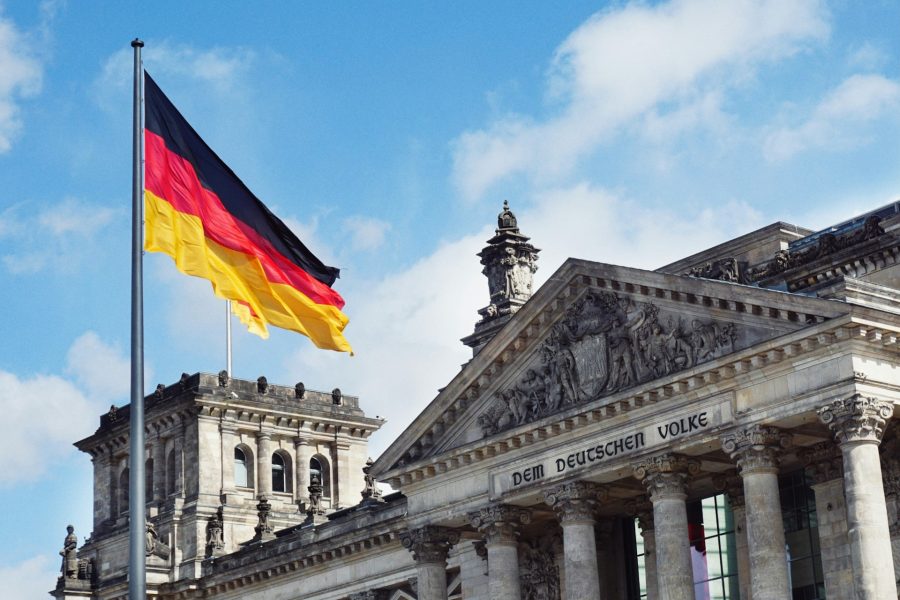
Is there really one German identity that defines all Germans? One German identity to rule them all? We’re going to get into this question, but bear with me for a few paragraphs. I want to take a moment up front to provide a little context, tell you where I’m coming from.
We’re going to dip into some culture-war nonsense and talk about conservative and liberal arguments. You probably already have some deeply held beliefs about this stuff. But I’m not trying to strut up and down like a pedantic peacock with a fan of credentials and bona fides sprouting out of my backside, telling you the right way to think while firmly convinced that I even know what that is.
No, I’m more like a little kid who is really into something, pointing excitedly and saying, “Just look at this! Isn’t it so cool?” I want to share my enthusiasm for this land, this city, this country, this language and this culture. But I’m going to say things that might offend you, or make you feel attacked. I’m not trying to offend you; I’m just trying to share my passion.
“All Germans Are Like That”
I prepared for five years before moving to Berlin in 2012 — learning the language, building out a résumé that would work in the EU, saving money — and I’ve put a lot of time and effort into building my life here and creating community. I live in German, I work in German, and I have loved in German.
And when I hear people start with “all Germans are like this” or “all Germans are like that,” I feel like they are reducing this rich place with all of its diversity to something horrifyingly simple. They are sucking the richness out, leaving behind a nationalistic husk that doesn’t resemble what I know. In the end, when you hear people saying this kind of stuff, I want you to reply with: “No true German!” And shut them down. To be honest, I too have probably made these kinds of comments in the past, but I changed my mind.
I also want to add that Germans themselves are very hesitant to come to their own defense, for obvious reasons, given the suffering that Germany has caused and experienced. Germans have a word for this: Vergangenheitsbewältigung, dealing with the past. Now, true, there are conservatives in this country who reach for arguments about national identity: people who seem to have learned nothing from history. But I don’t think they’re a majority. Just a little something to keep in mind as we get into this.
The Argument
Any time someone starts with “the Germans are…” they’re reaching into a sack of nationalistic myths and stereotypes either to 1) complain about something they don’t like or 2) draw the lines around who is in — the real Germans — and, much more importantly, who is out. It’s nationalist because it tries to create one identity defined in terms that serve a further agenda: bitching about Germany, or appealing to pride while directing anger or fear toward an Other.
Aldous Huxley once said: “Philosophy teaches us to feel uncertain about the things that seem to us self-evident. Propaganda, on the other hand, teaches us to accept as self-evident matters about which it would be reasonable to suspend our judgement or to feel doubt.”
And this kind of nationalistic argumentation is pure propaganda in that sense: it boils down an old and intricate tapestry into a few bare threads in order to make what is usually a very bad-faith argument. There’s some agenda in there that has nothing to do with Germany or the people who live here, and much more to do with advancing an unspoken agenda. You’ll hear this from both conservatives and liberals. But it’s bad faith all the way down, regardless of the ideology.
The Language and Culture
Anyone who either doesn’t speak German or only speaks standard German (i.e. Hochdeutsch) has absolutely no authority to make sweeping claims about Germanness. Whenever I hear someone start talking about German identity, I want to propose the following thought experiment:
Go and get yourself the following: someone from Bavaria, Swabia, Franconia, Saxony, Saarland, Cologne, Prussia (that’s still a thing, people), and Friesland. Invite this party to sit down at a table in a beer garden, and then tell me about German identity and what it means to be German. Some of these people won’t even be able to communicate effectively with each other, and some of them will outright despise each other. Where’s your nationalist German identity now, sucka?
A key ingredient of this country is dialect. It allows us to say something, in only a few words, about who we are and where we come from. Go into any bar in Berlin and say, “Grüß Gott!” as a greeting; or go into a bar in Stuttgart and let out a “Moin moin” and just look at the reaction you get. Dialects are everywhere, and they’re awesome!
I found out last month that Duden has published a series of books about dialects. I immediately ordered Berlinerisch and Plattdeutsch from Dussmann, and I’ll get Sächsisch and Fränkisch next. I don’t see dialect as yet another thing I have to learn in Germany; I see it as another thing I get to learn. When I say “Moin moin” or pepper my speech with Berlinerisch, I get to signal where I live, what I’m about, and what I’ve experienced; and I can do that in a handful of words. And people will react with: “Ah yes… one of ours.” It’s worth the effort for the feeling of belonging it affords.
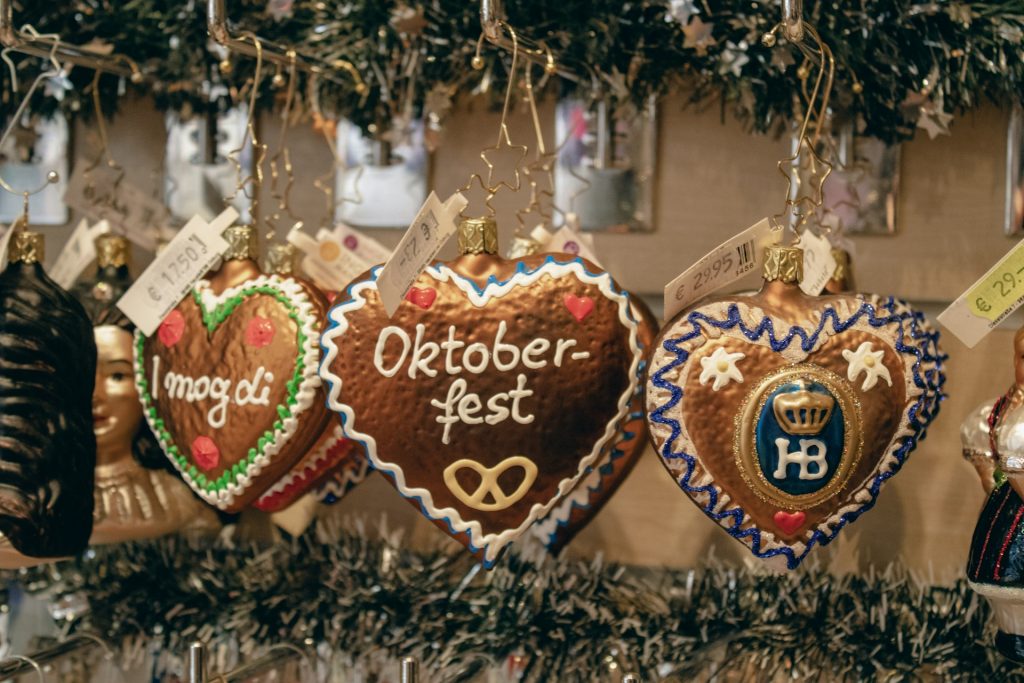
Or take Tracht. Go to “München”, and buy the Lederhosen and the jacket; then walk around Berlin. Tell me how that goes for you.
How can you look at the diversity of language, tradition, even food, and tell me that there’s one German identity, or even one Germany for that matter? It’s absurd on its face.
The History
And why do we have this diversity? Because people have been living here for a very long time, since long before those… um, disagreements with the Roman Empire. Then there was the whole Holy Roman Empire thing — neither holy nor Roman, but what are you gonna do — when this land was a collection of independent states.
For the majority of its history, the territory was held by a bunch of different groups that kind of shared a language. When someone starts going on about “Germany,” they’re talking about a national construct that came into existence with the unification of these groups in the 19th century. From a real historical perspective, that happened yesterday. It is very new. And nationalists — I don’t care where they come from, the UK, US or here — love to build narratives that are pure fiction.
When the nationalist argument is about complaining and finger-pointing, we’re lumping people together to say, “J’accuse.” And when it’s about pride, it’s usually more about defining who is in and who is out. Either way, it puts massive historical ignorance on display to push a set of interests — and I hate it. We are living in a city that has grown over the last thousand years from a Slavic-speaking village in a swamp. Any argument that makes an appeal to a single national identity is sweeping all of this off the table, attempting to make a deep history very shallow. Don’t let them do that.
Today
May you live in interesting times — and we definitely are, eh, friends? But when we hear someone talking about “Stadtbild,” or claiming that “only East Germans are true Germans,” or, from the other side, that Germans are cold, have no humor, and are obsessed with efficiency, we have left reality and spun off into a mess of bad-faith ideology. I thought we had gotten away from nationalism. I thought we had all learned our lesson from the wars of the 20th century and decided to leave that where it belongs: in the past.
In my home country, and all around the world, we’re seeing this propaganda make a comeback. We have to reject this outright! The idea of the “true German” is not an argument; it’s a set of myths, stereotypes, and bad faith wrapped around a Trojan Horse of unspoken interests that couldn’t care a fig about this land and the people who live in it. It is divisive. It is fiction. And it damages our ability to create real cultural unity and community.
I am a Berliner. I have chosen this place, and I’ve made a life here. Hopefully, one day soon, I’ll get citizenship, and then I too will be a German. I find that pretty awesome, and I encourage you to do the same. You’re already here; the invitation is all around you. So stick that in your damn “Stadtbild!”