
“Democracy Is More Than Voting”: Sami Atris on Organising Communities in Berlin

Michaela Vas,

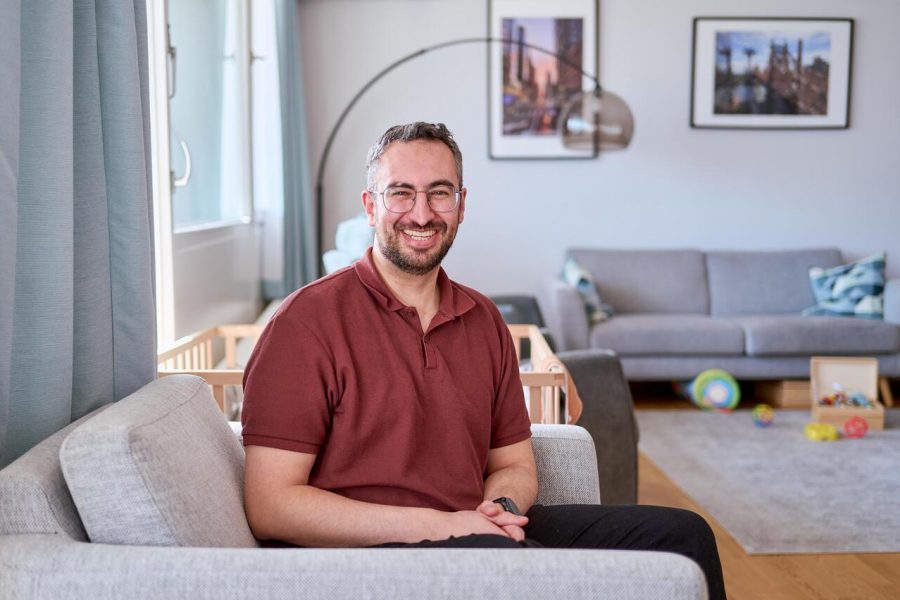
Sami Atris
Many Berliners feel that political decisions are made far away from their everyday reality. Sami Atris, lead organiser of the Berliner Bürgerplattformen, works to change that — by helping communities organise, build trust, and speak with a stronger voice.

WHP: Can you briefly introduce the Berliner Bürgerplattformen? What is its main purpose in Berlin?

Sami Atris: Who actually decides what happens in our lives? How much influence do we have over how high our rent is — or whether we can even afford to stay in our neighbourhood? Who decides whether our children go to a good school? What the park around the corner looks like, whether the bus still runs, whether the playground gets renovated?

Most of the decisions that massively affect our lives are made somewhere — but not by us.

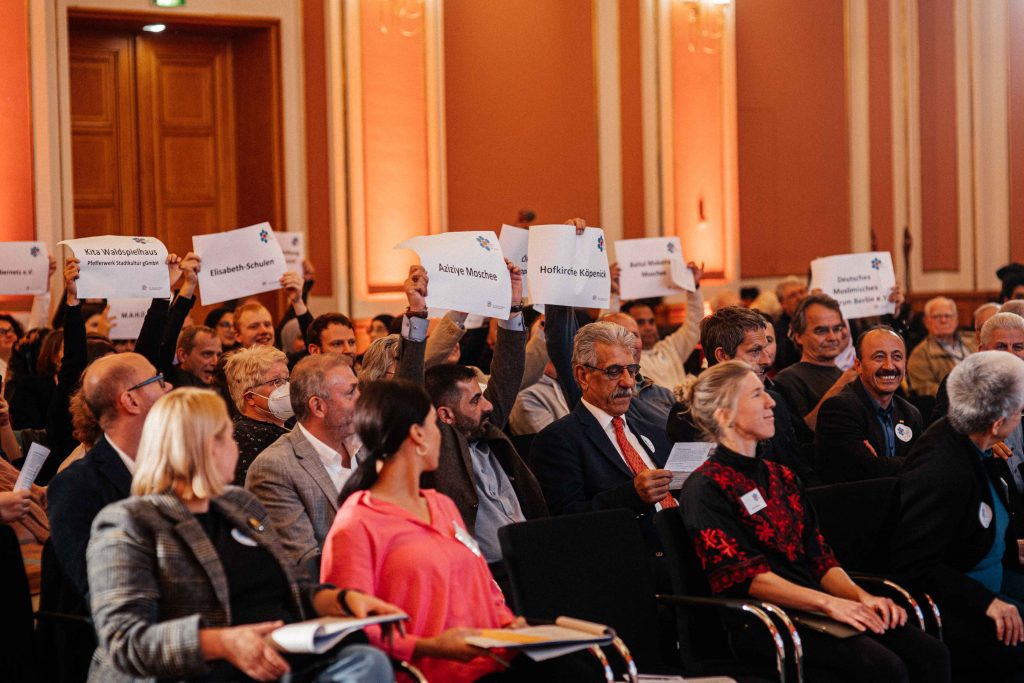
The Berliner Bürgerplattformen are an alliance of civil society groups: schools, daycare centres, churches, mosques, community centres, and much more. These groups have a clear message: We want a say. Not through polemics, not through protest for the sake of protest — but through solutions we develop together, and through our ability to show decision-makers that these solutions are in the interest of the city.

How do we find our issues? Our member groups listen to their base and find out what really concerns people. From these conversations emerge the topics we work on. Then we analyse: Who makes the decisions we want to change? How do we get a seat at that table?

It is about power — but not the kind of power exercised at others’ expense. It is about developing influence together, so that people who are often not heard get a voice. A voice that counts.

WHP: What personally motivated you to get involved?

Sami Atris: In 2015, I first came into contact with community organizing and the Berlin Bürgerplattformen. I had previously met young people — migrants who had repeatedly experienced discrimination at government offices, at school, or on the street. Many had come to terms with it. They withdrew, stayed among their own. A safe space — but also a cage.

I tried to bring them in. And it worked. Over the years I observed again and again how these young people grew out of that powerlessness. Not because someone rescued them — but because they built relationships with other people and groups in the city, learned to trust one another, and then fought for their own interests. And won. They realised: I am not a victim. I am someone who can shape the city.

This experience was so formative that I left my previous career and became a community organiser. I have not regretted it for a single second.

WHP: What challenges do people in Berlin face when they want to get politically or socially involved — and how does the Bürgerplattform try to respond?

Sami Atris: Again and again people come to me and ask: Who should I even vote for? Nothing ever changes anyway. And I tell them: Democracy is more than voting. You can fight for yourself and your neighbourhood every single day — by organising together. A vote every few years matters, but it alone rarely changes what affects us daily.

Our guiding principle is: Do nothing for others that they can do themselves. But for the things that cannot be changed alone, the Bürgerplattform is the place where people learn how to organise systematically — and generate the strength from that to bring about real change.
Berliner Bürgerplattformen
© Berliner Bürgerplattformen

What we offer to counter the feeling of powerlessness is no quick fix. Before we work together on issues, we invest a great deal of time in something that is often forgotten in politics: relationships. Genuine conversations about what moves people, what they wish for, what makes them angry. From this foundation grows trust — and from trust grows the ability to act together.

Whoever works with us eventually negotiates not as an individual, but as part of an organised community. That changes how decision-makers listen. And it changes how people see themselves.

WHP: Is there a project, event or initiative coming up that you would particularly like to recommend to our readers?

Sami Atris: For anyone who has become curious and would like to experience community Organising first-hand, I recommend the Organising Germany Day on 24 April 2026 at the Catholic University of Social Work Berlin (KHSB). 120 people from across Germany who want to change their neighbourhood will come together in one place. There will be talks, workshops and a vibrant marketplace of possibilities — with activists from Berlin, Cologne and Duisburg showing what is possible in practice.

Those who want to join for the whole weekend will experience even more: On Saturday 25 April we head to the German Bundestag — a conversation with a member of parliament about informal power dynamics in the city, followed by an exploratory tour of Berlin-Schöneweide, where the Berlin Bürgerplattformen took their first steps over 25 years ago.

On Sunday 26 April we visit the Lilienthalstraße cemetery in Neukölln — 1,000 graves where Muslims could be buried according to their own rites. A campaign that shows what becomes possible when people come together and persistently stand up for their interests.

Places are limited. Registration deadline is 13 April 2026. You can register here.

WHP: How can interested people support your work or get involved themselves?

Sami Atris: There are different ways, depending on who you are and what you can contribute. The most valuable support is when an organisation — a school, a mosque, a church, an association, a community centre — becomes a member of the Bürgerplattform. These groups bring what truly matters: people, networks, roots in the neighbourhood. Without this foundation there is no platform.

Entrepreneurs who take social responsibility seriously can accompany us through an annual donation as part of our circle of supporters. This allows us to work in a long-term and independent way — without party lines, without grant bureaucracy. Individual donations also help us to continue our work consistently.And anyone who simply wants to take a first look without committing to anything straight away — the Organising Germany Day on 24 April is the perfect place to start. Or just get in touch directly here.

(Header image: © Florian Boillot / FUNKE Foto Services)
Author:

More From WahlheYmatPost

  • Berlin Wiki: Party Profiles II – The Greens, The Left, the AfD and the BSW party

    Berlin Wiki: Party Profiles II – The Greens, The Left, the AfD and the BSW party

    What is the Green Party? Bündnis 90/Die Grünen is an important political force in the Berlin House of Representatives. Although the party has not been part of the government since the 2023 election, it operates from the opposition within parliament. Its guiding principle is ecological, economic, and social sustainability. It focuses on stronger climate protection,…

  • Berlin Wiki: Which Parties Shape the Capital?

    Berlin Wiki: Which Parties Shape the Capital?

    Which parties are important in Berlin? Berlin has many political parties, each pursuing its own agenda. These parties are organized at different levels. Many have a Berlin state association, as well as several district and local branches. The parties that receive the most votes form parliamentary groups in the House of Representatives, Berlin’s parliament. The…

  • The Good, the Bad, and the Arbeitsamt

    The Good, the Bad, and the Arbeitsamt

      Most places have an arm of the government to help folks out when they’re unemployed; governments like their citizens to have jobs and pay taxes. It tends to keep the governments – and the citizens – happy. There’s also the matter of not letting people starve in the street when they’re out of work.…

  • Home Is Not a Place: A Berlin Exhibition Rethinks Migration

    Home Is Not a Place: A Berlin Exhibition Rethinks Migration

    How do people change after moving from one place to another? What do they leave behind and what do they carry with them? Is it possible to feel at home in a space that is vastly different from the one we left? In her latest installation “Remembering Space (how much past can the present hold)”,…

  • Berlin Wiki: Your Guide to the 2026 Berlin Election

    Berlin Wiki: Your Guide to the 2026 Berlin Election

    What will be elected in Berlin in 2026? On September 20, 2026, a new House of Representatives will be elected in Berlin. At the same time, the district assemblies of Berlin’s twelve districts will also be elected. The electoral term is always five years. Voters therefore decide which parties and politicians will serve in these…

  • Multilingualism, Participation, and Power: A Berlin Case Study

    Multilingualism, Participation, and Power: A Berlin Case Study

    Local migrant organizations often play a crucial yet underrecognized role in shaping participation, representation, and social cohesion within urban districts. Based on my experience directing the migraUp! Pankow project in Berlin between 2015 and 2025, this reflection highlights how community-based initiatives can strengthen migrant organizations while simultaneously contributing to local governance and democratic participation. migraUp!…

  • “Democracy Is More Than Voting”: Sami Atris on Organising Communities in Berlin

    “Democracy Is More Than Voting”: Sami Atris on Organising Communities in Berlin

    WHP: Can you briefly introduce the Berliner Bürgerplattformen? What is its main purpose in Berlin? Sami Atris: Who actually decides what happens in our lives? How much influence do we have over how high our rent is — or whether we can even afford to stay in our neighbourhood? Who decides whether our children go…

  • “Das Volk” in 2026: Time to Redefine the People

    “Das Volk” in 2026: Time to Redefine the People

    “Do you behave as the person you truly want to be?” I ask myself this question in moments when I clearly fall short. Yes, it is hard to live up to one’s ideal self—I’m probably not the only one who feels this way. The same applies for societies. Over the past ten years, I have…

  • “Treat Every Case as Your Own”: How Zaki e.V. Supports Berlin’s Overlooked Migrants

    “Treat Every Case as Your Own”: How Zaki e.V. Supports Berlin’s Overlooked Migrants

    WHP: Can you briefly introduce Zaki e.V.? What is your main mission in Berlin? Pia Bergmann: Zaki – Bildung und Kultur e.V. is a migrant-led organization, with its main office located at the Berlin Global Village in Neukölln and another office in Pankow. The organization’s focus can be summed up in one sentence: arrival and…

  • Germany Has an Energy Crisis — Just Not the One You Think

    Germany Has an Energy Crisis — Just Not the One You Think

    Energy – scarcity.We talk about energy all the time—but only in physical terms.I find myself thinking more and more about our social energy, which may matter even more. Because a society also needs energy. This energy, I would call social energy—a concept that appears in the social sciences under terms like collective intelligence or social…

  • One In Four Berliners Cannot Vote: Europe Still Struggles With Migrant Political Participation

    One In Four Berliners Cannot Vote: Europe Still Struggles With Migrant Political Participation

    A recent report by the Migration Policy Group, a think tank based in Brussels, shows that Germany is among the best of the worst when it comes to enabling and encouraging the political participation of immigrants. Germany’s score in this is only a small part of the bleak findings from the report’s Political Participation Index,…

  • ‘Migrants’ Are The Greatest Opportunity For Germany

    ‘Migrants’ Are The Greatest Opportunity For Germany

    “Change begins with a conversation.” That’s why I was glad to be invited to the SharedTableDinner by the Oneliness Project. How do we find a sense of home in each other? How are loneliness and democracy connected? These were the questions that shaped the evening. Amazing people shared deeply personal thoughts about how they connect…

  • Ukrainian Voices in Berlin: “People Are Not Objects for Integration Debates”

    Ukrainian Voices in Berlin: “People Are Not Objects for Integration Debates”

    WHP: Can you briefly introduce the Allianz Ukrainischer Organisationen e.V (Alliance of Ukrainian Organizations)? What is its main task in Berlin? Oleksandra Bienert: The Allianz Ukrainischer Organisationen e.V. is a nationwide association currently bringing together 23 civil society organizations in eight federal states. These organizations were founded by people with a Ukrainian migration background and…

  • WahlheYmat Turns Two — And Invites You In

    WahlheYmat Turns Two — And Invites You In

    WahlheYmat is looking for new members.That is the message I would like to write about today. Before my life in Berlin, I was never this direct. I am learning a lot here. And I don’t just mean the famous Berliner Schnauze — like going into a bakery and saying: “Good morning, so sorry for disturbing…

  • The Berlin Blueprint: Participation as the Ultimate Act of Self-Determination

    The Berlin Blueprint: Participation as the Ultimate Act of Self-Determination

    In the glossy catalogs of modern wellness, “self-help” is often sold as a retreat from the world: a private journey of healing through products and quiet contemplation. Berlin’s history, however, offers a more rugged, democratic alternative. In this city, wellbeing has never been found in isolation. It has been forged through participation. To be a…

Address

Am Hamburger Bahnhof 3
10557 Berlin
Germany

hey@wahlheymat.de

Social Networks