
35 Years of Integration Work: CLUB DIALOG and the Power of Community Networks

Michaela Vas,

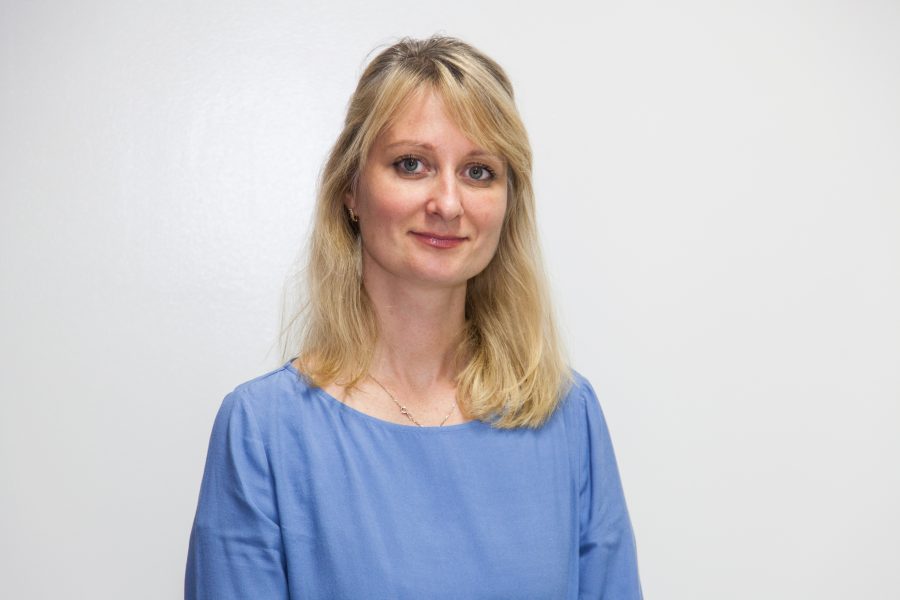
Natalia Roesler
Successful integration in Berlin depends on long-term community work and strong migrant-led networks – says Dr. Natalia Roesler, Managing Director of CLUB DIALOG e.V. She talks about the persistent challenges faced by people with migration backgrounds in Berlin and the organisation’s decades-long work with Russian-speaking and Eastern European communities. An interview.

WHP: Can you briefly introduce your initiative? What is its main task in Berlin?

Dr. Natalia Roesler: CLUB DIALOG e.V. is a migrant organisation that was founded in Berlin in 1988 to stimulate social dialogue between Russian-speaking migrants and local Berliners, as well as to promote the integration of immigrants. Over the course of more than three and a half decades, Club Dialog has developed a structure that enables comprehensive transnational integration and educational work in multiple languages and for all generations.

Our primary target groups are people who have come to Berlin from Eastern Europe, the Baltic states, and Central Asia. However, in some projects we also work with people from other countries. In one important project – “TEAM für Berlin” – we also work with organisations and initiatives of people with a history of migration, with the aim of professionalising and empowering them.

WHP: What personally motivated you to get involved here?

Dr. Natalia Roesler: Here, as in social work in general, you get the sense that you are doing something truly meaningful and helping people. You receive plenty of feedback, and there are no rigid routines – every day brings new tasks.

WHP: What challenges do people with a migration background face in Berlin – and how does your organisation deal with them?

Dr. Natalia Roesler: We are quite an old organisation, and yet our tasks have remained largely the same – it is really surprising that when I sometimes read our old funding applications or project descriptions, they are still relevant today. These are always the same challenges people face when moving to a new country: language cannot be learned quickly, children need to be integrated into schools, people want to preserve and pass on their own culture and language, they want to find work, qualifications are not recognised, many experience discrimination, and so on.

We try to find answers to these challenges by initiating different projects that address different needs: for children, seniors, women, job seekers, people seeking education, and so on. We also build and maintain networks that help our target groups help themselves.

WHP: Is there a project, event, or initiative coming up that you would like to recommend to our readers?

Dr. Natalia Roesler: Many of our individual projects will be organising events soon; all of them can be found on our website under “Programm” I would particularly like to highlight the programme of the TEAM project (to be published shortly) – it is intended as support for smaller initiatives and organisations.

WHP: How can interested people support your work or get involved themselves?

Dr. Natalia Roesler: There are many ways to do so. People can volunteer with us – for example, by supporting people from Ukraine (project “Patenschaften”), or by working with refugees in accommodation centres (project “Need for Deed”), or by getting involved in one of our other projects (all listed here). In addition, it is also possible to complete a Voluntary Social Year or a Federal Volunteer Service with us.

CLUB DIALOG e.V. ist eine Berliner Migrant*innenorganisation, die 1988 gegründet wurde, um den gesellschaftlichen Dialog zwischen russischsprachigen Zugewanderten und der Berliner Stadtgesellschaft zu fördern. Kernaufgabe des Vereins ist es, Integration durch Bildung, Begegnung und Empowerment zu stärken.
Seit über 35 Jahren arbeitet CLUB DIALOG generationenübergreifend und mehrsprachig mit Menschen aus Osteuropa, dem Baltikum und Zentralasien, aber auch mit anderen Communities. Neben klassischer Integrations- und Bildungsarbeit unterstützt der Verein mit Projekten wie „TEAM für Berlin“ gezielt Initiativen von Menschen mit Einwanderungsgeschichte dabei, sich zu professionalisieren, zu vernetzen und nachhaltig wirksam zu werden.

Author:

More From WahlheYmatPost

  • Who Will Lead Germany Into Its International Future?

    Who Will Lead Germany Into Its International Future?

    What does the story of Charles De Gaulle teach us? Antonin Baudry’s La Bataille de Gaulle tells, in five hours, the story of the General during the Second World War. A great movie. I learned a lot. Tenacity. De Gaulle arrives alone in London. On 18 June 1940, he makes his first BBC speech, speaking…

  • Berlin Wiki: What Are the Key Issues in Berlin’s Election?

    Berlin Wiki: What Are the Key Issues in Berlin’s Election?

    Why Is Rent Policy a Central Issue in Berlin’s Election Campaign? Around 85 percent of Berliners live in rented accommodation. At the same time, the housing market in the capital is tight: rents are rising, new housing construction remains sluggish, and legal loopholes frequently allow furnished apartments to be offered at inflated prices. This is…

  • A Mayor Tandem for Berlin

    A Mayor Tandem for Berlin

    What if Berlin had two Regierende Bürgermeister:innen? One representing the city’s elected voice — and another representing the voice of Berlin’s international residents who live, work and contribute here but do not have German citizenship and therefore cannot vote in Berlin elections. Because in a democratic society, it can’t be right that 25% of the…

  • Berlin Wiki: Equal Access to Democracy

    Berlin Wiki: Equal Access to Democracy

    What Impact Does Berlin’s Electoral Reform Have? In September 2023, Berlin’s House of Representatives (AGH) adopted an amendment to the state constitution lowering the voting age from 18 to 16. The aim of the constitutional amendment is to strengthen the democratic participation of young people. The new rule will apply for the first time in…

  • No German Passport? You May Still Have a Vote in Berlin 

    No German Passport? You May Still Have a Vote in Berlin 

    If you are an EU citizen living in Berlin but do not have German citizenship, you cannot vote in the election for Berlin’s House of Representatives (Abgeordnetenhaus). But you can vote for your local District Assembly (Bezirksverordnetenversammlung, or BVV) if you meet the eligibility requirements. Around 240,000 non-German EU citizens are eligible to take part…

  • The Signature That Didn’t Count – Finding My Voice in Berlin

    The Signature That Didn’t Count – Finding My Voice in Berlin

    When I moved to Berlin in the spring of 2022, I was approached one sunny afternoon by people carrying clipboards under their arms. Would I like to sign a petition? I was pleasantly surprised by this request – such a sense of community in Berlin, what a place to have come to live. With a…

  • StimmlosTrend: A New Survey Wants to Hear Berlin’s Missing Voices

    StimmlosTrend: A New Survey Wants to Hear Berlin’s Missing Voices

    Can’t vote in Berlin? There are a million people like you. We’re giving them a voice. That’s the message of WahlheYmat’s new StimmlosTrend campaign, which launches today. Modern democracy is built on elections. In Berlin, the House of Representatives is elected every five years by eligible German citizens (EU citizens can only vote in district…

  • “Berlin taught me to dislike the word integration” 

    “Berlin taught me to dislike the word integration” 

    WHP: You worked in humanitarian aid around the world for many years. What ultimately motivated you to found Just-Go-For-It? Marilena Chatziantoniou: I started working in the field of humanitarian aid in 1998. My first assignment was in Albania, where I worked for a small German NGO, just months before the Kosovo crisis. I remember falling…

  • What is Germany’s greatest asset?

    What is Germany’s greatest asset?

    “Football is a simple game. Twenty-two men chase a ball for 90 minutes and, in the end, the Germans always win,” said Gary Lineker after England lost the 1990 World Cup semi-final on penalties against Germany. Times are changing. Germany no longer always wins at major football tournaments. And England now has a German coach.…

  • Migrants With Degrees Are Not What Germany Is Looking For

    Migrants With Degrees Are Not What Germany Is Looking For

    Education is a right, not a privilege. This idea has been a founding principle of modern democracies. In practice, however, access to education is far from guaranteed for everyone. As of this year, Germany has significantly restricted access to state-funded intermediate and advanced German courses for migrants participating voluntarily. Many rejected asylum seekers, people with…

  • Berlin Wiki: Ways to Influence Politics in Berlin

    Berlin Wiki: Ways to Influence Politics in Berlin

    What is a Volksentscheid? A Volksentscheid, or referendum, allows Berliners to vote directly on proposed legislation and political issues outside regular elections, or to trigger an early election. Anyone who is eligible to vote in elections to the Berlin House of Representatives (Abgeordnetenhaus) is also eligible to take part in a Volksentscheid. A Volksentscheid can…

  • Berlin Wiki: How Berlin’s Government Is Formed

    Berlin Wiki: How Berlin’s Government Is Formed

    How Is the Government Formed? Berlin’s state government is the Senate. It consists of the Governing Mayor and ten senators. Every five years, a new Senate is formed. During coalition negotiations, the parliamentary groups agree on common political goals, the distribution of government portfolios and the budget. Afterwards, the members of the Berlin House of…

  • Berlin Wiki: Democracy and the Principles of Free Elections

    Berlin Wiki: Democracy and the Principles of Free Elections

    What Does Democracy Mean? A great deal could be written about what democracy is. Put simply, in a democracy, all state authority is derived from the people. This means that the citizens of a country determine its political direction. Germany is a parliamentary and representative democracy: citizens elect representatives who make decisions on their behalf.…

  • Berlin Wiki: Who Influences Political Decisions? 

    Berlin Wiki: Who Influences Political Decisions? 

    What Is Lobbying? Lobbying is the organised effort by interest groups to influence political decisions. The term is derived from the word “lobby,” referring to the entrance halls of parliaments where representatives of various interests traditionally met with members of parliament to discuss and promote their concerns. Lobbying takes place in almost every area of…

  • Berlin Wiki: Finding Reliable Information Before You Vote

    Berlin Wiki: Finding Reliable Information Before You Vote

    What Is the Wahl-O-Mat? The Wahl-O-Mat has been provided by the Federal Agency for Civic Education (Bundeszentrale für politische Bildung, bpb) since 2002. It is an online voting advice tool that allows users to compare their own political positions with those of political parties in Germany. Anyone using the Wahl-O-Mat can respond to a series…

  • Berlin Wiki: Understanding Political Parties

    Berlin Wiki: Understanding Political Parties

    What Is an Election Manifesto? Before an election, political parties present their election manifestos. This applies in federal, state, and local elections. In the manifestos, parties set out in writing the goals they intend to pursue. These goals reflect the issues that are important to the party during the upcoming legislative term—that is, the electoral…

Address

Am Hamburger Bahnhof 3
10557 Berlin
Germany

hey@wahlheymat.de

Social Networks