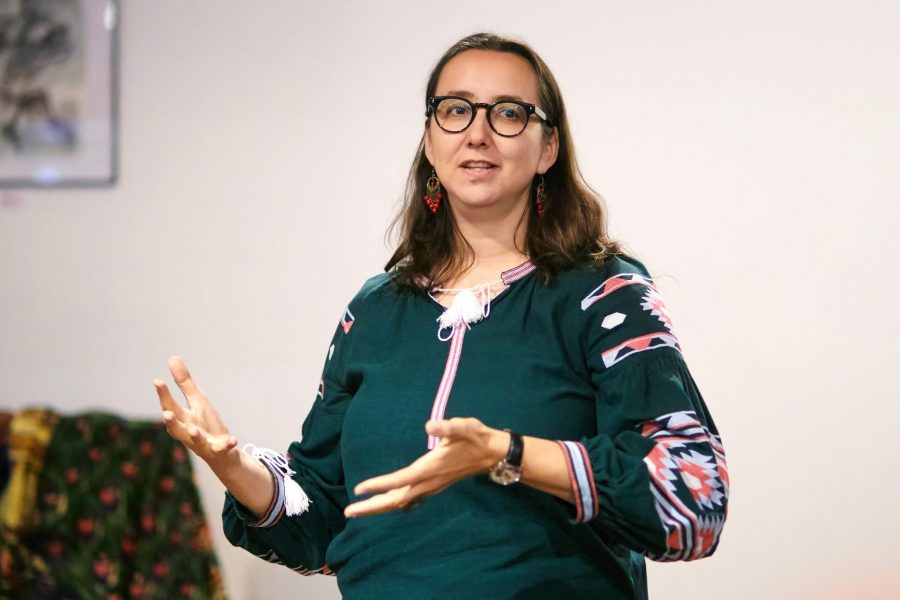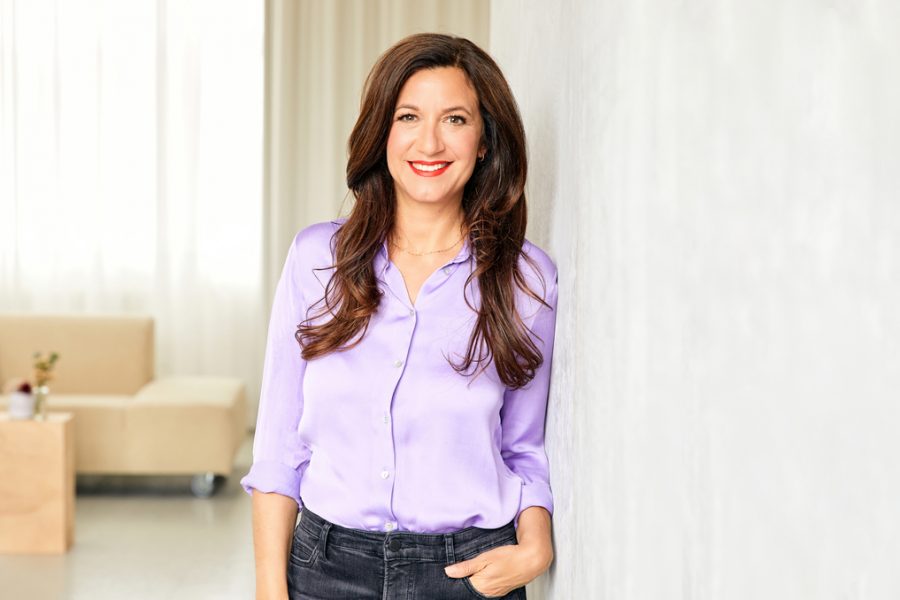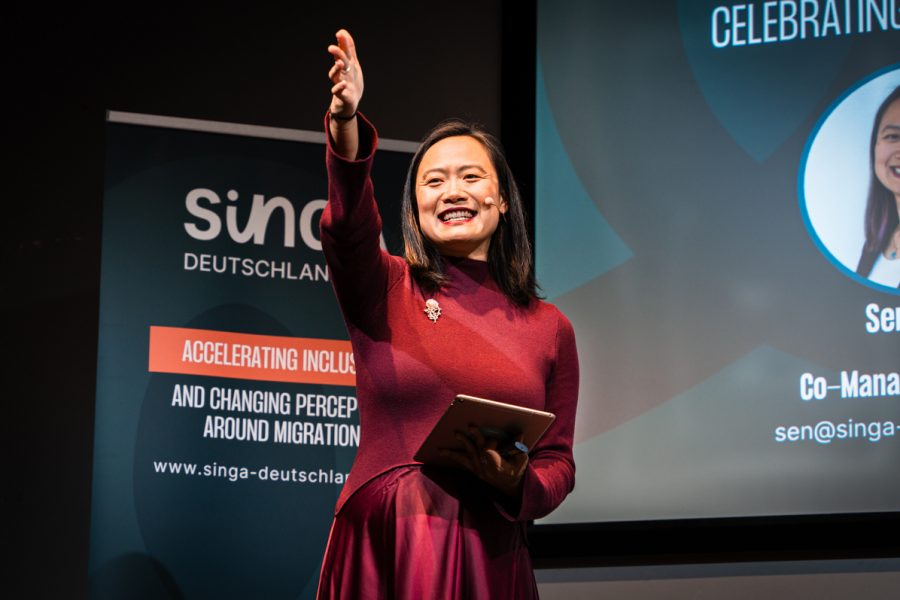


When Nalan Sipar asked her boss at Deutsche Welle if she could create content in Turkish to help inform the German-Turkish community during the early days of the 2020 global pandemic in Berlin, the answer was no.
Her boss at the time told her that a state contract prevented the government-funded broadcaster from covering information in this way, so she started her own media channel anyway.
“I started doing it and the channel took off,” Nalan recalls. “People were asking me questions… I was covering all those topics and after half a year I lost my job.”
It was, she says, “literally the hardest time of my life because it was the pandemic. You are scared of everything. You are literally anxious about your life and then you lose your job.”
But something kept her going: the community she was serving.
When Institutions Say No – Communities Say Yes
“I would say the only thing that kept me moving was the love of my community,” Nalan explains.
“Wherever they saw me, they always said, ‘Hey, thank you very much. I watch your videos or I can speak German but I forward your videos to my mom because she doesn’t speak German.’”
The feedback was immediate and personal. An elderly woman in Kreuzberg recognized her despite both wearing masks: “I watch your videos every night before I go to bed.”
A second-generation immigrant sent the videos to her father with dementia, who had forgotten German but could still understand his native language, Turkish.
“If you see the real impact of your work on real people and get this feedback, it’s insane,” she says. “It keeps me moving because it feeds me emotionally somehow.”
Nalan took loans from friends to pay rent. She couldn’t buy everything she would have wished for herself. But it didn’t matter. This isn’t a story about struggling until you finally get accepted by German institutions. This is about what happens when you stop waiting for permission and start serving the needs you see clearly in front of you.
The Gap No One Wanted to Fill
After a year and a half of running her online channel, Nalan had a realization: “Turkish people are the biggest immigrant community in Germany. They have been living here for the last 60 years and there’s not a single media outlet specifically for them.”
She doesn’t mean Turkish media companies broadcasting from Turkey. She means a German-Turkish outlet that serves all generations, bridges the gap with German society, and covers inner-German politics in both languages.
When she proposed covering immigrant topics at Rundfunk Berlin-Brandenburg (RBB), the reaction was: “This is not our target group.” Her response? “The Turkish population in Germany also pays taxes… if people pay their taxes you have to serve them, too.”
The numbers back her up.
In Germany, 43% of young people have a migration background. Yet only 5% of journalists are people of color. “The media is about holding power, right? And they don’t want to share the power.”
For Nalan “holding the power” isn’t just about having money, but having the exclusive right to define what is “German” and who belongs through the media.
Nalan’s vision for her company, MedyaN, is to disrupt this hierarchy. She isn’t asking for a seat at their table; she is building her own, creating a platform that serves as a bridge for the migrant community, while holding up a mirror to the majority.
As she puts it, her goal is to “inform, inspire, and empower” those who have been systematically ignored, bringing the “power” of the media back to everyone who pays the taxes to support it.
The Eight-Minute Conversation That Changed Everything
For two to three years, Nalan pitched her vision to investors and media accelerators. The doors kept closing.
One woman asked her for her five-year vision. Nalan responded: “I see myself in California… I wake up in my beach house and I’m having a zoom call with my team in Berlin.”
The woman and another person in the Zoom call laughed at her. “She says, ‘well I don’t know whether you could make it to California but maybe you can go back to Turkey because they also have some beaches there’. It took me almost 6 months to be able to speak to other people about this idea again. And, I was literally questioning myself, my ability, and my intelligence.”
Then came what Nalan calls “serendipity.”
A Stanford professor liked one of her LinkedIn posts about the need for a German-Turkish media outlet. His flight got cancelled. He was stuck in Berlin. They met at a café on a Saturday at 11:00 AM.
“It was 11:08… and he was like, you know what, we have a great journalism fellowship at Stanford why don’t you apply and I was like… it has been only eight minutes. I have been talking to Germans for the last two or three years and nobody has ever shown me any opportunity.”
She started crying. “It was magical.”
“You Belong Here”
Nalan spent nine months in 2025 at Stanford as part of the John S. Knight Fellowship. She was the first journalist of color from Germany to participate in its 60-year history.
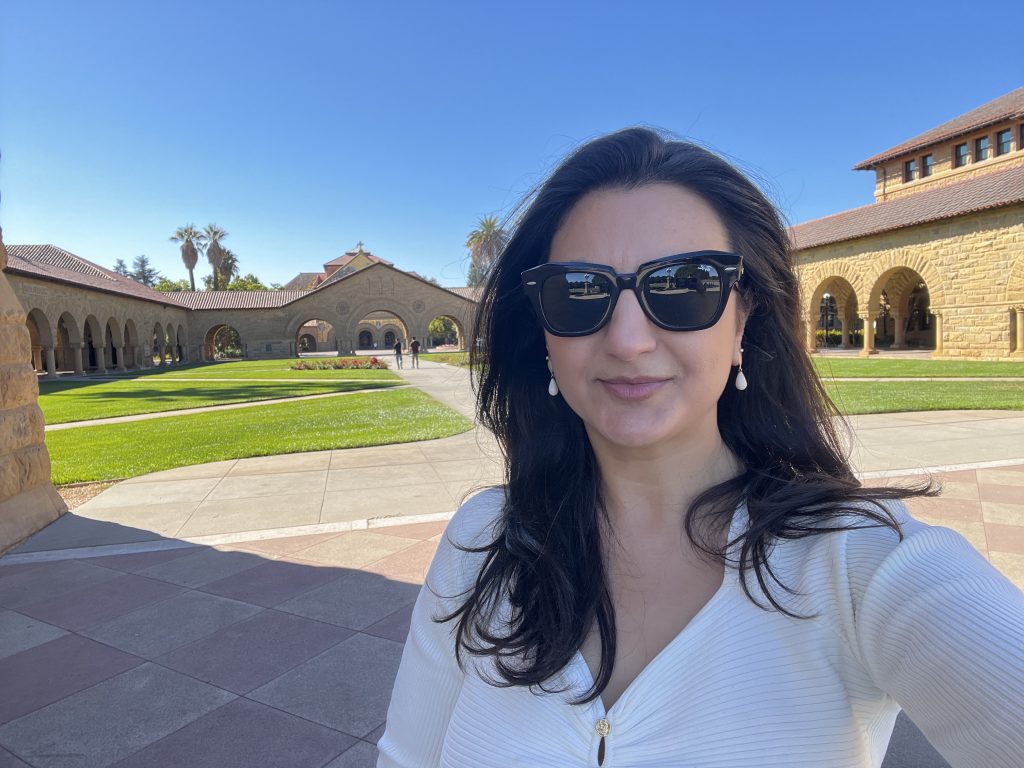
In the first session, the fellows were told: “You guys made it here and you belong here.”
“No one has ever told me this in Germany. No one has ever told me you belong here… it was such an appreciation of your personality, your human being… whereas in Germany I wasn’t feeling seen with my ideas.”
The fellowship changed more than her business acumen. It changed her relationship with herself.
“This racism kills your self… it kills so many layers of your personality.” She describes swimming in Stanford’s pool: “Oh, damn. I feel like I’m 15 again… I’m actually a very self-confident person. I used to always be so confident, but in Germany, I made myself so small… every time when I hear a ‘no’ or I feel like I don’t belong to the people of Germany, I just back up.”
At Stanford, Nalan released her real personality again: “I don’t want to give a f*** anymore about anything to do with discrimination and there’s a vision I hold that keeps me going.”
What Germany Couldn’t See, Community Could
An Indian woman Nalan met in Berlin after she returned from the fellowship at Stanford told her: “I used to be so powerful in India… I would write letters to the president… now, in Germany I feel like I’m worth nothing.”
Nalan acknowledges the pattern but offers a crucial reframing: she didn’t wait to feel powerful in Germany to start building. She served her community, and that service, not external validation, became her foundation.
In September 2025, Nalan returned to Berlin with clarity about what she’s building: MedyaN (meaning “your media” in Turkish). It is the first media company in Germany for people of color, made by people of color, starting with the German-Turkish community.
“There is not a single media company here in Germany that tries to connect migrant communities with German society. I want to give German natives without a migration background a mirror so they can see how we see them.”
Human-Centered Journalism as Resistance
Nalan’s newest project is a cooking show called “Nalan’s Kitchen”. It’s an embodiment of what she calls “human-centered journalism.”
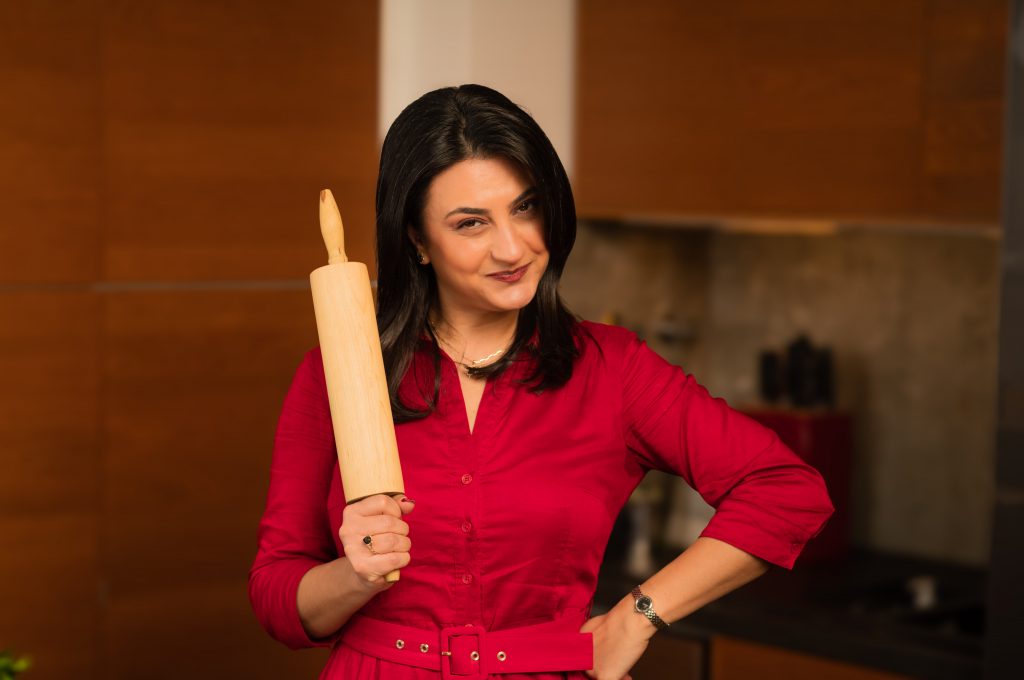
At a Stanford workshop, a New York Times representative revealed that the paper’s primary revenue comes from their cooking app, not journalism. But the deeper motivation came from watching Trump’s re-election and seeing how quickly society divided.
“Once you lose the human-centered narrative… if you don’t see a human being in me you can do whatever you want to me… This is something that’s happening in the US right now and has happened here in Germany, too.”
Her response? Turn the table.
“We know the recipe about how to manipulate people,” she says, referencing Goebbels’ WWII propaganda tactics. “So why not turn the tables and do the exact thing, but with love.”
The first episode features dating stories alongside discussions of structural problems, all over a home-cooked meal. It’s available with German, English, and Arabic subtitles.
“Reuters studies show exactly how people are leaning towards not watching the news anymore,” Nalan says. “For me as a journalist, the question is always, ‘but how can I still reach you and make it interesting for you to talk about socio-political issues?’ because if we are not talking about those problems we have a major problem collectively.”
The Vision Moving Forward
Nalan is currently producing her cooking show with financial support from a German philanthropist, Kai Viehof. She’s talking to investors about creating an independent digital platform (MedyaN) and dreams of creating an academy for immigrant children who want to become journalists.
When asked about her ultimate vision, she doesn’t hesitate: becoming Germany’s Oprah Winfrey. “She also just started with a show and now she owns her own cable network… Why not?”
What This Means for Berlin
Nalan is clear this isn’t just about people of color building their own platforms.
It’s about connection.
“There are a bunch of people out there like white Germans who are willing to understand our stories, our struggles, but they just don’t get the opportunity for it.”
She notes that when German media discusses immigrant communities without inviting them in: “You guys are actually just gossiping about ‘us’.”
The cooking show invites people to share their stories. She’s looking for guests, and investors who believe in the vision. She’s also collecting donations while seeking investors to help develop MedyaN into “a proper company with a sufficient budget.”
The Real Power Shift
What makes Nalan’s story compelling isn’t just that she succeeded despite rejection. It’s that she found a different metric for success entirely. One that is uniquely guided from her own heart.
She didn’t wait for German institutions to see her value. She didn’t wait to feel powerful to start building. She didn’t let Germany’s outdated social systems keep her down. Instead, she asked: Where is there a need I can serve? And she served it.
Recently, someone told her: “‘You are the most trustworthy resource for me because I see you criticizing Turkey. I also see you criticizing Germany.’ There’s nothing better I can hear about my job. This is the best thing I can hear.”
Post-Stanford, Nalan is back with a new mantra: “Ain’t nobody can tell me anything… They can tell me ‘no’ however many times they can. I don’t give a s*** about it anymore… Even if it’s not only about discrimination and racism it’s also a huge business opportunity that you are not able to see right in front of you.”
This isn’t arrogance. This is a woman who spent six months questioning her intelligence after being laughed at upon sharing her vision, who made herself small for years in Germany, who finally remembered what it felt like to be 15 and self-confident, and ultimately chose never to shrink again.
For Germans wondering how to bridge the gap: the answer is already being built. You’re invited to participate…Not as saviors, but as fellow humans and residents of Germany willing to see and be seen.
For immigrants in Berlin still waiting for permission, still making themselves small: Nalan’s story IS permission. You don’t need anyone in Berlin to tell you that you belong. Decide that you do and create your loving vision alongside Nalan.
Put more of what you love into the city by doing what serves your goals and community best.
The rest will fall into place.
How to Connect with Nalan and join her on her mission:
- Watch “Nalan’s Kitchen”.
- Email Nalan with your ideas and/or stories.
- Invest in Nalan’s mission, financially.