
Ok. This is going to sound like a typical “back in my day” kind of old man rant. But hear me out, because I’m not talking about a world swallowed by time. Despite claims to the contrary, Berlin is still full of places that offer a key to a door that still stands today: a door that opens to anyone willing to turn the handle.
I was born at the Saint Joseph’s Hospital In Tacoma, Washington. It kind of looks like a space station that forgot to go to space, with its towering, curvy 70s futurism and large oval windows. Tacoma is a “bigger” city with about 250,000 residents– not nearly as big as Seattle, but a full-fledged city. But, when I was 5, my mother remarried and we moved to a smaller suburb called Gig Harbor; not, however, the normal kind of suburbia that might spring to mind.
The village, located in a perfect, natural harbor, was founded on fishing; by the time we moved there, it was the 80s and the yuppies had arrived. They liked the quaint seaside, which was still an easy commute away from T-Town. Let the gentrification begin!
Throughout the 80s and into the 90s, those blue-collar roots held on for a while. There was the forbidden bowling alley down the street from my house, with cheap plastic wood paneling and the thick stink of cigarette smoke, or the family-owned Finnhomes Convenience Mart on the other side of the bay, where many a guy in a flannel and muddy boots would pop in for a case of Budweiser.
Mostly Books
When I was growing up there, we had one local bookstore: Mostly Books. It was a quiet little nook on the main street that snaked around the bay, lined with restaurants of all kinds, a few antique stores, and marinas. The store had a bit of a nautical theme to match the fishing hamlet, but I knew right away that it was a different kind of space.
It was a little dark in there, and there was no music playing. When you entered the store, it had the hush of a library. Mostly Books was run by an older couple, and the husband would travel around the Pacific Northwest, buying used books. You could ask him to look out for certain titles and he would add them to his list. Back in those days, it could take a long time to find something out of print. I think I spent over a year looking for volume three of Jack Vance’s “Demon Prince” series, and finally found it in a used bookstore in Bellingham. Anyway, I got to know that old man, and he got to know me. We would chat whenever I came in. We had a rapport.
When we would go into Tacoma and check out bookstores at that temple of commerce, the Tacoma Mall, they were only marginally bigger than Mostly Books. There was a Crown Books and a Walden’s Books: box-like things full of popular paperbacks, games and other chain-store fare.
But there was also Nybles and Bytes, which held a very special place in my heart; N & B was independent and all about computers, computer games, and roleplaying books. I would go into Nybles and Bytes and stare with great longing at their Amiga 2000 demo model; my young heart burned for that machine. But, since I didn’t have $2,000 lying around, I would spend my pocket money on sci-fi and fantasy titles, like the great gamebook series “Fighting Fantasy” by Steve Jackson; I ended up collecting a bunch of those. Gamebooks were like video games in book form, and a whole lot cheaper. A lot of them are still in print, but probably sold to those seeking nostalgia.
You never know what treasure you might find
One day in the early 90s, they broke ground on the first big bookstore I had ever seen: Borders. It was a massive, corporate, two-story affair that stood by itself near the entrance of the mall complex: clean modern 90s commercial architecture that told no tale of its own.
Nothing really indicated it was a bookstore until you parked the car and started walking toward the entrance. The bottom floor was all books and the second floor was split between books and CDs. DVDs weren’t a thing yet, but in one section of the first floor, I vaguely remember VHS tapes for sale.
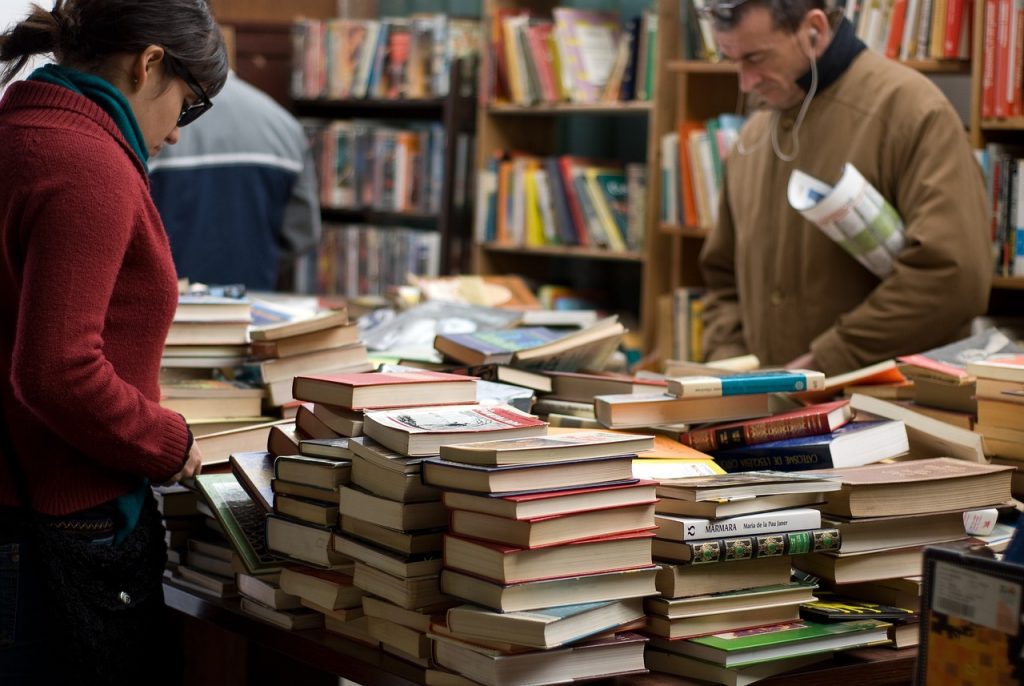
It was exciting just to wander around and look. Kind of like when you go to a library and walk the stacks. You never knew what treasure you might find, like the book you didn’t know existed, but now was beckoning and demanding the last scraps of money from your wallet. Yes, it was very flashy and corporate, but they just had so much available.
This is what makes navigating digital spaces so difficult: you’re dependent on the algorithm to find anything, and there’s no one to ask for help or recommendations. That old shop owner at Mostly Books knew me personally, he knew what kind of books I liked, and he knew his inventory. From this triangle of data points, he could recommend things in a way no algorithm ever can. We lost something when we shifted over to online spaces for everything – or maybe something was taken from us.
We are truly lucky in this city
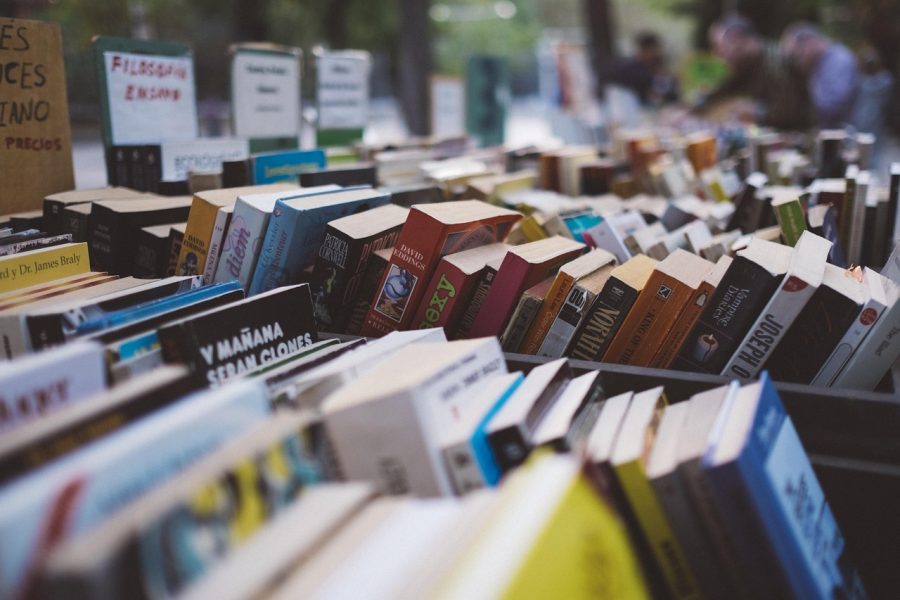
What does all of this have to do with Berlin? Well, we are truly lucky in this city to have alternatives to buying our culture through a browser. In my Kiez, there’s about three Mostly Books within walking distance of my apartment. I have gotten friendly with the owner of Moby Dick on Stargarder Straße; I walk past his shop at least once a week, and I can never resist looking through the window to read the titles on display. I’ve ordered a few books from him, and we even ran into each other one night at the kebab shop that stays open very late.
I have no idea how any of these bookshops stay open, but they’re doing good work. There are also specialty shops in the city that cater to specific genres. Are you looking for fantasy or sci-fi? Try Otherland in Kreuzberg. They also have monthly events there, from readings to roleplaying nights. Are mysteries your jam? Try Mrs. Marple in Charlottenburg; the shop is tiny, but the owner knows every title in her inventory like the back of her hand – a lot of titles are hand-picked by her.
Exploring the physical spaces
And we have our own Borders… actually, it’s much better than Borders in Tacoma, Washington could have ever aspired to be: Dussmann Kulturkaufhaus on Friedrichstraße. Started by Peter Dussmann just after the Wall came down, Dussmann has become a local institution with five floors of cultural goodness. It’s also open surprisingly late – until midnight.
Dussmann is great, but also very dangerous for the wallet. When I leave, mine is usually exhausted. I was shocked the other day when I was at a gaming night, showing off my latest purchase – “Hiero’s Journey” a sci-fi novel from the 70s – and I told the table they could order it from Dussmann; one of the players turned to me and asked, “What is a Dussmann?” The deuce, you say!

And I would be remiss if I didn’t mention a few comic book stores. When I was a kid, we had O’Leary’s in Lakewood. That place was great! It was always a good day when I could get out there and look through the shelves. They had over 100 square meters of store space. It was the biggest comic shop we had around. Well, in Berlin we have Modern Graphics on Kastanienallee. They have books in German and English, but also in French. If you don’t know about French comic culture, then you have a whole brave new world waiting for you, my friend.
But there’s more! Hidden on a side street in Prenzlauer Berg, you can find Black Dog Comics, which specializes in American books only. It’s all English, all the time at Black Dog.
They even have a section in the back that specializes in indie roleplaying games, if that’s your thing. Or maybe it could be your thing… go find out! Just like Mostly Books, the guys at Black Dog know their stuff and are ready to give you suggestions.
Hell, I went in there last April looking for a birthday present for a youngin’ in Montana that I’d never met; all I knew was his age, and that he liked to read. Dirk, one of the owners of Black Dog, hooked me up! He spent nearly an hour making suggestions for that age group specifically. And then I was able to ship it directly from Black Dog. These kinds of experiences are waiting for you too. You just have to go out into physical spaces to find them.
If you’re light on cash, there are plenty of libraries around town. Go browse the stacks and just poke around. Maybe there’s a gateway to fantasy and imagination waiting around the next shelf. Browsing the stacks is a thing. What do I mean? Perhaps you have an interest in sharks; let’s just say. Well, you look up “sharks” in the card catalog and you get this back: 597.3. That means that if you go to that place in the stacks, you’ll find everything about sharks that the library in question has to offer. Browsing the stack is way more powerful than you can imagine, and I can only recommend it. You’ll find books you could never have come up with.
Digital platforms don’t need more money, nor do they really deliver as well as they like to claim. The almighty algorithm has turned our cultural spaces into a mono-culture, pushing what Spotify, Amazon, or Netflix think they can sell, rather than what we actually want. We are being marketed at and sold to in a way that we have never seen before. But the physical spaces are still here in Berlin; I have plenty on my list to explore. So, you can still buy books, CDs, or DVDs and have your own collection; you can still browse physical spaces instead of digital ones; you can still make friends with shopkeepers and get the hot tips. Physical is the new digital.