
How Audrey Tang Is Rebooting Democracy — and What Berlin Can Learn from Taiwan

Ivan Gabor,

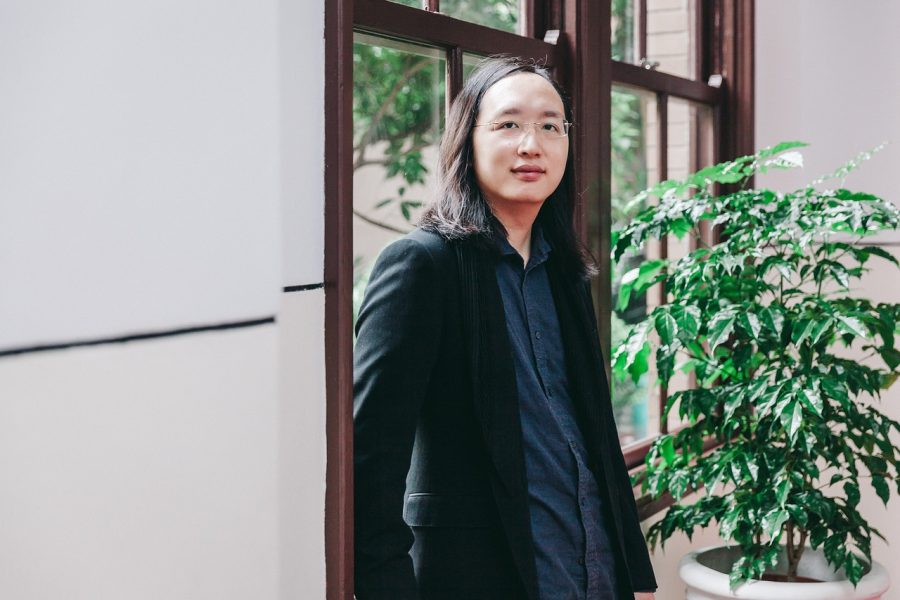
Audrey Tang
At the Berlin Freedom Conference, Ivan Gabor met Audrey Tang, Taiwan’s trailblazing Digital Minister, whose radical yet practical ideas show how democracy can thrive in the digital age. From crowdsourced policymaking to fighting deepfakes with citizen assemblies, Tang’s vision proves that participation, not perfection, is the future of governance.

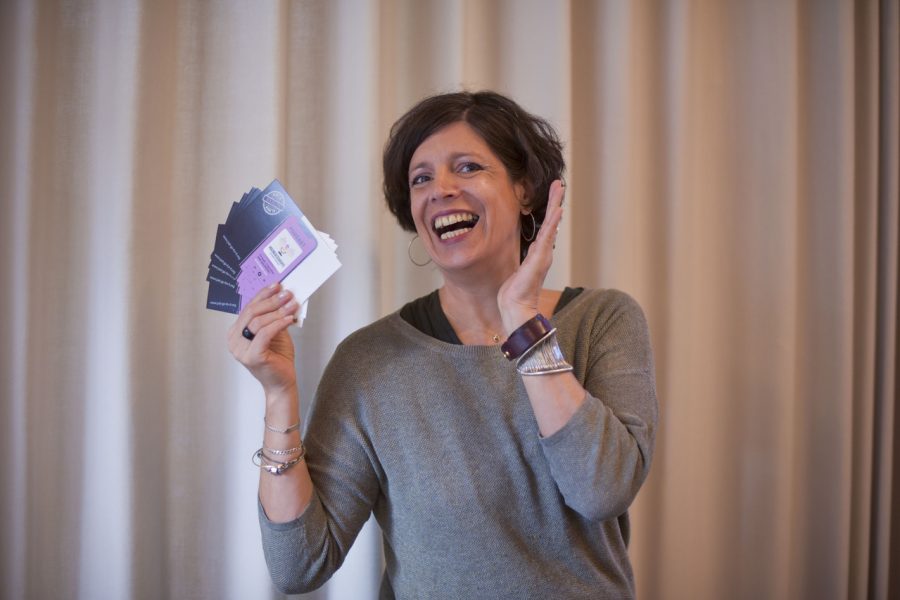
“The engine behind reshaping democracy has been young people and immigrants,” Audrey Tang – Taiwan’s Cyber Ambassador and first Digital Minister – told me. I was fortunate enough to meet Audrey at the Berlin Freedom Conference on 10 November. To tell you the truth: Audrey was the main reason I went. Ever since I read the book Plurality last year, I had been waiting for this chance.

We often say that Germany is one of the most developed democracies on the planet. But this is certainly not true when it comes to using technology for democratic processes. Taiwan, however, is a place we could learn from enormously – if we want to.

If you’re wondering, here are two concrete and fascinating examples, based on Audrey’s keynote:

Uber

“So ten years ago, when the ride-sharing app Uber came to Taiwan, it triggered intense conflict in various segments of our society. But we used Polis (pol.is), a bridging system, to map where people actually agreed, like a group selfie. And in just three weeks, we turned the conflict into policy options that everybody could live with. Not the left-wing, not the right-wing, the up-wing consensus. And today, that algorithm is already widely used around the world as community nodes.”

Deep fakes

Another example: What did Taiwan do against deepfake scams? Audrey explained:

“We sent 200 000 text messages to random numbers around Taiwan asking for a citizen’s assembly to deliberate the idea. So 447 people were randomly selected, representing the same demographics as the Taiwanese population, in rooms of ten, facilitated by an AI. We told each of those 45 rooms: ‘You have to come up with an idea that resonates with the other nine people in that video room in order for it to be considered’. One room said, ‘Let’s label all advertisements prominently until it’s digitally signed off by somebody’.  Another room said, ‘If somebody lost 7 million to an investment scam advertisement that’s not labelled, let’s make them fully liable, like Facebook’. 

So Facebook has to pay that 7 million dollars in damages if it runs unsigned advertisements. Very good idea. Another room noted that TikTok, at the time, did not have a Taiwan office – ‘For every day they ignore our rules, let’s slow down the connection to their video by 1%, but not censor them’. 

So basically, those ideas get woven together by a language model, a small language model, and at the end of the day everybody votes on it. So of those 447 people, more than 85%, regardless of demographics, agreed. The other 15% could live with it, and considered it quite legitimate. That was last March, and by May we passed the amendment on the Digital Signature Act. By July, we passed an anti-fraud law. And this year, these deep scams have disappeared. Advertisements intended for fraud is down by more than 90%.”

These examples show beautifully how 21st-century democracy can work – what co-creating structures means, how participation can evolve, and why elections alone are not the only element of a functioning democracy.

If you feel that we can learn a lot from Taiwan, then we are on the same page.

That’s why I was even more excited to hear Audrey’s “6-Pack of Care” – six simple principles:

  1. Listen to people – not only the powerful, but the small and overlooked.
  2. Keep promises – not vague ideas soon abandoned, but clear commitments with consequences.
  3. Check the process – not “just trust us lol,” but transparency and fast community feedback.
  4. Check the results – not useless metrics, but measures designed by and for the community.
  5. Aim for win-win – not mutually assured destruction, but solutions where all sides benefit.
  6. Be as local as possible – not one-size-fits-all, but a variety of solutions for a variety of communities.

Simple. Logical. Easy to remember. And deeply meaningful.

I love the profound optimism that Audrey carries. She once learned a difficult lesson about urgency, and since then she has documented everything she learns each day.

“If we publish perfection, it only invites applause. But imperfection invites participation. Our cracks open space for collaboration. As Leonard Cohen sang: ‘There’s a crack in everything — that’s how the light gets in.’ For democracies, that is key. We must publish our process, not just our final policy. Show the how and why — so people can see it — and turn critics into co-creators.”

Since Simon Sinek’s famous Golden Circle TED Talk, we always search for the why. And yet we often jump to the what. We give easy answers for why: for democracy, for our values… — all true.
But what really matters now is how we do things.
That is priority number one: changing how without needing to change why or what.

This is exactly what the 6-Pack of Care is about – and why it matters so much.
Author:

More From WahlheYmatPost

  • No True German — What It Means to Be German in 2026

    No True German — What It Means to Be German in 2026

    Is there really one German identity that defines all Germans? One German identity to rule them all? We’re going to get into this question, but bear with me for a few paragraphs. I want to take a moment up front to provide a little context, tell you where I’m coming from.  We’re going to dip…

  • Berlin Wiki: From Postal Voting to the Ballot Box 

    Berlin Wiki: From Postal Voting to the Ballot Box 

    How Does Postal Voting Work? In Germany, voters can choose to vote by post instead of going to a polling station on election day. Information on how to apply for postal voting can be found in the voter notification that eligible voters receive in the weeks before the election. Depending on the municipality, voter notifications…

  • From Peru to Berlin: Building Bridges Between Different Ways of Knowing 

    From Peru to Berlin: Building Bridges Between Different Ways of Knowing 

    Are degrees really the only measure of knowledge? Should humans focus on altering nature or adapting to it? Do international studies actually include perspectives from all around the world? Academic credentials, adapting nature to suit modern lifestyles and Eurocentric education are standards that are rarely questioned.  Marita Orbegoso Alvarez, Peruvian educator, community organizer and activist,…

  • Finding Trauma Instead of Belonging: A Review of I Keep My Shadow Light 

    Finding Trauma Instead of Belonging: A Review of I Keep My Shadow Light 

    TL;DR “I Keep My Shadow Light” is the self-published debut novel by Fionnuala Kavanagh. This challenging work follows a cast of four characters from different backgrounds as they try to find a home in Berlin. Very dark in places, the book gives us a chance to read something that would probably never come out of…

  • Migrants With Degrees Are Not What Germany Is Looking For

    Migrants With Degrees Are Not What Germany Is Looking For

    Education is a right, not a privilege. This idea has been a founding principle of modern democracies. In practice, however, access to education is far from guaranteed for everyone. As of this year, Germany has significantly restricted access to state-funded intermediate and advanced German courses for migrants participating voluntarily. Many rejected asylum seekers, people with…

  • Berlin Wiki: The Overlooked Election — BVV and Local Democratic Participation

    Berlin Wiki: The Overlooked Election — BVV and Local Democratic Participation

    How Does the BVV Election Work? On September 20, Berlin goes to the polls. On that day, the election to the House of Representatives (Abgeordnetenhaus) will take place, along with the elections to the District Council Assemblies (Bezirksverordnetenversammlungen, BVV). Berlin is divided into twelve districts, each of which elects its own District Council Assembly. This…

  • Berlin Wiki: Who Makes Decisions in the Districts?

    Berlin Wiki: Who Makes Decisions in the Districts?

    What Does a District Office Do? A Berlin district office (Bezirksamt) manages the administration of one of Berlin’s twelve districts and serves as the district’s political leadership. It consists of the district mayor and five district councillors (Bezirksstadträte), who are elected by the district assembly (Bezirksverordnetenversammlung, BVV). The district office implements adopted laws and policies.…

  • Berlin Wiki: How Berlin’s Government Works 

    Berlin Wiki: How Berlin’s Government Works 

    What Makes Berlin’s Governing Mayor Special? Whoever holds the office of Governing Mayor is both the head of government and the ceremonial head of the city of Berlin. The House of Representatives (Abgeordnetenhaus) votes on who will hold the position. There has even been a case in which someone won the election without being their…

  • Berlin Wiki: How Do the First and Second Vote Work? 

    Berlin Wiki: How Do the First and Second Vote Work? 

    What Does the First Vote Decide? The article looks at how voters elect candidates and parties in Bundestag elections and elections to the Berlin House of Representatives, and how seats in parliament are distributed through proportional representation. In Bundestag elections or elections to the House of Representatives, voters cast both a first vote and a…

  • Tempelhofer Feld: Berlin’s Most Emotional Urban Conflict Is Back 

    Tempelhofer Feld: Berlin’s Most Emotional Urban Conflict Is Back 

    We are approaching an election in September. Hopefully, you’re reading along in the Berlin Wiki to bone up on how stuff works in German elections, the lexicon, and the issues. Well, one of the issues we’re going to see debated concerns the Tempelhofer Feld. So let’s talk about that for a bit.  The other night,…

  • Berlin Wiki: Parties, Direct Mandates and the Five-Percent Threshold 

    Berlin Wiki: Parties, Direct Mandates and the Five-Percent Threshold 

    What Is a Political Party? A political party is an association of citizens regulated by the German Federal Party Law. Political parties aim to influence political decision-making at federal or state level over a longer period of time and may represent voters in state parliaments or in the Bundestag. First of all, a party needs…

  • Good Intentions Are Not Democratic Enough

    Good Intentions Are Not Democratic Enough

    “What you do for me, but without me, you do against me” — the exact origin of this quote is unclear. Nevertheless, it captures something that frequently happens in Germany when it comes to the political participation of historically excluded groups. Policies are supposedly made for migrants, yet not with them. Gender equality is debated…

  • What Happened When I Tried to Organize My Neighbors 

    What Happened When I Tried to Organize My Neighbors 

    There’s a lot of talk today about building community. At our March WahlheYmat Talk, the crowd brought up the subject, specifically that we should be creating more of it. Ideas flew around the room. We are living in an era of schism, where the people pulling the levers of power are trying to create an…

  • Berlin Wiki: Who Is Allowed to Vote – and Why Not Everyone Can

    Berlin Wiki: Who Is Allowed to Vote – and Why Not Everyone Can

    Who is allowed to vote, and who is not? In a democratic state like Germany, the right to vote is of central importance. It allows citizens to take part in political decision-making and help determine the composition of the government. In Germany, voters must meet certain requirements in order to vote. They must hold German…

  • Berlin Wiki: Party Profiles II – The Greens, The Left, the AfD and the BSW party

    Berlin Wiki: Party Profiles II – The Greens, The Left, the AfD and the BSW party

    What is the Green Party? Bündnis 90/Die Grünen is an important political force in the Berlin House of Representatives. Although the party has not been part of the government since the 2023 election, it operates from the opposition within parliament. Its guiding principle is ecological, economic, and social sustainability. It focuses on stronger climate protection,…

Address

Am Hamburger Bahnhof 3
10557 Berlin
Germany

hey@wahlheymat.de

Social Networks