
Stay: The New Migration Challenge Germany Can’t Ignore

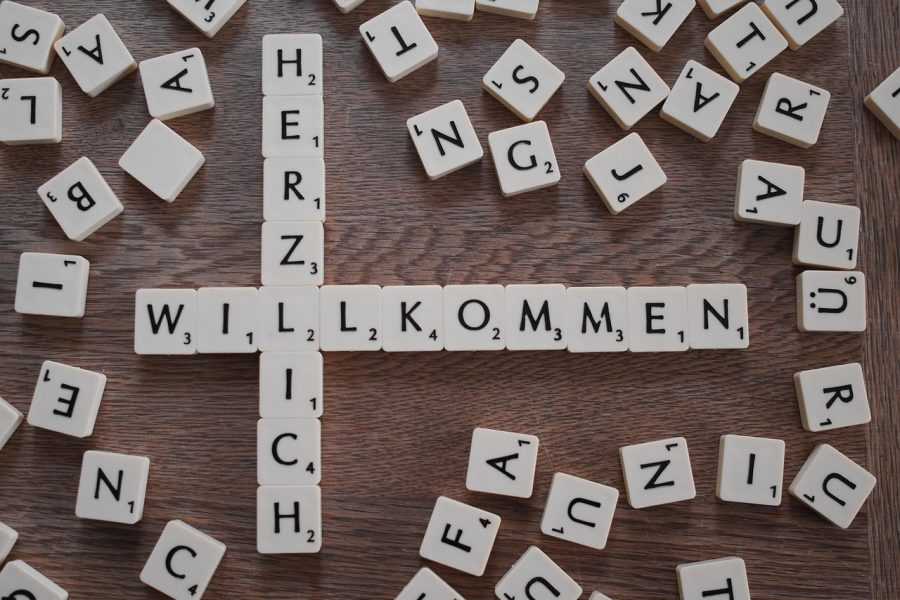
Willkommen
Germany urgently needs international talent — yet one in four newcomers is considering leaving again. In his latest reflection, Ivan Gabor argues that the real challenge isn’t only attracting workers, but building a society where they want to stay. He calls for a bold narrative shift: a Germany that integrates itself into an inclusive, collaborative, future-ready reality.

If nothing changes demographically, Germany will have 16 million fewer workers by 2060 than today. According to most projections, the country needs around 400,000 new workers every year from abroad.

We often hear this fact in the news, but what we hear much less about is how many international people leave Germany again—and this seems to be becoming a growing problem. A new study shows that one in four people who come from abroad considers leaving. The reasons vary — family, work, returning home — but every second person in this group thinks about leaving because of the political climate. And it’s not rocket science to guess why: people with a migration background who have no intention of leaving are particularly worried by words like “Remigration” or “Passdeutsch.”

In Germany, over 10 million people were born outside the country. The share of the population varies widely depending on the region. In Berlin or Bremen, it is around 30% (including those who obtained citizenship); in Saxony, about 8%. I spoke with someone from Saxony-Anhalt who told me: “You in Berlin can’t even imagine how strong the hostility towards migrants (‘Migrationsfeindlichkeit’) is in my region.”

So what can be done?

One response from the federal government was the creation of a new agency called Work and Stay, designed to bring people in and help them remain in the country.

A strong example from civil society is Workstadt in Wuppertal. They run a “stay” programme financed by companies. The average recruitment cost of one skilled worker is €27,000, which means a company that needs 100 workers a year spends close to €3 million just to bring people here. So if — statistically — one in four leaves again, this creates a massive loss. That is why companies in Wuppertal contribute a fee to fund Workstadt. Their work has not only social value but a very clear economic one.

In discussions with people across various levels, one thing becomes clear: we need a narrative shift in the field of migration. A new mindset about how we see society and the role of international people within it. To put it very clearly: not only immigrants need “integration” — the whole society needs to integrate, to adapt to a new, inclusive, collaborative reality. A society that runs on technology and AI. The question is how humans can get the most out of technology while remaining human – and how Germany can transform into an international society where everyone proudly keeps their cultural roots.

Inclusivity, digitalisation, humanity, local democracy, solidarity — these are the driving forces behind the most innovative societies in the world, from Taiwan to Finland. The key in such a transformation lies in decentralised networks and in building an innovative system that can feed and strengthen those networks.

We would love to hear your thoughts on this topic.
Write to us at heypost@wahlheymat.de
Author:

More From WahlheYmatPost

  • Stay: The New Migration Challenge Germany Can’t Ignore

    Stay: The New Migration Challenge Germany Can’t Ignore

    If nothing changes demographically, Germany will have 16 million fewer workers by 2060 than today. According to most projections, the country needs around 400,000 new workers every year from abroad. We often hear this fact in the news, but what we hear much less about is how many international people leave Germany again—and this seems…

  • “We Can’t Let Protection Become a Privilege”

    “We Can’t Let Protection Become a Privilege”

    WahlheYmatPost: Can you briefly introduce your organization? What is its main mission in Berlin? Vicky Germain: The Migrationsrat Berlin e.V. (Migration Council Berlin) is an umbrella organization of more than 90 BIPoC (Black, Indigenous, and People of Color) and/or migrant self-organizations and post-migrant groups in Berlin. Its central mission is to improve the social, political,…

  • Neustart Berlin: A Fresh Start Without Everyone in the Room

    Neustart Berlin: A Fresh Start Without Everyone in the Room

    Berliner Morgenpost — together with Tagesspiegel, EUREF Campus, and radioeins — launched a strong new initiative: Neustart Berlin. Everyone was invited to submit an ongoing project that could revitalize Berlin and give the city a fresh start for the 21st century and beyond. More than 70 initiatives applied; a jury selected eight of them to…

  • Berlin, Hold My Book: Why Physical Still Beats Digital

    Berlin, Hold My Book: Why Physical Still Beats Digital

    Ok. This is going to sound like a typical “back in my day” kind of old man rant. But hear me out, because I’m not talking about a world swallowed by time. Despite claims to the contrary, Berlin is still full of places that offer a key to a door that still stands today: a…

  • Remembering as Resistance – How AKEBI Confronts Racism in Berlin

    Remembering as Resistance – How AKEBI Confronts Racism in Berlin

    WahlheYmatPost: Can you briefly introduce your organization? What is its main mission in Berlin? Erkin Erdoğan: AKEBI e.V. is a Berlin-based non-profit association, founded by migrants from Turkey in 2014. The name “AKEBI” is the acronym of “Association of Activists Against Racism, Nationalism, and Discrimination” from the Turkish language. We had a preceding anti-racist network…

  • The Berlin Lesson: Trust People, Not Bureaucracies

    The Berlin Lesson: Trust People, Not Bureaucracies

    I was reading Walter’s article about volunteering, and made me think deeply. I come from a society where volunteering was never a tradition. The imperative was: everyone takes care of themselves. If someone works unpaid, they are considered a loser or being taken advantage of. Applying to university never required any kind of volunteer experience,…

  • How Audrey Tang Is Rebooting Democracy — and What Berlin Can Learn from Taiwan

    How Audrey Tang Is Rebooting Democracy — and What Berlin Can Learn from Taiwan

    “The engine behind reshaping democracy has been young people and immigrants,” Audrey Tang – Taiwan’s Cyber Ambassador and first Digital Minister – told me. I was fortunate enough to meet Audrey at the Berlin Freedom Conference on 10 November. To tell you the truth: Audrey was the main reason I went. Ever since I read…

  • From Glitter to Growth: How Taylor Coburn Found Her Shine in Berlin

    From Glitter to Growth: How Taylor Coburn Found Her Shine in Berlin

    I had the pleasure of sitting down with an immigrant change-maker who encourages fellow immigrants from all walks of life to build their lives here in Berlin, instead of just scraping by and letting social norms, visas, or rules rob them of their ability to thrive.  Taylor Coburn is involved in many projects around the…

  • The Power of Ehrenamt: Finding Connection Through Volunteering in Berlin

    The Power of Ehrenamt: Finding Connection Through Volunteering in Berlin

    The news is grim these days. Everywhere we look things are going off the rails. The cost of living, and the political maneuverings… everything seems like too much, too soon, and too fast. And it’s easy to give in to the atomization of 21st century life; we are millions of people living alone. Alone in…

  • Giving Voice to Eastern European Migrants: The Polnischer Sozialrat’s Work for Equality

    Giving Voice to Eastern European Migrants: The Polnischer Sozialrat’s Work for Equality

    WHP: Can you briefly introduce your organization? What is its main task in Berlin? Dr. Kamila Schöll-Mazurek: The Polnischer Sozialrat (Polish Social Council – PSR) is one of the oldest Polish migrant organizations in Germany. Since our founding in 1982, we have advocated for the social participation and equal rights of Polish people in Berlin.…

  • Six Pictures from the Future — A Glimpse into Tomorrow’s Berlin

    Six Pictures from the Future — A Glimpse into Tomorrow’s Berlin

    For a campaign, you need many elements — but everything starts with funding. That’s why we first want to give enormous thanks to the supporters of WahlheYmatPost, to everyone who believes in what we do and why we do it: the Welcome Alliance Fund by ProjectTogether and the Bundesministerium des Inneren. And a heartfelt thank-you…

  • “Berlin Modern” — Is This the Modern Berlin?

    “Berlin Modern” — Is This the Modern Berlin?

    Last weekend, I had the chance to see inside Berlin’s newest museum: Berlin Modern.The visit made me think about how we imagine the future Berlin. If you’ve walked near the Kulturforum, between the Neue Nationalgalerie and the Philharmonie, you’ve surely noticed that enormous construction site. That is where Berlin Modern is rising — a new…

  • Welcome to the Club: How Vereine Can Turn Berlin from a City of Strangers into a Home

    Welcome to the Club: How Vereine Can Turn Berlin from a City of Strangers into a Home

    In 2000 Robert D. Putnam published a book, “Bowling Alone”, in which he argued that Americans were becoming increasingly isolated and removed from community and social capital. He took the institution of the Bowling League as his prime example. I remember when the book came out – though, admittedly, I never got around to reading…

  • “Civil Courage Begins in Everyday Life – and Ends Where We Look Away” – Diana Henniges on 12 Years of Moabit hilft

    “Civil Courage Begins in Everyday Life – and Ends Where We Look Away” – Diana Henniges on 12 Years of Moabit hilft

    WHP: Can you briefly introduce your organization? What is its main mission in Berlin? Diana Henniges: Moabit hilft e.V. is an independent, civil society association that emerged in 2013 from a spontaneous neighborhood initiative. We support people in urgent need – whether they are refugees, have a migration background, or need help for entirely different…

  • Bürgerbeteiligung: Participation or Paperwork?

    Bürgerbeteiligung: Participation or Paperwork?

    Berlin invites its citizens to participate — but only after the decisions are made. A visit to the Bürgerbeteiligungsbüro: where good intentions meet German bureaucracy. I was so happy when I first discovered the Bürgerbeteiligungsbüro. Yes! Finally, a place for participation! It took me quite some time, though, to understand what this institution is actually…

Address

Am Hamburger Bahnhof 3
10557 Berlin
Germany

hey@wahlheymat.de

Social Networks