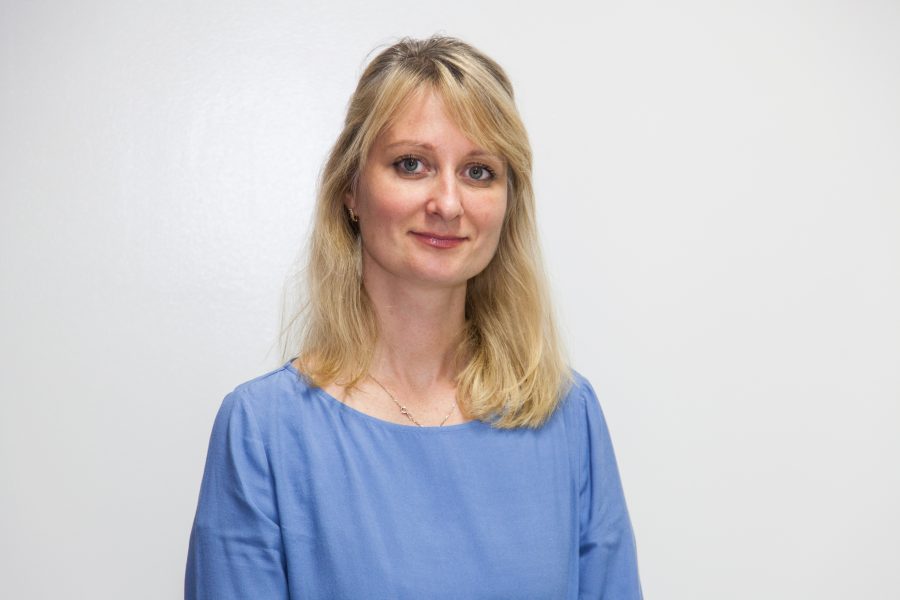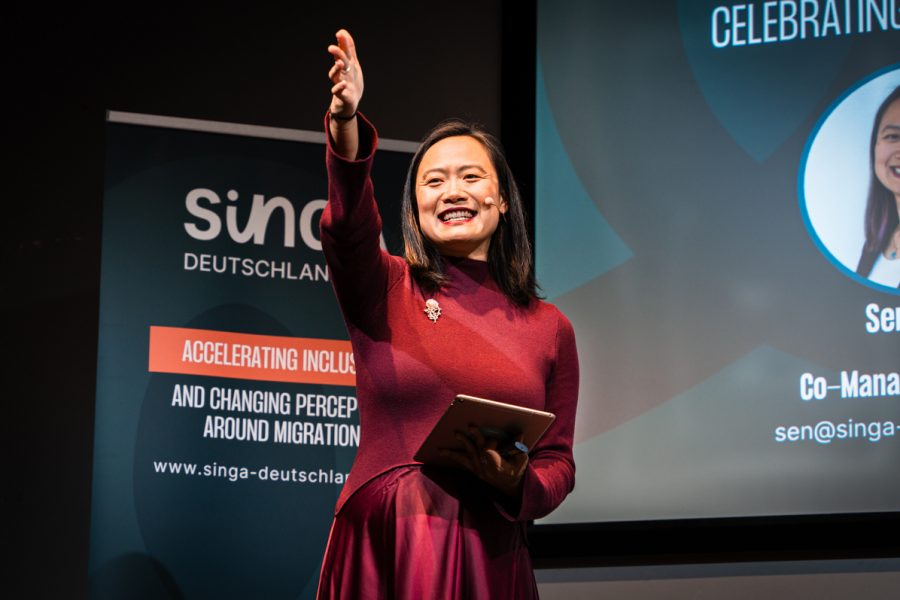


I set out to conduct my first-ever interview for WahlheYmatPost on a grey and rainy Friday afternoon in Charlottenburg. The founder of WahlheYmat e.V., Ivan Gabor, mentioned meeting a man named Jaybo, a Frenchman living in the heart of Kreuzberg who is positively impacting his community. I happily took the opportunity to try out being a journalist and go get my story.
It was a typical grey November day, and I had been to Kreuzberg a million times in the past decade, never being aware of this café.
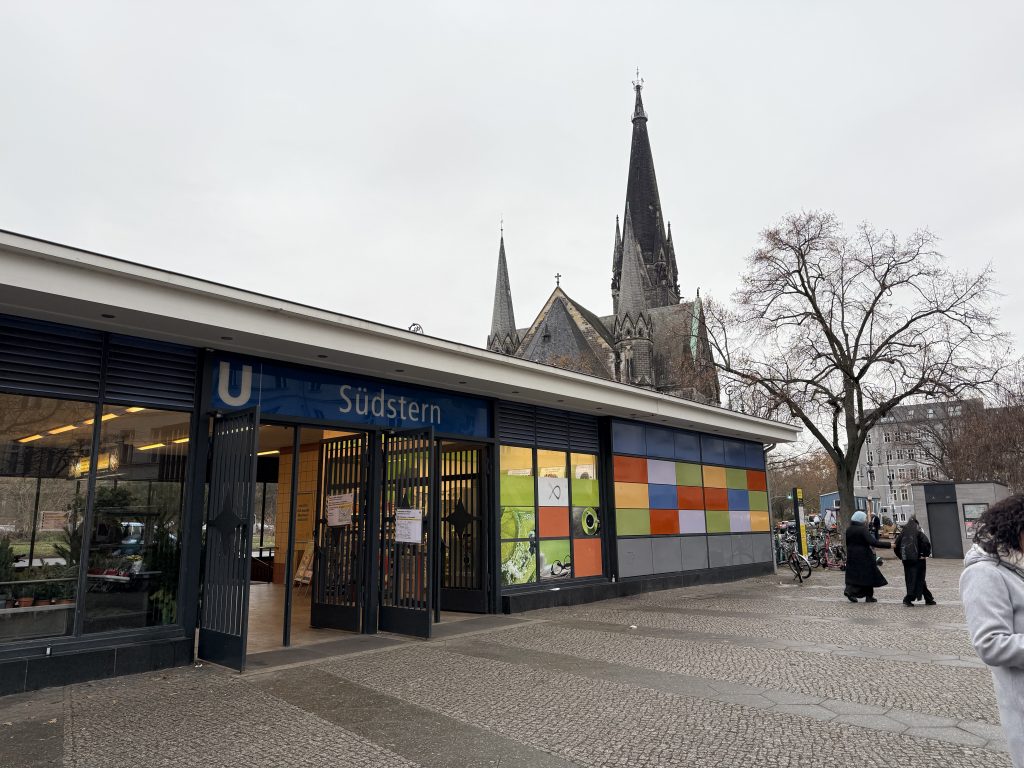
As I stepped through the cozy doors of Jaybo’s café, “Monsieur Ibrahim”, I quickly realized this would be no ordinary experience. It was one I would have to approach intentionally with curiosity and respect for a man’s life journey.
Slowly, as we conversed, I began to see Kreuzberg in a way I never had before.
I was a bit nervous…would my plan to just use the voice recorder app on my iPhone actually work? Would I be able to capture the story in a way that would serve the mission of WahlheYmatPost and also my own goal of mobilizing immigrant citizens to create our shared home of Berlin?
I took a deep breath and decided none of that mattered in that moment. Instead, I told myself, “We lead with presence and curiosity now, and receive whatever comes…”
And the returns were nothing short of spectacular. I got to hear Jaybo’s life story and catch a glimpse of what might be possible if I continued on my current path. Jaybo’s experiences and insights were very similar to my own – the only difference was they were coming from decades of lived experience, trial and error, and, most importantly, through relentless courage, service, and perseverance.
A Runaway’s Journey to Berlin
Born in Paris but raised in the south of France, Jaybo left home at the age of fourteen.
“I’m always looking forward, never looking back.” His travels took him to places as far-flung as Sweden and South Africa. Around 1984, after falling in love with a Berliner woman, he arrived in Berlin — still years before the Wall came down.
Though his Berliner love ultimately and heartbreakingly left him for California, Jaybo stayed – initially because of issues with his identity papers, complicated by a clash with a right-leaning French consulate official. “I washed my pants and the [ID card] was in there and you couldn’t recognize anything no more,” he explained with a slight smile.
In his early 20s and alone in Berlin, he used the skills he had learned surviving in France – street theater, improvisation, and collecting money with a hat – to earn a living. “I was walking and tried to make a connection with [people]. And all the people on the terrace were laughing. And after that I come and I get my money.”
Eventually, this street performance led to a successful theatrical piece called “Bureau Bureau” (Office, Office) that he created and put on with a friend from Toulouse named Jean Verdier. “We couldn’t speak a word of German at that point. We just used onomatopoeia,” he laughed. “It was burlesque. It was Jerry Lewis meets Harold Lloyd. And the people loved it. They were coming by bus to see it.”
As I listened to Jaybo walk me through his life, I realized he was someone who truly lived what he was talking about. A recurring theme I noticed was that no matter what your circumstances, it’s ultimately YOU who can apply yourself in ways to form and shape what you get out of each experience – and that’s what really makes the difference when it comes to changing the world around you.
The Privilege of Self-Education
Jaybo never completed formal schooling. He proudly told me that “life became [his] school” and that he always learned by doing. His motivation comes from a desire to learn and succeed, often pushing himself to master a skill “to 170%,” before moving on to the next venture…
“When I learn something, I learn it to 170%. I will be there till I’m satisfied. And when I’m satisfied, then I change the plot,” he explained. “So I did so many jobs just because I love to learn.”
His continuous reinvention led him to found a skate company called Iriedaily with Daniel Luger, Walt Molt, and Rolle Wagner. It also let him to run a bar called Zoulou Bar, and publish a lifestyle magazine together with his now wife Cathy Boom and Christian Tjaben. “After the Wall fell and all the techno scene came, I was working behind bars. I was doing a magazine with my wife. I joined a skate company. I had a bar. I had so many things.”
He sees the ability to choose what to learn – rather than being dictated by a societal program – as a profound privilege. When I asked him to explain what he meant by privilege, he simply said: “To be free to learn, not to get what they give you.”
His take on choice as a privilege really struck me because I never saw the natural human ability to choose as a privilege – rather, as a resource we all have and all equally can tap into to make our life one that reflects our truth.
“For me, choice is a privilege. There are so many people, they don’t have a choice… And a privilege in education is enormous.”
I was reminded that people are born into very different circumstances, and so, indeed, choice is a privilege – yet it is one that we can all step into. Jaybo’s example shows this clearly: he recognized it early on and used it as a form of education outside conventional structures.
“I could choose what I wanted to learn. That’s the big difference in the education system. Suddenly you don’t have to listen to the program that they give you. Suddenly choose what you want to do.”
What I was hearing from him was that even in the worst circumstances, there is always a way to change your perspective and use the situation to learn how to move differently and shift your experience.
Monsieur Ibrahim: From Art Burnout to a Sanctuary For All
After a career as a painter and graphic designer, Jaybo experienced a “burnout,” rooted in disappointment with the ego and greed he saw in the art world…
“I’ve been disappointed about humanity in relation to the art that I did. Not about my success or money, because I had that. But about the greediness of people to do with culture. It’s always the ego. I’m very against ego.”
He began working on sculpting, video work, and most recently writing for film during the isolation of the pandemic. None of his storyboards that he tried to re-create himself with during the pandemic have been filmed until now.
His most recent pivot came when the owner of his local café, “Monsieur Ibrahim,” was struggling. Jaybo offered to buy the shop, while ensuring the original owner kept his job. “He said, ‘I can’t do it. I’m like, I’m losing everything.’ I said, okay, before you sell that to somebody else, sell that to me. And I’ll buy you with me. So you got a job and then we continue.”
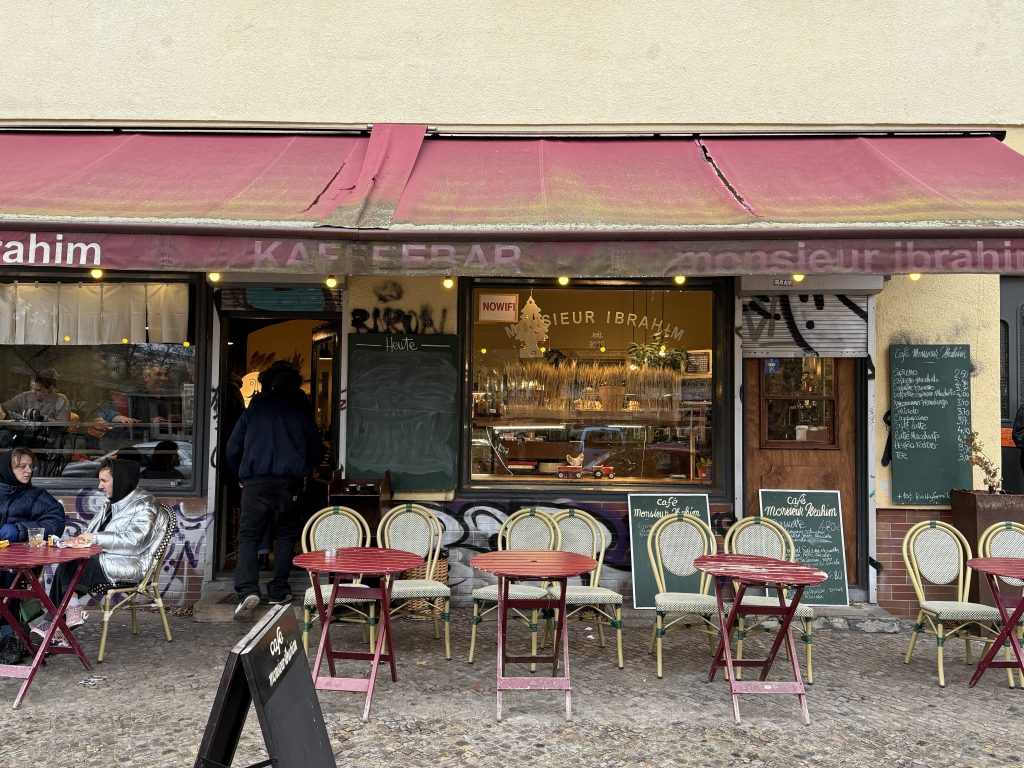
Once again applying his 170% learning philosophy, and together with the help of Anatole and Ibrahim Ége he taught himself how to bake and became a pâtissier. “I suddenly became Monsieur Ibrahim. And I became a pâtissier and I did pastry. I’d never done pastry before. So I learned pastry by doing it,” he said, the pride evident in his voice.
During the pandemic, this decision saved the business by transforming the café into a bakery for the locals. “We were about to close. So I saved the shop with the baking because people came out and we were a bakery.”
Now, the café is more than just a place for pastries; it’s a creative hub. Jaybo sees the space as a place for the community to have fun with culture – writers, musicians, comedians, and actors. “There’s a lot of students. They are french actors, they are musicians, they are writers. They do everything, but they have fun. It seems like culture is a place to have fun, not work.”
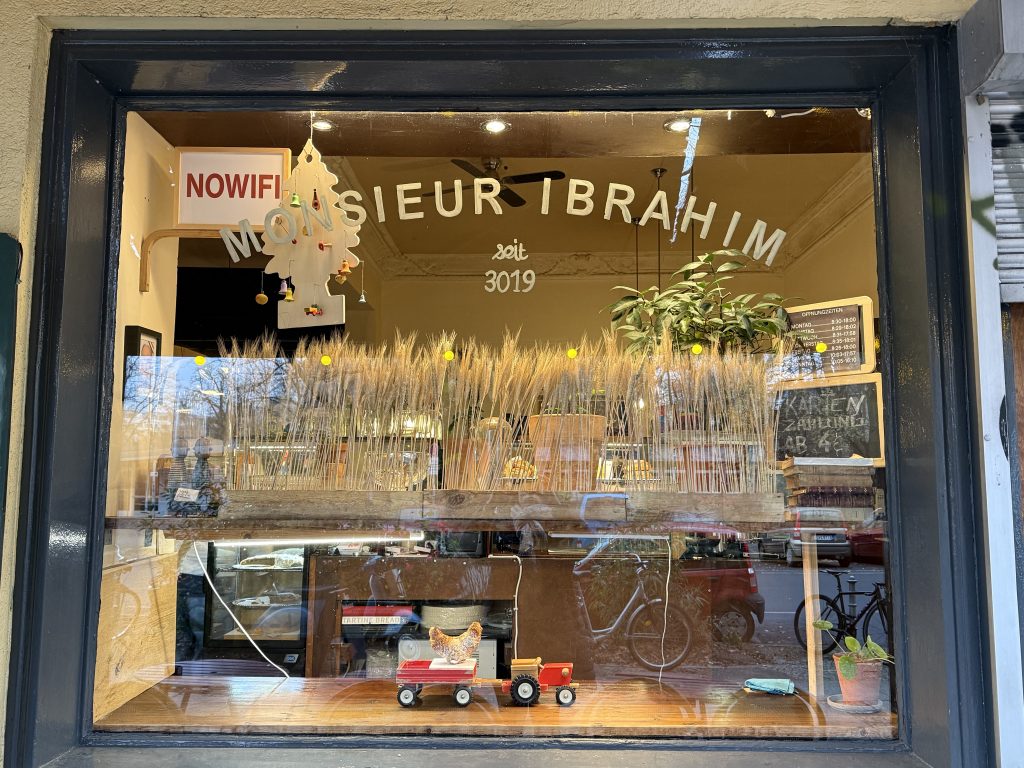
He opens the door to anyone who is “true” and “genuine,” operating on instinct “like a dog” to recognize people who contribute authentically. “I’m like a dog. I know exactly if this person is good enough. And then not good in quality, but good as a person and genuine.”
When I asked what he’d done to create this atmosphere, he replied: “Every time, I know how to deal with choices. I know how to deal with decisions. This guy comes, I feel that’s good. It’s just a thing. I know it’s good. I don’t know what the guy is, I don’t know what he’s talking about, I don’t know whatever. But it happens.”
He shared the story of an Indian man named Aymen who kept coming back, asking for work. “We never said no. So because we didn’t say no, he always came back till there was a sapce for him and he still works for us now.”
“Please leave all your trouble outside and just come here and rest. This is what we want you to do.”
Jaybo views the café as a sanctuary (as I had suggested), where people can find refuge from their struggles and anxiety, calling it “like ibuprofen” for the mind. “We have a lot of young people coming. They are students, or whatever. We don’t have WiFi. But they still come here and work.”
“Here you have rest,” he emphasized. “And that’s magical. People stop to think for an hour.”
In a city where many struggle with anxiety and the weight of daily life, this simple offering of space to breathe becomes radical. It’s not therapy, not a program – just human connection and a genuine welcome.
The Morning Novel: An Alternative to Bad News
Jaybo’s latest venture inside the café is a publishing company for short nouvelles (novellas) meant to be read in under 20 minutes. He aims to give people “a coffee, a croissant, and a novel to read” in the morning, offering a positive alternative to consuming “bad news.”
“Every time on Monday morning the people come here, they have like one or two days free. The first thing they do here is run to the newspaper to see what Trump said. I said, man, you forget one thing. Very important. You are here to live, you know, you are not here to wait for what he said.”
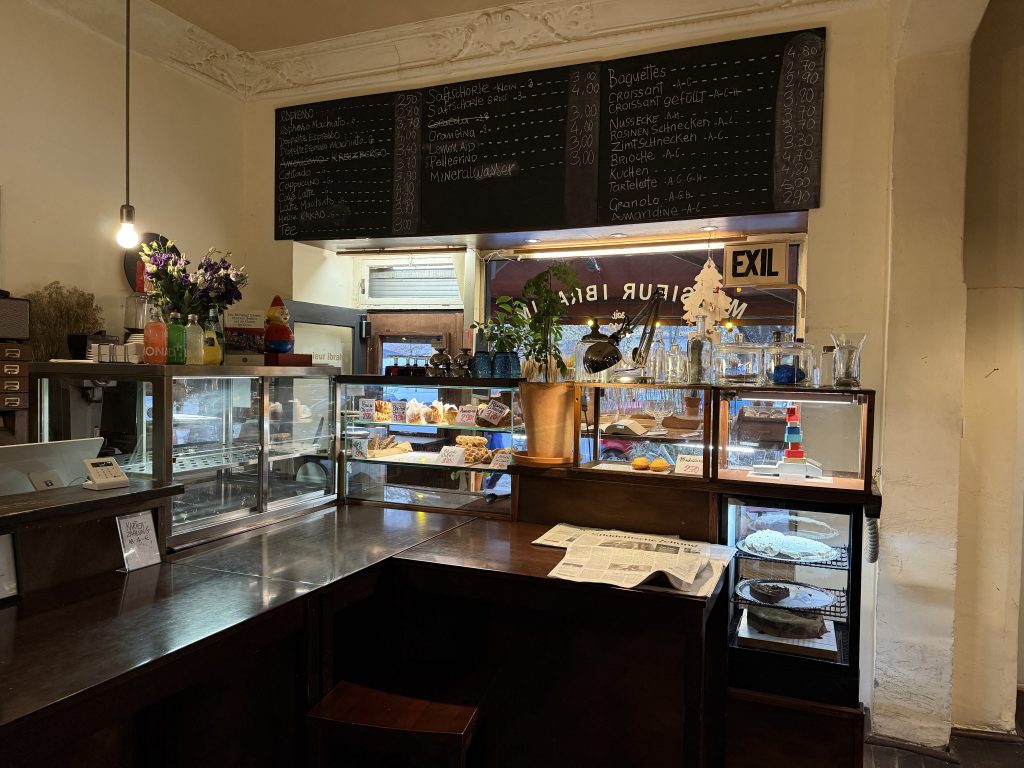
His solution is elegant: “What about writing a story? Just read that and then they read something. ‘Oh, it’s fun’ or ‘it’s so beautiful’ or ‘Oh, I didn’t see it like this.’ The brain is working and it’s the best moment, it’s the morning. Change the thing, change the material, change the narrative.”
I was delighted. I found that this perspective cut through to something essential. We spend so much time consuming information about a world we feel powerless to change, when we could be engaging with the life right in front of us.
Jaybo’s solution isn’t to ignore the world, but to start the day with something that nourishes rather than drains.
Driftwood Philosophy: Moving to Find Your Center
When I asked Jaybo how he sees himself, he returned again and again to the metaphor of driftwood. “I like to refer to myself as driftwood. You know, the wood comes, and then stays there for a while till the next wind comes. I’m always acclimating myself to where I am. I’m very good at that.”
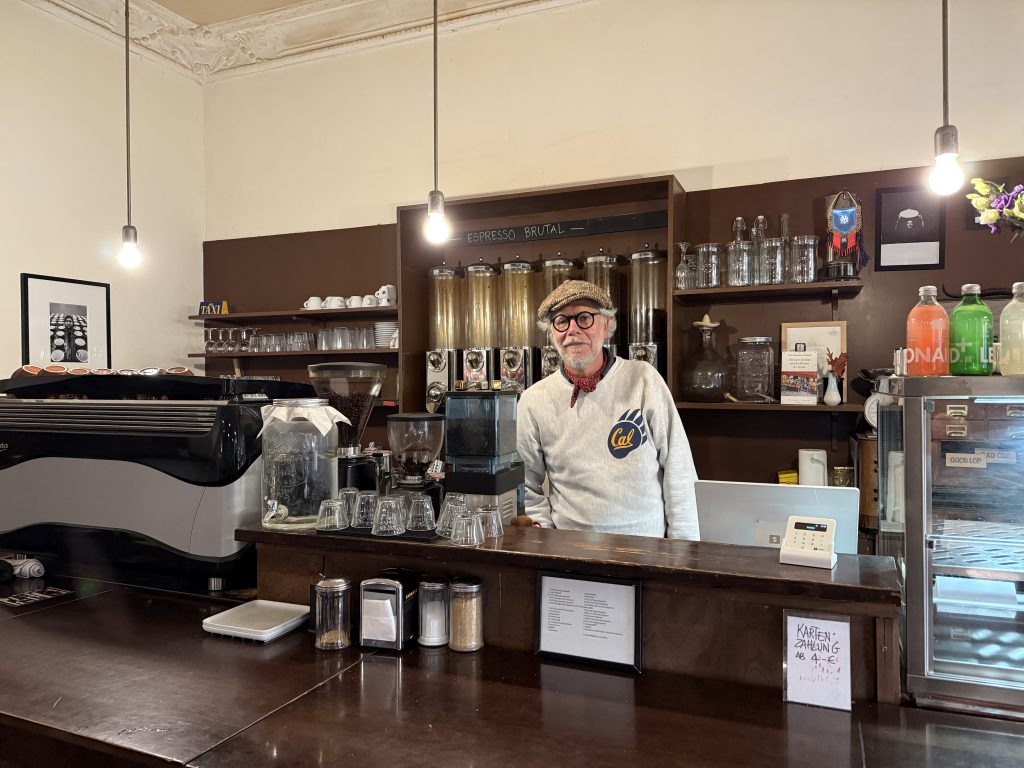
This philosophy emerged from his childhood with dogs, who taught him everything about survival. “I’m like a dog. I’m really close to that because dogs know a lot of things. They are not metaphysical, but dogs know. And dogs know the feelings of people, react to smells or whatever. And I’m in that kind of system too. I’m an animal like anyone else.”
He spoke about growing up with six dogs. “I was living with them. I reacted with them. I was completely like them. And I learned everything… survival… I learned from them.”
Growing up with dogs,Jaybo learned that dogs know things without being metaphysical – they operate on instinct, on truth. This became his way of navigating the world: trusting his gut to recognize genuine people and situations, moving when it’s time to move, staying when it’s time to stay…like a piece of driftwood.
“For me, dogs are better than humans,” he said simply. “That’s the base of something. When you feel nature, you have to be in nature. You also have to be nature. You can’t talk about nature. You have to be nature.”
His philosophy extends to a profound sense of interconnection. “For me, I’m part of you as you are part of me, same as I am the universe. I don’t think any other way. I’m completely feeling a volcano when it’s going up, as well as the joy of two people who love each other. It’s the same level.”
When I asked if this was philosophical or spiritual, he was quick to correct: “Philosophical. I don’t want to go on meta things. I feel it really pragmatically.”
Looking forward, his next “drift” is to Sicily, where he purchased land and houses with his wife, Cathy to close his life’s circle: from the farm to the farm.”My next drift to experience was going to Sicily and to find a piece of land. And now I have a piece of land. I have a house on it. I have two houses on it. And I’m going back to the farm.”
He plans to use his atelier there as a retreat to help people recovering from burnout. “I have a beautiful atelier which is really zen. And then I’m trying to help people there to come when they are in burnout to fix them up.”
After forty years in Berlin, Jaybo considers the chapter “completed,” and is preparing to move to Sicily full-time. “I’ve been more in Berlin than I’ve ever been in France,” he reflected.
Jaybo’s Message to Berliners: Little Changes Create Big Impact
Throughout our conversation, Jaybo kept returning to a simple principle: only the little changes you make will actually make a difference. Not the big political movements, not the laws, not the grand gestures… just the small, daily choices to help, to create, to show up. This was very evident in all of his stories about the small steps he made to learn about himself which in turn allowed him to show up for his community in meaningful ways
“It’s not the big change, it’s not the law, it’s not the war. It’s just a little change. If you change, you will change somebody else too. But the change has to be made by you.”
He illustrated this with the image of pushing someone’s wheelchair without being asked.
“People with wheelchairs have to roll themselves. And nobody comes up with the idea to say to somebody, can I push you till the corner? Because I’m going on the road. Where are you going? I can push you there. That’s all. You can talk about the weather. It’s nothing. It costs nothing.”
“I did that here in the Körtestraße. I’m famous for that,” he said with a grin. “The people rolling, I take them with me. ‘Where are you going?’ ‘To Edeka.’ ‘Oh yeah, then I’ll take you to Edeka.’ You go in there, ‘Hey, ciao.’ Nothing. You talk about how you’re doing today.”
These small acts of horizontal – person-to person – connection. Treating everyone as equals and helping without expectation are what build community. They’re what transformed his café from a struggling business into a sanctuary…
“I’m very horizontal,” he explained. “I think that everyone has the same chances. There is no difference. Whatever you are, you are part of me. So I can’t be against you. I can’t be upset about you, because you are like a prickle which is itching me, but nothing else.”
When I reflected on how he saved the café by simply learning to bake, he acknowledged the reality: “I’ve been very lucky with money, so I had… it’s easy to talk like I do, but you need money for that.” But then he added: “I’ve been to Africa. I’ve been to Bangladesh. There’s people with no money. And I know that it’s like this, but they still have something that we don’t have.”
“They have a fire, and this fire is the most important. You have to burn…”
As I left Monsieur Ibrahim that grey November afternoon, I carried with me more than just an interview. I had living proof that one person, moving through life with intention and openness, creates ripples that become waves. Those forty years of small, genuine choices build something that feels like home…not just for yourself, but for everyone who walks through your door.
The driftwood goes where the wind takes it, but it makes its mark wherever it lands.