
35 Years of Integration Work: CLUB DIALOG and the Power of Community Networks

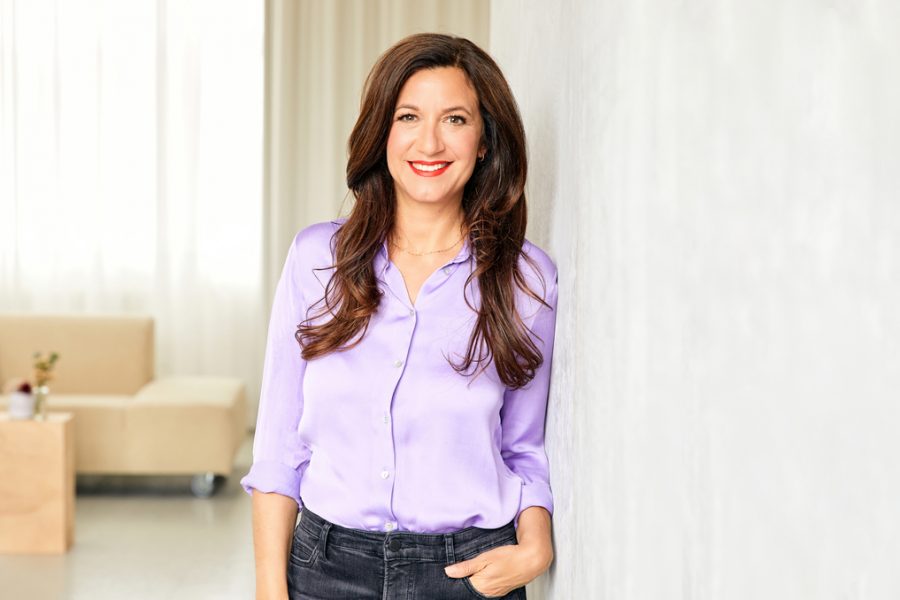
Natalia Roesler
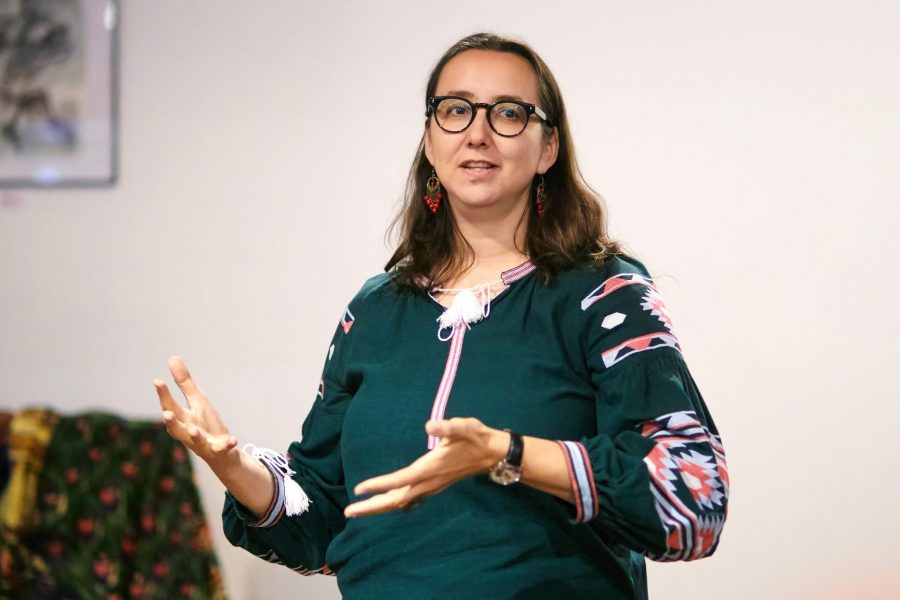
Successful integration in Berlin depends on long-term community work and strong migrant-led networks – says Dr. Natalia Roesler, Managing Director of CLUB DIALOG e.V. She talks about the persistent challenges faced by people with migration backgrounds in Berlin and the organisation’s decades-long work with Russian-speaking and Eastern European communities. An interview.

Can you briefly introduce your initiative? What is its main task in Berlin?

CLUB DIALOG e.V. is a migrant organisation that was founded in Berlin in 1988 to stimulate social dialogue between Russian-speaking migrants and local Berliners, as well as to promote the integration of immigrants. Over the course of more than three and a half decades, Club Dialog has developed a structure that enables comprehensive transnational integration and educational work in multiple languages and for all generations.

Our primary target groups are people who have come to Berlin from Eastern Europe, the Baltic states, and Central Asia. However, in some projects we also work with people from other countries. In one important project – “TEAM für Berlin” – we also work with organisations and initiatives of people with a history of migration, with the aim of professionalising and empowering them.

What personally motivated you to get involved here?

Here, as in social work in general, you get the sense that you are doing something truly meaningful and helping people. You receive plenty of feedback, and there are no rigid routines – every day brings new tasks.

What challenges do people with a migration background face in Berlin – and how does your organisation deal with them?

We are quite an old organisation, and yet our tasks have remained largely the same – it is really surprising that when I sometimes read our old funding applications or project descriptions, they are still relevant today. These are always the same challenges people face when moving to a new country: language cannot be learned quickly, children need to be integrated into schools, people want to preserve and pass on their own culture and language, they want to find work, qualifications are not recognised, many experience discrimination, and so on.

We try to find answers to these challenges by initiating different projects that address different needs: for children, seniors, women, job seekers, people seeking education, and so on. We also build and maintain networks that help our target groups help themselves.

Is there a project, event, or initiative coming up that you would like to recommend to our readers?

Many of our individual projects will be organising events soon; all of them can be found on our website under “Programm” I would particularly like to highlight the programme of the TEAM project (to be published shortly) – it is intended as support for smaller initiatives and organisations.

How can interested people support your work or get involved themselves?

There are many ways to do so. People can volunteer with us – for example, by supporting people from Ukraine (project “Patenschaften”), or by working with refugees in accommodation centres (project “Need for Deed”), or by getting involved in one of our other projects (all listed here). In addition, it is also possible to complete a Voluntary Social Year or a Federal Volunteer Service with us.

CLUB DIALOG e.V. ist eine Berliner Migrant*innenorganisation, die 1988 gegründet wurde, um den gesellschaftlichen Dialog zwischen russischsprachigen Zugewanderten und der Berliner Stadtgesellschaft zu fördern. Kernaufgabe des Vereins ist es, Integration durch Bildung, Begegnung und Empowerment zu stärken.
Seit über 35 Jahren arbeitet CLUB DIALOG generationenübergreifend und mehrsprachig mit Menschen aus Osteuropa, dem Baltikum und Zentralasien, aber auch mit anderen Communities. Neben klassischer Integrations- und Bildungsarbeit unterstützt der Verein mit Projekten wie „TEAM für Berlin“ gezielt Initiativen von Menschen mit Einwanderungsgeschichte dabei, sich zu professionalisieren, zu vernetzen und nachhaltig wirksam zu werden.

Author:

More From WahlheYmatPost

  • 35 Years of Integration Work: CLUB DIALOG and the Power of Community Networks

    35 Years of Integration Work: CLUB DIALOG and the Power of Community Networks

    Can you briefly introduce your initiative? What is its main task in Berlin? CLUB DIALOG e.V. is a migrant organisation that was founded in Berlin in 1988 to stimulate social dialogue between Russian-speaking migrants and local Berliners, as well as to promote the integration of immigrants. Over the course of more than three and a…

  • Nebenkostenabrechnung: The Reckoning No One Explains

    Nebenkostenabrechnung: The Reckoning No One Explains

    TL;DR If you’re in Germany, be ready for big costs at the end of the year. You should also always have a savings pool to deal with random, crazy, unexpected bills that might show up. They tend to do that as the year ends.   We just had another Christmas in Germany. And wasn’t it magical,…

  • Rising Ukrainian Engagement Powers Berlin’s Civic Scene

    Rising Ukrainian Engagement Powers Berlin’s Civic Scene

    WHP: Can you briefly introduce your initiative? What is its main mission in Berlin? Tetyana Lavuta: Svoji.de is an online platform that increases the visibility of Ukrainian civic initiatives in Berlin and Brandenburg and supports their networking with other migrant communities. The name evokes a sense of belonging and safety: the Ukrainian word “svoji” (written…

  • Newcomers Are Not a Problem to Solve: How SINGA Deutschland Builds Participation

    Newcomers Are Not a Problem to Solve: How SINGA Deutschland Builds Participation

    WHP: Could you briefly introduce SINGA Deutschland? What is its main mission in Berlin? Sen Zhan: SINGA Deutschland was founded in 2016 by a brilliant team of three co-founders — Luisa Seiler, Sima Gatea, and Vinzenz Himmighofen — as a humanitarian response at a moment when many newcomers were arriving in Germany. From the beginning,…

  • Papers, please! — How I Turned a 90-Day Visa into a Home in Berlin

    Papers, please! — How I Turned a 90-Day Visa into a Home in Berlin

    When you’re trying to set up your life in Berlin, visas are one of the first things you need to get in order. Unless you’re an EU citizen, you can’t live and work in Germany without one. Simple as that! But there are a whole bunch of different visa options. Should you try for the…

  • Berlin’s Rental Maze: What an American Learns When the Landlord Plays Games

    Berlin’s Rental Maze: What an American Learns When the Landlord Plays Games

    If you moved to Berlin from another European country, then you probably already know how many protections renters have here. My German friends hate it when I go on about how awful the US is – especially the low-level injustice and exploitative chicanery – but as a renter, you have essentially no rights in the…

  • Monsieur Ibrahim’s Magic in Kreuzberg: From Runaway to Community Maker

    Monsieur Ibrahim’s Magic in Kreuzberg: From Runaway to Community Maker

    I set out to conduct my first-ever interview for WahlheYmatPost on a grey and rainy Friday afternoon in Charlottenburg. The founder of WahlheYmat e.V., Ivan Gabor, mentioned meeting a man named Jaybo, a Frenchman living in the heart of Kreuzberg who is positively impacting his community. I happily took the opportunity to try out being…

  • Stay: The New Migration Challenge Germany Can’t Ignore

    Stay: The New Migration Challenge Germany Can’t Ignore

    If nothing changes demographically, Germany will have 16 million fewer workers by 2060 than today. According to most projections, the country needs around 400,000 new workers every year from abroad. We often hear this fact in the news, but what we hear much less about is how many international people leave Germany again—and this seems…

  • Berlin, Hold My Book: Why Physical Still Beats Digital

    Berlin, Hold My Book: Why Physical Still Beats Digital

    Ok. This is going to sound like a typical “back in my day” kind of old man rant. But hear me out, because I’m not talking about a world swallowed by time. Despite claims to the contrary, Berlin is still full of places that offer a key to a door that still stands today: a…

  • Remembering as Resistance – How AKEBI Confronts Racism in Berlin

    Remembering as Resistance – How AKEBI Confronts Racism in Berlin

    WahlheYmatPost: Can you briefly introduce your organization? What is its main mission in Berlin? Erkin Erdoğan: AKEBI e.V. is a Berlin-based non-profit association, founded by migrants from Turkey in 2014. The name “AKEBI” is the acronym of “Association of Activists Against Racism, Nationalism, and Discrimination” from the Turkish language. We had a preceding anti-racist network…

  • From Glitter to Growth: How Taylor Coburn Found Her Shine in Berlin

    From Glitter to Growth: How Taylor Coburn Found Her Shine in Berlin

    I had the pleasure of sitting down with an immigrant change-maker who encourages fellow immigrants from all walks of life to build their lives here in Berlin, instead of just scraping by and letting social norms, visas, or rules rob them of their ability to thrive.  Taylor Coburn is involved in many projects around the…

  • Giving Voice to Eastern European Migrants: The Polnischer Sozialrat’s Work for Equality

    Giving Voice to Eastern European Migrants: The Polnischer Sozialrat’s Work for Equality

    WHP: Can you briefly introduce your organization? What is its main task in Berlin? Dr. Kamila Schöll-Mazurek: The Polnischer Sozialrat (Polish Social Council – PSR) is one of the oldest Polish migrant organizations in Germany. Since our founding in 1982, we have advocated for the social participation and equal rights of Polish people in Berlin.…

  • “We Can’t Let Protection Become a Privilege”

    “We Can’t Let Protection Become a Privilege”

    WahlheYmatPost: Can you briefly introduce your organization? What is its main mission in Berlin? Vicky Germain: The Migrationsrat Berlin e.V. (Migration Council Berlin) is an umbrella organization of more than 90 BIPoC (Black, Indigenous, and People of Color) and/or migrant self-organizations and post-migrant groups in Berlin. Its central mission is to improve the social, political,…

  • Neustart Berlin: A Fresh Start Without Everyone in the Room

    Neustart Berlin: A Fresh Start Without Everyone in the Room

    Berliner Morgenpost — together with Tagesspiegel, EUREF Campus, and radioeins — launched a strong new initiative: Neustart Berlin. Everyone was invited to submit an ongoing project that could revitalize Berlin and give the city a fresh start for the 21st century and beyond. More than 70 initiatives applied; a jury selected eight of them to…

  • The Berlin Lesson: Trust People, Not Bureaucracies

    The Berlin Lesson: Trust People, Not Bureaucracies

    I was reading Walter’s article about volunteering, and made me think deeply. I come from a society where volunteering was never a tradition. The imperative was: everyone takes care of themselves. If someone works unpaid, they are considered a loser or being taken advantage of. Applying to university never required any kind of volunteer experience,…

  • How Audrey Tang Is Rebooting Democracy — and What Berlin Can Learn from Taiwan

    How Audrey Tang Is Rebooting Democracy — and What Berlin Can Learn from Taiwan

    “The engine behind reshaping democracy has been young people and immigrants,” Audrey Tang – Taiwan’s Cyber Ambassador and first Digital Minister – told me. I was fortunate enough to meet Audrey at the Berlin Freedom Conference on 10 November. To tell you the truth: Audrey was the main reason I went. Ever since I read…

Address

Am Hamburger Bahnhof 3
10557 Berlin
Germany

hey@wahlheymat.de

Social Networks