
‘Migrants’ Are The Greatest Opportunity For Germany

While people are eager to connect with their neighbours and build community, political participation often feels distant and alien. Ivan Gabor’s conclusion: if we take democracy seriously, we need to rethink who participates — and how.

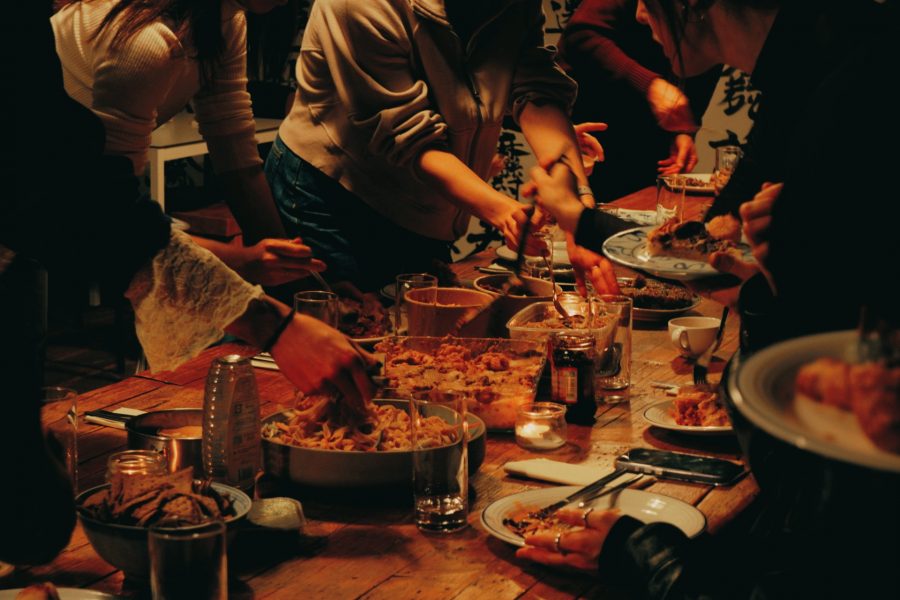
“Change begins with a conversation.” That’s why I was glad to be invited to the SharedTableDinner by the Oneliness Project. How do we find a sense of home in each other? How are loneliness and democracy connected? These were the questions that shaped the evening.

Amazing people shared deeply personal thoughts about how they connect — or don’t connect — with their neighbours, and about what (good) citizenship can mean.

The common ground was a strong desire to belong — to seek human connection in one’s surroundings, to be heard, to care about others, and to be appreciated.

If you say, “Let’s do our common things in the neighborhood,” it awakens something warm. Something deeply human. It feels positive. It feels like belonging. Like home.

If you say, “Get involved in politics,” almost everyone runs away. It feels like the opposite of everything above.

And yet — by its original Greek meaning, it is the same.

So something went wrong. How do we fix this?

Five points of change I believe in:

  1. Who participates? We tend to forget: the War of Independence in the US began with a lack of voting rights. Taxation should be connected to voting rights.
  2. Where are decisions made? Bring them (back) to the local level. 
  3. Who decides? Shift power from politicians to citizen-based structures — except for infrastructure, energy, and safety.
  4. How to access? German AND English as official languages.
  5. How do we serve? Low bureaucracy. Fast, user-friendly, simple administration.

Most of us agree on that. But how do we implement such profound change?

Ask those who have already lived it!!!

Brave people who risked their lives to escape. Courageous people who left comfortable lives for democracy. Dauntless people who started a new chapter — without speaking any German, without a network or connections.

The greatest untapped potential of German society is the more than fifteen million people who came from other countries — 1.3 million in Berlin alone.

They are not participating in politics or in shaping public opinion. They are seeking recognition. They are seeking participation. They know how to deal with change.

‘Migrants’ are not a problem.
‘Migrants’ are the greatest opportunity for Germany.
Author:

More From WahlheYmatPost

  • One In Four Berliners Cannot Vote: Europe Still Struggles With Migrant Political Participation

    One In Four Berliners Cannot Vote: Europe Still Struggles With Migrant Political Participation

    A recent report by the Migration Policy Group, a think tank based in Brussels, shows that Germany is among the best of the worst when it comes to enabling and encouraging the political participation of immigrants. Germany’s score in this is only a small part of the bleak findings from the report’s Political Participation Index,…

  • ‘Migrants’ Are The Greatest Opportunity For Germany

    ‘Migrants’ Are The Greatest Opportunity For Germany

    “Change begins with a conversation.” That’s why I was glad to be invited to the SharedTableDinner by the Oneliness Project. How do we find a sense of home in each other? How are loneliness and democracy connected? These were the questions that shaped the evening. Amazing people shared deeply personal thoughts about how they connect…

  • “Democracy Is More Than Voting”: Sami Atris on Organising Communities in Berlin

    “Democracy Is More Than Voting”: Sami Atris on Organising Communities in Berlin

    WHP: Can you briefly introduce the Berliner Bürgerplattformen? What is its main purpose in Berlin? Sami Atris: Who actually decides what happens in our lives? How much influence do we have over how high our rent is — or whether we can even afford to stay in our neighbourhood? Who decides whether our children go…

  • Ukrainian Voices in Berlin: “People Are Not Objects for Integration Debates”

    Ukrainian Voices in Berlin: “People Are Not Objects for Integration Debates”

    WHP: Can you briefly introduce the Allianz Ukrainischer Organisationen e.V (Alliance of Ukrainian Organizations)? What is its main task in Berlin? Oleksandra Bienert: The Allianz Ukrainischer Organisationen e.V. is a nationwide association currently bringing together 23 civil society organizations in eight federal states. These organizations were founded by people with a Ukrainian migration background and…

  • WahlheYmat Turns Two — And Invites You In

    WahlheYmat Turns Two — And Invites You In

    WahlheYmat is looking for new members.That is the message I would like to write about today. Before my life in Berlin, I was never this direct. I am learning a lot here. And I don’t just mean the famous Berliner Schnauze — like going into a bakery and saying: “Good morning, so sorry for disturbing…

  • The Berlin Blueprint: Participation as the Ultimate Act of Self-Determination

    The Berlin Blueprint: Participation as the Ultimate Act of Self-Determination

    In the glossy catalogs of modern wellness, “self-help” is often sold as a retreat from the world: a private journey of healing through products and quiet contemplation. Berlin’s history, however, offers a more rugged, democratic alternative. In this city, wellbeing has never been found in isolation. It has been forged through participation. To be a…

  • No Permission, More Love: Building Your Vision in Berlin Like Nalan Sipar

    No Permission, More Love: Building Your Vision in Berlin Like Nalan Sipar

    When Nalan Sipar asked her boss at Deutsche Welle if she could create content in Turkish to help inform the German-Turkish community during the early days of the 2020 global pandemic in Berlin, the answer was no.  Her boss at the time told her that a state contract prevented the government-funded broadcaster from covering information…

  • “Discrimination is not an individual problem, but a structural one”

    “Discrimination is not an individual problem, but a structural one”

    WHP: Can you briefly introduce Yekmal? What is your main task in Berlin? Remziye Uykun: Yekmal e.V. is a migrant education, parent and community organisation based in Berlin that now operates nationwide, with locations in several federal states. Our main task is to strengthen multilingualism as a democratic resource, enable equal participation and structurally anchor…

  • 35 Years of Integration Work: CLUB DIALOG and the Power of Community Networks

    35 Years of Integration Work: CLUB DIALOG and the Power of Community Networks

    WHP: Can you briefly introduce your initiative? What is its main task in Berlin? Dr. Natalia Roesler: CLUB DIALOG e.V. is a migrant organisation that was founded in Berlin in 1988 to stimulate social dialogue between Russian-speaking migrants and local Berliners, as well as to promote the integration of immigrants. Over the course of more…

  • Monsieur Ibrahim’s Magic in Kreuzberg: From Runaway to Community Maker

    Monsieur Ibrahim’s Magic in Kreuzberg: From Runaway to Community Maker

    I set out to conduct my first-ever interview for WahlheYmatPost on a grey and rainy Friday afternoon in Charlottenburg. The founder of WahlheYmat e.V., Ivan Gabor, mentioned meeting a man named Jaybo, a Frenchman living in the heart of Kreuzberg who is positively impacting his community. I happily took the opportunity to try out being…

  • Berlin’s Silent 25 Percent

    Berlin’s Silent 25 Percent

    “We are in a very tense situation with a record number of non-voters and a great distrust in society towards institutions, so it was the right time to convene this citizens’ assembly.” This quote does not come from Berlin — although the record number of non-voters is also the case here. It was said by…

  • From Hate Brands to Love Brands: A Different Vision for Democracy

    From Hate Brands to Love Brands: A Different Vision for Democracy

    “We need impactful love brands… that blend purpose, impact, innovation, and emotion.”This challenge was launched by the GICA Impact Network, founded and led by our amazing friend Alexander Sascha Wolf. Sure, Sascha is right — but using the term love brand made me think. What are the love brands of our democratic and political life?…

  • Building Home in Berlin: The Inside-Out Approach with Katarina Stoltz

    Building Home in Berlin: The Inside-Out Approach with Katarina Stoltz

    Katarina Stoltz, originally from Sweden, spent her first months in Berlin crying over Prosecco on a friend’s balcony in Prenzlauer Berg. She’d left behind a thriving career as a Reuters photojournalist in Warsaw. Her work was published in the New York Times, capturing Poland’s entry into the European Union. She’d quit her job, sold her…

  • Nebenkostenabrechnung: The Reckoning No One Explains

    Nebenkostenabrechnung: The Reckoning No One Explains

    TL;DR If you’re in Germany, be ready for big costs at the end of the year. You should also always have a savings pool to deal with random, crazy, unexpected bills that might show up. They tend to do that as the year ends.   We just had another Christmas in Germany. And wasn’t it magical,…

  • Rising Ukrainian Engagement Powers Berlin’s Civic Scene

    Rising Ukrainian Engagement Powers Berlin’s Civic Scene

    WHP: Can you briefly introduce your initiative? What is its main mission in Berlin? Tetyana Lavuta: Svoji.de is an online platform that increases the visibility of Ukrainian civic initiatives in Berlin and Brandenburg and supports their networking with other migrant communities. The name evokes a sense of belonging and safety: the Ukrainian word “svoji” (written…

  • Newcomers Are Not a Problem to Solve: How SINGA Deutschland Builds Participation

    Newcomers Are Not a Problem to Solve: How SINGA Deutschland Builds Participation

    WHP: Could you briefly introduce SINGA Deutschland? What is its main mission in Berlin? Sen Zhan: SINGA Deutschland was founded in 2016 by a brilliant team of three co-founders — Luisa Seiler, Sima Gatea, and Vinzenz Himmighofen — as a humanitarian response at a moment when many newcomers were arriving in Germany. From the beginning,…

Address

Am Hamburger Bahnhof 3
10557 Berlin
Germany

hey@wahlheymat.de

Social Networks