
One In Four Berliners Cannot Vote: Europe Still Struggles With Migrant Political Participation

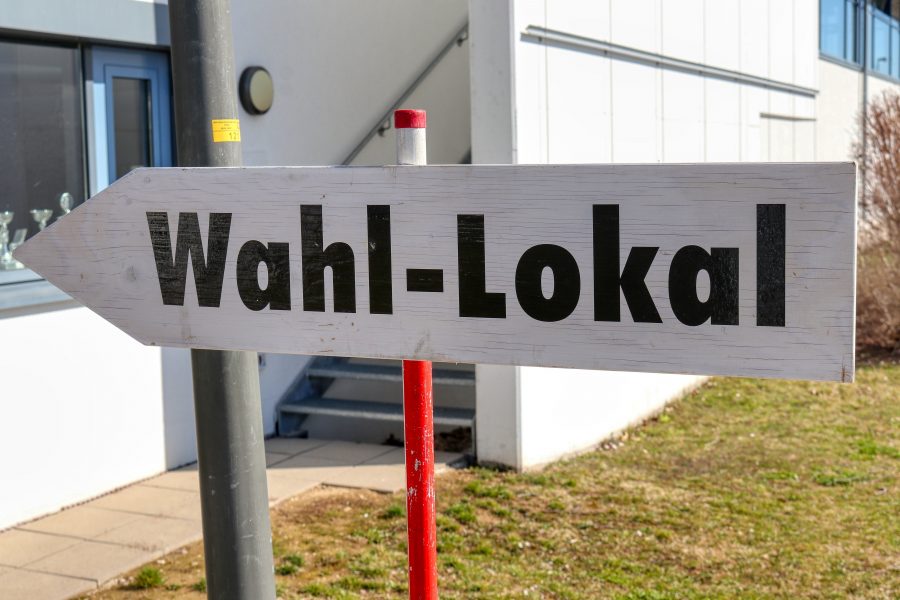
Wahllokal political participation
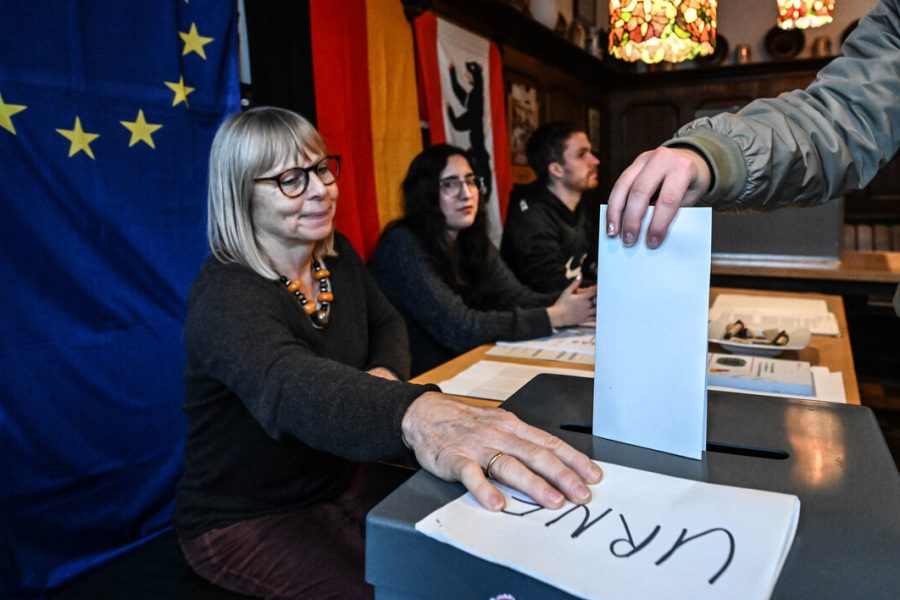
A quarter of Berlin’s residents cannot vote in national or local elections because they do not hold German citizenship. A new report by the Brussels-based Migration Policy Group shows that this democratic gap is not unique to Germany. Across Europe, migrants face major barriers to political participation — making it the weakest area of integration policy on the continent.

A recent report by the Migration Policy Group, a think tank based in Brussels, shows that Germany is among the best of the worst when it comes to enabling and encouraging the political participation of immigrants. Germany’s score in this is only a small part of the bleak findings from the report’s Political Participation Index, which shows that political participation and representation are the weakest areas when it comes to the integration of newcomers across Europe.

“The Political Participation Policy Index clearly shows that most immigrants face limited opportunities to influence and shape the policies that directly affect their lives” the authors write. 

Research shows that the political participation of immigrants can strengthen their sense of belonging and trust in the institutions where they live. When people feel heard and that the government understands and represents their interests, they are more likely to feel connected and favourable towards it. Exclusion works in the opposite way.
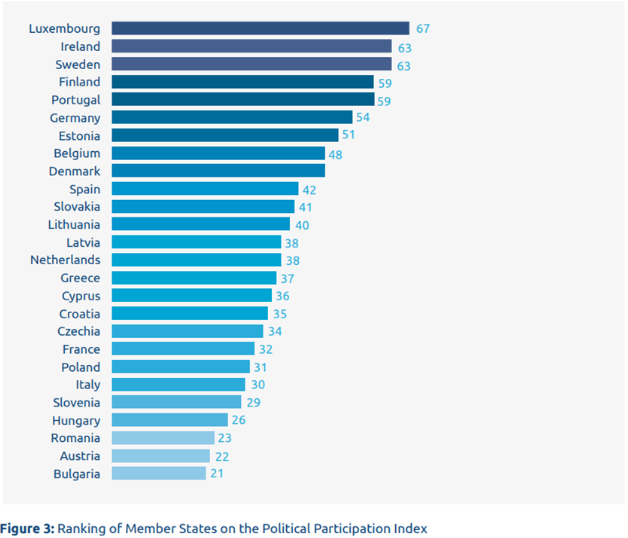
Political Participation Index
Source: Migration Policy Group

A democratic gap: who gets to vote — and who doesn’t

Political representation is also a question of having a healthy democratic system. (As WahlheYmatPost has mentioned several times, approximately 25% of people living in Berlin do not have the right to vote in the national or local elections because they don’t have German nationality.)

Since 2004, the Migration Policy Group has used the MIPEX Index to rank governments’ efforts to support “migrant integration” in more than fifty countries, covering areas such as access to education and health services, family reunification, and anti-discrimination laws.

Not having the right to vote is only one way in which migrants can be politically disenfranchised. The report assessed 27 EU member states across eight indicators that encompass opportunities and realities for including migrants in political life: 

  1. Existence of a national strategy to increase political participation
  2. Full political and civil rights through citizenship
  3. Right to vote in elections for foreign citizens
  4. Encouragement to vote
  5. Promotion of representation in political life
  6. Representation of migrant-led civil society
  7. Enabling collective civic engagement
  8. Civic education for a diversifying society

These indicators were measured for different “categories” of immigrants in each country, including “third-country nationals” (non-EU citizens), EU citizens, refugees, asylum seekers and second-generation migrants. The resulting country scores represent the average results for each of these groups.

Germany: strong in civic engagement, weak in voting rights

All countries assessed scored poorly, but in different ways. For example, compared to other countries, Germany performed best when it came to “enabling collective civic engagement” and “civic education for a diversifying society”. However, Germany was among the worst when it came to the “right to vote in elections for foreign citizens”. Only those with German nationality have the right to vote in federal and regional elections. While citizens of other EU states can vote in local elections in Germany, this leaves “third-country nationals” without the right to vote, regardless of how long they’ve lived in the country. However, this isn’t the same elsewhere in Europe – the report found that immigrants from outside of Europe are allowed to vote in (at least) local elections in the Netherlands, Denmark, and Sweden.

The question of inclusion in democracies is not new. The report notes that extending voting rights to immigrants from outside Europe and to mobile EU citizens has specifically been a topic of discussion since the 1970s. But even today, including “new Europeans” in civic and political life is largely overlooked. Even at the EU level, the European Commission’s current “Action Plan on Integration and Inclusion” encourages countries to adopt consultative bodies with migrants, but doesn’t connect integration to extending voting rights.

Naturalisation as a filter, not a solution

In the Migration Policy Group’s policy brief accompanying their Political Participation Policy Index report, the authors argue that the poor performance of all countries amounts to structural discrimination against immigrants. They show how, for example, even though naturalisation is portrayed as a straightforward way to gain a political voice — since citizenship grants the right to vote there are reasons why people may not want to obtain the citizenship of the country where they live, but still want their needs and perspectives represented.

Furthermore, there are significant institutional barriers and delays in naturalisation processes, serving as active tools for states to filter out those who are considered “undesirable” members of a society. The report specifically points to the fact that in today’s naturalisation process in Germany, applicants must prove they have an income deemed “adequate” by the German state. In the past, applicants for citizenship were allowed to rely on public assistance if they could show that their need for support resulted from circumstances beyond their control.

The authors also highlight the lack of “accessible, targeted, and timely information for new citizens and resident non-nationals who are eligible to vote” as a form of systemic discrimination not faced by non-migrants. They found that only a few countries in Europe (i.e. Sweden and Finland) take proactive steps to increase political access and participation, such as through automatic voter registration and targeted voter information campaigns.

Underrepresentation in political institutions

Immigrants also face significant barriers when it comes to political representation. The report finds that most countries restrict political party membership and the right to stand for elections to citizens. They cite Spain, where people from Morocco, Romania, countries in Latin America, and EU mobile citizens represent over 10% of the population, but less than 4% of the proportion of candidates in municipal elections.

Luckily, the report leaves policymakers with several recommendations for how they can improve the current situation. They can start by:

  • Recognising structural discrimination as a barrier to political participation
  • Advancing access to voting and candidacy rights
  • Dismantling administrative barriers to political participation
  • Ensuring meaningful consultation and sustained financial support for racialised minorities’ and migrants’ civil society organisations

For cities like Berlin, where a large share of residents have a migration background, the question of political inclusion is becoming increasingly urgent. When large parts of the population cannot participate in elections or are rarely represented in political institutions, it raises broader questions about how inclusive modern democracies really are. As migration continues to shape European societies, the challenge will not only be integrating newcomers economically and socially, but also ensuring they have a meaningful voice in the political decisions that affect their lives.
Author:

More From WahlheYmatPost

  • One In Four Berliners Cannot Vote: Europe Still Struggles With Migrant Political Participation

    One In Four Berliners Cannot Vote: Europe Still Struggles With Migrant Political Participation

    A recent report by the Migration Policy Group, a think tank based in Brussels, shows that Germany is among the best of the worst when it comes to enabling and encouraging the political participation of immigrants. Germany’s score in this is only a small part of the bleak findings from the report’s Political Participation Index,…

  • ‘Migrants’ Are The Greatest Opportunity For Germany

    ‘Migrants’ Are The Greatest Opportunity For Germany

    “Change begins with a conversation.” That’s why I was glad to be invited to the SharedTableDinner by the Oneliness Project. How do we find a sense of home in each other? How are loneliness and democracy connected? These were the questions that shaped the evening. Amazing people shared deeply personal thoughts about how they connect…

  • “Democracy Is More Than Voting”: Sami Atris on Organising Communities in Berlin

    “Democracy Is More Than Voting”: Sami Atris on Organising Communities in Berlin

    WHP: Can you briefly introduce the Berliner Bürgerplattformen? What is its main purpose in Berlin? Sami Atris: Who actually decides what happens in our lives? How much influence do we have over how high our rent is — or whether we can even afford to stay in our neighbourhood? Who decides whether our children go…

  • Ukrainian Voices in Berlin: “People Are Not Objects for Integration Debates”

    Ukrainian Voices in Berlin: “People Are Not Objects for Integration Debates”

    WHP: Can you briefly introduce the Allianz Ukrainischer Organisationen e.V (Alliance of Ukrainian Organizations)? What is its main task in Berlin? Oleksandra Bienert: The Allianz Ukrainischer Organisationen e.V. is a nationwide association currently bringing together 23 civil society organizations in eight federal states. These organizations were founded by people with a Ukrainian migration background and…

  • WahlheYmat Turns Two — And Invites You In

    WahlheYmat Turns Two — And Invites You In

    WahlheYmat is looking for new members.That is the message I would like to write about today. Before my life in Berlin, I was never this direct. I am learning a lot here. And I don’t just mean the famous Berliner Schnauze — like going into a bakery and saying: “Good morning, so sorry for disturbing…

  • The Berlin Blueprint: Participation as the Ultimate Act of Self-Determination

    The Berlin Blueprint: Participation as the Ultimate Act of Self-Determination

    In the glossy catalogs of modern wellness, “self-help” is often sold as a retreat from the world: a private journey of healing through products and quiet contemplation. Berlin’s history, however, offers a more rugged, democratic alternative. In this city, wellbeing has never been found in isolation. It has been forged through participation. To be a…

  • No Permission, More Love: Building Your Vision in Berlin Like Nalan Sipar

    No Permission, More Love: Building Your Vision in Berlin Like Nalan Sipar

    When Nalan Sipar asked her boss at Deutsche Welle if she could create content in Turkish to help inform the German-Turkish community during the early days of the 2020 global pandemic in Berlin, the answer was no.  Her boss at the time told her that a state contract prevented the government-funded broadcaster from covering information…

  • “Discrimination is not an individual problem, but a structural one”

    “Discrimination is not an individual problem, but a structural one”

    WHP: Can you briefly introduce Yekmal? What is your main task in Berlin? Remziye Uykun: Yekmal e.V. is a migrant education, parent and community organisation based in Berlin that now operates nationwide, with locations in several federal states. Our main task is to strengthen multilingualism as a democratic resource, enable equal participation and structurally anchor…

  • 35 Years of Integration Work: CLUB DIALOG and the Power of Community Networks

    35 Years of Integration Work: CLUB DIALOG and the Power of Community Networks

    WHP: Can you briefly introduce your initiative? What is its main task in Berlin? Dr. Natalia Roesler: CLUB DIALOG e.V. is a migrant organisation that was founded in Berlin in 1988 to stimulate social dialogue between Russian-speaking migrants and local Berliners, as well as to promote the integration of immigrants. Over the course of more…

  • Monsieur Ibrahim’s Magic in Kreuzberg: From Runaway to Community Maker

    Monsieur Ibrahim’s Magic in Kreuzberg: From Runaway to Community Maker

    I set out to conduct my first-ever interview for WahlheYmatPost on a grey and rainy Friday afternoon in Charlottenburg. The founder of WahlheYmat e.V., Ivan Gabor, mentioned meeting a man named Jaybo, a Frenchman living in the heart of Kreuzberg who is positively impacting his community. I happily took the opportunity to try out being…

  • Berlin’s Silent 25 Percent

    Berlin’s Silent 25 Percent

    “We are in a very tense situation with a record number of non-voters and a great distrust in society towards institutions, so it was the right time to convene this citizens’ assembly.” This quote does not come from Berlin — although the record number of non-voters is also the case here. It was said by…

  • From Hate Brands to Love Brands: A Different Vision for Democracy

    From Hate Brands to Love Brands: A Different Vision for Democracy

    “We need impactful love brands… that blend purpose, impact, innovation, and emotion.”This challenge was launched by the GICA Impact Network, founded and led by our amazing friend Alexander Sascha Wolf. Sure, Sascha is right — but using the term love brand made me think. What are the love brands of our democratic and political life?…

  • Building Home in Berlin: The Inside-Out Approach with Katarina Stoltz

    Building Home in Berlin: The Inside-Out Approach with Katarina Stoltz

    Katarina Stoltz, originally from Sweden, spent her first months in Berlin crying over Prosecco on a friend’s balcony in Prenzlauer Berg. She’d left behind a thriving career as a Reuters photojournalist in Warsaw. Her work was published in the New York Times, capturing Poland’s entry into the European Union. She’d quit her job, sold her…

  • Nebenkostenabrechnung: The Reckoning No One Explains

    Nebenkostenabrechnung: The Reckoning No One Explains

    TL;DR If you’re in Germany, be ready for big costs at the end of the year. You should also always have a savings pool to deal with random, crazy, unexpected bills that might show up. They tend to do that as the year ends.   We just had another Christmas in Germany. And wasn’t it magical,…

  • Rising Ukrainian Engagement Powers Berlin’s Civic Scene

    Rising Ukrainian Engagement Powers Berlin’s Civic Scene

    WHP: Can you briefly introduce your initiative? What is its main mission in Berlin? Tetyana Lavuta: Svoji.de is an online platform that increases the visibility of Ukrainian civic initiatives in Berlin and Brandenburg and supports their networking with other migrant communities. The name evokes a sense of belonging and safety: the Ukrainian word “svoji” (written…

  • Newcomers Are Not a Problem to Solve: How SINGA Deutschland Builds Participation

    Newcomers Are Not a Problem to Solve: How SINGA Deutschland Builds Participation

    WHP: Could you briefly introduce SINGA Deutschland? What is its main mission in Berlin? Sen Zhan: SINGA Deutschland was founded in 2016 by a brilliant team of three co-founders — Luisa Seiler, Sima Gatea, and Vinzenz Himmighofen — as a humanitarian response at a moment when many newcomers were arriving in Germany. From the beginning,…

Address

Am Hamburger Bahnhof 3
10557 Berlin
Germany

hey@wahlheymat.de

Social Networks