
Berlin’s Rental Maze: What an American Learns When the Landlord Plays Games

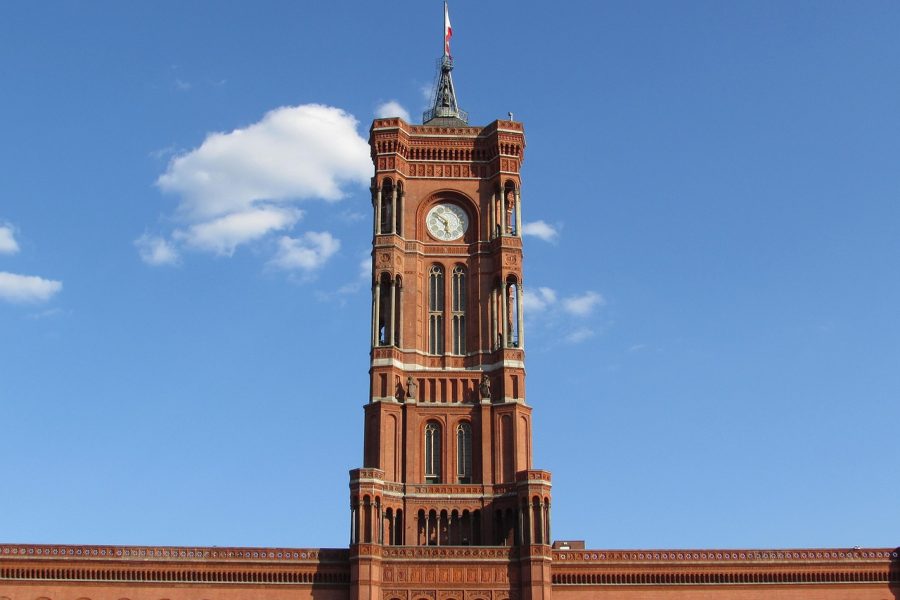
Berlin, Fernsehturm,
Berlin’s housing market may seem unforgiving at first glance, yet it hides unlikely forms of protection. Walter Phippeny contrasts American precarity with German resilience, showing how a city that often appears aloof can become a refuge when things go wrong.

If you moved to Berlin from another European country, then you probably already know how many protections renters have here. My German friends hate it when I go on about how awful the US is – especially the low-level injustice and exploitative chicanery – but as a renter, you have essentially no rights in the US. In the land of the free, you’re free to go find another place to live. 

And if you have an eviction on your credit record, you’re free to go live in the encampment under one of the freeways. It can be really grim for regular, working-class folks. A landlord can give you 90 days’ notice for undocumented noise complaints, or they can just raise the rent whenever they want – and often do, just to be on the safe side. 

Now, in Berlin, landlords can use loopholes to mess with you. You can get “eigenbedarft” where the landlord basically says they want to move into the property themselves and you’ve got to find something else. But it’s hard to just raise the rent or throw you out in 90 days. If a landlord wants to evict you, it can take them up to a year to do it. 
But what do we have in Berlin that you won’t find back in Seattle or Tacoma? Rental protection collectives, or “Mieterschutzbund”. There are several in the city to choose from; the one I’m a member of costs a little over €80 a year. They are great for two things: access to lawyers for advice and representation, and legal insurance. 

When something goes south with your landlord, you’re not alone. You can make an appointment with a lawyer, sign whatever paperwork applies, and get some advice. If action needs to be taken, the lawyer will write a letter for you on their stationery. This is especially important for the non-German-speaking parts of the city. We tend to find ourselves in shady situations where people exploit our lack of Berlin street smarts.  

“I think I have just the thing for you”

I got my first apartment on October 1st, 2012. I had to find something fast, and that was still possible back in those days. I ran into a ton of scams; I actually had one guy asking me to hand over money for an apartment, sight-unseen. Eventually, I got an appointment to see a WG (Wohngemeinschaft) over in Friedrichshain. It was a dark hole, and the potential roommate wasn’t even there. 

I told the guy showing the place that this was certainly not what I was looking for. I didn’t mind the idea of a WG; I thought it might help me with my German. But this place was a bit too much. The guy showing me the apartment was a really tall Englishman; let’s call him Sam. He looked at me and said, “I think I have just the thing for you. Let’s meet at this address and I’ll show you a furnished place. Just you. No roommates.”

We met up in Mitte, and he took me to a ground-floor apartment in the back courtyard. It got very little light from outside. There was no internet and the TV didn’t work. But there was a bed, a fridge, and a washing machine; there may have been bars over the windows, but there was a couch, and it was Altbau. He wanted €680 per month, utilities included. I thought, “I’ve got nothing else going, and I don’t even know if this Berlin experiment is going to work. At least the furniture is taken care of and I have a place.” 

I took it. And what was supposed to be temporary lasted just over three years. If you’re curious and don’t already know how this scam works, let me lay it down. Sam is renting this apartment for maybe €400. He’s taking advantage of the fact that foreigners tend not to know what rent costs in Berlin. 

My apartment in Seattle before I came to Berlin cost about $800 and it was much smaller than this apartment in Mitte. €680,00 doesn’t seem like much money, and it means that Sammy boy here gets to make €280 a month for doing nothing. If he’s got a small portfolio of these places, he’s making a shiny penny in what the kids today call “passive income.” It’s nice work – if you can get it. 

“You have every right to stay”

The issue starts in November 2015. Someone keeps taking my name off the mailbox. One afternoon I catch them doing it and confront them. Sam is the main renter, and his contract explicitly says that he can’t sublet, which is exactly what he’s using the property for. The actual property manager is mad at him, and, just as a cherry on top, he hasn’t been paying the rent for a few months. 

The property rental place wants to terminate his contract. I ask around for advice, and the advice is, “Get thee to the Mieterschutzbund!” I join up and get the legal insurance. When it comes to legal insurance, it’s important to have it in place six months before you actually need it. I got an appointment with the lawyer, and he looked through my contract. 

“As long as you’re paying rent, the gentleman you signed this contract with can’t terminate it without reason. And he better have a good one!”

Then Sammy tried to terminate the contract. I went back to the lawyer, showing him the email I had received. The reaction, after chuckling, was, “This is not legally binding in any way. I can write whatever I want on a piece of paper. Doesn’t mean it will hold in court. There’s nothing this person can do. You have every right to stay.”

Find a Mieterschutzbund and join today

Now, there’s being right, and there’s being smart. I did not want to get embroiled in some legal fight with a dude who has a key to my apartment. I decided to get out as quickly as I could, and, in January of 2016, I found a new place. The new apartment was also a scam, but at least I was the main renter on the lease, and it was a real lease. It was also a big step up from Erdgeschoss, Hinterhof… I had to go back to the Mieterschutzbund and have some more letters sent to Sammy boy to get my deposit back. But that worked out. 

So, the moral of this story is: go find a Mieterschutzbund and join today. Do it before you’re in a tricky pickle. And when a landlord starts pulling shenanigans, you’ll know where to go to get help. This city is not as bleak and lonely as it looks, and there are places to get the legal advice you need as a newcomer. Learning how to Berlin is all about finding the places and resources that will lend you a hand when things go sideways.             
Author:

More From WahlheYmatPost

  • Newcomers Are Not a Problem to Solve: How SINGA Deutschland Builds Participation

    Newcomers Are Not a Problem to Solve: How SINGA Deutschland Builds Participation

    WHP: Could you briefly introduce SINGA Deutschland? What is its main mission in Berlin? Sen Zhan: SINGA Deutschland was founded in 2016 by a brilliant team of three co-founders — Luisa Seiler, Sima Gatea, and Vinzenz Himmighofen — as a humanitarian response at a moment when many newcomers were arriving in Germany. From the beginning,…

  • Papers, please! — How I Turned a 90-Day Visa into a Home in Berlin

    Papers, please! — How I Turned a 90-Day Visa into a Home in Berlin

    When you’re trying to set up your life in Berlin, visas are one of the first things you need to get in order. Unless you’re an EU citizen, you can’t live and work in Germany without one. Simple as that! But there are a whole bunch of different visa options. Should you try for the…

  • Berlin’s Rental Maze: What an American Learns When the Landlord Plays Games

    Berlin’s Rental Maze: What an American Learns When the Landlord Plays Games

    If you moved to Berlin from another European country, then you probably already know how many protections renters have here. My German friends hate it when I go on about how awful the US is – especially the low-level injustice and exploitative chicanery – but as a renter, you have essentially no rights in the…

  • Monsieur Ibrahim’s Magic in Kreuzberg: From Runaway to Community Maker

    Monsieur Ibrahim’s Magic in Kreuzberg: From Runaway to Community Maker

    I set out to conduct my first-ever interview for WahlheYmatPost on a grey and rainy Friday afternoon in Charlottenburg. The founder of WahlheYmat e.V., Ivan Gabor, mentioned meeting a man named Jaybo, a Frenchman living in the heart of Kreuzberg who is positively impacting his community. I happily took the opportunity to try out being…

  • Stay: The New Migration Challenge Germany Can’t Ignore

    Stay: The New Migration Challenge Germany Can’t Ignore

    If nothing changes demographically, Germany will have 16 million fewer workers by 2060 than today. According to most projections, the country needs around 400,000 new workers every year from abroad. We often hear this fact in the news, but what we hear much less about is how many international people leave Germany again—and this seems…

  • “We Can’t Let Protection Become a Privilege”

    “We Can’t Let Protection Become a Privilege”

    WahlheYmatPost: Can you briefly introduce your organization? What is its main mission in Berlin? Vicky Germain: The Migrationsrat Berlin e.V. (Migration Council Berlin) is an umbrella organization of more than 90 BIPoC (Black, Indigenous, and People of Color) and/or migrant self-organizations and post-migrant groups in Berlin. Its central mission is to improve the social, political,…

  • Berlin, Hold My Book: Why Physical Still Beats Digital

    Berlin, Hold My Book: Why Physical Still Beats Digital

    Ok. This is going to sound like a typical “back in my day” kind of old man rant. But hear me out, because I’m not talking about a world swallowed by time. Despite claims to the contrary, Berlin is still full of places that offer a key to a door that still stands today: a…

  • Remembering as Resistance – How AKEBI Confronts Racism in Berlin

    Remembering as Resistance – How AKEBI Confronts Racism in Berlin

    WahlheYmatPost: Can you briefly introduce your organization? What is its main mission in Berlin? Erkin Erdoğan: AKEBI e.V. is a Berlin-based non-profit association, founded by migrants from Turkey in 2014. The name “AKEBI” is the acronym of “Association of Activists Against Racism, Nationalism, and Discrimination” from the Turkish language. We had a preceding anti-racist network…

  • The Berlin Lesson: Trust People, Not Bureaucracies

    The Berlin Lesson: Trust People, Not Bureaucracies

    I was reading Walter’s article about volunteering, and made me think deeply. I come from a society where volunteering was never a tradition. The imperative was: everyone takes care of themselves. If someone works unpaid, they are considered a loser or being taken advantage of. Applying to university never required any kind of volunteer experience,…

  • How Audrey Tang Is Rebooting Democracy — and What Berlin Can Learn from Taiwan

    How Audrey Tang Is Rebooting Democracy — and What Berlin Can Learn from Taiwan

    “The engine behind reshaping democracy has been young people and immigrants,” Audrey Tang – Taiwan’s Cyber Ambassador and first Digital Minister – told me. I was fortunate enough to meet Audrey at the Berlin Freedom Conference on 10 November. To tell you the truth: Audrey was the main reason I went. Ever since I read…

  • From Glitter to Growth: How Taylor Coburn Found Her Shine in Berlin

    From Glitter to Growth: How Taylor Coburn Found Her Shine in Berlin

    I had the pleasure of sitting down with an immigrant change-maker who encourages fellow immigrants from all walks of life to build their lives here in Berlin, instead of just scraping by and letting social norms, visas, or rules rob them of their ability to thrive.  Taylor Coburn is involved in many projects around the…

  • The Power of Ehrenamt: Finding Connection Through Volunteering in Berlin

    The Power of Ehrenamt: Finding Connection Through Volunteering in Berlin

    The news is grim these days. Everywhere we look things are going off the rails. The cost of living, and the political maneuverings… everything seems like too much, too soon, and too fast. And it’s easy to give in to the atomization of 21st century life; we are millions of people living alone. Alone in…

  • Giving Voice to Eastern European Migrants: The Polnischer Sozialrat’s Work for Equality

    Giving Voice to Eastern European Migrants: The Polnischer Sozialrat’s Work for Equality

    WHP: Can you briefly introduce your organization? What is its main task in Berlin? Dr. Kamila Schöll-Mazurek: The Polnischer Sozialrat (Polish Social Council – PSR) is one of the oldest Polish migrant organizations in Germany. Since our founding in 1982, we have advocated for the social participation and equal rights of Polish people in Berlin.…

  • “Darth Vader speaks Amtssprache”: The Chilling Poetry of German Bureaucracy

    “Darth Vader speaks Amtssprache”: The Chilling Poetry of German Bureaucracy

    Every bureaucracy has its language; one might even go further to say that language is bureaucracy’s main tool. The characteristics of bureaucratic speech are well known: thick, complicated sentences, dripping with precision and impersonality. It is intentionally difficult to understand, requiring a certain amount of skill and training in its dark art. Most people will…

  • The Kiez: Where Berlin Becomes Personal

    The Kiez: Where Berlin Becomes Personal

    I’ve often said that in France every region has its dish, its wine, and its cheese; in Germany, every region has its dish, beer, sausage…and language. If we learned German before coming here, we learned “High German” (Hochdeutsch) – because it’s spoken in the high country… not because it’s lofty, or something – and then…

  • Neustart Berlin: A Fresh Start Without Everyone in the Room

    Neustart Berlin: A Fresh Start Without Everyone in the Room

    Berliner Morgenpost — together with Tagesspiegel, EUREF Campus, and radioeins — launched a strong new initiative: Neustart Berlin. Everyone was invited to submit an ongoing project that could revitalize Berlin and give the city a fresh start for the 21st century and beyond. More than 70 initiatives applied; a jury selected eight of them to…

  • Six Pictures from the Future — A Glimpse into Tomorrow’s Berlin

    Six Pictures from the Future — A Glimpse into Tomorrow’s Berlin

    For a campaign, you need many elements — but everything starts with funding. That’s why we first want to give enormous thanks to the supporters of WahlheYmatPost, to everyone who believes in what we do and why we do it: the Welcome Alliance Fund by ProjectTogether and the Bundesministerium des Inneren. And a heartfelt thank-you…

Address

Am Hamburger Bahnhof 3
10557 Berlin
Germany

hey@wahlheymat.de

Social Networks