

TL;DR I talk about planning and approach to this talk. Intro to some resources.
Estimated Reading time between 7 and 15 minutes (including all the resource notes)… without following links, of course.
When Ivan asked me to do this, I felt honored, excited, and more than a little anxious. This is a huge topic! We could do a whole lecture series on just tech; there is so much hype, fear, complexity and history, it’s vary hard to come to terms with all of it. I think the description of this event really keys into this. What WOULD we do without this strata of tech that keeps our world running? In fact, there are probably multiple PhD theses in here! And, when I read the CVs of the guests, I got even more nervous. They are all so accomplished; what could I being to the table?
So, I spun off into prep. I tried my best come up with a plan — a frame work that the conversation would hang on — and plenty of questions for our guests. But, in the immortal words of the Prussian general Helmuth von Moltke, “no plan survives the first contact with the enemy”. More than likely you’re reading this in the aftermath of the talk, and I hope it went well.
I know there’s a lot here. I tend to do a lot of info-dumps in person too; but my personal philosophy is, “always go deep”. I wanted to learn German so I moved to Germany. When I commit, I commit. For those of you out there who ALSO like to go deep, I wanted to provide some jump-off points — a list of accessible resources — that would allow you to follow anything you find interesting. But, if you’re not wired that way, that’s cool too.
After I introduce our guest speakers, I want to take about 5 to 10 minutes to build some context and some forgotten histrocity that often gets overlooked when we talk about this subject. That’s really where the resources below come in. I want to give as much time for the guests; so this context building is going to be a speed-run through some deep water.
I should add some additional comments here about where I’m coming from (and this does NOT represent the views of Wahlheymat, just me); I’m not an impartial party, striving for objectivity, nor am I a journalist. I’ve got my views and assumptions, and I, personally, consider it a courtesy to know in advance where a presenter is coming from before giving them more of my time. So, I believe very much in democracy and I get very tired when people start going on about “the masses” which makes unflattering assumptions about the majority; I am also very skeptical about AI, because Tech is a hotbed for scams. The subject — Technology in gerneral, but AI in particular — is so poorly understood that it allows confidence people to pop in there and make some quick money. I am NOT, however, a luddite; I have a deep passion for tech that I have turned into a 20+ year career in the field. I believe in measured adoption and, as an engineer, I have a motto: creating interesting systems that empower the people who use them. This is direct in contrast with the “philosophy” I see at play in the big platforms in 2025… maybe ‘modus operandi’ is more accurate than ‘philosophy’.
As always, if you have questions, or would like to have a larger conversation, you’re welcome to reach out to me. The best contact would be email: walter.phippeny (at) digitalhecatomb.net. And I really appreciate all you beautiful folks who could make it out on a Wednesday night. Please sign up for our news letter, and we’ll see you at the next one!

Guests:
Ana Alvarez: CEO of Mirgapreneur
Orsolya, PhD: Senior Advocacy Office at the Civil Liberties Union
Anne Kjaer Bathel, CEO of ReDI School of Digital Integration
With Moderation by yours truly, Walter Phippeny
http://www.digitalhecatomb.net/
Resources you can check out, if you’d like to learn more:
Stuff to watch
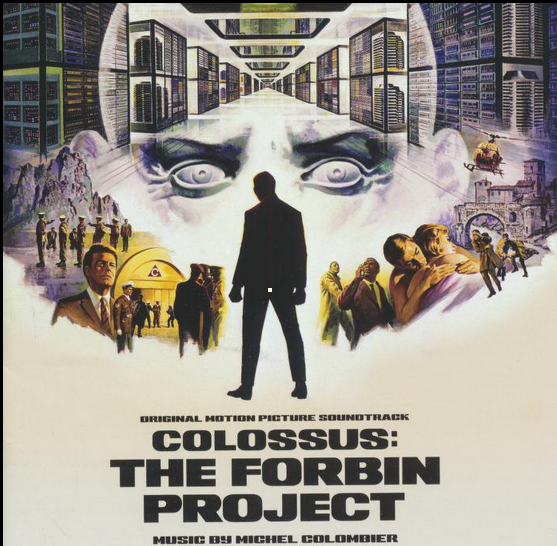
Colossus: The Forbin Project (1970)
Before there was Skynet, there was Colossus. From the 1st book in the series by D.F. Jones published 1966. Full movie is available on the Internet Archive. Runtime 1h38m. Very much worth your time!
Colossus, entire film on the Internet Archive

Community Memory, started in 1973
Computer History Museum article that gives a great run-down of this shortlived experiment in community build with computers:

BBS the Documentary Series by Jason Scott (2005)
8 episode miniseries that tells the story of the BBS. BBSs never really took off outside of the US, but they were definitely a continuation of projects like Community Memory, just on a larger scale. The entire series is available at the Internet Archive. Full running time of all 8 episodes is 5 hours. Jason Scott also has a documentary about text adventures called “Get Lamp”; I highly recommend giving that a look if you’re interested in the early days of computer games.
BBS Miniseries by Jascon Scott…the whole thing
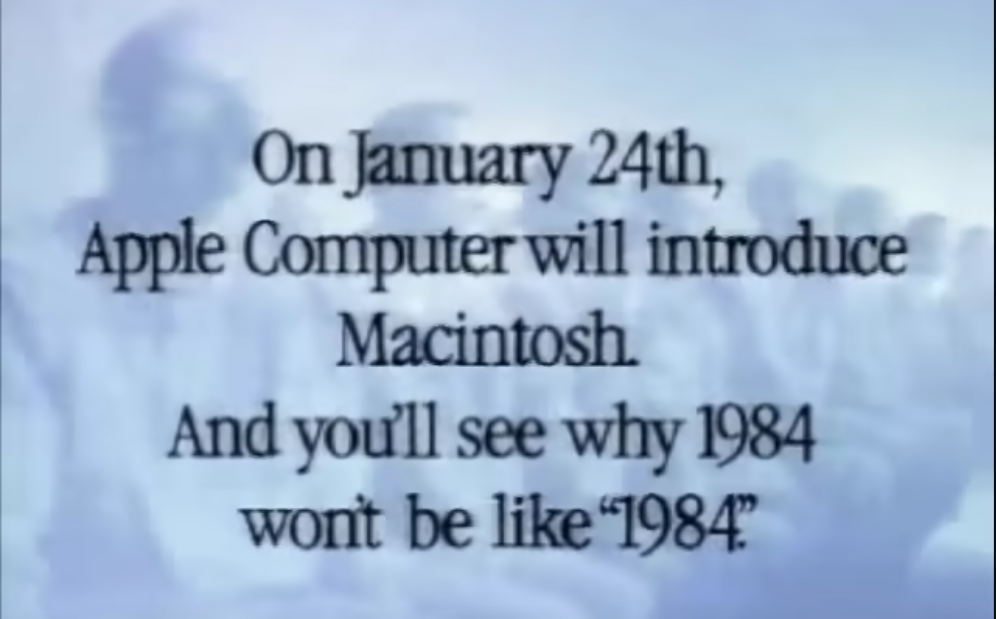
The famous Apple commercial introducing the Macintosh (1984)
This thing was directed by Ridley Scott. Running time 1 minute. It’s a must see.
1984 Apple Commercial for the Mac Premier
Babylon: Metropolis, 1927

Would you like to go see the classic by Fritz Lang accompanied by a live orchestra? Of course you would. And the Babylon cinema in Mitte has got you covered. Tickets aren’t cheap at ca. 29,00€ a piece, but it IS a live music event with an entire orchestra. Here’s some more info at Babylon’s website:
Babylon – info, showtimes tickets for Metropolis
If you can’t afford that, but would like to see the film anyway, you can find it on the Internet Archive. You could play along with a kazoo, or something. That could be a lot of fun, actually… Runtime 2h.
Books:
“Technofeudalism”, Yanis Varoufakis (2024)
This book focuses on the economic impact of where we are today. Varoufakis is a strong voice on the Left and has a lot of great books you should check out. They explain the current, economic environment, coming from a Left perspective.
“AI Snake Oil”, Arvind Narayanan & Sayash Kapoor (2024)
The authors here attempt to define what AI can and can’t do in layman’s terms. Kind of like Turing’s attempt to define what computers can, and can’t, compute. Give it a look.
“Network State”, Balaji S. Srinivasan (2022)
If you want to understand where guys like Peter Thiel and Elon Musk are trying to go — the tech brain objectives, in short — this is the place to start. In my opinion, this is a very bad book, written by someone who is foolishly over-confident about their own intellectual abilities. I couldn’t finish. But it WILL allow you to see what this group thinks. Along with Curtis Yarvin, this is the Dark Enlightenment stuff (see below).
“Neuromancer”, Gibson (1983)
You could buy this on Amazon, but, if you’d like a copy, you should go to the English section of Dussmann in Friedrichstraße and buy it there. Dussmann deserves you love, Amazon less so. They have a whole table of the “SF Master Works” editions with yellow covers on the second level in the English department, of which “Neuromancer” is one of many.
Tech Podcasts and lectures:
As you can tell from the titles, these guys are very critical of the current tech environment. Marx is a young Canadian journalist working on a few projects and miniseries. Ed Zitron is originally from England, but living in California. The man is very angry, but he’s worth listening to.
Paris Marx
Tech won’t save us: https://www.youtube.com/@techwontsaveus
System Crash: https://www.youtube.com/@systemcrashpod/videos
Ed Zitron
Better Offline: https://www.youtube.com/@BetterOfflinePod
Some Vocab that’s worth defining
Tech Brain
People throw this word around, but here’s what I mean when I say it. The phrase tries to encapsulate the view of the chronically digital who look at things in terms of disruption, etc. The kind of folks that are constantly re-inventing things that already exist – Uber and taxis, or AirBnB and hotels – because it terns them into middle men with great advantage. These folks seem to be undemonstrably convinced in the correctness of their ideas, and are so ready to push them on you – whether you like it or not – despite overwhelming evidence that these ideas are poorly thought out and don’t work: e.g. Crypto, NFTs, Blockchain and many more. For the true failure of the Libertarian experiment, please see “A Liberatrian walks into a Bear” by Matthew Hongoltz-Hetling. And, if you don’t want to read the whole thing, you can check out this article, reading time ca. 20m: Vox article about the best laid plans of Libertarians being thwarted by bears.
A.I.
When people talk about AI today, they’re generally talking about Generative AI – things like ChatGPT, Claude, or Deepseek – which are Large Language Models that use huge datasets to construct very complex probability calculations that can go out to thousands of variable to determine what would come next in a given sentence. Basically, a giant probability machine that has been trained on enough language that it can predict what would pass as an approved sentence in a given language. When you interact with these things, you can start to see the limits of what they can do, and that they aren’t really aware of the world.
This brings us to General AI, or AGI, which is fully aware of itself, its environment, and the people in it. Despite the hype, AGI is waaaaay out there and not coming to a theater near you soon.
The Dark Enlightenment
A very anti-democratic movement steeped in Libertarian values. This is largely the brainchild of Curtis Yarvin (a.k.a. Mencius Moldbug), who is best buddies with Peter Thiel. If you want to understand the longterm goals of the tech oligarchs, this is a great place to start. Here’s a two part series on YouTube that goes into his history and ideas; it’s a little over two hours, but there are no visuals. You can just put it on and listen while cooking, or folding laundry: Behind the Bastards, Curtis Yarvin Part I