
“Discrimination is not an individual problem, but a structural one”

Multilingualism is not a cultural add-on, but a question of power, participation and democracy — says Remziye Uykun, Project Development and Coordination Lead of the BEFaN Network at Yekmal e.V., in an interview with WahlheYmatPost. She addresses the persistent structural discrimination faced by people with migration histories in Berlin, the marginalisation of Kurdish as a stateless language, and why sustainable, migrant-led networks and reliable funding are essential for educational justice.

WHP: Can you briefly introduce Yekmal? What is your main task in Berlin?

Remziye Uykun: Yekmal e.V. is a migrant education, parent and community organisation based in Berlin that now operates nationwide, with locations in several federal states. Our main task is to strengthen multilingualism as a democratic resource, enable equal participation and structurally anchor anti-racist educational work. Yekmal works at the intersection of families, educational institutions and politics. We advocate for first and family languages to be not only symbolically recognised but concretely supported – in daycare centres, schools and extracurricular educational spaces.

We explicitly understand education as a question of power and justice: it is about whose language counts, whose knowledge is recognised, and who is allowed to participate in decision-making.

A particular focus of our work lies on institutionally marginalised languages such as Kurdish as a stateless language. The lack of structural support is not a pedagogical oversight, but an expression of political decisions and anti-Kurdish racism. Our goal is an education system that does not merely manage diversity, but understands it as the foundation of democracy and social justice.

WHP: What personally motivated you to get involved here?

Remziye Uykun: The migration policy perspective is decisive for me. I bring many years of experience in this field and represent a clear position: education, participation and democracy cannot be conceived without the consistent inclusion of people with a migration history.

Multilingualism, participation and educational justice are not abstract guiding concepts for me, but concrete political tasks. Too often, they are named without being structurally implemented. Yekmal offers me the space to address these issues in a practical, political way, together with the communities, and in an effective manner.

What motivates me is the conviction that sustainable change can only succeed if people with a migration history do not remain objects of measures, but are recognised and involved as acting subjects.

WHP: What challenges do people with a migration history face in Berlin – and how does your organisation deal with them?

Remziye Uykun: People with a migration history in Berlin continue to face structural mechanisms of exclusion and institutional discrimination. These are particularly evident in the education system, but also in access to participation, recognition and funding. As a Kurdish parents’ association, Yekmal is often subject to a general suspicion that directly affects cooperation, institutional recognition and project funding. As a Kurdish organisation, we have to legitimise ourselves far more than others. This is not an isolated case, but an expression of anti-Kurdish racism and structurally unequal treatment.

These exclusions have a direct impact on children. Kurdish children experience discrimination in schools, for example through the devaluation of their language, the lack of first-language support, or low institutional expectations. The fact that Kurdish is a stateless language further exacerbates this disadvantage.

Yekmal addresses these challenges through empowerment and educational work, professional qualification, parental counselling as well as political and professional intervention. Our approach is clear: discrimination is not an individual problem, but a structural one – and must also be addressed structurally.

WHP: Is there a project, event, or initiative coming up that you would particularly like to recommend to our readers?

Remziye Uykun: Two initiatives stand as exemplary for our work: the BEFaN network and the WIRKT! project. BEFaN is a Berlin-wide professional network of 27 migrant organisations that has existed for over ten years and works to promote the institutional anchoring and support of multilingualism, participation, diversity, and educational justice in the education system. Despite its high relevance for democracy policy, BEFaN is still largely dependent on voluntary work and is not sustainably financially secure.

The WIRKT! project is specifically aimed at parents with a migration history and strengthens parental participation and involvement, particularly in parent committees. WIRKT! combines empowerment, political education and networking with the aim of enabling parents to effectively represent their interests and actively shape educational processes.

Both initiatives clearly demonstrate that participation, diversity and democracy do not emerge on their own – they require committed migrant-led structures and reliable funding.

WHP: How can interested people support your work or get involved themselves?

Remziye Uykun: Support begins with not only recognising migrant perspectives, but actively including them. Interested people can support our work by participating in events, getting involved in projects, entering into cooperations, or making our positions visible in public and political spheres.

What is crucial here is a shared understanding that participation is not a voluntary concession, but a democratic right that must be politically intended, institutionally enabled, and permanently structurally secured.

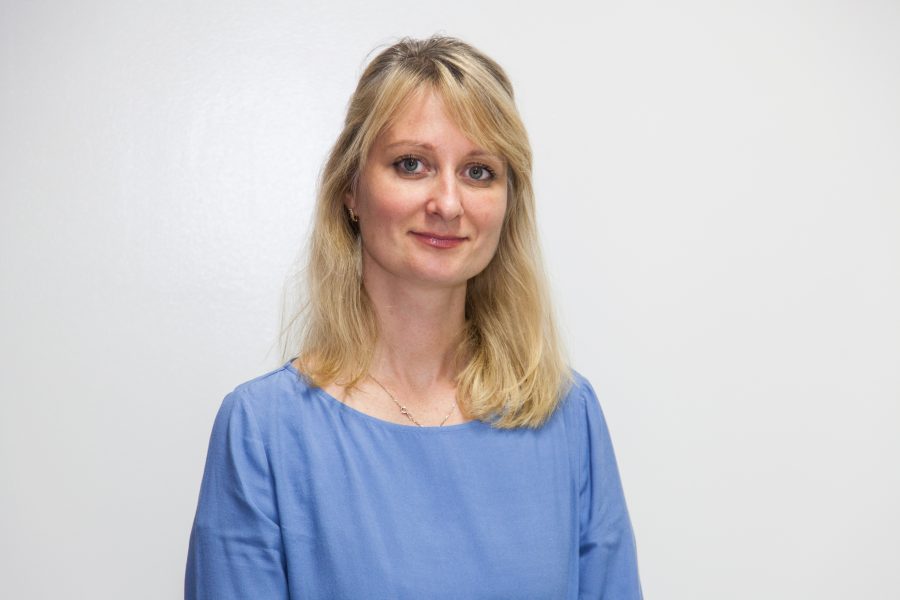
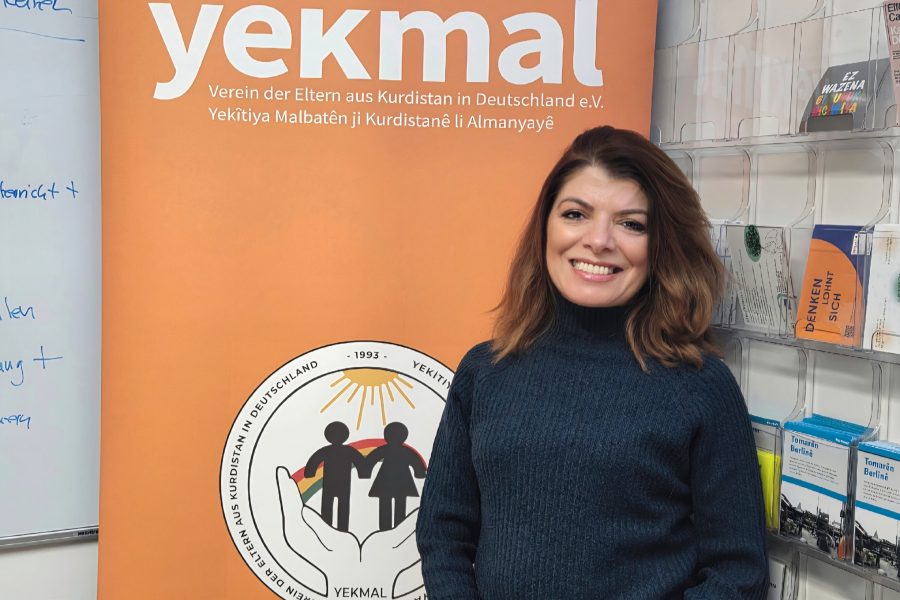
Remziye Uykun is a qualified sociologist. Since 2024, she has been working at Yekmal e.V., where she coordinates the Berlin-wide professional network BEFaN and is responsible for project development. For many years, she has been committed to the institutional recognition of multilingualism, strengthening migrant-led organisations, and advancing educational justice and equal participation.

Author:

More From WahlheYmatPost

  • “Discrimination is not an individual problem, but a structural one”

    “Discrimination is not an individual problem, but a structural one”

    WHP: Can you briefly introduce Yekmal? What is your main task in Berlin? Remziye Uykun: Yekmal e.V. is a migrant education, parent and community organisation based in Berlin that now operates nationwide, with locations in several federal states. Our main task is to strengthen multilingualism as a democratic resource, enable equal participation and structurally anchor…

  • Building Home in Berlin: The Inside-Out Approach with Katarina Stoltz

    Building Home in Berlin: The Inside-Out Approach with Katarina Stoltz

    Katarina Stoltz, originally from Sweden, spent her first months in Berlin crying over Prosecco on a friend’s balcony in Prenzlauer Berg. She’d left behind a thriving career as a Reuters photojournalist in Warsaw. Her work was published in the New York Times, capturing Poland’s entry into the European Union. She’d quit her job, sold her…

  • 35 Years of Integration Work: CLUB DIALOG and the Power of Community Networks

    35 Years of Integration Work: CLUB DIALOG and the Power of Community Networks

    WHP: Can you briefly introduce your initiative? What is its main task in Berlin? Dr. Natalia Roesler: CLUB DIALOG e.V. is a migrant organisation that was founded in Berlin in 1988 to stimulate social dialogue between Russian-speaking migrants and local Berliners, as well as to promote the integration of immigrants. Over the course of more…

  • Nebenkostenabrechnung: The Reckoning No One Explains

    Nebenkostenabrechnung: The Reckoning No One Explains

    TL;DR If you’re in Germany, be ready for big costs at the end of the year. You should also always have a savings pool to deal with random, crazy, unexpected bills that might show up. They tend to do that as the year ends.   We just had another Christmas in Germany. And wasn’t it magical,…

  • Rising Ukrainian Engagement Powers Berlin’s Civic Scene

    Rising Ukrainian Engagement Powers Berlin’s Civic Scene

    WHP: Can you briefly introduce your initiative? What is its main mission in Berlin? Tetyana Lavuta: Svoji.de is an online platform that increases the visibility of Ukrainian civic initiatives in Berlin and Brandenburg and supports their networking with other migrant communities. The name evokes a sense of belonging and safety: the Ukrainian word “svoji” (written…

  • Newcomers Are Not a Problem to Solve: How SINGA Deutschland Builds Participation

    Newcomers Are Not a Problem to Solve: How SINGA Deutschland Builds Participation

    WHP: Could you briefly introduce SINGA Deutschland? What is its main mission in Berlin? Sen Zhan: SINGA Deutschland was founded in 2016 by a brilliant team of three co-founders — Luisa Seiler, Sima Gatea, and Vinzenz Himmighofen — as a humanitarian response at a moment when many newcomers were arriving in Germany. From the beginning,…

  • Papers, please! — How I Turned a 90-Day Visa into a Home in Berlin

    Papers, please! — How I Turned a 90-Day Visa into a Home in Berlin

    When you’re trying to set up your life in Berlin, visas are one of the first things you need to get in order. Unless you’re an EU citizen, you can’t live and work in Germany without one. Simple as that! But there are a whole bunch of different visa options. Should you try for the…

  • Berlin’s Rental Maze: What an American Learns When the Landlord Plays Games

    Berlin’s Rental Maze: What an American Learns When the Landlord Plays Games

    If you moved to Berlin from another European country, then you probably already know how many protections renters have here. My German friends hate it when I go on about how awful the US is – especially the low-level injustice and exploitative chicanery – but as a renter, you have essentially no rights in the…

  • Monsieur Ibrahim’s Magic in Kreuzberg: From Runaway to Community Maker

    Monsieur Ibrahim’s Magic in Kreuzberg: From Runaway to Community Maker

    I set out to conduct my first-ever interview for WahlheYmatPost on a grey and rainy Friday afternoon in Charlottenburg. The founder of WahlheYmat e.V., Ivan Gabor, mentioned meeting a man named Jaybo, a Frenchman living in the heart of Kreuzberg who is positively impacting his community. I happily took the opportunity to try out being…

  • Stay: The New Migration Challenge Germany Can’t Ignore

    Stay: The New Migration Challenge Germany Can’t Ignore

    If nothing changes demographically, Germany will have 16 million fewer workers by 2060 than today. According to most projections, the country needs around 400,000 new workers every year from abroad. We often hear this fact in the news, but what we hear much less about is how many international people leave Germany again—and this seems…

  • Berlin, Hold My Book: Why Physical Still Beats Digital

    Berlin, Hold My Book: Why Physical Still Beats Digital

    Ok. This is going to sound like a typical “back in my day” kind of old man rant. But hear me out, because I’m not talking about a world swallowed by time. Despite claims to the contrary, Berlin is still full of places that offer a key to a door that still stands today: a…

  • Remembering as Resistance – How AKEBI Confronts Racism in Berlin

    Remembering as Resistance – How AKEBI Confronts Racism in Berlin

    WahlheYmatPost: Can you briefly introduce your organization? What is its main mission in Berlin? Erkin Erdoğan: AKEBI e.V. is a Berlin-based non-profit association, founded by migrants from Turkey in 2014. The name “AKEBI” is the acronym of “Association of Activists Against Racism, Nationalism, and Discrimination” from the Turkish language. We had a preceding anti-racist network…

  • From Glitter to Growth: How Taylor Coburn Found Her Shine in Berlin

    From Glitter to Growth: How Taylor Coburn Found Her Shine in Berlin

    I had the pleasure of sitting down with an immigrant change-maker who encourages fellow immigrants from all walks of life to build their lives here in Berlin, instead of just scraping by and letting social norms, visas, or rules rob them of their ability to thrive.  Taylor Coburn is involved in many projects around the…

  • Giving Voice to Eastern European Migrants: The Polnischer Sozialrat’s Work for Equality

    Giving Voice to Eastern European Migrants: The Polnischer Sozialrat’s Work for Equality

    WHP: Can you briefly introduce your organization? What is its main task in Berlin? Dr. Kamila Schöll-Mazurek: The Polnischer Sozialrat (Polish Social Council – PSR) is one of the oldest Polish migrant organizations in Germany. Since our founding in 1982, we have advocated for the social participation and equal rights of Polish people in Berlin.…

  • “We Can’t Let Protection Become a Privilege”

    “We Can’t Let Protection Become a Privilege”

    WahlheYmatPost: Can you briefly introduce your organization? What is its main mission in Berlin? Vicky Germain: The Migrationsrat Berlin e.V. (Migration Council Berlin) is an umbrella organization of more than 90 BIPoC (Black, Indigenous, and People of Color) and/or migrant self-organizations and post-migrant groups in Berlin. Its central mission is to improve the social, political,…

  • Neustart Berlin: A Fresh Start Without Everyone in the Room

    Neustart Berlin: A Fresh Start Without Everyone in the Room

    Berliner Morgenpost — together with Tagesspiegel, EUREF Campus, and radioeins — launched a strong new initiative: Neustart Berlin. Everyone was invited to submit an ongoing project that could revitalize Berlin and give the city a fresh start for the 21st century and beyond. More than 70 initiatives applied; a jury selected eight of them to…

  • The Berlin Lesson: Trust People, Not Bureaucracies

    The Berlin Lesson: Trust People, Not Bureaucracies

    I was reading Walter’s article about volunteering, and made me think deeply. I come from a society where volunteering was never a tradition. The imperative was: everyone takes care of themselves. If someone works unpaid, they are considered a loser or being taken advantage of. Applying to university never required any kind of volunteer experience,…

Address

Am Hamburger Bahnhof 3
10557 Berlin
Germany

hey@wahlheymat.de

Social Networks