
“Treat Every Case as Your Own”: How Zaki e.V. Supports Berlin’s Overlooked Migrants

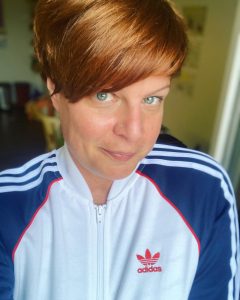
Pia Bergmann Zaki
For many newcomers in Berlin, one of the biggest challenges—besides the language—is navigating a system that is both highly complex and constantly shifts responsibility. This is exactly where Zaki e.V. steps in—with accessible, multilingual support and a clear principle: no case is passed on; every case is followed through to a solution, as Pia Bergmann, communications officer at Zaki, explains in our interview.

WHP: Can you briefly introduce Zaki e.V.? What is your main mission in Berlin?

Pia Bergmann: Zaki – Bildung und Kultur e.V. is a migrant-led organization, with its main office located at the Berlin Global Village in Neukölln and another office in Pankow. The organization’s focus can be summed up in one sentence: arrival and inclusion through education.

Zaki (ذكي) comes from Arabic and is also used in Persian. It means something like smart or clever. A name that says it allbecause at Zaki, the main goal is to support people from Afghanistan, Arab countries, and Ukraine in finding education and work in Germany. Or, in short: self-efficacy. The organization was founded in 2019 by Omed Arghandiwal, who himself has Afghan roots and is now the managing director of Zaki e.V. Based on the migration experiences of its staff, the organization sees itself as one that offers counseling and educational worklow-barrier, multilingual, and free of charge.

WHP: What personally motivated you to get involved there?

Pia Bergmann: After living in Palestine for seven years, I returned to my hometown of Berlin in 2023 and had to completely reorient myself. In a society where there is hardly any talk of a welcoming culture anymore and debates around migration are increasingly shaped by racist and apocalyptic views, it was clear to me: I wanted to find work that felt meaningful, where I could learn new things and feel comfortable.

And that is exactly what Zaki e.V. is for me. It may sound cheesy, but I enjoy going to work every day. Two years ago, I took over administration and public relations at Zaki e.V. Meanwhile, I also provide one-on-one coaching and exam preparation for young Afghans, as well as social counseling for Arabic-speaking people, which I greatly enjoy because I value direct contact and exchange.

In doing so, I do not only see my role as supportive, but also as learning: I take something new from every encounter. I am repeatedly impressed and inspired by what the people we work with here manage to achieve. And all within a system that often makes things very difficult for them.

WHP: What challenges do people with a migration background in Berlin face—and how does your organization respond to them?

Pia Bergmann: People come to us with a wide range of concerns and problems. Our target groups include people from Afghanistan, from Arabic-speaking countries, and so-called third-country nationals from Ukraine. These are people who, for example, lived in Ukraine for studies or work, then had to flee, and now cannot return either to Ukraine or to their countries of origin. These are often overlooked groups. And that is exactly where we see our mission.

One of our projects supports people with disabilities from Afghanistan.

For example, last month in our social counseling, we succeeded in helping a chronically ill pensioner from Afghanistan assert her rights. For eight months, she had been passed back and forth between the health insurance company and the social welfare officeneither institution considered itself responsible. For her, this meant no secure health insurance and therefore no regular access to urgently needed blood pressure medication. Together, we finally filed a complaint with the police. Just one week later, things began to movethe health insurance has been reactivated and her medical care secured.

This is just one example of how people often get lost in the bureaucratic maze. The case shows how important it is to accompany those affected in deadlocked procedures and to clearly demand accountability. Our managing director always says: “Treat every problem as if it were your own.” Instead of sending people from A to B to C, we do everything we can to find a solution.

WHP: Is there a project, event, or initiative at Zaki e.V. coming up that you would especially recommend to our readers?

Pia Bergmann: As part of our projects for men in Pankow and Charlottenburg-Wilmersdorf, we regularly offer workshops on mental health. These are the next ones:

In Dari: 08.04.2026, 17:30–19:30 “Feelings and methods to cope with them (anger)” at our office in Pankow (Schönfließer Str. 7, 10439 Berlin)

In Arabic: 24.04.2026, 15:00–16:30 “Cultural identity, roots, new values” at Ulme 35 (Ulmenallee 35, 14050 Berlin)

As part of our project “Digital offers for Afghans in Berlin,” there are also regular info seminars for single parents and people with disabilities from Afghanistan, which can be attended both on-site at our office in Neukölln (Am Sudhaus 2, 12053 Berlin) and online. Information can be found on Instagram, Facebook, or in our event calendar.

WHP: How can interested people support your work or get involved themselves?

Pia Bergmann: For us, education is a fundamental human right. That is why we are committed to providing a wide range of educational opportunities, especially for people with migration and refugee backgrounds. As a non-profit organization, we rely on funding and donations. Therefore, we are very grateful for donations that help us maintain and further develop our work in the long term.In addition to financial support, voluntary engagement is also very welcomeevery form of participation helps strengthen our work!

(Header image: © Max Schröder)
Author:

More From WahlheYmatPost

  • “Treat Every Case as Your Own”: How Zaki e.V. Supports Berlin’s Overlooked Migrants

    “Treat Every Case as Your Own”: How Zaki e.V. Supports Berlin’s Overlooked Migrants

    WHP: Can you briefly introduce Zaki e.V.? What is your main mission in Berlin? Pia Bergmann: Zaki – Bildung und Kultur e.V. is a migrant-led organization, with its main office located at the Berlin Global Village in Neukölln and another office in Pankow. The organization’s focus can be summed up in one sentence: arrival and…

  • Germany Has an Energy Crisis — Just Not the One You Think

    Germany Has an Energy Crisis — Just Not the One You Think

    Energy – scarcity.We talk about energy all the time—but only in physical terms.I find myself thinking more and more about our social energy, which may matter even more. Because a society also needs energy. This energy, I would call social energy—a concept that appears in the social sciences under terms like collective intelligence or social…

  • Multilingualism, Participation, and Power: A Berlin Case Study

    Multilingualism, Participation, and Power: A Berlin Case Study

    Local migrant organizations often play a crucial yet underrecognized role in shaping participation, representation, and social cohesion within urban districts. Based on my experience directing the migraUp! Pankow project in Berlin between 2015 and 2025, this reflection highlights how community-based initiatives can strengthen migrant organizations while simultaneously contributing to local governance and democratic participation. migraUp!…

  • One In Four Berliners Cannot Vote: Europe Still Struggles With Migrant Political Participation

    One In Four Berliners Cannot Vote: Europe Still Struggles With Migrant Political Participation

    A recent report by the Migration Policy Group, a think tank based in Brussels, shows that Germany is among the best of the worst when it comes to enabling and encouraging the political participation of immigrants. Germany’s score in this is only a small part of the bleak findings from the report’s Political Participation Index,…

  • ‘Migrants’ Are The Greatest Opportunity For Germany

    ‘Migrants’ Are The Greatest Opportunity For Germany

    “Change begins with a conversation.” That’s why I was glad to be invited to the SharedTableDinner by the Oneliness Project. How do we find a sense of home in each other? How are loneliness and democracy connected? These were the questions that shaped the evening. Amazing people shared deeply personal thoughts about how they connect…

  • “Democracy Is More Than Voting”: Sami Atris on Organising Communities in Berlin

    “Democracy Is More Than Voting”: Sami Atris on Organising Communities in Berlin

    WHP: Can you briefly introduce the Berliner Bürgerplattformen? What is its main purpose in Berlin? Sami Atris: Who actually decides what happens in our lives? How much influence do we have over how high our rent is — or whether we can even afford to stay in our neighbourhood? Who decides whether our children go…

  • Ukrainian Voices in Berlin: “People Are Not Objects for Integration Debates”

    Ukrainian Voices in Berlin: “People Are Not Objects for Integration Debates”

    WHP: Can you briefly introduce the Allianz Ukrainischer Organisationen e.V (Alliance of Ukrainian Organizations)? What is its main task in Berlin? Oleksandra Bienert: The Allianz Ukrainischer Organisationen e.V. is a nationwide association currently bringing together 23 civil society organizations in eight federal states. These organizations were founded by people with a Ukrainian migration background and…

  • WahlheYmat Turns Two — And Invites You In

    WahlheYmat Turns Two — And Invites You In

    WahlheYmat is looking for new members.That is the message I would like to write about today. Before my life in Berlin, I was never this direct. I am learning a lot here. And I don’t just mean the famous Berliner Schnauze — like going into a bakery and saying: “Good morning, so sorry for disturbing…

  • The Berlin Blueprint: Participation as the Ultimate Act of Self-Determination

    The Berlin Blueprint: Participation as the Ultimate Act of Self-Determination

    In the glossy catalogs of modern wellness, “self-help” is often sold as a retreat from the world: a private journey of healing through products and quiet contemplation. Berlin’s history, however, offers a more rugged, democratic alternative. In this city, wellbeing has never been found in isolation. It has been forged through participation. To be a…

  • No Permission, More Love: Building Your Vision in Berlin Like Nalan Sipar

    No Permission, More Love: Building Your Vision in Berlin Like Nalan Sipar

    When Nalan Sipar asked her boss at Deutsche Welle if she could create content in Turkish to help inform the German-Turkish community during the early days of the 2020 global pandemic in Berlin, the answer was no.  Her boss at the time told her that a state contract prevented the government-funded broadcaster from covering information…

  • “Discrimination is not an individual problem, but a structural one”

    “Discrimination is not an individual problem, but a structural one”

    WHP: Can you briefly introduce Yekmal? What is your main task in Berlin? Remziye Uykun: Yekmal e.V. is a migrant education, parent and community organisation based in Berlin that now operates nationwide, with locations in several federal states. Our main task is to strengthen multilingualism as a democratic resource, enable equal participation and structurally anchor…

  • 35 Years of Integration Work: CLUB DIALOG and the Power of Community Networks

    35 Years of Integration Work: CLUB DIALOG and the Power of Community Networks

    WHP: Can you briefly introduce your initiative? What is its main task in Berlin? Dr. Natalia Roesler: CLUB DIALOG e.V. is a migrant organisation that was founded in Berlin in 1988 to stimulate social dialogue between Russian-speaking migrants and local Berliners, as well as to promote the integration of immigrants. Over the course of more…

  • Monsieur Ibrahim’s Magic in Kreuzberg: From Runaway to Community Maker

    Monsieur Ibrahim’s Magic in Kreuzberg: From Runaway to Community Maker

    I set out to conduct my first-ever interview for WahlheYmatPost on a grey and rainy Friday afternoon in Charlottenburg. The founder of WahlheYmat e.V., Ivan Gabor, mentioned meeting a man named Jaybo, a Frenchman living in the heart of Kreuzberg who is positively impacting his community. I happily took the opportunity to try out being…

  • Berlin’s Silent 25 Percent

    Berlin’s Silent 25 Percent

    “We are in a very tense situation with a record number of non-voters and a great distrust in society towards institutions, so it was the right time to convene this citizens’ assembly.” This quote does not come from Berlin — although the record number of non-voters is also the case here. It was said by…

  • From Hate Brands to Love Brands: A Different Vision for Democracy

    From Hate Brands to Love Brands: A Different Vision for Democracy

    “We need impactful love brands… that blend purpose, impact, innovation, and emotion.”This challenge was launched by the GICA Impact Network, founded and led by our amazing friend Alexander Sascha Wolf. Sure, Sascha is right — but using the term love brand made me think. What are the love brands of our democratic and political life?…

  • Building Home in Berlin: The Inside-Out Approach with Katarina Stoltz

    Building Home in Berlin: The Inside-Out Approach with Katarina Stoltz

    Katarina Stoltz, originally from Sweden, spent her first months in Berlin crying over Prosecco on a friend’s balcony in Prenzlauer Berg. She’d left behind a thriving career as a Reuters photojournalist in Warsaw. Her work was published in the New York Times, capturing Poland’s entry into the European Union. She’d quit her job, sold her…

Address

Am Hamburger Bahnhof 3
10557 Berlin
Germany

hey@wahlheymat.de

Social Networks